Seoul Getting There: Airports, Trains, Buses & Routes
Getting to Seoul is not a single route decision. The best option depends on your country or city of departure, the airport or station used, your final neighborhood, your luggage, and the time you arrive. This guide compares Incheon and Gimpo airports, KTX and conventional rail, long-distance buses, and alternative gateways by total time, cost, convenience, and booking difficulty. It also explains how to reach central Seoul and avoid common mistakes with terminals, airport changes, and late-night connections.
Seoul's Main Arrival Gateways
Start by separating the long-distance journey from the final trip into Seoul. An airport may offer the best flight but require a longer city transfer, while a regional airport or rail station may reduce the last-mile journey. Your arrival gateway should therefore be chosen by the complete itinerary, not only by the flight or train duration.
Incheon International Airport for Long-Haul Arrivals
Incheon International Airport is the main choice for many long-haul international itineraries. Whether it is the right airport for you depends on the airlines and routes operating on your travel date, so check the current airport and airline listings when searching for flights.
Incheon is outside central Seoul. After immigration and baggage collection, you still need an onward journey by airport rail, airport limousine bus, or taxi. The Seoul Metropolitan Government describes these as the main ground transport categories into the city.
Leave flexible time between landing at Incheon and any fixed onward booking. Immigration queues, baggage delays, walking between the terminal and transport area, and a late flight can all reduce the time shown on your original itinerary. This matters especially when you are booking a separate KTX ticket, domestic flight, or long-distance bus rather than one protected airline connection.
Gimpo International Airport for Domestic and Regional Arrivals
Gimpo International Airport is Seoul's principal domestic gateway and also handles selected short-haul regional international routes. It is closer to the built-up Seoul area than Incheon and has useful connections to the airport rail and subway network. This can make it attractive for domestic flights from distant regions or for a regional flight that genuinely operates there.
Do not assume that every international route serving Seoul uses Gimpo. The airline, airport, and booking confirmation should identify the correct airport and terminal for your date. The Gimpo International Airport site also notes that boarding-ticket and baggage-check deadlines vary according to airline policy, which is important when comparing a domestic flight with a train.
An itinerary that arrives at Incheon and departs from Gimpo requires a separate airport transfer. It is not a simple station change inside Seoul. Add time for collecting luggage, finding the inter-airport route, possible road congestion, and the check-in rules for the second flight. When the schedule allows, a same-airport connection is usually easier to manage.
Choosing Between Incheon and Gimpo
Neither airport is always better. Compare the available flight, the total time from your origin to your accommodation, the cost of reaching Seoul, the arrival hour, and the number of separate tickets. A closer airport can be useful only if its flight schedule fits your journey and does not create a difficult connection.
| Gateway | Typical role | City access | Main planning issue |
|---|---|---|---|
| Incheon International Airport | Long-haul international arrivals | Airport rail, limousine bus, or taxi | Longer onward journey into Seoul |
| Gimpo International Airport | Domestic and selected regional arrivals | AREX all-stop service, subway, or taxi | Fewer relevant routes and airport details to confirm |
For many long-haul travelers, Incheon will offer the most practical flight selection. For a domestic or regional traveler, Gimpo may reduce the city transfer. However, the fastest flight is not necessarily the fastest arrival in Seoul after airport access, check-in, immigration, baggage, and the final local journey are included.
Reach Seoul by Domestic Flight or Train
Domestic air and rail are the main choices for travelers already in South Korea. The better option depends on whether you begin near a major station, an airport, an island, or a distant regional city, and on whether Seoul Station or Yongsan Station is convenient for your accommodation.
Domestic Flights to Gimpo
A domestic flight to Gimpo can be useful from an island or a distant regional origin when the departure airport is easy to reach and the arrival schedule matches your plans. It can also help when rail service would require several changes or a long approach journey to a station.
Compare the whole process rather than the time in the air. Include the trip to the departure airport, the airline's check-in and baggage deadlines, security procedures, possible waiting time, the flight, baggage collection at Gimpo, and the final subway, rail, or taxi ride. A short flight can lose its apparent advantage when both airports are far from the places you actually need to visit.
International travelers should distinguish carefully between Gimpo and Incheon. A long-haul flight may arrive at Incheon while a separate domestic ticket departs from Gimpo. Search the airport name shown on each booking, and do not rely on a general destination label such as Seoul. Airline schedules and terminal arrangements should be checked for the intended travel period.
KTX and Conventional Rail to Seoul
KTX is the principal fast rail option from major Korean cities. Depending on the route and current service, a Seoul-bound itinerary may arrive at Seoul Station, Yongsan Station, or another station shown by the booking system. The arrival station matters because it determines the final subway, bus, or taxi journey.

Conventional trains can be useful when high-speed rail does not serve your origin directly, when the available departure is more convenient, or when a slower service offers a suitable fare and schedule. Do not compare only the train's travel time. Include the journey to the departure station and the local transfer after arriving in Seoul.
Use the official Korail timetable and fare guide for the service date, route, fare, and station information. Korail's English booking site is designed to help international travelers purchase KTX and other train tickets online. Popular departures can be more difficult to book on weekends and during major national travel periods, so an earlier search is useful when your schedule is fixed.
Choosing Rail or Domestic Air
Use a door-to-door comparison with these questions:
- Where do you start? Rail is often practical when you can reach a central station easily. Air may be more suitable when a regional airport is much closer than the nearest fast-rail station.
- Where will you stay in Seoul? A train arriving at a useful central hub may reduce the final transfer. An airport arrival may require another rail, subway, bus, or taxi journey.
- How much luggage do you have? Count the effort of moving through an airport, transferring between airports, or changing trains and subway lines.
- What is the complete cost? Add access to the departure point, the long-distance ticket, baggage-related charges if applicable, and local transport after arrival.
- How many separate bookings are involved? A simple rail journey may be easier than an air itinerary that requires airport changes, even when the flight itself is shorter.
Domestic air remains particularly useful for island travel and for origins with a well-timed airport service. Rail is often appealing when you can reach the departure station easily and want to arrive at a major Seoul rail hub. Let the current schedule and total route decide rather than treating one mode as universally faster.
Reach Seoul by Express or Intercity Bus
Long-distance buses connect Seoul with many Korean cities, towns, and regional destinations. They can provide direct coverage where high-speed rail is unavailable, but the arrival terminal and road conditions are just as important as the ticket price.
Seoul's Main Long-Distance Bus Terminals
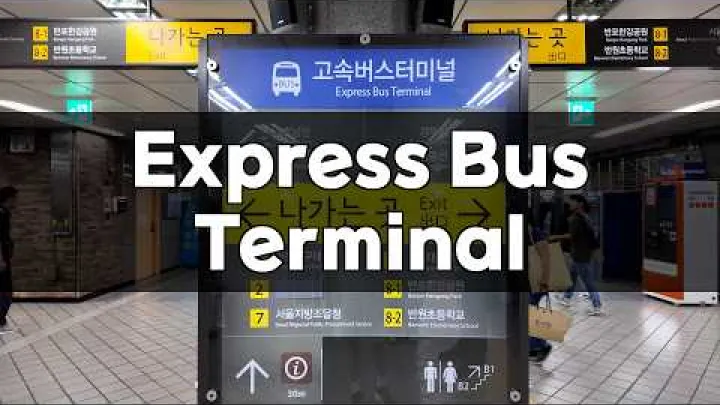
Seoul Express Bus Terminal, Dong Seoul Bus Terminal, and Seoul Nambu Terminal are distinct departure and arrival points. The origin, destination, and service type determine which terminal you need. Some regional flows may have more than one possible terminal, while others are assigned to one specific location.
The terminal name on the ticket is more useful than a search for Seoul bus terminal. The VisitKorea guide to express and intercity buses provides a starting point for understanding Seoul's long-distance bus network, but the current booking result should control your plan.
These terminals connect with Seoul's subway and local bus network, but none should be treated as close to every neighborhood. After the bus arrives, you may still need a subway transfer, a local bus, or a taxi. Save the terminal name and its map location before departure so you can plan that final leg.
Booking Express and Intercity Bus Tickets
Express and intercity buses are related but are not interchangeable labels for every booking. The route may appear through the applicable operator platform, such as Kobus, txbus, or Bustago, depending on the service. Use the platform that lists your exact origin, destination, and departure terminal rather than choosing a site only because its name is familiar.

Check four separate booking issues:
- Language: English information may be available on some pages or services but not every screen or station notice.
- Payment: Foreign card acceptance can vary by platform, card issuer, and transaction. A successful search does not guarantee a successful payment.
- Ticket details: Confirm the service class, assigned seat, departure time, terminal, and any collection or boarding instructions.
- Changes and cancellations: Read the ticket conditions before paying, especially if your arrival in Korea depends on another flight or train.
A station counter can be a useful fallback when online booking is difficult, but it does not guarantee that a particular departure will still have seats. Book earlier for weekends and major domestic travel periods, particularly when you need a specific departure or several seats together.
When Bus Is the Better Choice
A bus can be the better choice for a smaller city, town, or regional destination without a direct high-speed rail connection. It may also stop at a Seoul terminal that is more convenient for your final neighborhood than the available rail station. A direct bus can reduce changes and make luggage handling easier.
The trade-off is road traffic, especially on the approach to Seoul. Add a traffic buffer to any itinerary that includes a long-distance bus, particularly when you have a flight, event, check-in deadline, or separate ticket after arrival. Do not assume that buses are always cheaper or faster than KTX; compare the current fare, complete journey, terminal transfer, and schedule risk.
Consider Alternative Gateways and Ferry Access
Seoul does not have to be the first Korean gateway in every itinerary. A regional arrival can make sense when it produces a better airfare, a useful schedule, or a planned stop elsewhere in the country. It can also add a second long-distance connection, so the extra coordination must be part of the comparison.
When Busan, Regional Airports, or Incheon Port Make Sense
Travelers may enter South Korea through Busan or another regional airport and continue to Seoul by KTX, conventional rail, or a long-distance bus. This can be worthwhile when the international flight is substantially more suitable, when direct flights to Seoul are unavailable, or when Busan or another region is already part of the trip.
![Preview image for the video "韓國旅行EP.1🇰🇷 從香港機場到首爾車站超詳細教學👀貴賓室排長龍嗎?AREX在哪裡乘搭?[TIPS] from HK Airport to Seoul Station via Incheon".](/sites/default/files/styles/media_720x405/public/oembed_thumbnails/2026-09/ib5qv8RNN8jITK4YyWhTMup84hlAC7SEEeBZUpajPtU.jpg.webp?itok=ezEykIcf "Preview image for the video \"韓國旅行EP.1🇰🇷 從香港機場到首爾車站超詳細教學👀貴賓室排長龍嗎?AREX在哪裡乘搭?[TIPS] from HK Airport to Seoul Station via Incheon\".")
Compare the complete two-stage journey: arrival formalities, the transfer from the regional airport or port, the onward ticket, the waiting time between separate bookings, and the final trip from a Seoul station or bus terminal to your accommodation. A lower airfare may not be a lower total cost if it requires an additional ticket, an overnight stay, or a long transfer.
Incheon International Ferry Terminal is a niche alternative gateway. Passenger services, routes, frequencies, fares, and operating arrangements require current confirmation rather than assumptions based on an old route list. Confirm the selected ferry or regional service directly with its current operator and check the port's current passenger information before booking onward travel.
Compare Routes by Time, Cost, and Convenience
The most useful comparison is door to door. Separate the long-distance leg from the local transfer, then consider waiting time, luggage, booking difficulty, and the risk of missing a connection.
Fastest Arrival for Time-Sensitive Travelers
In-vehicle time alone can give the wrong answer. A domestic flight may be short but require airport access and check-in. A KTX journey may take longer on the timetable but begin at a central station and end at a useful Seoul hub. A bus may be direct but exposed to road traffic near the city.
| Option | Long-distance leg | Local transfer | Main schedule risk |
|---|---|---|---|
| International flight to Incheon | Long-haul flight and arrival formalities | AREX, airport bus, or taxi | Immigration, baggage, and city transfer time |
| Domestic flight to Gimpo | Short-haul flight and airport procedures | AREX all-stop service, subway, or taxi | Airport access and separate tickets |
| KTX or conventional rail | Rail journey to a Seoul-area station | Subway, local bus, or taxi | Seat availability and station-to-hotel transfer |
| Express or intercity bus | Road journey to a Seoul terminal | Subway, local bus, or taxi | Traffic and the exact terminal |
| Alternative gateway | Flight or ferry plus an onward connection | Rail, bus, or taxi after the second arrival | Separate tickets and limited service frequency |
For a time-sensitive itinerary, first identify the final Seoul district. Then compare the current total journey from your starting point, including access to the departure point and the last local transfer. A predictable rail service or a direct airport connection can be a strong choice when its current timetable fits, but there is no universal fastest route for every origin.
Lower-Cost Options
Lower-cost possibilities may include standard rail, intercity bus, and a lower-priced airport rail service where that fare structure applies. The cheapest long-distance ticket is not automatically the cheapest arrival. Add transport to the departure airport or station, the local ride from Seoul Station, Yongsan Station, or a bus terminal, and any extra baggage or overnight cost.
For example, a low air fare may require a costly trip to a distant airport, an airport change, or an additional local ticket after landing. A bus may have a useful base fare but arrive at a terminal that requires a longer final transfer. A rail ticket may cost more than a bus ticket while reducing changes and making the final journey simpler. Compare the total amount you will pay and the time you will spend, not only the headline fare.
Fare structures and booking conditions change. Use a current operator result for the exact date, class, and route, and check whether the displayed price includes every required segment of the journey.
The Simplest Option for Luggage or Complex Itineraries
Convenience depends on the number of transfers and the distance between each transfer, not only on whether a vehicle travels directly. An airport limousine bus may be simple when it stops near your accommodation. AREX may be easier when you prefer a fixed rail route to Seoul Station. A taxi can reduce handling for heavy luggage or a group, while a long-distance bus can provide one seat from a regional city to a Seoul terminal.
Travelers with separate international and domestic tickets should prefer a same-airport itinerary when the flight schedule and fare make that possible. Changing between Incheon and Gimpo adds a separate airport journey, and arriving through a regional gateway adds another long-distance connection before you reach Seoul. These options can still work, but they require more time, more tickets, and more points at which a delay can affect the plan.
For a first visit, families, or travelers with heavy bags, rank routes by manageable transfers, seating, luggage access, and the distance from the arrival point to the accommodation. A route with a slightly higher ticket price may be the better practical choice if it avoids several changes.
Travel from Each Gateway into Central Seoul
Once you know the gateway, choose the city transfer by matching speed, price, traffic exposure, luggage, and your final neighborhood. Seoul Station is useful for some onward rail and subway journeys, but it is not automatically the closest point to every hotel.
Incheon Airport to Seoul by AREX, Bus, or Taxi
From Incheon, the main choices are AREX express service, AREX all-stop service, airport limousine buses, and authorized taxis. AREX offers a rail route into Seoul and can be useful when your destination connects conveniently through Seoul Station. The express and all-stop services are different products, so use the current operator information for the correct ticket and boarding details.
An airport limousine bus may be more convenient when its stop is close to your hotel or neighborhood. It provides a seat and avoids carrying luggage through several rail changes, but the road journey is affected by traffic. The Seoul Metropolitan Government gives a representative airport limousine example of about 60 to 80 minutes and ₩5,000 to ₩15,000, varying by route, region, and traffic. Treat those figures as date-sensitive examples rather than a universal fare or travel time.
A taxi provides a door-to-door option when the destination is difficult to reach by rail, when luggage makes transfers unsuitable, or when the arrival time does not fit scheduled public transport. Buy public transport tickets from official airport or operator facilities and use the designated taxi stand. Do not accept unsolicited offers from people approaching inside or outside the terminal.
Gimpo Airport to Seoul by AREX or Subway
Gimpo is connected with AREX all-stop service and Seoul subway routes, making it useful for several parts of the city. The best connection depends on the final district, the number of transfers, and how easily you can move your luggage through a station.
Do not assume that the AREX express service is available from Gimpo. Check the current airport rail information and select the service shown for Gimpo. A compatible transportation card can simplify local rail and subway travel, and multilingual station signs can help international travelers follow the route. Seoul's transport network generally provides signs in Korean, English, and Chinese, but the exact transfer and last-service information still matters for a late flight.
Seoul Station, Yongsan Station, and Bus Terminals as City Entry Points
Seoul Station and Yongsan Station are major rail arrival points, but they are different places and may lead to different final routes. Seoul Express Bus Terminal, Dong Seoul Bus Terminal, and Seoul Nambu Terminal are also separate city entry points for long-distance buses. The terminal or station assigned to your ticket should determine your local travel plan.
Each entry point connects to Seoul's wider subway and bus network, but a good connection on a map may still involve long walking distances inside a station or a transfer with luggage. Use the exact station or terminal name when checking the route to your accommodation. The Visit Seoul transportation guide notes that Seoul's rail and subway system uses color-coded lines and multilingual station signs.
A current local transportation card or payment method can make the onward trip easier, but check the accepted method for the service you intend to use. Plan the final local leg separately from the long-distance ticket so that you know where to exit, how far you must walk, and whether a taxi is more practical with your luggage.
Book and Verify Your Arrival Journey
After selecting a route, verify every segment that can affect the arrival. A route summary or map is useful for discovering options, but the final booking should come from the airline, airport, rail operator, bus platform, or port operator that controls the service.
Verify Schedules, Fares, and Tickets
Use this final verification checklist:

- Airline and airport: Confirm Incheon or Gimpo, the terminal, the arrival date, and any separate domestic connection.
- Rail: Check the exact Korail service, departure station, arrival station, fare, seat availability, and ticket conditions.
- Bus: Confirm whether the service is express or intercity, the departure terminal, the arrival terminal, seat assignment, fare, and cancellation rules.
- Airport transfer: Check the AREX, airport limousine bus, or taxi information for the terminal, operating period, stops, and payment method.
- Alternative gateway: Confirm the port or regional operator directly when a ferry or less common service is involved.
Korail provides official English pages for current timetables, fares, and online booking. Search engines and third-party route pages can help you find a possible route, but they may not reflect a temporary service change, a new terminal assignment, or the current payment rules. Book popular KTX, domestic flight, and bus departures earlier when your travel period overlaps with weekends or major national travel periods.
This route-planning guide is prepared for September 2, 2026. Exact schedules, fares, route assignments, and service notices remain date-sensitive, so use the official operator information for the day and service you intend to book.
Plan for Late-Night Arrivals and Service Gaps
The scheduled landing time is not the same as the time you can leave the airport. Include immigration, baggage collection, walking to the transport area, and possible flight delays before deciding that the last train or bus is realistic. The actual arrival time at the terminal should control the plan.
Use a simple sequence: check the flight's current arrival estimate, allow time for airport formalities, compare that result with the last available AREX, subway, or airport bus, and then choose a backup if the connection is too close. Visit Seoul describes subway train operation as approximately 5:30 a.m. to midnight, but the last usable service depends on the line, station, direction, and date.
If scheduled public transport is no longer realistic, use a marked taxi stand or an official booking channel for a taxi or pre-arranged transfer. Avoid unsolicited ride offers. Confirm the destination address and keep the booking details available before leaving the terminal. Night service varies, so do not base a late arrival on an assumed night bus or an unverified last departure.
Match the Ticket to the Correct Terminal or Station
Seoul Station, Yongsan Station, Gwangmyeong, Seoul Express Bus Terminal, Dong Seoul Bus Terminal, and Seoul Nambu Terminal are different places with different routes. A ticket that uses the word Seoul does not necessarily mean that it departs from or arrives at the station closest to central Seoul or your accommodation.
Save the exact English and Korean station or terminal name shown by the current ticketing system. Check its position on a map before departure and compare it with the location saved in your travel plan. The VisitKorea bus information is useful for understanding the named Seoul bus terminals, but your current ticket remains the final reference for the route.
- Confirm whether the arrival point is Seoul Station, Yongsan Station, Gwangmyeong, or a specific bus terminal.
- Check the walking distance from the platform, exit, or terminal gate to the local connection.
- Check subway or local bus access if you are carrying large luggage.
- Save the final route from the exact station or terminal to your accommodation.
- Allow time for the local transfer instead of treating the long-distance arrival as the end of the journey.
Choose the Best Route for Your Arrival
Choose your Seoul route in three steps: identify the gateway that actually fits your flight or origin, compare complete door-to-door time and cost, and verify the exact operator, station, terminal, and service date before paying. Incheon is usually the relevant starting point for long-haul flights, Gimpo can simplify domestic or selected regional arrivals, KTX is useful from major Korean cities, and buses extend coverage to many destinations outside the fast-rail network. Regional gateways and ferry access can work for the right itinerary, but they require more coordination. The best route is the one that matches your arrival time, luggage, final neighborhood, and tolerance for transfers rather than the one with the shortest vehicle journey alone.
Select area
Create a post
Posting is free and no registration is required.