Baguio Getting There: Bus, Car, Manila and Clark Routes
Baguio getting there is mostly a road journey, even for travelers who first arrive in the Philippines by air. The city sits in the Cordillera highlands, so most visitors reach Baguio City by long-distance bus, private car, or a flight to Manila or Clark followed by overland travel. This guide compares the main gateways, explains what to check before booking, and highlights road, weather, terminal, and last-mile issues that can affect your trip.
Schedules, fares, road status, and terminal arrangements can change, especially during holidays, storms, and major events. Use this guide to choose the right route, then confirm the latest details with operators, airports, and official local advisories before departure.
Quick Answer: The Best Way to Get to Baguio
Best option for most travelers
For most travelers, the best way to get to Baguio is by road from Metro Manila, usually by bus if you want the simplest booking and do not want to drive. Manila has the widest choice of international flights and several Baguio-bound bus departure areas, including Cubao, Pasay, Caloocan, Avenida, and the Paranaque Integrated Terminal Exchange.
Clark International Airport is a useful alternative if you can find a flight that fits your schedule and want to avoid crossing Metro Manila. From Clark, travelers usually connect by local shuttle, taxi, ride-hailing vehicle, or arranged transfer to Dau-Mabalacat, SM Clark, or another nearby transport point for a Baguio-bound bus or private vehicle.
Do not assume that you can fly directly to Baguio. Loakan Airport exists, but regular scheduled passenger service has been limited and has changed in recent years. Treat direct Baguio flights as a possible bonus only after checking current airline and airport information.
Comparison by gateway, time, cost, and difficulty
The right route depends on where you start, how much luggage you have, whether you prefer comfort or low cost, and how much uncertainty you can accept. The time ranges below are practical planning bands, not guaranteed travel times. Traffic, weather, expressway congestion, terminal queues, and mountain-road controls can make the journey longer.
| Route option | Typical use | Time and cost pattern | Booking difficulty |
|---|---|---|---|
| Metro Manila to Baguio by bus | Best for most visitors without a car | Variable; often half-day to longer in traffic; usually lower cost than private transport | Moderate; easier on main corridors, harder during peak dates |
| Metro Manila to Baguio by private car | Best for groups, families, or flexible itineraries | Fuel, tolls, parking, and driver fatigue matter; travel time varies widely | Easy to start, but requires road and parking planning |
| Clark to Baguio | Good if flight times match onward transport | Can avoid Metro Manila traffic; transfer to a bus point may add time | Moderate; verify airport shuttles and bus departures |
| Northern Luzon to Baguio | Useful from La Union, Ilocos, Pangasinan, and nearby provinces | Often shorter than returning to Manila; online booking may be limited | Varies by town and operator |
| Other islands via Manila or Clark | Best for Cebu, Visayas, and Mindanao travelers | Domestic flight plus road journey; buffers are important | Moderate to high if connecting the same day |
Bus travel is usually the simplest balance of price and convenience. Private car travel gives more control over stops and timing, but the final climb into Baguio is mountain driving, not expressway driving. Clark can be efficient when flights and onward buses align, while direct flights to Baguio should not be the foundation of your plan unless they are confirmed for your exact travel date.
Before You Book: Baguio Is Mainly a Road Destination
Baguio is an inland highland city. This matters because some transport search engines may show airport codes, route ideas, or old services that do not reflect what you can actually book now. Start with a road-based plan, then add flights only as a way to reach the nearest practical gateway.
Current status of flights to Loakan Airport
Loakan Airport serves the Baguio area and is commonly associated with the airport code BAG. However, the existence of the airport does not mean regular commercial passenger flights are available on your travel date.
Recent commercial service on the Cebu-Baguio route changed after its resumption, and available public reporting indicated that the service was set to end in 2024. The Philippine News Agency is one source that has reported on this flight situation. Because air service can change again, verify directly with airlines, airport notices, and government announcements before building an itinerary around a direct Baguio flight.
Be careful with flight aggregators. Some platforms may display a route, airport code, or airline page even when no regular service is operating. If you cannot complete a booking on an airline's official channel or confirm it with the carrier, plan to fly to Manila or Clark and continue by road.
Why rail and ferries are not practical ways to reach Baguio
Baguio is not a port city, so ferries do not reach it directly. Travelers arriving by sea from another island would still need to continue by road from a Luzon port or from a larger city with bus connections.
There is also no practical passenger rail route directly into Baguio for ordinary travelers. Rail may be relevant only as a first-leg movement within a wider Luzon trip, followed by a bus, van, or private car. For trip planning, treat Baguio as a long-distance road destination.
Getting to Baguio from Metro Manila
Metro Manila is the most common gateway for Baguio because it has the largest airport, many long-distance bus terminals, and frequent road connections to northern Luzon. The main decision is whether to take a bus or drive.
Buses from Cubao, Pasay, Caloocan, Avenida, and PITX
Several Metro Manila departure areas are associated with Baguio-bound buses. Common starting points include Cubao, Pasay, Caloocan, Avenida, and the Paranaque Integrated Terminal Exchange, often shortened to PITX. Your best terminal depends on your hotel location, airport terminal, preferred operator, and departure time.

Operators and services may include examples such as Victory Liner, Genesis Transport or JoyBus, Solid North, and Partas, but the available departures can change. Use these names as starting points for checking official websites, social media pages, booking platforms, or terminal ticket offices rather than as a fixed complete list.
Regular air-conditioned buses are usually the lowest-cost mainstream option. Deluxe buses may offer fewer stops, more comfortable seating, or onboard amenities depending on the operator. Executive or point-to-point services may be more comfortable and more direct, but they are still affected by traffic, weather, and road controls.
From NAIA to a Baguio bus
If you arrive at Ninoy Aquino International Airport, there may not be a simple guaranteed NAIA-to-Baguio bus that fits your flight. Services, pickup points, and licenses can change, so check current operator notices before assuming a direct airport pickup.

A practical pattern is to move from NAIA Terminal 3 or another NAIA terminal to a Baguio bus departure point such as PITX, Pasay, Cubao, or another operator terminal. The best choice depends on your arrival time and traffic. Daytime arrivals may give you more options, while late-night arrivals may make it safer and less stressful to stay near the airport or bus terminal and travel the next morning.
International travelers should build a generous buffer. Immigration, baggage claim, terminal transfers, ride-hailing waits, Metro Manila traffic, and bus-seat availability can all affect the connection. If your flight lands close to your intended bus departure, choose a later bus or plan an overnight stop.
Private car route via NLEX, SCTEX, TPLEX, and Rosario
A common self-drive route from Metro Manila uses the North Luzon Expressway, then the Subic-Clark-Tarlac Expressway, then the Tarlac-Pangasinan-La Union Expressway toward the Rosario/Baguio exit before the mountain ascent. Expressway.ph describes the NLEX-SCTEX-TPLEX-Rosario pattern as a common route reference, but drivers should still check current tollway advisories, navigation conditions, and road status on the day of travel.
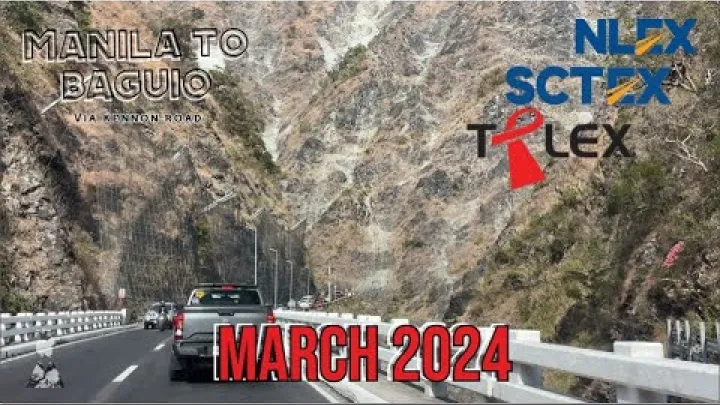
The expressway section is relatively straightforward compared with the final climb. Once you leave the toll road corridor, the route changes into mountain driving with curves, changing visibility, slower vehicles, and possible weather disruption. Do not drive tired, and avoid rushing the final approach.
Budget for tolls, fuel, parking, and possible paid accommodation parking in Baguio. If you are not used to mountain roads, consider using a bus instead, especially during heavy rain or after a long international flight.
Getting to Baguio from Clark and Central Luzon
Clark can be a smart gateway for Baguio if your flight schedule is convenient. It is especially useful for travelers who want to reduce exposure to Metro Manila traffic, but it usually requires at least one onward transfer.
Clark Airport to Dau or nearby bus connections
Clark International Airport is located in Central Luzon, closer to many northern routes than NAIA. The airport publishes shuttle and bus-service information through the Clark International Airport website, which is a useful place to begin checking current ground transport options.
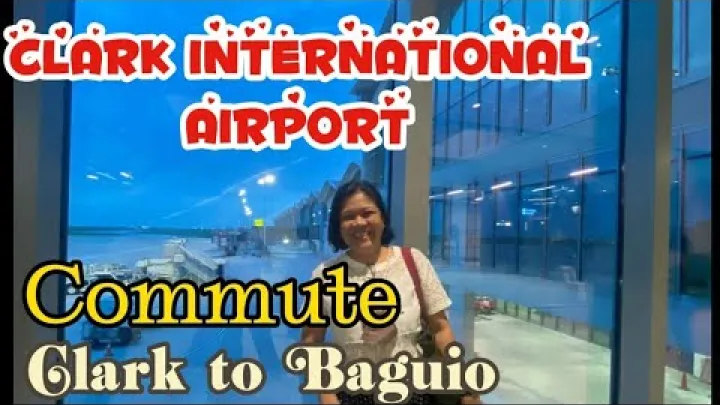
A common pattern is to travel from Clark Airport to Dau-Mabalacat, SM Clark, or another nearby transport point, then board a Baguio-bound bus or use arranged private transport. Do not assume that a direct Clark Airport-to-Baguio bus is operating at the exact time you land. Match your flight arrival with the latest shuttle, bus, and terminal information.
If you arrive late in the evening, check whether the transfer to Dau or another bus point is still practical. For some travelers, staying overnight near Clark and taking a morning bus may be easier than making a rushed connection.
When Clark is the better gateway
Clark is often the better gateway when you can find a good flight, you want to avoid crossing Metro Manila, and you are comfortable making a short ground transfer before the long-distance bus. It can also work well for travelers coming from destinations with direct flights to Clark.
Manila may still be easier if it has cheaper or more frequent flights, if you arrive very late, or if your preferred Baguio bus operator departs from a terminal that is convenient from your Manila hotel. Choose Clark when the whole door-to-door route is simpler, not only because it looks closer on a map.
- Choose Clark if flight times are convenient and onward bus connections are confirmed.
- Choose Manila if you need more international flight choices or more bus departure options.
- Consider an overnight stop if your flight arrival and bus departure leave little margin.
Getting to Baguio from Northern Luzon, the Cordillera, and Other Islands
You do not always need to route through Manila. Travelers already in northern Luzon or the Cordillera may be able to reach Baguio through regional bus routes or arranged road transport.
From La Union, Ilocos, and Pangasinan
If you are already in northern Luzon, look for regional routes to Baguio from transport hubs in La Union, Ilocos, or Pangasinan. San Fernando, La Union is a useful anchor for travelers on the west coast, while Pangasinan towns may have bus or van links depending on the current operator network.
Naguilian Road is one important access route from the La Union side, but road choice depends on vehicle type, weather, restrictions, and your exact starting point. Regional services may have fewer online booking options than the Manila-Baguio corridor, so check local terminals, operator pages, or hotel transport desks before travel.
From Sagada, Banaue, and other Cordillera towns
Baguio is both a destination and a transport node within the Cordillera highlands. Travelers may connect between Baguio and places such as Sagada, Banaue, or other mountain towns, but these transfers involve winding roads, longer travel times, and fewer service choices than the Manila corridor.
Do not plan tight same-day connections after a long mountain transfer. Rain, landslides, roadworks, and slow traffic can cause delays. Use established operators where possible, confirm departure points locally, and check weather or road advisories before committing to a highland-to-highland connection.
From Cebu, Visayas, and Mindanao via Manila or Clark
Travelers from Cebu, the Visayas, and Mindanao usually fly first to Manila or Clark, then continue to Baguio by bus, private car, or arranged transfer. This is the most reliable planning model unless a direct Baguio flight is clearly available and confirmed for your exact date.
Build buffer time between the domestic flight and the bus. If your flight is delayed, you may miss your bus departure or arrive in Baguio very late. For families, first-time visitors, or travelers with large luggage, an overnight stop in Manila or Clark can make the journey much easier.
Mountain Roads, Weather, and Travel Timing
The final approach to Baguio is the part of the journey where weather and road conditions matter most. Even if the expressways are smooth, the mountain roads require more caution and may be affected by restrictions.
Marcos Highway, Kennon Road, and Naguilian Road
Important Baguio access routes include Marcos Highway, also known as Aspiras-Palispis Highway, Kennon Road, and Naguilian Road. Each route has a different practical role depending on your origin, vehicle, weather, and current traffic controls.
Marcos Highway is commonly used by many Baguio-bound vehicles. Kennon Road is scenic and historic, but it is also subject to restrictions and may not always be available to all vehicles. Naguilian Road is important for travelers coming from the La Union side. Buses and heavy vehicles may be directed differently from private cars, so follow official restrictions rather than navigation-app shortcuts.
Rainy-season delays, landslides, and road advisories
Heavy rain, typhoons, landslides, roadworks, and police controls can affect Baguio-bound routes. Before driving or taking a highland bus, check advisories from agencies such as DPWH Cordillera, especially when Kennon Road or other mountain roads may have restrictions.
Local road-passability updates may also be posted by the Baguio City Police Office during weather disruptions or traffic-control periods. If the weather is severe, avoid treating the trip as a fixed schedule. Add time buffers, consider delaying departure, or choose a more established bus service instead of self-driving.
A practical go-or-wait rule is simple: if advisories report closures, light-vehicle-only restrictions, landslide risk, or severe weather, do not force a tight itinerary. Baguio is worth reaching safely, and delays are easier to manage than road emergencies.
Busy weekends, holidays, and festival traffic
Baguio can become very busy on weekends, public holidays, school breaks, and major event periods. Panagbenga, the well-known flower festival, is one period when transport demand, city traffic, and accommodation demand can rise sharply.
During peak periods, book bus seats and lodging earlier than usual. If driving, expect heavier traffic near the city center, Session Road, Burnham Park, and popular hotel areas. Arriving early in the day can reduce stress, but it does not eliminate congestion during major travel periods.
Arriving in Baguio: Terminals and Last-Mile Transport
Arrival in Baguio is usually central enough to be convenient, but the exact stop depends on the operator. Check the arrival point printed on your ticket before choosing a hotel or arranging pickup.
Governor Pack Road bus terminal area
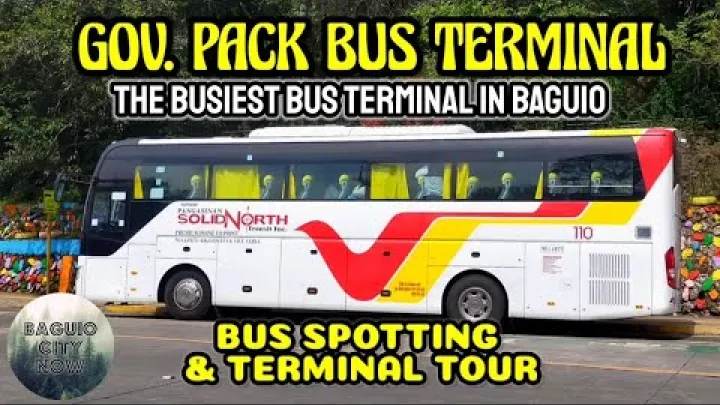
Many long-distance bus arrivals are associated with the Governor Pack Road terminal area near central Baguio. This area is useful for orientation because it is close to familiar city landmarks such as Session Road and Burnham Park.
However, not every operator uses the same exact terminal facility. Some companies have their own nearby terminals or loading areas. If you are meeting someone, booking a hotel pickup, or arranging a taxi, use the operator's exact terminal name and address, not only the general phrase “Baguio bus terminal.”
Taxis, jeepneys, and hotel transfers
Taxis are often the easiest last-mile option if you have luggage, arrive at night, or are staying outside the immediate city center. Use licensed vehicles and confirm that the taxi uses the meter where applicable. Ride availability can be affected by traffic and peak arrival times.
Jeepneys are cheaper and useful if you know the route to your destination area, but they are less convenient with large bags or after a long journey. Some hotels can arrange transfers or give clear pickup instructions from the bus terminal. Keep small cash available for local transport and short waits.
Future intermodal terminal changes to verify
Baguio has discussed transport organization and intermodal terminal planning as part of wider efforts to manage congestion. Because terminal arrangements can change over time, check current city announcements and operator instructions before travel.
The City Government of Baguio is a useful official source for local announcements that may affect arrivals, traffic schemes, or public transport organization. Do not assume that old blog posts or saved maps still show the correct terminal arrangement.
Booking, Comfort, and Safety Tips
Good planning makes the Baguio trip smoother. The most important habits are checking current operator information, allowing time buffers, and choosing a service level that matches your comfort needs.
Choosing regular, deluxe, or point-to-point buses
Regular buses are usually the practical budget choice. Deluxe buses may offer more comfortable seats, fewer stops, or different onboard amenities. Executive buses and point-to-point services may provide a more direct and comfortable journey, depending on the operator and route.
JoyBus is one example of an executive class service to Baguio described by Genesis Transport. Before booking any premium service, compare the current boarding point, baggage rules, amenities, cancellation policy, and arrival terminal.
- Choose a regular bus if price is your main priority.
- Choose deluxe or executive service if comfort and fewer stops matter more.
- Choose a terminal near your hotel or airport route if you want less local transfer stress.
- Do not assume premium service is always faster in bad traffic or poor weather.
Checking schedules, fares, seats, and operator notices
Check schedules and fares through official operator websites, official social media pages, reputable booking platforms, or terminal ticket offices. Static schedule screenshots can become outdated, especially before holidays, long weekends, and festivals.
Fares may change because of fuel prices, demand, service class, holidays, route restrictions, or operator decisions. If you see a fare quoted online, treat it as a guide unless it is shown on the operator's current booking page for your exact date and route.
Book ahead for weekends, holidays, Panagbenga season, and school breaks. If you are traveling immediately after an international flight, choose a departure with enough margin rather than the earliest possible bus.
Avoiding practical problems at terminals and on arrival
Arrive early, keep your ticket details visible, confirm the boarding bay, and ask only uniformed staff or official ticket-office personnel if you are unsure. Watch your luggage during loading and avoid handing bags to unofficial helpers unless the operator clearly identifies them.
Late-night arrivals can limit food choices, local transport options, and hotel check-in flexibility. Keep small cash for taxis, jeepneys, snacks, and unexpected delays. International travelers should save the hotel address in offline form and keep a local contact number if available.
Do not use alarm as your guide, but use practical caution. Stay in well-lit terminal areas, avoid unofficial transport offers that pressure you to decide quickly, and confirm the destination and fare rules before leaving the terminal area.
Frequently Asked Questions
Can you fly directly to Baguio?
Do not assume you can fly directly to Baguio. Loakan Airport exists, but scheduled commercial service has changed in recent years. Check current airline booking channels and official announcements before planning around a direct flight.
What is the best way to get from Manila to Baguio?
For most travelers, the best way is a long-distance bus from a Manila terminal such as Cubao, Pasay, Caloocan, Avenida, or PITX. A private car is useful for groups or flexible itineraries, but it requires mountain-road driving and parking planning.
Is there a bus from NAIA to Baguio?
Direct NAIA-to-Baguio services should be checked carefully because pickup points and services can change. Many travelers transfer from NAIA to a Manila bus terminal such as PITX, Pasay, or Cubao, then board a Baguio-bound bus.
Is Clark Airport a good gateway for Baguio?
Yes, Clark can be a good gateway if your flight times match onward transport. You may need to transfer from Clark Airport to Dau-Mabalacat, SM Clark, or another nearby bus point before continuing to Baguio.
Which road to Baguio is best for private cars?
There is no single road that is always best. Many Manila drivers use NLEX, SCTEX, TPLEX, and the Rosario/Baguio exit before the mountain ascent, but the final route may depend on weather, restrictions, vehicle type, and current advisories.
Can you get to Baguio by train or ferry?
Not directly. Baguio is an inland mountain city with no practical passenger rail route into the city. Train or ferry travel can only be part of a wider journey to a Luzon gateway, followed by road transport to Baguio.
Conclusion: How to Choose Your Route to Baguio
Choose a Manila bus if you want the most common and straightforward route to Baguio. Choose a private car if you need flexibility and are comfortable with expressway and mountain-road driving. Choose Clark if flights and onward transport connect well and you want to reduce time in Metro Manila.
Whatever route you choose, confirm current schedules, fares, terminal locations, and road advisories close to your travel date. Baguio is easy to plan when you treat it as a road destination, allow buffers, and make safety your priority on the final climb into the Cordillera highlands.
Select area
Create a post
Posting is free and no registration is required.