Kawthaung Getting There: Routes, Transport and Border Planning

Kawthaung getting there can involve a domestic flight, a Thailand-Ranong border crossing, or a long overland journey through southern Myanmar. The fastest route is usually different from the easiest route to verify, and a route that appears on a map may not be available or suitable for foreign travelers at the time of travel. This guide compares the main options by speed, cost, comfort, booking difficulty, documents, and connection risk. Use it as a planning framework, then confirm the details that control your trip shortly before departure.
Check Access and Documents Before You Travel
Kawthaung is a remote destination, and transport information can become outdated quickly. Start with access and documents rather than choosing a ticket first.
Check Current Conditions Before Choosing a Route
Use a dated verification check for every important part of the journey. A route may exist physically while being suspended, restricted by local permissions, difficult for foreign travelers to use, or unsuitable because the connecting service is not running.
- Read the current travel advice issued by your government for Myanmar and the Tanintharyi region.
- Check the airline, bus operator, border information, or local transport provider for the proposed travel date.
- If you plan to cross from Ranong, ask a current established operator whether the border is operating and whether a boat is available.
- If you plan to travel by road or boat inside Myanmar, obtain a current answer about access, departure location, and arrival arrangements.
Use a simple go-or-no-go decision. Proceed only when the route has a realistic ticket or transport arrangement, the required documents are accepted, the relevant access information is current, and you know where you will sleep or connect after arriving. If one of those elements cannot be confirmed, do not treat an old blog, a map route, or a search-engine result as proof that the journey is practical.
Conditions can also affect different parts of the same itinerary in different ways. A Yangon flight may be operating while a road connection from Myeik is not suitable, or a Ranong crossing may be possible while an onward island boat is cancelled. Plan each segment separately rather than assuming that one confirmed ticket makes the whole journey dependable.
Confirm Entry Documents and Travel Permissions
Prepare documents before deciding whether you are making a short border visit or entering Myanmar for an overnight stay. These are not necessarily the same journey. A same-day border visit or visa-related trip may follow different rules from a tourist entry in Kawthaung, and onward travel to the Mergui Archipelago can involve additional permissions arranged through an operator.
Use this checklist and label each item by the type of confirmation it requires:
- Official requirement: Check the passport validity period, visa or e-visa rules, and the entry document accepted at the Ranong-Kawthaung crossing through an official Myanmar visa or immigration channel.
- Thai border requirement: Confirm the Thai departure process and, if you will return to Thailand, the documents and permission needed for re-entry. Do not assume that a border crossing automatically preserves your right to enter Thailand again.
- Operator requirement: If you are joining a resort, liveaboard, or island tour, ask the operator which permits, passenger details, and travel documents it must receive before departure.
- Subject to change: Treat visa-on-arrival claims, temporary border passes, fees, opening times, and onward permissions as unconfirmed until an official authority or an established current operator confirms them.
Keep the original passport available for immigration and carry secure copies of the identity page, visa or approval information, accommodation details, and transport bookings when appropriate. A copy does not replace the original document, but it can make communication easier if a booking office or hotel needs to check your details.
Ask specifically whether your planned entry permits an overnight stay and whether it permits travel beyond Kawthaung. Do not rely on advice intended only for local residents, a short border visit, or a previous travel season.
The Fastest Route: Fly Within Myanmar
Flying within Myanmar is normally the most direct long-distance approach when the service is operating and your documents permit domestic travel. The main planning question is not only whether a flight is listed, but whether the complete itinerary, connection, baggage rules, and arrival time work for your onward plans.
Fly from Yangon to Kawthaung
Yangon International Airport, RGN, and Kawthaung Airport, KAW, are the main domestic air pairing to investigate. Myanmar Airways International lists Kawthaung among its destinations and provides flight schedule information. A destination listing is useful for starting a search, but it is not a guarantee that a flight will operate on your date.
Read the full itinerary carefully. A booking described as Yangon to Kawthaung may be direct or may include an intermediate stop. Check every airport, the connection time, whether baggage is transferred automatically, and whether you must collect and recheck luggage. A short connection can be fragile when separate tickets or small domestic terminals are involved.
Flight travel is usually faster and more comfortable than a long road journey, but the fare may be higher and schedules can change. As an indicative example only, an Expedia search page has displayed Yangon-Kawthaung examples of about two hours and fares around US$208 one way or US$410 return. Those figures are date-sensitive search examples, not a current quotation or a promise of availability.
Before payment, check the airline's baggage allowance, airport check-in instructions, change and cancellation rules, and the process for delays or schedule changes. If you are connecting to a boat, hotel pickup, or remote-island departure, do not use the last possible flight unless you have a practical fallback.
Use Myeik or Another Domestic Gateway When Available
Myeik can be a useful regional stepping stone when both the arrival service and the onward connection are operating. A traveler might reach Myeik by air and continue to Kawthaung by road, or use a separately confirmed regional flight if one is available. This can create more than one planning branch, but it also means checking two transport providers instead of one.
Dawei and other domestic gateways may appear in route searches as geographic intermediate points. Treat them as possibilities rather than fixed connections. Confirm the airport service, whether foreign travelers can use the proposed onward route, and how you will travel from the gateway to Kawthaung.
Regional planning is most useful when it gives you flexibility, not when it forces a tight same-day connection. Separate tickets should have enough time for delays, baggage collection, rebooking, and a change of vehicle. Do not add an airport code, frequency, fare, or connection time to your plan unless the current operator has confirmed it.
The Thailand Route: Bangkok or Southern Thailand to Ranong
For travelers already in Thailand, Ranong can provide a practical approach to Kawthaung. The journey has several stages: reaching Ranong, transferring to the active border and pier area, completing Thai departure formalities, arranging the boat crossing, and completing Myanmar entry procedures.
Travel from Bangkok to Ranong
From Bangkok, the main choices are a flight when operating, an overnight bus, or a private road transfer. A flight generally reduces travel time and physical effort, while an overnight bus can lower the cost of the first leg and avoid a separate hotel night. A private vehicle offers more control over departure and arrival but usually costs more.

| Choice | Best use | Cost and comfort | Border fit |
|---|---|---|---|
| Flight | Fastest approach when operating | Usually higher or variable cost; more comfortable | Good only if arrival leaves time for the crossing |
| Overnight bus | Lower-cost long-distance travel | Lower cost level; less comfortable | Risk of arriving too late for immigration or boats |
| Private vehicle | Flexible timing or shared travel | Highest cost unless shared; direct transfer | Useful when the driver knows the confirmed departure point |
Confirm the actual Bangkok airport or bus terminal on your ticket and with the current carrier. Departure locations and schedules can change, and an old terminal name can send you to the wrong side of a large city. A late arrival in Ranong is especially difficult because the remaining immigration and boat arrangements may not match your arrival time. If the border stage is not confirmed, plan to sleep in Ranong rather than assuming that a night arrival will lead directly to Kawthaung.
Travel from Phuket or Surat Thani to Ranong
From Phuket: Compare a regular bus, shared van, private vehicle, and an operator-arranged transfer. A regular service may leave you at a bus station and require a separate trip to the border pier. A private transfer can simplify luggage and timing, but the fare and included stops must be agreed in advance. Travelers staying on an island or joining a liveaboard should first ask the marine operator whether it can arrange the complete transfer to Ranong.
From Surat Thani: Road travel can also be arranged by bus, shared van, or private car. Make sure the booking is for Ranong itself and not only for a nearby town or a general southern route. Ask where the vehicle arrives, how you will reach the active border departure point, and whether the provider has handled this connection recently.
These journeys require more coordination than a local airport transfer. Add time for a delayed road departure, a change at the bus station, luggage, Thai immigration, and the boat crossing. If an island trip or fixed departure in Kawthaung follows, an operator-arranged transfer may be easier to manage than several unconnected tickets.
Reach the Border Pier in Ranong
Ranong Airport and Ranong Bus Station are not the border crossing. You still need a local transfer to the Thai immigration facility and the active departure point. Sa-Phan Pla Jetty and Victory Pier are names travelers may encounter for the Ranong crossing area, but nearby facilities and operator names can differ.
- Collect your luggage at Ranong Airport or arrive at Ranong Bus Station.
- Use a confirmed taxi, hotel transfer, or established operator to reach the immigration and pier area.
- Ask which named facility is currently handling Thai departure formalities and boat boarding. Do not rely only on a map pin or an old booking message.
- Complete the Thai exit process, then follow the instructions for the boat crossing and Myanmar arrival.
Give the driver the exact destination supplied by your current operator, and allow time to locate the correct counter or jetty. Posted operating hours and local procedures should be confirmed for your travel date rather than copied from an old itinerary. If your transport arrives late in the day, the sensible plan may be a Ranong overnight stop instead of trying to force the crossing.
Crossing from Ranong to Kawthaung
The border crossing is a separate transport and immigration stage, not simply a ferry ride. Plan it as its own connection, with time for official procedures and the local boat arrangement.
Complete Thai Departure and Boat Boarding
Descriptions of the Ranong-Kawthaung crossing commonly refer to longtail boats traveling across the river rather than a conventional scheduled passenger ferry. The boat may be shared or private, and the fare may be arranged locally. Do not treat a negotiated price, boat capacity, or departure time from an old account as a fixed public tariff.
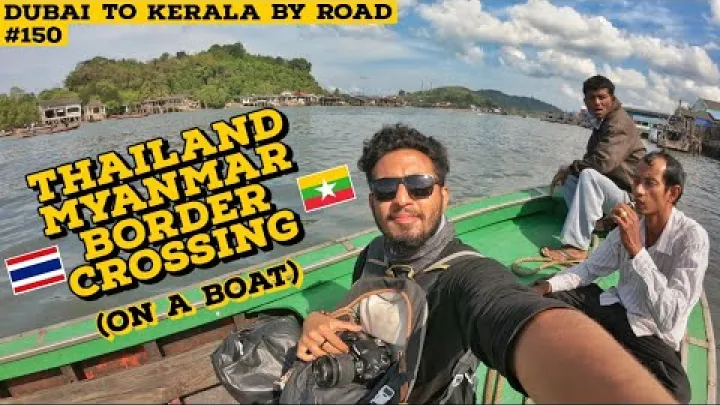
A practical sequence is:
- Reach the clearly identified Thai immigration and departure area.
- Keep your passport and required entry information ready for Thai departure formalities.
- Before completing the Thai exit process, confirm through the official departure point or an established current operator that the border is operating and that a boat is available.
- After the exit process, follow instructions for the shared or private boat. Confirm where you will disembark and what the quoted transport arrangement includes.
- Protect your passport and luggage during the crossing, then proceed to Myanmar immigration rather than treating the boat arrival as completed entry.
Use a clearly identified departure point and keep the plan flexible enough to handle a queue, a changed boat arrangement, or a delay at immigration. Official immigration actions and local boat arrangements are different parts of the process. Pay attention to which person is providing transport and which counter is responsible for border formalities.
Arrive at Myo Ma Jetty and Continue into Kawthaung
Myo Ma Jetty is the Kawthaung arrival point described in local travel accounts, but confirm that it is the current landing point for your crossing. After arriving, travelers complete Myanmar entry formalities before continuing to a hotel, the Kawthaung town center, or a tour-operator pickup.
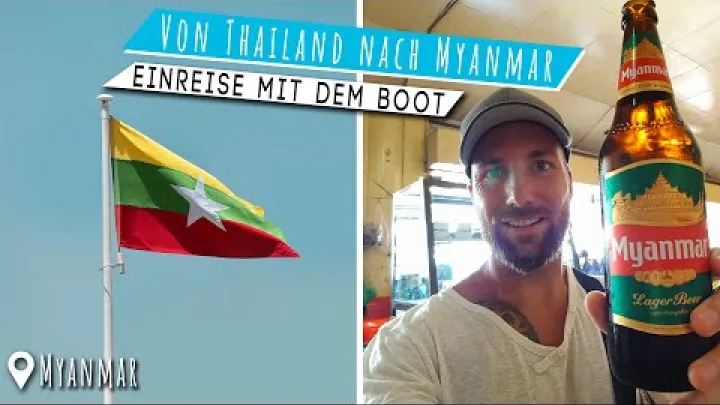
Arrange a hotel or operator pickup when possible. This is particularly useful with heavy luggage, a late arrival, limited local language, or a boat departure early the next day. Give the hotel the expected landing point and ask for a working contact number in case the crossing takes longer than planned.
If the arranged driver is not present, contact the hotel or operator before accepting an alternative ride. Remain at the public arrival area while making the call and ask the provider where to meet its representative. Do not assume that a taxi, tuk-tuk, or minivan will always be waiting at the jetty.
Decide Between a Day Trip and an Overnight Stay
Choose the type of trip before crossing the border. A same-day visit, an overnight stay, and onward travel to the Mergui Archipelago create different timing and permission requirements.
- Return to Thailand: Use this only when the border process, Thai re-entry requirements, and return boat timing are confirmed. It is a border visit, not automatically the same as tourist entry for an overnight stay.
- Stay overnight in Kawthaung: Book accommodation in advance and use the night as a buffer for a delayed crossing, a late arrival, or a next-day domestic connection.
- Continue to the archipelago: Have a confirmed boat, operator, departure port, check-in instruction, and required permission before traveling from Thailand. Remote-island travel should not depend on finding an unplanned boat after arrival.
A late border crossing is a poor foundation for a same-day connection to a remote island or an early-morning boat. If the crossing is later than expected, staying in Kawthaung and continuing the next day is generally easier to manage than rushing between immigration, a hotel, and a marine departure.
Overland Travel Within Myanmar
Overland routes can be useful for travelers already in southern Myanmar, but they are more difficult to verify than a normal domestic flight. The road corridor from Myeik to Kawthaung is the clearest documented regional option in the available travel material.
Travel from Myeik by Bus, Minivan, or Private Car
The Myeik-Kawthaung road corridor has been described with buses, minivans, and private-car arrangements. An older Lifeseeing Tours report listed VIP and air-conditioned bus categories and historical prices, including 30,500 kyat for a VIP bus and 23,500 kyat for an air-conditioned bus. The report is useful evidence that the connection has existed, but its prices and departure information should not be used as a current timetable.
A bus may be the lower-cost choice when a current departure is available, but it offers less control over stops and seating. A minivan can provide a smaller group and different departure flexibility, although comfort and luggage space vary. A private car is usually the most flexible option for stops and pickup but requires a clear agreement about the route, destination, total fare, and driver.
Ask a current local ticket office, hotel, or established operator for the exact departure point and current availability. Confirm whether the vehicle goes all the way to Kawthaung, whether a change is required, how luggage is handled, and whether the service accepts foreign travelers. A long road journey also needs a realistic arrival plan, especially if you will continue to a hotel, immigration office, or boat departure on the same day.
Consider Yangon, Dawei, or Combined Rail-and-Road Itineraries
Route planners may display long multimodal journeys from Yangon that combine a bus, a rail segment, and road transport toward southern Myanmar. A result on a route planner does not prove that every leg is currently operating, bookable, or permitted for foreign travelers.
Rail is best treated as an upstream connection only after you have confirmed the onward road service, the departure point, and permission to use the route. A train booking without a dependable final road leg does not solve the Kawthaung journey. Avoid using generic route-planner durations and prices as the main recommendation.
Dawei can appear as a geographic intermediate point, but it requires its own check for transport availability, traveler access, and onward connections. Do not assume that reaching Dawei guarantees a current bus, private car, or combined bus-and-boat route to Kawthaung. For a route with several independent segments, flexibility matters more than a low theoretical fare.
Know When an Overland Plan Is Not Dependable
Road access can be affected by checkpoints, local permissions, conflict, weather, cancellations, changing departure points, and limited booking channels. The existence of a road or a local bus does not automatically mean that an independent foreign traveler can use it.
Use this go-or-no-go checklist on the travel day:
- You have a current ticket or a named driver and a confirmed departure location.
- A current local transport provider has confirmed that foreign travelers can use the proposed route.
- The provider has described the likely arrival point and a realistic onward arrangement.
- Travel conditions and the planned departure are suitable for the full road journey.
- You have a fallback if the departure is cancelled or access changes.
Ask a current local transport provider to confirm the exact road departure and foreign-traveler permission on the day you travel. If the provider cannot answer clearly, reassess the trip instead of continuing with an unverified itinerary. Depending on the conditions, the safer practical choice may be a currently confirmed flight, a Thailand-based plan, or postponement.
Compare Routes and Build a Reliable Itinerary
There is no single best way to reach Kawthaung. The right choice depends on where you start, whether you can fly, how much flexibility you have, and whether the border or road segment can be confirmed.
Compare Routes by Time, Cost, Comfort, and Booking Difficulty
The table below uses relative categories rather than fixed fares or schedules. They are planning descriptions, not guarantees.
| Route | Time and comfort | Booking channel | Best for | Main uncertainty |
|---|---|---|---|---|
| Domestic flight via Yangon | Fastest when operating; comfortable | Airline or established travel agent | Long-distance travelers with a confirmed flight | Operation, connection pattern, and schedule changes |
| Thailand-Ranong crossing | Moderate overall; several separate stages | Thai transport, immigration, and local boat arrangement | Travelers already in southern Thailand | Border procedure, active pier, and boat availability |
| Myeik road route | Slow and demanding; comfort varies by vehicle | Current local ticket office, hotel, or operator | Travelers already in southern Myanmar | Road access, foreign-traveler permission, and departures |
| Long multimodal route from Yangon | Slowest and most complex | Separate bus, rail, and road providers | Very flexible travelers with local support | Whether every segment is operating and permitted |
Flights are usually easier to organize as one long-distance booking, but they may cost more and offer fewer alternatives if the service changes. The Ranong route can be logical for a traveler already in Thailand, yet it requires separate decisions at the Thai border and the boat stage. The Myeik route may be economical for someone already in the region, while a long Yangon rail-and-road plan is the most difficult to verify.
Build a Buffer Around Connections
Avoid linking a domestic flight, a long bus journey, a border crossing, and an early boat departure with no recovery time. Each segment can be delayed independently, and a missed boat may be harder to replace than a missed urban transfer.
Two practical planning patterns are:
- Arrive in Ranong first: Reach Ranong with enough time to rest, identify the active departure point, and complete the border crossing during the next suitable operating period. This is more dependable than arriving at the end of an overnight journey and expecting to cross immediately.
- Arrive in Kawthaung first: Cross or fly on one day, stay in town, and continue to the archipelago after the hotel, operator, port, and luggage arrangements are confirmed.
Choose changeable or flexible bookings when the route depends on several providers. Keep a fallback night in the plan if a fixed island departure, a remote hotel, or a non-refundable activity follows. There is no universal buffer that works for every schedule, so base the gap on the actual operating windows and the consequence of missing the next connection.
Reach the Town Center and Continue to the Islands
After reaching Kawthaung, local transfers are usually simpler than the international or regional journey, but the small scale of the airport and port means that pre-arrangement can still be valuable.
Travel from Kawthaung Airport to the Town Center
Kawthaung Airport is close enough to make a short local transfer to central hotels practical, but an exact journey time and fare should not be assumed. The most useful choices are a taxi arranged at the airport, a hotel pickup, or a transfer organized by a tour or boat operator.
Ask the driver or hotel to confirm the destination before leaving the airport. This is especially important if your accommodation is outside the central town area or if the driver is also taking you to a port. Agreeing on the destination first avoids confusion between a hotel, a jetty, and an operator office.
For a late arrival, arrange pickup before boarding the flight when possible. The terminal may have limited services, and luggage or a delayed flight can make an informal arrival transfer harder to arrange. Keep the hotel telephone number and booking details accessible rather than relying on finding public transport after landing.
Connect Hotels, the Port, and Mergui Archipelago Boats
Hotels, resorts, and marine operators may coordinate several parts of the onward journey: airport pickup, hotel check-in, port transfer, immigration support, and the boat to the Mergui Archipelago. Boulder Asia, for example, describes local taxis, tuk-tuks, and minivans as part of transfers for travelers continuing to a boat departure.
Ask the specific operator to confirm the departure pier, check-in time, luggage limit, passenger documents, required permits, and the transfer from your hotel. A transfer to the town center is not the same as a transfer to the port, and an airport arrival does not automatically include either one.
Marine transport is operator-specific and can vary by season. Before leaving for the port, ask the onward boat or resort operator to confirm sea conditions and the planned departure status. If weather makes the sea journey unsuitable, follow the operator's revised plan rather than traveling to the port on the assumption that the boat will sail.
Remote-island travel also depends on the operator's route and permissions. Independent travelers should not assume that every archipelago destination can be reached by finding a public boat at the jetty, or that a same-day departure will be available after a late arrival in Kawthaung.
Avoid Touts and Unclear Local Transport Deals
At a border, jetty, airport, or bus arrival point, you may meet drivers or intermediaries offering transport or help with documents. This does not mean that every local driver or boatman is dishonest, but unclear arrangements can create avoidable problems.
- Use a hotel pickup or established operator when possible, particularly for the first transfer after crossing the border.
- State the destination and agree on the total fare before boarding. Ask whether the amount covers the vehicle, luggage, waiting time, and any additional passenger.
- Keep control of your passport. Give it to immigration officials when required, but do not hand it to an intermediary who offers to arrange entry outside the official process.
- Pay immigration charges only at the official counter and keep any receipt or confirmation provided there.
- If a driver changes the destination or price, stop and contact your hotel or operator before continuing.
Ordinary local fare negotiation is different from a scam allegation. The practical protection is a clear destination, a total price, and separation between transport payment and official immigration charges.
Choose the Kawthaung Route You Can Verify
Choose a domestic flight when the airline confirms the complete Yangon-Kawthaung itinerary and it fits your documents and onward plans. Choose the Ranong crossing when you are already in Thailand and the border, active pier, boat, and entry arrangements are confirmed. Choose the Myeik road route only when a current provider confirms the departure and foreign-traveler access. Long rail-and-road itineraries may be geographically possible but should not be your main plan without confirmation for every segment.
The most reliable Kawthaung itinerary is the one you can verify from departure to arrival, with a realistic buffer and a clear fallback. Confirm the changing details shortly before travel, keep your documents under your control, and arrange the next local transfer before you need it.
Select area
Create a post
Posting is free and no registration is required.