Kawthaung Budget: Daily Travel Costs and Saving Tips
A Kawthaung budget is easiest to plan when ordinary town spending is separated from the cost of reaching southern Myanmar and visiting the Mergui Archipelago. For a cautious starting point, allow about USD 25–40 per person per day for budget travel, USD 60–100 for mid-range travel, or USD 130–180 or more for a comfortable stay in town. These are planning bands, not fixed local tariffs. This guide breaks down accommodation, food, transport, access, activities, currency, and the decisions that can change the final Kawthaung travel cost.
Kawthaung Budget at a Glance
Kawthaung can support a simple town-based trip, but the total changes sharply when you add an international crossing, a domestic flight, a resort stay, or a marine excursion. The table below is designed as a town-only starting point. It does not include the Yangon–Kawthaung flight, the Ranong–Kawthaung crossing, or a Mergui Archipelago package.
Daily Budget Ranges for Three Travel Styles
The ranges below are per traveler per day. The accommodation line is converted to a per-person planning figure when a room is shared. A solo traveler using a private room should expect accommodation to take a larger share of the daily budget.
| Travel style | Daily town budget | Accommodation assumption | Food | Local transport | Activities |
|---|---|---|---|---|---|
| Budget | USD 25–40 | Basic room shared or low-cost bed, about USD 10–18 per person | USD 8–12 | USD 3–5 | USD 0–5 |
| Mid-range | USD 60–100 | Mid-range room shared by two, about USD 25–45 per person | USD 15–25 | USD 5–10 | USD 5–20 |
| Comfortable | USD 130–180 or more | Comfortable private room or resort allocation, about USD 50–80 per person in this example | USD 30–50 | USD 10–20 | USD 20–40 |
These category amounts are envelopes rather than four prices that must all occur together. A budget traveler may spend less on activities and more on a private room, while a comfortable traveler may spend most of the activity allowance on one special experience. A resort base such as Victoria Cliff Hotel & Resort can also shift the balance toward accommodation, dining, and transfers. The comfortable band can be exceeded by premium rooms, private transport, or marine activities.
What the Daily Figures Include and Exclude
The daily figures cover recurring spending while you are based in Kawthaung town: a place to sleep, meals and drinks, short local trips, and modest town activities. They are not a full door-to-door trip price. A useful worksheet is:
Town total = daily baseline × number of town days + access costs + separately priced activities + contingency.
Access costs include the Yangon–Kawthaung flight or the Ranong–Kawthaung longtail-boat crossing. A flight is normally priced per person, while a hotel is normally priced per room per night. A boat charter may be priced per boat or group, and a snorkeling program may be priced per person. Do not compare these units as if they were equivalent.
Breakfast may be included in one hotel rate and excluded from another. Taxes and fees may be included in a booking snapshot but not in a direct quote. Transfers, snorkeling equipment, meals, accommodation, park charges, port fees, and insurance may or may not be part of a marine package. When an item is unknown, leave it as an open line in the worksheet instead of treating it as free.
Accommodation Costs in Kawthaung
Accommodation is usually the largest recurring cost in a town-based Kawthaung trip. The main comparison is not only between a cheap room and a resort. It is also between a room priced per night and the amount each traveler pays after sharing it. Town accommodation can support a lower daily budget, while a resort stay may be chosen for views, facilities, or easier access to an organized excursion.
Budget Guesthouses and Hostel-Style Stays
An available low-cost property snapshot associated with Penguin Hotel starts at about USD 13. Treat that figure as an illustrative, dated-style snapshot rather than a guaranteed current rate. It does not establish what a traveler will pay on a particular date, whether the room is still available, or whether the displayed amount applies to one person or one room.
For planning, a basic stay below USD 20 can make the USD 25–40 daily band possible, especially when two people share a room and the traveler eats at tea shops or simple local restaurants. Hostel-style listings can display prices per bed or per person, but hostel availability in Kawthaung appears limited and a current city-wide hostel average is not established by the available evidence.
The trade-off is usually simplicity. The named low-cost accommodation evidence describes simple rooms and a basic breakfast, but those details should be treated as property-specific. Do not assume that every low-cost listing has air-conditioning, a private bathroom, dependable availability, or the same breakfast arrangement. Read the live room description and separate the room price from any optional services.
Mid-Range Hotels and Comfortable Resorts
A practical planning frame for a mid-range room is about USD 40–60 per night, but this is an approximate category range rather than a universal Kawthaung rate. A dated booking snapshot gives a useful example: as of August 5, 2026, Expedia showed Victoria Cliff Hotel & Resort from USD 47 for one night for two adults on August 12, 2026, including taxes and fees. If two people share that room, the displayed room amount works out to about USD 23.50 per person before considering any room-specific conditions. Breakfast and other inclusions still need to be checked separately.
Comfortable lodging can be planned at roughly USD 80–150 or more, but evidence for the full upper end of Kawthaung’s market is limited. A higher budget may buy a private room, a better view, resort facilities, or a more convenient base, but it does not automatically include a boat trip. Accommodation, dining, and marine excursions should remain separate lines unless the property confirms that they are bundled.
When a booking page displays an unusually high amount, do not treat it as a normal nightly room rate without investigating. It may represent several nights, multiple rooms, a package, a group total, or a data error. A very low amount can also reflect a restricted room, limited occupancy, non-refundable terms, or a different date. The price is useful only after its unit and conditions are clear.
How Dates, Occupancy, and Booking Conditions Change the Price
One hotel search listing identifies June, August, and October as periods when some Kawthaung hotel prices may be lower. This is a booking observation, not a fixed seasonal rule. A lower displayed rate does not by itself describe weather, marine conditions, or the suitability of a month for every activity.
Test the same property and the same room across exact dates. Compare one adult with two adults, one room with two rooms, and refundable with non-refundable terms. Weekends, local events, high demand, room type, sea views, resort facilities, breakfast, taxes, and cancellation conditions can all change the amount. A price for two adults in one room cannot be compared directly with a solo rate or a price for a basic room.
Before booking, recheck the exact room rate for the planned dates and occupancy. Confirm the final total, taxes, breakfast, included services, and cancellation terms on the booking page or with the property. Keep this accommodation check separate from weather or travel-condition decisions.
Food and Drink Costs in Kawthaung
Food is one of the more controllable parts of a Kawthaung budget. Tea shops and simple restaurants can support a low daily allowance, while repeated meals at a hotel or resort, seafood, imported drinks, and alcohol can move the total into a higher category. The best approach is to budget according to eating habits rather than assume one city-wide meal price.
Tea Shops, Street Food, and Simple Local Meals
A broad Myanmar travel benchmark places a full tea-shop meal at approximately USD 3–6. Trip.com presents this as a general Myanmar budget reference, so it should not be read as a current menu guarantee for Kawthaung. It is most useful for showing why tea shops and simple local food can cost less than hotel dining.
A separate local restaurant snapshot puts some dishes at roughly 2,000–4,000 MMK. That is venue-specific and dated evidence, not a city-wide average. Keep the original MMK amount beside the quote until you check the exchange rate. Do not turn one dish price into a prediction for a full meal, because portions, seafood, drinks, and restaurant type may differ.
For a budget traveler, USD 8–15 per day is a cautious food-planning range when using tea shops, simple restaurants, snacks, and occasional breakfast included with accommodation. Appetite matters. A traveler who buys three full meals and several drinks will spend more than someone who eats a basic breakfast and two inexpensive meals. Thai-Burmese restaurants may also have different prices from local tea shops, even when they serve similar types of food.
Restaurants, Seafood, and Drinks
For mixed dining, a behavior-based planning range of about USD 15–25 per day is reasonable. More comfortable dining can reach approximately USD 30–50 per day when meals are taken at a hotel or resort, seafood is ordered regularly, or drinks are added. These are spending scenarios, not verified average menus for every restaurant in Kawthaung.
Seafood deserves its own decision line. A local seafood dish may be affordable in one setting, while a larger portion, a resort menu, an imported drink, or alcohol can raise the bill quickly. Do not assume that every seafood dish is inexpensive or that all hotels use the same pricing. Ask whether the listed amount is for a portion, a set meal, or an individual item, and whether service charges or drinks are separate.
Food savings are usually easier to achieve without shortening the trip. Use tea shops and local restaurants for ordinary meals, then choose a Thai-Burmese restaurant or hotel meal as a deliberate splurge. This gives a more predictable budget than eating at a resort for every meal.
Transport and Access Costs
Transport has two different roles in a Kawthaung budget. Local mobility covers walking, taxis, tuk-tuks, port transfers, and short boat rides within the destination. Access covers the much larger decision of reaching Kawthaung from Ranong, Yangon, or the Myeik–Bokpyin–Kawthaung overland corridor. Keep these lines separate so a low daily town budget does not hide an expensive arrival.
The Ranong–Kawthaung Longtail-Boat Crossing
A travel account about the Ranong–Kawthaung longtail-boat crossing refers to a price of under THB 300, or about 14,000 MMK at that time. Mind of a Hitchhiker is an anecdotal travel source, not an official current fare schedule. The amount is therefore best used as a historical price anchor rather than as a guaranteed tariff.
The crossing is a one-off access cost, so it may be small beside a Yangon flight. However, a changed sailing arrangement, a missed connection, or a need for an additional night can create extra accommodation, food, and local transport spending. Before fixing dates, confirm the current fare, operating arrangement, payment currency, and whether any separate charges apply. Do not assume that one traveler’s negotiated amount will be available to every passenger.
Yangon Flights and Overland Travel via Myeik and Bokpyin
Air travel is usually the faster and more predictable access option, but it can dominate a short trip budget. A recent booking snapshot from Expedia showed Yangon–Kawthaung fares starting at about USD 208 one way and USD 410 round trip. The same listing notes that fares vary by month and day of the week. These are date-sensitive examples, not fixed prices for every departure.
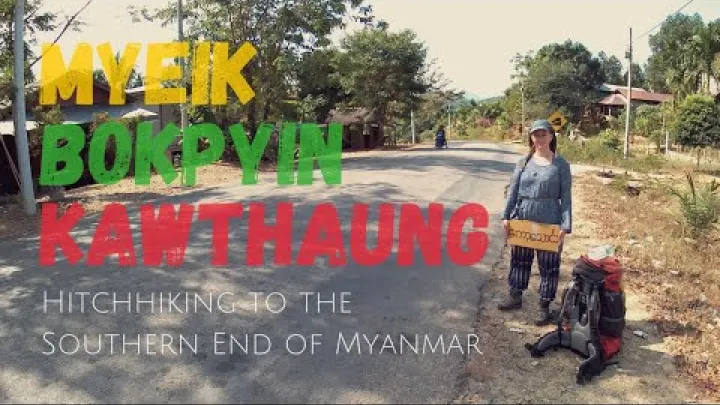
The Myeik–Bokpyin–Kawthaung overland corridor can look much cheaper in an individual travel account. One account describes spending about 45,700 MMK, or approximately EUR 29 and USD 31.50 at the time, over two days. That account involved hitchhiking and basic lodging, so it is not equivalent to a normal scheduled bus or private-car fare. It also requires substantially more time and tolerance for uncertainty than a flight.
The choice is therefore time versus money rather than simply cheap versus expensive. A flight may protect a short itinerary and reduce uncertainty. Slower overland travel may reduce cash spending for a flexible traveler, but it can require extra days and may not be practical for every visitor. Older statements about discontinued sea services, including references to boats between Myeik and Kawthaung ceasing in 2016, should be treated as historical information to check rather than a current service guarantee.
Once you choose a route, confirm the current fare and service availability through the relevant airline, boat operator, or booking channel before fixing dates. Add the access amount outside the daily Kawthaung baseline.
Local Taxis, Tuk-Tuks, and Short Boat Transfers
Broad Myanmar transport benchmarks mention taxi trips of roughly 5,000–15,000 MMK and a tuk-tuk example of about 6,000 MMK. These figures are weak planning references because current Kawthaung-specific fares are not established by the available evidence. They should not be used as a precise local fare list.
For ordinary local mobility, allow approximately USD 3–10 per day as a cautious planning estimate. Walking can reduce this amount for short town trips. A shared ride may cost less per traveler than a private taxi, while a port transfer or short boat ride can follow a different pricing basis. A marine excursion boat is not ordinary local transport and should remain in the activity budget.
Ask the local driver or hotel for the current fare before taking a taxi, tuk-tuk, or short boat transfer. Confirm whether the price is for one traveler, the whole vehicle, or a return journey. This simple question is more useful than applying a national average to every ride in Kawthaung.
Activities and Mergui Archipelago Costs
Town-based activities allow a traveler to control spending, but the Mergui or Myeik Archipelago introduces a separate high-cost module. A walk, market visit, temple visit, or viewpoint may need only food and local transport money. A snorkeling program can cost more than several days of accommodation and meals combined.
Free and Low-Cost Things to Do in Town
Available attraction listings identify free-entry and budget-friendly options in Kawthaung. Suitable low-cost planning anchors include waterfront walks, temples, markets, and general town exploration. These descriptions show that a visitor does not need a marine excursion every day to have activities in the itinerary.
Use USD 2–10 per day as a modest allowance for minor admissions, donations, snacks, and incidental activities. This is a planning allowance, not a list of confirmed attraction fees. Do not assume that every temple, viewpoint, market, or attraction is free. Separate an admission fee from a voluntary donation, and keep snacks and transport as separate lines even when the attraction itself has no charge.
Snorkeling, Island Trips, and Package Inclusions
A Myanmar National Airlines promotion quoted USD 450 per person for an island snorkeling program and stated that the domestic flight was excluded. The promotion is a concrete premium-program example, not a universal day-tour price. It also refers to a program operating according to the organizer’s schedule. Myanmar National Airlines is the source of that promotional example.

Operators may bundle boat transport, snorkeling equipment, meals, accommodation, guides, park charges, port fees, and transfers in different combinations. One quote may be per person, another per boat, and another per group. A separate Trip.com snippet mentions approximately USD 4,700 for three days and two nights, but the person, group size, package basis, and service inclusions are unclear. That ambiguous amount is not suitable as a normal benchmark or as a calculation in a Kawthaung budget.
Request an itemized, date-specific written quote before using a marine price in your trip total. It should show the unit, schedule, inclusions, exclusions, cancellation terms, and whether the domestic flight is included. Do not assume that a program price covers the same nights, meals, or transfers already listed in your town budget.
How One Marine Excursion Changes the Trip Budget
A quoted USD 450 marine program can exceed several days of ordinary town spending. For example, a five-day budget town baseline is approximately USD 125–200, while a five-day mid-range baseline is approximately USD 300–500. A USD 450 program is therefore more than twice the lower budget baseline and can exceed the entire five-day mid-range baseline at its lower end.
The following is an illustrative cash-outlay comparison only. It assumes the USD 450 program is a separate cost for one person and does not replace any accommodation, meals, or transport already included in the town baseline. If the operator includes those items, remove the duplicated costs.
| Three town days | Town-only baseline | Quoted marine addition | Illustrative total before access |
|---|---|---|---|
| Budget style | USD 75–120 | USD 450 per person | USD 525–570 |
| Mid-range style | USD 180–300 | USD 450 per person | USD 630–750 |
| Comfortable style | USD 390–540 | USD 450 per person | USD 840–990 |
These totals still exclude the Yangon flight or other access cost, and the quoted program itself excludes the domestic flight. A budget traveler may choose town-based experiences and one carefully selected marine day. A comfortable traveler may deliberately make the marine activity the main expense of the trip. Both choices can be sensible when the package basis is understood.
Sample Kawthaung Budgets and Savings Decisions
The models below multiply the daily town bands by three, five, or seven chargeable town days. They are not complete international trip totals. Add access, activities, and a contingency after checking whether a room is shared and whether any package replaces ordinary daily costs.
Three-Day, Five-Day, and Seven-Day Planning Models
| Town days | Travel style | Daily baseline | Town-only total | Add separately |
|---|---|---|---|---|
| 3 | Budget | USD 25–40 | USD 75–120 | Flight, crossing, and optional marine activity |
| 3 | Mid-range | USD 60–100 | USD 180–300 | Flight, crossing, and optional marine activity |
| 3 | Comfortable | USD 130–180 | USD 390–540 | Flight, crossing, and optional marine activity |
| 5 | Budget | USD 25–40 | USD 125–200 | Flight, crossing, and optional marine activity |
| 5 | Mid-range | USD 60–100 | USD 300–500 | Flight, crossing, and optional marine activity |
| 5 | Comfortable | USD 130–180 | USD 650–900 | Flight, crossing, and optional marine activity |
| 7 | Budget | USD 25–40 | USD 175–280 | Flight, crossing, and optional marine activity |
| 7 | Mid-range | USD 60–100 | USD 420–700 | Flight, crossing, and optional marine activity |
| 7 | Comfortable | USD 130–180 | USD 910–1,260 | Flight, crossing, and optional marine activity |
For access planning, the flight snapshots provide examples of about USD 208 one way or USD 410 round trip. The longtail-boat reference was under THB 300 or 14,000 MMK at the time of that travel account. The snorkeling promotion was USD 450 per person and excluded the domestic flight. Do not automatically add all three options: a traveler normally chooses an access route, while the marine activity is optional.
The comfortable seven-day range above is a planning ceiling for ordinary town spending, not a promise that every higher-end itinerary fits within USD 1,260. A private resort room, repeated premium dining, private transfers, or multiple marine days can take the total higher.
The Biggest Ways to Save Without Cutting the Trip Short
Rank savings decisions by their likely impact rather than beginning with small food purchases.
- Choose access carefully. A flight can be valuable when time matters, but a flexible traveler may compare it with a slower overland option. The saving is real only when the additional days, meals, and accommodation do not erase it.
- Compare marine packages line by line. A cheaper-looking quote may exclude flights, meals, equipment, or port charges. A complete quote can be better value than a low headline price with many additions.
- Select the right room basis. A basic guesthouse or shared room can reduce the per-person cost. A private resort room may be worthwhile for comfort, but it should be chosen as a deliberate upgrade rather than mixed into a budget calculation.
- Use local food for ordinary meals. Tea shops and simple restaurants can keep daily food spending controlled. Save hotel, resort, seafood, or imported-drink spending for selected meals.
- Walk and share short rides when practical. Walking for nearby town trips and sharing a taxi can reduce local mobility costs. Keep port transfers and short boat rides as separate items because their pricing basis may differ.
Longer stays also spread fixed access costs across more days. A USD 410 round-trip flight has a larger effect on a three-day visit than on a seven-day visit. That advantage disappears if every additional day includes a premium excursion. Do not save money by relying on an old anecdotal fare, an unverified operator, or a package with unclear inclusions.
When Peak Demand, Weekends, and Events May Raise Costs
The available hotel-search indication that June, August, and October can show lower prices is useful for testing flexible dates, not for declaring a universally cheapest month. A live search is the only way to know whether a specific room is cheaper for your dates.
Weekends, events, peak demand, room type, occupancy, and cancellation conditions may change hotel prices. The available evidence does not establish a fixed Kawthaung surcharge for weekends or a month-by-month demand calendar. Compare the same property, room, number of guests, and cancellation terms across several dates. Keep price seasonality separate from weather assumptions and marine-condition decisions.
Currency, Cash Planning, and Price Verification
Kawthaung budgets may involve MMK, THB, and USD quotes. A crossing may be discussed in Thai baht or Myanmar kyat, a hotel may display USD, and a local meal may be listed only in MMK. Keep each amount in its original quoted currency until you check the exchange rate and the payment currency requested by the seller.
Using MMK, THB, and USD Quotes Carefully
Never compare a price only by its number. First identify whether it is per person, per room, per boat, per night, or per group. A USD 450 snorkeling quote per person is not comparable with a USD 450 boat quote for six people. A USD 47 hotel amount for two adults is not the same as a USD 47 solo room or a USD 47 per-person package.
Because payment-method evidence is limited, do not assume that every hotel, driver, restaurant, or operator accepts cards, keeps cash available, or uses the same exchange rate. Confirm the currency requested, the final amount, and any exchange-rate or payment surcharge at the moment of payment. Keep a modest contingency line in the worksheet for price changes and small extra charges rather than hiding uncertainty inside the daily average.
A Pre-Booking and Arrival Price-Check List
Copy this short worksheet before fixing your Kawthaung plans:
- Accommodation: record the property, exact dates, room type, occupancy, total room amount, taxes and fees, breakfast, cancellation terms, and any transfer or package inclusion.
- Access: record whether the amount is one way or return, the fare currency, baggage or other listed conditions, and whether the flight or boat service is available on the required date.
- Marine activity: request the price per person, room, boat, or group. List boat transport, equipment, meals, accommodation, guide, park charges, port fees, transfers, flight exclusions, and cancellation terms.
- Local movement: ask for the current taxi, tuk-tuk, port-transfer, or short-boat fare before using the service. Record whether the quote covers one ride, a return, one passenger, or the whole vehicle.
- Payment: write down the currency requested, the exchange rate used, the final amount, the payment method, and any surcharge at the time of payment.
- Budget update: enter the confirmed one-off costs first, then multiply the selected daily baseline by the number of town days. Add a clearly labeled contingency instead of replacing unknown values with a national average.
It also helps to label every figure by evidence type. A verified quote is a confirmed amount for your dates and unit. A dated booking snapshot is a price displayed for a specific search and may change. A traveler anecdote records what one person paid under particular conditions. A planning estimate is a range used to build a budget when a current Kawthaung tariff is not available. Keeping those labels visible prevents a broad Myanmar benchmark or an old crossing price from looking like a guaranteed local rate.
Final Kawthaung Budget Takeaways
For ordinary town spending, start with about USD 25–40 per day for budget travel, USD 60–100 for mid-range travel, or USD 130–180 or more for comfortable travel. Then add access separately: a Yangon flight can be much more significant than a local meal, while the Ranong crossing is a smaller one-off cost based on the available historical account. Treat the Mergui Archipelago as a separate module because one quoted USD 450 snorkeling program can exceed several days of accommodation, food, and town transport.
The most reliable Kawthaung budget is not one impressive average. It is a worksheet that keeps room, person, boat, group, currency, inclusions, and date visible. Choose the town base and comfort level first, confirm the large access and marine costs, and then use food and local transport choices to fine-tune the total.
Select area
Create a post
Posting is free and no registration is required.