Myitkyina Getting There: Current Routes and Transport Options
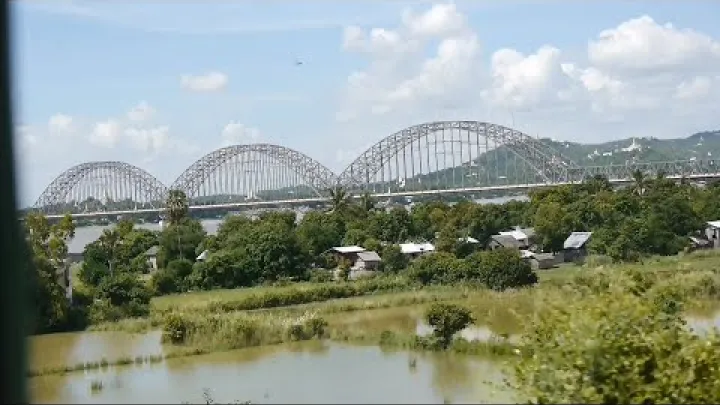
Myitkyina getting there requires more than finding a route on a map. The city in northern Kachin State can be approached through Myitkyina Airport, by the Mandalay–Myitkyina road corridor, or by the railway route whose current passenger status must be checked rather than assumed. Yangon and Mandalay serve different planning needs, especially for international arrivals and domestic connections. This guide compares air, bus, private road, and rail options, then explains how to verify each leg and reach the city center after arrival.
Check Whether Travel to Myitkyina Is Currently Possible
Before comparing prices or travel times, establish whether the journey is permitted, advisable, and realistically reversible. Transport availability and travel permission are separate questions.
Start With Current Safety Advice
The first decision is whether to travel at all. Myanmar conditions can change quickly, and warnings may apply differently to the country, Kachin State, Sagaing Region, and particular roads. The OSAC travel advisory page lists a May 13, 2026 Level 4, Do Not Travel advisory for Burma/Myanmar. Treat that as a serious decision point and read the current advisory from your own government as well.
A flight listing, an open bus terminal, or a ticket offered by an agent is not a safety clearance. Transport can remain available even when official guidance advises against travel or when a particular corridor is unsuitable. Read the country and regional sections of the advisory immediately before deciding, and do not use an available ticket to justify proceeding against that advice. This article describes logistics; it is not an endorsement of tourism or other travel to Myitkyina.
Check Entry Eligibility and Movement Permissions
Separate three questions: can you enter Myanmar, can you travel onward to Myitkyina, and can you move beyond Myitkyina into other parts of Kachin State? A visa or entry category may answer only the first question. Nationality restrictions, border rules, visa conditions, and local movement controls can change, so check official immigration, embassy, or consular channels for your passport before booking.
Do not assume that a domestic ticket, hotel reservation, or invitation grants permission to pass a checkpoint or enter a restricted area. Ask which documents are required for the exact route and whether any permission must be obtained before departure. If official sources give different answers, postpone payment until the conflict is resolved through an authoritative channel.
Set a Go-or-No-Go Rule Before Booking
Use a simple decision rule before paying for transport:
- Entry eligibility and any onward movement requirement are confirmed for your nationality.
- The outbound service is confirmed for the exact date and departure point.
- A return ticket or realistic return option is also confirmed.
- You have a lawful backup plan if the first service is cancelled or stopped.
If one of these points cannot be verified, postponing is safer than improvising at a terminal or checkpoint. A route can change after payment, so choose cancellation or rebooking conditions that leave you room to stop the journey.
Choose Yangon or Mandalay as Your Starting Gateway
The best starting gateway depends on where you enter Myanmar and which transport mode is actually operating. Mandalay is the main comparison point for northern domestic travel, while Yangon may be more convenient for an international arrival.
Use Mandalay for the Northern Connection
Mandalay is the natural gateway to compare when your plan is focused on reaching Myitkyina from central Myanmar. It is the relevant starting point for a domestic flight search, the south-to-north road corridor, and the historical railway route. Its location can reduce the number of long connections compared with starting in Yangon.
For your date, confirm the exact airport for a flight, the railway station for a train, and the bus terminal for an overland service. A route that appears simple on a map may require a separate transfer between an airport, station, and terminal. Do not treat Mandalay as an automatically approved or dependable gateway; convenience and current operation are separate issues.
Compare the complete Mandalay chain rather than only the distance to Myitkyina. Check where you will arrive, where the onward service leaves, whether luggage must be collected and rebooked, and whether the operator accepts your travel documents. If the connection involves separate tickets, treat each segment as your responsibility and avoid assuming that a delay on the first leg will protect the next booking.
Use Yangon When It Fits Your International Arrival
Yangon can make sense when your international flight ends there and an onward domestic service is available. The plan may be a direct Yangon–Myitkyina flight, if one is being sold for your date, or a connection through Mandalay. A road journey from Yangon adds a longer south-to-north chain, while a flight connection adds another airport and ticket segment.

Allow more flexibility for a Yangon-origin itinerary. International arrival delays, airport changes, separate-ticket rules, and a missed domestic connection can affect the whole journey. Use Yangon as a practical starting gateway when it fits your confirmed transport, not because a historical route map shows a direct service.
Before choosing Yangon, establish whether the onward ticket is issued as one protected itinerary or as separate bookings. Confirm baggage procedures, the airport used for every segment, and what you would do if the international flight arrives late. If a direct Yangon–Myitkyina service is not confirmed, compare the added Mandalay connection with the longer overland alternative rather than assuming that either is available.
Compare Speed, Cost, and Booking Difficulty
Air is normally the fastest way to cover the distance when a flight is operating and seats are available. It may also be the most expensive option, and direct booking or telephone confirmation may be necessary. Road travel can have a lower ticket price, but it takes much longer and may be affected by checkpoints, closures, or a changed departure point. Rail has a clear historical route, but current passenger availability is the main problem.
Use the following as a planning comparison, not as a live timetable or fare list:
| Mode | Relative travel time | Cost pattern | Booking difficulty | What to confirm |
|---|---|---|---|---|
| Air | Shortest when operating | Often higher | Airline or agent confirmation | Flight, date, airport, cancellation terms |
| Long-distance bus | Long overland journey | Often lower ticket cost | May require local contact | Departure, operator, route, return service |
| Private road travel | Flexible but variable | Depends on vehicle and driver | Requires lawful local arrangement | Permission, route, driver, total fare |
| Rail | Historically slower | Historically lower | Current service may be unclear | Exact train, date, ticket, through service |
Use cost patterns as a screening tool, not a promise about what you will pay. The final amount may depend on the booking channel, luggage, transfers, overnight stops, vehicle waiting time, and whether a return ticket is available. Booking difficulty is also part of the cost: a service that can only be confirmed locally may require extra time, communication, and a flexible first night.
Do not compare only the ticket price. Include transfers, accommodation caused by delays, lost connections, luggage rules, and the cost of returning if the outbound service stops. A cheap unconfirmed ticket is not necessarily the lowest-cost route.
Fly Through Myitkyina Airport
Flying is the most direct transport category to examine, but the route must be confirmed at the operator level. Myitkyina Airport is a domestic gateway, not an international arrival airport.
Identify MYT and Confirm the Operating Carrier
Use MYT as the IATA code when searching for Myitkyina Airport. The airport is also identified by the ICAO code VYMK. These codes help prevent confusion with another destination, but an airport code alone does not prove that a flight is currently operating.
Search the intended date through an airline booking channel and then contact the airline or its authorized agent if the result is unclear. Confirm the departure airport, arrival airport, flight number, baggage conditions, payment method, and whether the ticket can be changed. Airport directories and reference pages are useful for identity information, but they should not be treated as evidence of a current schedule or a current operating carrier.
Compare Connections From Mandalay and Yangon
Start with two route examples. The first is a direct Mandalay–Myitkyina domestic flight, if a carrier lists it for the date. This is usually the simpler northern connection because it avoids returning through Yangon. The second is a Yangon–Myitkyina flight, if directly available, or a Yangon–Mandalay–Myitkyina itinerary using separate or linked segments.
Mann Yadanarpon Airlines presents a Yangon-to-Myitkyina route and states a duration of 2 hours 10 minutes on its website. Use that page as an operator lead, not as a guarantee of a flight on your date. Confirm the current frequency, aircraft, fare, seat availability, and cancellation conditions directly.
If no direct segment is confirmed, do not assume that a connection will be protected. Separate tickets may require baggage collection, a new check-in, and a longer connection period. Check Mandalay-origin and Yangon-origin searches independently, then choose the itinerary with the clearest confirmation and the most workable return plan.
Plan for Cancellations and Airport Disruption
Air services can be cancelled, retimed, or interrupted, and an airport booking page may not show every operational problem. Reconfirm the flight directly with the airline before leaving for the airport. Ask whether the flight is confirmed, whether check-in is at the expected airport, and what happens if the carrier cancels the service.
Keep the airline’s rebooking and refund conditions separate from government travel advice. A refund policy may return money without making the route advisable, while an advisory does not automatically explain how a particular airline handles a cancelled ticket. If you need a ground alternative, use one only when it is lawful, currently operating, and consistent with the safety and movement information you have already checked. Do not create a backup that depends on an unsafe or unauthorized corridor.
Travel by Long-Distance Bus or Road
Overland travel is the main non-air comparison for reaching Myitkyina from the south. It can appear straightforward on a map, but a route line does not establish a running bus, an open road, or a permitted passage.
Follow the Mandalay–Myitkyina Overland Corridor
The Mandalay–Myitkyina road corridor is the main route to examine for a northbound journey by bus or private vehicle. A Yangon-origin plan can involve a longer south-to-north journey toward Mandalay and then onward toward Myitkyina. The exact route, stopping points, and direction of travel must come from a current operator or trusted local contact.
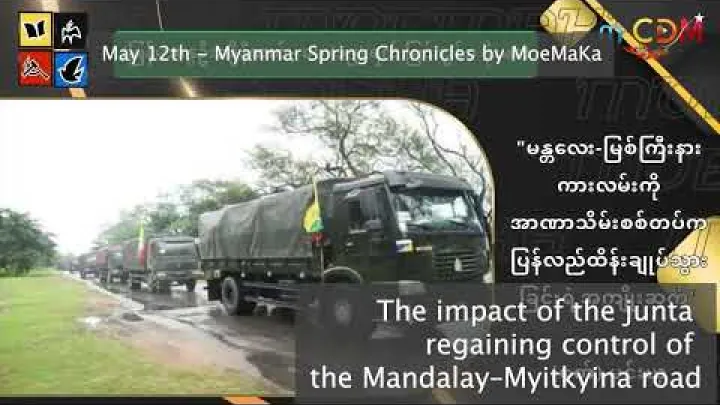
Expect a road journey to be measured in many hours rather than treated as a short transfer. A map application’s driving estimate is not a bus timetable and does not account for loading, checkpoints, road conditions, route controls, or an overnight stop. Do not publish or rely on a normal-condition time as if it were a promise. Ask specifically whether the service is running on your date, where it departs, and whether it reaches Myitkyina or ends at another town.
Check Departures at Myitkyina Highway Bus Terminal
Mapcarta identifies Myitkyina Highway Bus Terminal as a local bus-station anchor in Kachin State. That helps you identify the place to ask about arrivals and departures, but the map listing does not prove that a particular bus, operator, fare, or daily schedule is active.
Before paying, ask the current terminal staff or named operator to confirm all of the following:
- Departure date and time, including whether the service is daytime or overnight.
- Exact destination and route direction.
- Operator name, vehicle type, luggage allowance, and payment method.
- Departure platform or pickup point.
- Return departure, if you need to leave Myitkyina by bus.
Ask for confirmation of both the outbound and return departures before paying. Route names may not be consistently searchable online, and a map label is only a location reference. If staff cannot give a clear answer about the return service, treat the journey as one-way and reconsider whether you have a realistic way to leave.
Assess Private Road Travel and Checkpoint Exposure
A private car or hired driver gives more flexibility than a scheduled bus, but it does not remove road, checkpoint, or route-closure risks. A driver may also be unable or unwilling to continue if the route changes. Confirm that the trip is legally permitted, that the driver has current local knowledge, and that the vehicle can complete the planned journey.
Compare private road travel by flexibility, control, and total cost rather than by the quoted daily rate alone. Ask whether fuel, overnight stops, waiting time, tolls, and a return journey are included. Do not ask a driver to avoid a checkpoint, conceal your destination, or use an informal route. If the driver cannot explain the lawful route and current operating conditions, do not proceed with that arrangement.
Verify Rail Service Instead of Relying on Old Timetables
Rail is important to the geography of Myitkyina, but historical infrastructure and historical schedules are not proof of a current passenger connection. Treat rail as a separate verification task.
Understand the Mandalay–Myitkyina Railway
Myitkyina railway station is the northern local rail anchor. A historical reference to rail transport in Myanmar identifies the Mandalay–Sagaing–Shwebo–Myitkyina line and gives the route length as 361 kilometres. This establishes the historical line identity, not a current train timetable.
Schedules, fares, classes, and travel stories from before 2021 should be treated as background only. Railway infrastructure can remain in place while passenger service is suspended, reduced, divided into sections, or subject to short-notice changes. Do not build an itinerary around an old departure time or assume that a train reaching one station continues through to Myitkyina.
When checking rail, ask for the service status for the exact date rather than asking only whether the line exists. Confirm whether tickets are being issued, where they must be purchased, and whether the stated train is a through service or requires a change. These details determine whether rail is a usable arrival option or only historical route context.
Check for Any Local or Partial Service Separately
If a local report mentions a Kachin segment, a partial restart, or a train between nearby stations, check it as a separate service. Ask the station or railway operator for the exact origin, destination, travel date, departure time, ticket availability, and whether the service is passenger transport rather than a different railway movement.
A local segment does not prove that through service from Mandalay is running. It also does not prove that the connecting road or local transfer is permitted. When reports conflict, do not select the most optimistic version. Require a ticket or direct operator confirmation for every section of the proposed rail journey.
Keep a Backup if Rail Is Unconfirmed
Do not connect a visa, accommodation booking, flight, or important appointment to an unconfirmed train. If rail is not clearly available, compare a confirmed alternative with the return journey and disruption risk, not only with the rail ticket price.
Road travel is not automatically a suitable substitute. If no transport option can be confirmed with a realistic return plan, delay the journey rather than combining an old timetable with an improvised local leg.
Reach Myitkyina City Center After Arrival
Myitkyina Airport, the highway bus terminal, and the railway station are different arrival points. Arrange the last leg separately and avoid assuming that a standard shuttle, fixed fare, or late-night service is available.
Transfer From Myitkyina Airport
After arriving at Myitkyina Airport, confirm how you will reach your accommodation or the city center before leaving the terminal. A hotel pickup or pre-arranged driver can reduce uncertainty, especially when arriving late or carrying several bags. Ask for the driver’s name, vehicle description, meeting point, fare, and payment method.

If you arrange transport locally, use a named service or a clearly identified driver where possible. Keep your phone, passport, booking details, and cash or payment method with you. Do not rely on a fixed transfer time or a 24-hour taxi service unless someone locally confirms it for your arrival.
Transfer From the Highway Bus Terminal
Confirm the terminal’s exact pickup point before departure. Map labels, operator names, and local descriptions may not match, so ask the bus operator to write down the arrival location in a form a driver can understand. This is especially useful if your accommodation uses a local-language name.
On arrival, ask terminal staff or your pre-arranged contact for the city-center transfer. There may not be a standard shuttle. Allow for a delayed bus, keep luggage under control, and avoid handing over your documents while arranging the vehicle. Treat the terminal transfer as a separate local journey from the long-distance bus booking.
Transfer From Myitkyina Railway Station
Use the railway station as an arrival point only if a current passenger service has been confirmed. Historical station information does not establish that trains or local vehicles are operating on your date.
Before entering a vehicle, state the destination clearly, confirm the fare, and check that the driver understands the name of your accommodation or intended city-center location. Do not assume that taxi hours, station services, or a fixed station-to-center price from an old travel guide still applies.
Avoid Touts and Unclear Fares
Where available, use an official counter, a named transport operator, or a driver arranged by your accommodation. Before entering the vehicle, agree on the vehicle, destination, and total fare. Ask whether the price covers all passengers and luggage.
Keep your passport and phone with you, and do not let pressure at an arrival point force an immediate decision. This is a practical way to reduce misunderstandings; it is not a claim that every local driver is unsafe.
Book, Verify, and Protect a Flexible Itinerary
Once you have selected a possible route, treat every leg as a separate confirmation task. Record what was confirmed, by whom, and when.
Confirm Every Leg Before Paying
Use this checklist for flights, buses, private vehicles, and trains:
- Write down the exact travel date, direction, departure point, arrival point, and local time.
- Confirm the operator’s name and the current contact method.
- Check that the ticket or reservation is actually issued, not only held in a search result.
- Confirm the identity document required at booking and boarding.
- Ask about baggage, payment, cancellation, refund, and rebooking conditions.
- Confirm the return leg separately, including its departure location and date.
- Record the time of the latest confirmation and save the message, receipt, or booking number.
For a connection, complete the checklist for each segment. A confirmed Yangon–Mandalay leg does not confirm the Mandalay–Myitkyina leg, and a confirmed outbound bus does not confirm a return bus. Keep official contact details available in both your phone and an offline record.
Leave Buffers for Delays and Disruptions
Avoid tight connections to international flights, visas, appointments, or onward transport. For example, do not place an important international departure immediately after an unconfirmed or delay-prone overland arrival. A flexible accommodation night or a changeable ticket can be more useful than a cheaper fixed booking.
Keep the itinerary adjustable where cancellation rules allow. Consider what happens if you arrive late, miss a connection, or must return to the previous gateway. Route status should be treated as changeable until departure, not as permanent because it was available when you first searched.
Use a Clear Source Hierarchy
Use the strongest source for each type of question. Government advisories are the starting point for safety and permission. Official airline, railway, terminal, and operator contacts are more useful for live departures and ticket conditions. Recent local reporting can help identify a route change, but it should be checked against the responsible operator when possible.
Maps, aggregators, social media posts, and old travel guides are useful leads. They can help you find the name of Myitkyina Airport, the highway bus terminal, or Myitkyina railway station, but they do not necessarily show current operation. Record publication or update dates, add a last-checked time to your notes, and say plainly when no current confirmation exists. When evidence is weak or conflicting, do not turn it into a definite recommendation.
Conclusion: Confirm the Route Before You Travel
For Myitkyina getting there, Mandalay is the main gateway to compare for northern air, road, and historical rail routes, while Yangon may fit an international arrival or a confirmed direct domestic service. Myitkyina Airport is the fastest option when operating, but buses, private road travel, and rail each require separate checks for current service, permission, and return feasibility. Confirm the advisory, entry rules, operator, departure point, return plan, and city transfer before paying. If those details cannot be verified, postponing the journey is better than relying on an old timetable or an improvised route.
Select area
Create a post
Posting is free and no registration is required.