Yangon Getting There: Flights, Buses, Trains & Arrival Tips

Getting to Yangon requires more planning than simply choosing the fastest ticket. Yangon International Airport is the main international gateway, while long-distance buses and trains connect the city with parts of Myanmar when services are operating. This guide compares the main routes to Yangon, explains the key arrival points, and helps you plan the final journey into the city. Because transport operations and travel conditions can change, build time and flexibility into every stage of the trip.
Decide Whether and How to Travel to Yangon Now
Yangon is an important arrival point for Southern Myanmar, but reaching the city does not mean that every onward route in the country is suitable or available. Treat the international arrival decision, a domestic connection, and an overland journey as separate decisions.
Check Current Travel Advisories and Route Conditions
Begin with a current official travel advisory for your nationality, then assess the specific route you intend to use. Myanmar’s conditions are volatile, and official advice may distinguish between Yangon and other regions. A route that appears straightforward on a map can pass through areas affected by restrictions, disruption, or changing security conditions.
Read the relevant sections of UK Foreign Travel Advice or the equivalent authority for your passport before committing to a journey. This is particularly important if you are considering a long road or rail journey from Mandalay, Bagan, Inle Lake, Nay Pyi Taw, Mawlamyine, or another destination rather than flying directly into Yangon.
Do not assume that an airline ticket to Yangon confirms that a later road, rail, or domestic-air connection is appropriate. Check the latest route-specific security information before committing to a journey, and reconsider the itinerary if official advice or reliable local information indicates a material change. A traveler arriving at RGN may be able to stay in Yangon while choosing not to continue overland elsewhere.
Build a Verification Plan Before Booking
Use a short, repeatable verification process. First, check whether the route is acceptable under current travel advice. Second, look for the service directly with the airline, railway information channel, or bus operator. Third, confirm the exact departure airport, station, or terminal and the conditions attached to the ticket. Finally, repeat the schedule check shortly before leaving for the departure point.
Before payment, save the operator name, departure date, departure point, arrival point, baggage conditions, and a contact number. Check whether the booking is refundable or changeable and whether the listed connection is protected on one ticket. For a bus or train, confirm whether you must collect a physical ticket or report at a particular counter. These small details can matter as much as the advertised departure time when a terminal is outside central Yangon.
Third-party booking pages can be useful for comparing options, but they may not immediately reflect a cancellation, a revised departure point, or a temporary suspension. For flights, compare an airline’s booking page with a current status tool such as the Yangon flight status board. For buses, rely on the operator’s current notice or direct contact for the terminal and pickup details.
Schedule verification and safety verification answer different questions. A confirmed departure tells you that an operator intends to run a service; it does not assess conditions along an overland route. Leave a realistic connection buffer, especially when separate tickets are involved, and avoid making a non-refundable onward commitment immediately after a tight connection.
Fly to Yangon International Airport
For most international visitors, flying is the clearest way to get to Yangon. It reduces the time spent on long overland routes and brings travelers to the city’s principal air gateway, although the final transfer into central Yangon still needs planning.
Use Yangon International Airport as the Main Gateway
Yangon International Airport, using the code RGN, is the principal airport for international arrivals to Yangon and a major domestic aviation point. Use the RGN code consistently when comparing fares, booking connections, arranging a pickup, or searching flight status. It helps avoid confusion with other Myanmar airports and makes it easier to match a ticket with an arrival plan.
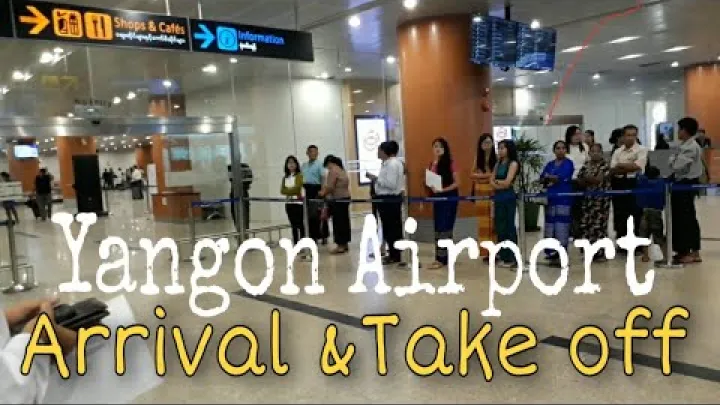
The airport provides international and domestic operations. Its official information also covers taxi access, pickup and drop-off areas, car parking, and inter-terminal shuttle arrangements. Check the Yangon International Airport website close to travel for practical airport information, but use your airline for the authoritative terminal, check-in, baggage, and boarding requirements for your flight.
Before departure, save the airline’s booking reference, confirm the terminal shown by the carrier, and review baggage rules for each sector. This matters when an international itinerary connects to a domestic flight, because luggage allowance, check-in deadlines, and connection arrangements may differ. If you are being met, give your driver the flight number and the current scheduled arrival time rather than only the original itinerary time.
Reach Yangon from Bangkok and Singapore
Bangkok and Singapore are practical regional gateways for Yangon. Bangkok can be especially useful for travelers connecting from other parts of Asia or from long-haul services, while Singapore offers another regional departure point. Nonstop availability, operating airlines, departure times, and prices can vary by date, season, and operating conditions, so they should not be treated as fixed features of the route.
Compare the airline’s own booking channel with a current flight-search platform such as Traveloka. A search result can help identify marketed options, but the carrier’s conditions should guide the final purchase. Focus on the full itinerary rather than the headline fare: check whether baggage is included, whether the connection is protected on one ticket, and what happens if an earlier flight arrives late.
A nonstop regional flight is usually simpler than combining separate tickets, but it may not always be the best value. If you choose separate tickets, allow enough time to collect baggage, clear any required formalities, change terminals if necessary, and check in again. A low fare can become expensive if a delayed first leg causes you to miss a separate final flight to RGN.
Reach Yangon from Other Myanmar Cities
Domestic access can be by air, train, or long-distance bus. The best choice depends on the route currently operating, the time you have, your comfort requirements, and whether you can arrive safely at the correct departure point.
Domestic Flights from Mandalay and Nyaung-U
When a current service is available, domestic flying is generally the fastest way to reach Yangon from major cities such as Mandalay. Nyaung-U, commonly used as the air gateway for Bagan, is another route travelers may encounter when planning an itinerary that ends in Yangon. The shorter travel time is the main advantage, while fares can be higher than ground transport and schedules may offer limited flexibility.

Do not rely on a historical number of daily departures. Search for the date you need, then confirm the service with the airline before paying for accommodation or a separate connection. Commercial flight listings can indicate that the Yangon–Nyaung-U market is being sold, including on Expedia, but availability on a specific day remains the relevant question.
Build a fallback that does not depend automatically on replacing a cancelled flight with an overnight bus or train. If an air service changes, first assess whether another flight, an extra night in the departure city, or a revised itinerary is the more sensible option. A ground alternative should only be considered after reviewing current route conditions and confirming that the operator is running the service.
Trains from Mandalay and Bagan
Rail can be appealing to travelers who want a slower, land-based journey, but it is not the efficient choice for a tight Yangon itinerary. Reported Yangon–Mandalay journeys have taken roughly 17 to 18 hours, and reported direct Yangon–Bagan journeys have also been around 17 hours. These are useful planning estimates, not promises of a current timetable.

A specialist rail reference reports two direct Yangon–Mandalay trains in its published information, with example journey lengths of about 17 hours 15 minutes and 18 hours. See Myanmar Trains as an indicative timetable reference, then reconfirm the actual departure, class, ticket process, and operating status before traveling.
Another reported pattern is one direct daily Yangon–Bagan service, but direct-service patterns can change. Expect a basic travel experience compared with air travel: journeys can be long, noise and movement can affect rest, and facilities should not be assumed. Do not promise yourself a particular sleeper arrangement, meal service, or online fare unless it is confirmed for the exact departure you intend to use.
Choose rail because you accept the time commitment and the possibility of operational changes, not because it is the default budget substitute for flying. It is best suited to a traveler with a flexible schedule who is comfortable with a long journey and has confirmed the current service details.
Long-Distance Buses and Yangon Terminals
Long-distance buses are important for domestic travel to Yangon, particularly on routes where flying is less convenient or where travelers want broader road coverage. Operators associated with Yangon services include JJ Express and Mandalar Minn, with corridors that may involve Mandalay, Bagan, the Inle Lake area, Nay Pyi Taw, Mawlamyine, and other destinations. Actual route coverage and operating days must be checked for the travel date.
Two Yangon names to know are Aung Mingala Highway Bus Terminal and Dagon Ayar Highway Bus Station. These are important long-distance bus gateways, but the assigned terminal depends on the route and operator. Do not travel to a terminal based only on an old review or a generic city search. Confirm the exact departure point, reporting time, luggage allowance, and pickup policy through the operator’s current channel.
When comparing tickets, check the terminal as carefully as the destination. A service advertised simply as “Yangon” may use a highway terminal rather than Yangon Central Railway Station or a downtown meeting point. Ask where you will be dropped off, whether the operator provides a shuttle or pickup, and how much time you should allow for the final transfer. This prevents a low headline fare from hiding a difficult last leg.
Buses can cost less than flights and may serve places without a useful airport connection. The trade-off is a much longer journey, possible night travel, variable road conditions, and a terminal that may be far from your accommodation. A bus is often a practical choice for a traveler whose destination is on the road corridor and who has time to spare; it is a weaker choice for someone who must arrive rested for a meeting or make an early onward connection.
Some operators offer their own meeting or transfer arrangements. For example, Mandalar Minn Express reports a pickup arrangement for passengers on certain morning departures from U Chit Maung Street near Yadanar Park. Treat this as an operator-specific service, not a general Yangon bus rule, and confirm whether it applies to your ticket, date, and direction of travel.
Choose the Best Transport Mode for Your Trip
There is no single best way to get to Yangon. The useful comparison is between travel time, relative cost, booking access, physical comfort, and the uncertainty you are willing to accept.
Compare Time, Cost, and Booking Difficulty
The following comparison is intentionally relative. Exact fares, frequencies, and journey times depend on the date, route, operator, and current operating conditions. Obtain a current quote before treating any option as a budget choice.
| Mode | Best for | Relative cost | Booking and timing | Main limitation |
|---|---|---|---|---|
| International or domestic flight | Fastest major-city access | Usually higher | Often easier to compare online | Schedule changes and baggage rules |
| Long-distance bus | Budget and road-route coverage | Often lower | Operator and terminal confirmation needed | Long or overnight journeys |
| Train | Slow travel with flexible time | Route-dependent | Confirm service and class directly | Very long journey times |
| Yangon–Dala ferry | Local river crossing | Local fare | Check daily operating hours locally | Not an intercity route into Yangon |
In broad terms, flights minimize journey time, buses offer the widest road coverage, and trains require the greatest time commitment. The cheapest ticket is not always the cheapest complete journey: add the cost of reaching Aung Mingala or Dagon Ayar, a transfer from the airport, meals during a long ride, and a possible overnight stay when comparing modes. Booking difficulty also varies by operator, and online availability does not by itself confirm that the service will run as planned.
Flights are normally the fastest option when operating, but an online seat does not remove the need to check the final status. Buses can provide wider access and may be more affordable, although the true cost includes the journey to and from an outlying terminal. Trains are slow and should be planned as a full travel day or overnight experience rather than a quick transfer.
The Yangon–Dala ferry has a different role. It is a local connection across the river, not a route from another Myanmar region into Yangon. Do not use it as a substitute for a domestic flight, train, or highway bus, and check its current operating hours before depending on it.
Choose Routes by Reliability, Comfort, and Risk
A time-sensitive traveler should normally prioritize a current flight that leaves enough time for airport check-in and any onward commitment. This choice reduces the time spent on a long road or rail segment, but it still depends on a service operating as scheduled and on a workable transfer from RGN after arrival.
A budget-focused traveler may prefer a bus when it serves the required route and the terminal logistics are manageable. The lower ticket price should be weighed against the length of the journey, possible overnight travel, food and transfer costs, and the difficulty of reaching an accommodation after arrival. A daytime service may be more comfortable for some travelers even if it uses more valuable daytime hours.
A traveler who wants to avoid overnight road travel should generally look first at daytime flights or, if suitable and available, a rail itinerary with a confirmed class and arrival plan. Rail is not automatically more comfortable simply because it is not a bus; it remains a long journey with basic conditions on many services. Make the choice based on the current advisory, the confirmed operator details, and your own tolerance for delay and limited facilities.
Get from Yangon Gateways into the City
Reaching Yangon’s airport, station, or highway bus terminal is only the first part of the journey. Plan the final transfer before departure, particularly when arriving with luggage or at an uncertain hour.
Travel from the Airport to Central Yangon
From Yangon International Airport, the main choices are an airport taxi or arranged pickup, and a Yangon Bus Service connection toward Sule Square. Sule Square is a useful central reference point for downtown Yangon, but it may not be the final stop for your hotel, workplace, or residence.
A route listing describes a YBS service from Yangon Airport Terminal 1 to Sule Square about every 15 minutes, with a fare of roughly US$1 and a journey of around 1 hour 4 minutes. Treat these figures as an indicative snapshot rather than a promise: traffic, operating hours, boarding points, frequency, and fare arrangements can change. Check the correct boarding point at the airport or with local staff on the day; the airport-to-central Yangon route listing is useful for orientation but should not replace local confirmation.
The bus may suit a traveler with light luggage, a daytime arrival, and time to spare. A pre-arranged transfer or airport taxi is usually simpler for a late arrival, heavy bags, an unfamiliar destination, or a traveler who wants to go directly to accommodation. Confirm the fare or the booking terms before beginning the ride, and keep the accommodation address available in a form the driver can read.
Connect from Bus Terminals and the Railway Station
Aung Mingala Highway Bus Terminal and Dagon Ayar Highway Bus Station are outside the central hotel and downtown areas. An intercity bus ticket therefore does not complete your trip to a city-center address. Before boarding the long-distance bus, identify the arrival terminal, save the accommodation location, and decide whether you will use an operator-arranged transfer, a pre-booked driver, or a locally available taxi.
Yangon Central Railway Station is a more central arrival anchor than the highway terminals, but onward travel still depends on your destination, luggage, and arrival time. A station close to the center can make the last leg shorter, yet a delayed train or a late arrival may change the practical options. Do not assume that a particular local service will be waiting.
Use a simple sequence on arrival: collect all luggage, check that you are at the terminal or station named on the ticket, go to the confirmed meeting point, and then proceed to the accommodation. If an operator has offered a pickup or drop-off service, confirm the eligibility, contact number, meeting place, and timing before departure. A named meeting point is generally clearer than accepting an unsolicited ride from someone who approaches passengers.
Handle Late Arrivals and Common Transport Problems
Late arrivals create a different problem from daytime transfers. A delayed flight, an overnight bus, or a late train can leave you tired and without an easy local connection. Arrange accommodation check-in, a trusted pickup, or clear written directions before departure if your arrival time is uncertain. Tell the accommodation your likely arrival window and keep a phone number that can be used if plans change.
At the airport, bus terminal, or station, use recognized operator staff, airport information, or a driver arranged in advance. If taking a taxi, agree the fare and destination before leaving. Be cautious with unsolicited transport offers, but avoid assuming that every approach is dishonest; the practical goal is a clear identity, destination, and price before the journey begins.
The Yangon–Dala ferry is a daytime local connection and should not be treated as a late-night fallback. Its hours can be reduced or altered, so a traveler arriving late should use a planned road transfer or stay near the arrival point if necessary rather than relying on the ferry.
Book and Prepare for the Journey
Good preparation reduces the impact of a changed flight, an unfamiliar terminal, or a missed connection. Keep essential documents, contact details, and payment options available without relying on a single device or one booking channel.
Prepare Documents and Essential Travel Details
Before international travel, verify visa or entry permission, passport-validity rules, airline conditions, and any transit requirements with an official source or the airline before departure. Requirements can depend on nationality, document type, route, and travel date, so there is no universal rule that safely applies to every traveler.
Keep accessible copies of your passport identification page, visa or entry documentation where applicable, flight or bus confirmation, accommodation details, emergency contacts, and travel insurance information. Digital copies are convenient, but an offline copy or printed backup can help when connectivity is limited or a phone battery is low.
For an overland trip, retain the exact operator name, route, terminal, departure time, and destination address. This allows you to show clear information to staff, a driver, or accommodation personnel if communication is difficult. Domestic travelers benefit from the same approach, even when no international entry paperwork is involved.
Carry Payment Backup and a Flexible Plan
Plan payment for the main ticket, the final city transfer, food during a long journey, and a possible rebooking. Carry a payment backup suitable for these needs rather than depending entirely on one card, one cash amount, or a single mobile service. The appropriate mix depends on your own access to payment methods and the conditions at the time of travel.
A modest contingency budget and flexible accommodation arrangements can make a schedule change easier to manage. Save the operator’s contact details, the accommodation phone number, and any transfer provider’s details before leaving. If your itinerary uses separate international, domestic, and ground tickets, give each connection enough time that one delay does not immediately disrupt the next booking.
- Save ticket confirmations and operator contacts offline.
- Record the correct RGN terminal, station, or bus terminal.
- Keep the accommodation address and check-in contact ready.
- Arrange the final transfer before an overnight or late arrival.
- Allow a buffer between separate tickets and bookings.
Conclusion: Choose the Yangon Route You Can Verify
For most visitors, a flight to Yangon International Airport is the most direct way to reach the city. Domestic flights can save substantial time when operating, while buses and trains offer alternatives for travelers with confirmed routes, more time, and a workable terminal plan. Choose the route that best matches your schedule and comfort needs, then confirm the operational details and plan the final transfer into Yangon before you set out.
Select area
Create a post
Posting is free and no registration is required.