Nyaungshwe Travel Guide: Inle Lake Planning Tips

A Nyaungshwe travel guide needs to begin with current access and safety conditions, not only with sightseeing ideas. Nyaungshwe is the practical gateway to Inle Lake, with town markets, boat jetties, bicycle routes, and onward connections through Shan State. This guide explains how to assess whether a visit is realistic, when weather may work best, how to reach the area, where to stay, how to estimate costs, and how to build a flexible two- or three-night plan.
Check Current Safety and Access Conditions First
Conditions in Myanmar can change quickly, and information from older travel blogs may no longer describe the situation on the ground. Treat the safety decision as the first part of planning a Nyaungshwe trip. Attractions, hotels, boats, and transport routes should only be considered after the current risk and access picture is clear.
Read the Current Advisory Before Booking Anything
The U.S. Department of State advisory issued on May 8, 2026 lists Burma or Myanmar at Level 4, Do not travel. It cites armed conflict, unrest, arbitrary enforcement, and poor health infrastructure. This is a serious official warning, not a routine reminder to take normal tourist precautions.
Nyaungshwe and Inle Lake should not be assumed to have normal tourist access simply because older visitor reports describe peaceful boat trips, open restaurants, established guesthouses, or easy bus connections. Those accounts may be useful for understanding the area's layout and culture, but they cannot confirm that a route, property, attraction, or service is operating now.
Read the current advisory from your own government as well. Advice can differ by nationality, and it may include information about restricted areas, consular support, insurance, entry conditions, or recommended departure plans. An informational travel guide cannot replace official advice. If the current guidance advises against travel, postponing the trip is the clearest way to follow it.
Use a Go-or-No-Go Planning Checklist
Before making a nonrefundable booking, assess the trip against five practical questions. The purpose is not to produce a simple safe or unsafe label. It is to identify whether the journey fits your risk tolerance and whether you can respond if transport, accommodation, or local services stop operating.
- Does the current advisory permit the type of travel you are considering? Read the full notice, not only its headline, and compare it with advice for Shan State and the route you would use.
- Can you confirm a functioning route? Ask a current airline, bus company, transport provider, trekking operator, or accommodation provider about the exact journey and date.
- Is your accommodation confirmed and reachable? Check that the property is operating, accepts your booking, has a working contact method, and can explain how you will arrive.
- Can you manage a disruption? Plan for a delayed departure, a cancelled connection, limited local services, and a need to change your route without relying on a tightly linked itinerary.
- Are your health, insurance, and consular arrangements suitable? Ask your insurer in writing whether the policy applies when official advice warns against travel. Consider your medical needs, access to treatment, emergency communication, and the level of consular assistance available to your nationality.
If one of these answers is unclear, do not treat a low price or an attractive old itinerary as a reason to proceed. A flexible reservation is useful only if the underlying route and emergency plan are realistic. Choosing to travel despite a restrictive advisory means accepting conditions that may change with little notice.
Understand Nyaungshwe’s Role in the Inle Lake Region
Nyaungshwe is best understood as a gateway town rather than a complete description of Inle Lake. The town provides the practical services that many visitors need, while the lake, surrounding villages, agricultural areas, and religious sites create a wider destination. Understanding this distinction makes it easier to choose a base, arrange transport, and set realistic expectations.
Place Nyaungshwe in Shan State and Eastern Myanmar
Nyaungshwe lies in Shan State in the eastern highlands of Myanmar. It is in a valley north of Inle Lake and forms part of Nyaungshwe Township. The town is the main practical starting point for many lake excursions because it brings together accommodation, food, bicycle rentals, travel services, local markets, and boat arrangements.
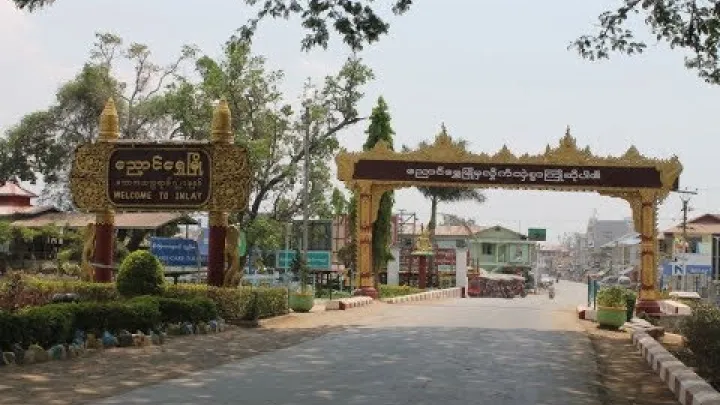
Heho is the area's air gateway, while Shwe Nyaung is an important name to recognize when looking at road and rail connections. Kalaw is the nearby highland town most often associated with the multi-day trekking route toward Inle Lake. These places are related in travel planning, but they are not interchangeable bases. A booking described as being near Inle Lake may be in Nyaungshwe, near a road transfer point, or at a lakeside resort reached by boat.
Older route descriptions often connect Nyaungshwe with Bagan, Mandalay, Yangon, and Kalaw. Use them to understand the traditional travel network, not as proof that a connection is currently available. The distance, route, departure point, and operating status should be confirmed for the specific date of travel.
See the Lake as a Cultural and Protected Landscape
Inle Lake is more than a scenic stop for a boat photograph. Its landscape includes floating gardens, stilt communities, boat-based movement, fishing traditions, markets, monasteries, pagodas, and other working spaces. For residents, the water is part of daily transport, food production, worship, and income. A visitor's itinerary should therefore leave room for observation and respect, rather than treating every village as a set for entertainment.
Descriptions of the lake may refer to Intha, Shan, Pa’O, and other communities. These identities should be used carefully. The communities are not one uniform group, and a tourist route cannot represent every resident or village. An image associated with a local tradition may also be staged for visitors or may show only one part of a more complex social and economic setting.
The protected wetland context is also important. The ASEAN Centre for Biodiversity describes the Inlay Lake Wildlife Sanctuary as an important watershed and water source for local communities, alongside its wetland and floating-garden environment. This connects conservation directly to visitor behavior. Reducing waste, avoiding damage to gardens and waterways, and choosing operators that treat residents respectfully are practical ways to recognize that the lake is a living landscape.
Orient Yourself Around the Market, Canal, and Harbor
For a first visit, use three orientation points: Nyaungshwe town center, the central or Mingalar Market area, and the northern canal leading toward the Nyaungshwe harbor or jetty. This is a simple text-based map:
![Preview image for the video "[EngSub] 🇲🇲 Visiting to Nyaung Shwe 5-DAY Market".](/sites/default/files/styles/media_720x405/public/oembed_thumbnails/2026-08/XoX56ZNlJWIs_4S6FovKMDbgnCMl_hNlSYGXpGcqnYk.jpg.webp?itok=JJHu3P62 "Preview image for the video \"[EngSub] 🇲🇲 Visiting to Nyaung Shwe 5-DAY Market\".")
- Begin around the central market area to understand where food, daily shopping, restaurants, and local services are concentrated.
- Walk north toward the canal and observe how the town changes from streets and shops to water-based movement.
- Continue toward the harbor or jetty when arranging a lake boat, but confirm which departure point your accommodation or boat operator is using.
- Think of the lake villages and resorts beyond the jetty as a separate zone. They are not an extension of the town that can be reached on foot.
The town core is generally the easiest area for walking between a guesthouse, market, restaurant, bicycle rental, and travel service. Lakeside accommodation offers a different setting and may use a separate transfer arrangement. Market hours, jetty use, rental availability, and service locations can change, so ask locally on arrival rather than relying on an old map or a traveler description.
Choose the Best Season for Nyaungshwe
Season affects lake visibility, cycling comfort, trekking conditions, clothing, and the amount of flexibility needed in an itinerary. Weather patterns are useful for choosing a travel window, but they do not guarantee conditions on a particular day. A current forecast matters most when you are deciding when to schedule a full lake or trekking day.
Compare the Cool-Dry, Hot-Dry, and Monsoon Periods
For many visitors, November through February is the most consistently comfortable period for lake trips, cycling, and trekking. Nights can feel cool in the highlands, especially compared with warmer parts of Myanmar, so a light layer is useful. This is also a popular planning period, which can affect availability and prices when services are operating.
March and April are generally hotter and sunnier. Early starts can make outdoor activities more comfortable, but strong sun and heat may make a long bicycle ride or full boat itinerary tiring. May through August generally brings more rain, cloud, and humidity, with a greater chance that outdoor plans will be interrupted. September and October are transition months: conditions may improve later in the period, but rain uncertainty remains.
| Period | General conditions | Planning trade-off |
|---|---|---|
| November to February | Cooler, generally drier, and often comfortable | Good activity comfort, but demand may be higher |
| March to April | Hotter and sunnier | Plan around heat and strong sun |
| May to August | More rain, cloud, and humidity | Allow extra flexibility for outdoor activities |
| September to October | Variable transition conditions | Possible cultural interest, but rain remains uncertain |
Broad Myanmar climate guidance from Audley Travel describes a wider dry season from October to May. That broad national pattern should not be treated as a live Nyaungshwe forecast. Check a current Nyaungshwe forecast before scheduling the main lake or trekking day.
Balance Weather with Festivals and Visitor Demand
The Phaung Daw Oo Pagoda Festival has historically taken place around September and October. If the event is taking place, it can add cultural interest while also changing movement around the pagoda, lake routes, jetties, and town. Boats may be busy, some sites may be crowded, and a traditional procession or ceremony may not follow the schedule described in an older guide.
Verify the current festival dates, route, event status, and access arrangements through a current local contact before building an itinerary around it. Historical timing is only a starting point. Do not assume that a festival will occur in the same form or that all visitors can access every part of it.
The drier months may be more popular and may bring stronger demand for rooms, boats, and transport. A shoulder period can offer a quieter experience, but it requires more tolerance for cloud, rain, and changed plans. Choose the season according to your main activity: reliable outdoor comfort, cultural timing, lower demand, or greater flexibility.
Plan How to Get to Nyaungshwe
Nyaungshwe can be reached through a combination of air and road travel, long-distance bus routes, indirect rail travel, or a trek from Kalaw. The best choice depends on which routes are operating, how much time you have, your budget, and how much disruption you can manage. Do not pay for onward travel until the intended route has been confirmed with a current operator or accommodation provider.
Use Heho Airport When Flights Are Operating
Heho Airport is the principal air gateway for the Inle Lake area. It is roughly 50 kilometers from Nyaungshwe, with a road transfer that generally goes through the Shwe Nyaung area. The airport is therefore not in the lake town itself. Your arrival plan needs to include the road connection from Heho to your accommodation, as well as a plan for a late arrival or a delayed flight.
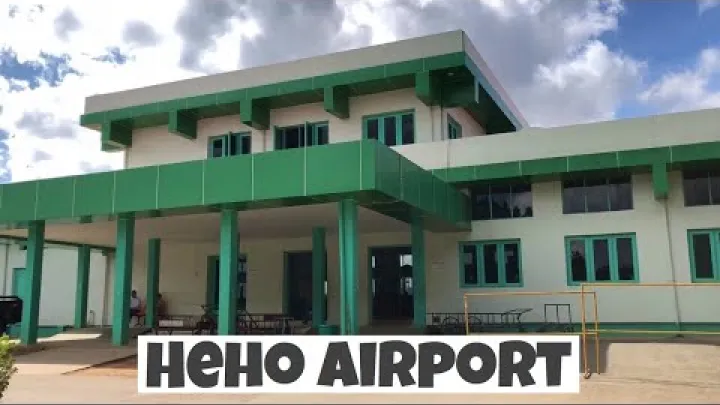
Flight schedules, airlines, fares, baggage rules, and transfer availability are changeable. Online Heho Airport flight listings can show what is being sold for selected dates, but a listing is not proof that the route will operate as planned. Confirm the flight directly with the airline or a current booking provider, then ask your accommodation to confirm the transfer, arrival procedure, and contact method.
Compare Buses, Road Transfers, Rail, and Trekking Routes
Historically, buses have connected the Inle Lake area with major destinations such as Bagan, Mandalay, Yangon, and Kalaw, often using Shwe Nyaung or Nyaungshwe as the relevant arrival point. Journey times, road conditions, departure locations, and service frequency can change. A route shown in an older backpacking itinerary may involve a checkpoint, transfer, or overnight stop that is no longer available.
Rail access is indirect and is associated with the Thazi and Shwe Nyaung direction. It may appeal to travelers who value the journey, but it should not be treated as a dependable itinerary component without a current timetable and confirmation that the complete connection is operating.
The Kalaw-to-Inle multi-day trek is a distinctive way to arrive when trails, villages, guides, and local conditions allow. It requires more than simply finding a route on a map. Confirm the operator, trail access, overnight villages, weather, physical demands, luggage arrangements, and the final arrival point before committing.
| Option | Best suited to | Main trade-off | Confirm before paying |
|---|---|---|---|
| Flight to Heho | Travelers prioritizing speed | Requires a separate road transfer | Flight, baggage, transfer, and late-arrival plan |
| Long-distance bus | Travelers seeking an overland option | Longer journey and possible route changes | Departure point, route, timing, and current service |
| Private road transfer | Travelers needing flexibility | Usually costs more than shared transport | Driver, vehicle, route, price, and arrival details |
| Rail connection | Travelers for whom the journey matters | Indirect and timetable-dependent | Complete connection through the current rail network |
| Kalaw trek | Fit travelers seeking a walking route | Physical effort and overnight logistics | Trail, villages, operator, weather, and local access |
Use convenience, cost, physical effort, flexibility, and verification needs as your comparison criteria. The fastest route is not useful if the transfer is unconfirmed, and the cheapest route is not a saving if a missed connection creates a larger problem.
Get Around Nyaungshwe and Inle Lake
Movement in the area divides naturally into town travel, land-based exploration, and boat travel. Walking and cycling work best around Nyaungshwe, while a boat is needed for the main lake experience. Choosing the right mode helps prevent unrealistic schedules and makes the difference between a town base and a lakeside base clearer.
Walk or Cycle Around Nyaungshwe
The central town is suited to walking between accommodation, markets, restaurants, the canal, and local services. Walking also gives you a better sense of the difference between visitor-oriented businesses and ordinary daily activity around the Nyaungshwe town center and Mingalar Market area.
Bicycles extend access beyond the core to nearby rural roads, villages, monasteries, and land-based attractions when those routes are open and suitable. They offer more independence than arranging a vehicle for every short trip, but route conditions should be assessed locally. Heat, dust, traffic, animals, uneven surfaces, and limited shade can make a route more demanding than it appears on a map.
Motorbike rental is a higher-responsibility choice. Before considering it, confirm local rules, insurance coverage, helmet availability, road conditions, and your own riding competence. Ask about the condition of the vehicle and what happens if it breaks down. For any bicycle or motorbike outing, carry water, protect yourself from the sun, and plan to return before dark. Historical rental prices from older travel accounts should not be used as current quotations.
Choose a Lake Boat Trip and Operator
A lake trip can be arranged through your accommodation, booked at the jetty, or purchased as a guided package with a fixed itinerary. A private boat may provide more control over departure and stops, while a shared arrangement may reduce the per-person cost when the route and group are suitable. A package may be simpler, but it can include stops that do not interest you or that are designed mainly for shopping and photographs.
Common lake-day components include floating gardens, stilt villages, Phaung Daw Oo Pagoda, Indein, markets, and craft or agricultural stops. These should be treated as possible components rather than a guaranteed list. Water levels, weather, local access, religious events, operating hours, and the interests of the group can affect the route. Ask which stops are included and how long the boat will remain at each one.
Boat charges are often quoted per boat rather than per passenger. The final amount may depend on the route, duration, group size, guide, meals, fuel, and included stops. A low per-person quote may exclude the return journey or may assume a larger group, while a private quote may look expensive until it is divided among several passengers.
Before agreeing to a trip, ask for a clear answer to these questions:
- What is the boat's condition, and what safety equipment is carried?
- Which route and stops are included, and which require an additional charge?
- What time will the boat leave and return, and what happens if weather or access changes?
- Does the price include a guide, food, fuel, entrance charges, or transfers?
- How does the operator approach photography, village visits, wildlife, and working gardens?
If an itinerary depends on people, animals, or craft workers performing for visitors, ask whether the stop can be replaced with an ordinary market, landscape, village edge, religious site, or agricultural area. The most memorable lake experience does not need to be the most intrusive one.
Choose Where to Stay and How Long to Stay
The main accommodation decision is whether to stay in Nyaungshwe town or choose a lakeside or on-lake resort. Neither is automatically better. The right base depends on whether you value daily convenience and flexible transport or quiet surroundings and direct water views.
Base in Nyaungshwe Town for Convenience
Nyaungshwe town is the most practical base for many first-time visitors. It puts restaurants, the market, bicycle access, boat arrangements, and onward transport within easier reach. It also makes it simpler to ask questions, change a plan, buy basic supplies, or arrange a short land-based outing.
Accommodation in town ranges from family-run guesthouses to budget hotels, mid-range properties, and more polished establishments. Choose by current operation, location, contact reliability, and the services you actually need rather than by an old ranking or a promise that a property is the best in town.
A town base is particularly useful when arrival times are uncertain or when you want to keep the itinerary adaptable. It avoids making every arrival, meal, market visit, and departure dependent on a boat transfer. Before booking, confirm that the property is currently operating and can arrange any transport or lake activity you need.
Choose a Lakeside or On-Lake Resort for a Quieter Stay
Lakeside or on-lake accommodation suits travelers who prioritize water views, quiet surroundings, and a resort-centered stay. It can make the lake landscape part of the accommodation experience rather than something visited only during a day trip.
The trade-off is dependence on boat or road transfers. Access to the market, restaurants, bicycle rentals, and last-minute transport may be less convenient than from town. A resort may also have fewer alternatives if the restaurant, transfer, or activity service is not operating as expected.
Before committing, confirm the transfer arrangement, arrival and departure times, cancellation terms, current service availability, and an emergency contact. A higher room price does not by itself guarantee better safety or more reliable operations. Compare the actual access plan with your arrival time and planned activities.
| Base | Atmosphere and access | Best for | Main trade-off |
|---|---|---|---|
| Nyaungshwe town | Active, practical, and land-based | First visits, short stays, flexible plans | Less secluded and less directly on the water |
| Lakeside or on-lake resort | Quiet, scenic, and water-oriented | Slow stays and travelers seeking views | More dependence on transfers and resort services |
Match the Stay Length to Your Base
For a two-night visit, a town base is usually the easier planning framework. You can use the arrival day to settle in, spend one full day on the lake, and leave without adding an extra transfer between a resort and the road network. This is a framework based on the practical needs of a short visit, not a universal minimum stay.
Three or more nights make a slower lake-and-land visit more realistic. You can separate the boat day from cycling, a market and monastery visit, a food experience, or another land-based activity. A lakeside stay also becomes easier to justify when you have enough time to absorb the setting rather than spending most of the visit moving to and from it.
Let route reliability, weather, and your preferred activities decide the final length. Add nights for flexibility, not simply to fill a target number of days.
Estimate Costs and Handle Booking Logistics
A useful Nyaungshwe budget is a list of cost categories rather than a single daily figure. Transport, accommodation, boat arrangements, local fees, food, and optional activities can vary widely by date, provider, currency, and local conditions. Historical travel prices are useful only for understanding what must be included in the calculation.
Build a Budget from Transport, Lodging, Boats, and Fees
Start with arrival and departure transport, then add accommodation for the chosen base. Separate the lake zone fee, boat travel, local transport, food, bicycle or vehicle rental, and optional visits. Ask whether a quoted boat amount is per boat or per person before comparing it with another quote.
Historical examples illustrate why caution is needed. One older travel account reported a lake zone fee of approximately 13,500 kyat and around 6,000 kyat for a day's canoe, describing the canoe amount as a price per canoe. Those figures are not current quotations, and no reliable update date should be assumed. Older bicycle and bus prices are also unlikely to be dependable for present planning. The Been Around the Globe account is therefore best used to understand the types of charges that may appear, not to set your budget.
Flight prices, room rates, boat charges, exchange rates, and fee conversion can change substantially. A kyat amount may have a different value from the one shown in an old report, and a quote in another currency may use a provider-specific conversion. Build a buffer for changes and ask for the total amount, inclusions, and payment currency before accepting a service.
- Transport: include the flight or overland journey, the Heho transfer if relevant, and the final connection to your accommodation.
- Accommodation: compare the room price with transfer charges, meals, cancellation terms, and any required deposit.
- Lake travel: establish whether the boat is private or shared and whether the quote covers fuel, guide services, food, and return travel.
- Fees: ask how the lake zone fee or other entrance charges are collected and whether the amount is included in a package.
- Daily spending: allow separately for food, market purchases, bicycle rental, land transport, and optional activities.
Confirm Reservations, Transfers, and Payment Options
Use flexible or refundable bookings where they are available. Avoid making a chain of nonrefundable commitments until the access route and property operation are confirmed. Flexibility is most useful when it is built into the booking terms, not when it depends on persuading a provider to make an exception later.
Before paying an accommodation deposit, ask the property to confirm that it is operating, how to reach it, whether an airport or bus transfer is available, and whether it can arrange a boat or local activity. Ask for the property's current contact details and save them in more than one place.
Before accepting a quote, confirm the current price, the currency used, the way fees are collected, and accepted payment methods. Do not assume that a previous traveler could pay in cash, use a card, or settle a fee in a particular currency under the same conditions. Keep a written record of what is included and what happens if the route, boat, or accommodation cannot operate.
Spend Time on the Lake with Cultural and Environmental Respect
The strongest Inle Lake experience combines one well-planned lake outing with time in Nyaungshwe and, if conditions allow, a land-based activity. A short list of suitable experiences is more useful than an attraction catalogue that assumes every site is open and every route is available.
Prioritize Lake Landscapes, Villages, Markets, and Sacred Sites
Organize possible activities into three groups:
- Water: a lake boat day with floating gardens, stilt villages, Phaung Daw Oo Pagoda, Indein, markets, and selected cultural or agricultural stops.
- Town: a walk through Mingalar Market and the central market area, local food, nearby monasteries, and time to observe ordinary activity around the canal and harbor.
- Land: cycling through suitable rural areas, a possible visit to Red Mountain Estate Vineyards and Winery, hot springs, or another nearby attraction that is currently accessible.
These examples are not a guaranteed attraction list. Indein, Phaung Daw Oo Pagoda, markets, wineries, hot springs, and other sites may have different opening arrangements or access conditions from those described in older guides. Ask a current local contact about opening status, transport, fees, and appropriate visiting hours.
Sacred sites and working villages require more care than a standard sightseeing stop. Dress appropriately for religious places, follow instructions about footwear and access, and ask permission before photographing people. Residents may be living, farming, trading, or worshipping rather than performing for visitors. A quiet visit that does not interrupt daily work is often more respectful than trying to collect a particular image.
Choose Community-Supporting and Low-Impact Experiences
The lake's wetland, watershed, floating agriculture, waterways, and communities are connected. Pollution or careless movement can affect both the environment and the people who rely on it. Treat gardens, boats, homes, docks, religious sites, and working areas as places with a purpose beyond tourism.
- Carry a reusable water container where practical and reduce single-use plastic.
- Carry all personal waste out of the lake and wetland area when there is no suitable disposal point.
- Do not throw waste into the water, leave packaging at a garden, or place rubbish beside a village path.
- Ask permission before photographing people, entering homes, or approaching working spaces.
- Choose local guides, boatmen, family-run accommodation, markets, and other local businesses when they meet your safety and reliability needs.
- Ask an operator to avoid intrusive encounters, forced performances, wildlife handling, or activities that damage gardens and waterways.
- Use water carefully and leave natural and cultural sites as you found them.
Do not label an individual operator as sustainable based only on advertising. Instead, ask practical questions about waste, route choices, photography, village visits, and treatment of workers and residents. Your choices are clearer and more useful when they are based on observable behavior.
Build a Flexible Nyaungshwe Itinerary
An itinerary for Nyaungshwe should have a clear main activity but enough space for arrival delays, weather changes, and local access decisions. The following plans are sequences rather than fixed schedules.
Create a Two-Night First-Time Plan
Use the arrival day to settle into Nyaungshwe, orient yourself around the market and canal, and arrange the main lake activity. Keep this day local rather than filling it with a distant excursion. A short walk through the town center and Mingalar Market area can help you understand where meals, supplies, bicycles, and transport services are located.
Reserve one full day for a boat-based Inle Lake experience. Select the sites and stops that match your interests instead of accepting every possible stop. You might prioritize landscapes and floating gardens, religious sites such as Phaung Daw Oo Pagoda or Indein, or a quieter route with fewer commercial visits. Confirm the return arrangement before departure from the jetty.
Use the departure morning for breakfast, a simple town activity, or a short walk. Do not rely on a tightly timed long-distance connection immediately after a full lake day or a late arrival. A town base is the default example for this plan because it reduces the number of transfers needed for a short visit.
Use Three Nights for a Slower Lake-and-Land Visit
With three nights, separate the main lake day from a land-based activity. The additional time could be used for cycling on a suitable route, visiting the market and a monastery, arranging a food experience, or considering Red Mountain Estate Vineyards and Winery or hot springs if access is available. This structure gives you a better chance to enjoy the area without treating every hour as a transfer.
A Kalaw trek or more distant extension should remain optional. Add it only after confirming the current trail, operator, villages, weather, physical demands, and onward transport. It should not be inserted into the itinerary simply because older route guides describe it as a standard part of an Inle Lake journey.
The strongest Nyaungshwe plan combines a suitable base, one clear lake day, realistic arrival and departure logistics, and enough flexibility to respond to current conditions. Decide first whether the destination fits the latest official advice and your personal risk limits. If it does not, postponing the visit is a valid travel decision; if you continue planning, keep every major commitment proportionate to the information you can confirm.
Select area
Create a post
Posting is free and no registration is required.