Nyaungshwe Getting There: Routes to Inle Lake
Nyaungshwe getting there is mainly a question of choosing the right gateway, not finding a flight or train station in the town itself. Nyaungshwe is the practical road gateway for Inle Lake: most travelers arrive through Heho Airport (HEH), Shwe Nyaung, Shwenyaung railway station, or Kalaw and then complete a local transfer. This guide, updated 7 August 2026, compares flights, long-distance buses, trains, trekking, and multi-modal routes from Yangon, Mandalay, Bagan, and other origins. Services, road access, and security conditions can change, so use the verification steps here to confirm the complete journey before you pay.
Check Current Access Before Booking
Transport to Nyaungshwe can involve several independently operated legs. Before comparing prices, identify the arrival gateway, the final road connection, and the location of your accommodation. This is especially important when a booking uses a similar name for Nyaungshwe, Shwe Nyaung, or Shwenyaung.
Why Nyaungshwe Requires a Gateway Transfer
Nyaungshwe is the practical road gateway for travelers continuing to Inle Lake. It is not normally reached through a dedicated airport in the town or through a central long-distance railway station. Instead, the usual pattern is to reach a nearby transport node and then travel by road to a hotel in Nyaungshwe or to a lakeside property.
The main air pattern is a flight to Heho Airport followed by a taxi or pre-arranged transfer. This is generally the speed-focused choice when the flight is operating and the road connection is available. Buses provide a longer overland alternative from major Myanmar cities. Rail travel through Thazi to Shwenyaung is a slower, connection-dependent option for travelers who value the journey more than arrival speed. Kalaw can serve as a road approach or as the starting point for a multi-day trek.
Route names, operating days, departure points, transfer times, and fares should be treated as changeable information. A route discovered in an older blog or booking search may show what was once possible without proving that the same service operates on your date. Think of every itinerary as a chain: origin, gateway, local transfer, and final accommodation.
How to Verify Routes in a Changing Transport Environment
Make a short access check before committing money. The U.S. Department of State Travel Advisory provides broader country-level movement and safety guidance, but it is not a route-specific timetable. Use it together with current information from the carrier, airport, railway contact, terminal office, hotel, or a reputable local booking office.
- Check the latest official advisory and ask whether any access restriction, checkpoint, road disruption, or local condition affects the route you plan to use.
- Confirm that a domestic flight to Heho Airport (HEH) is operating on your travel date, including the departure airport and any schedule change.
- Ask the bus or rail operator for the current departure point, destination wording, operating date, and expected arrival node.
- Confirm whether the ticket ends in central Nyaungshwe, Shwe Nyaung, Shwenyaung, or another nearby stop.
- For separate tickets, check the change and cancellation terms and keep a practical alternative such as an overnight stop or a later departure.
Aggregators, social media posts, and older travel reports can help you discover possible combinations. They are less reliable as the final authority for current service status, departure locations, and fares. Flexible reservations are valuable when a journey depends on a flight, a long-distance bus or train, and a local vehicle booked through different providers.
Understand Nyaungshwe’s Main Gateways
Each gateway serves a different kind of arrival. Heho is the main air access point, Shwe Nyaung is a common road access name, Shwenyaung is associated with the railway approach, and Kalaw is useful for road travel and trekking. None of these names should automatically be read as the exact location of your hotel.
Heho Airport (HEH) for Air Arrivals
Heho Airport, identified by the code HEH, is the principal air gateway used for the Inle Lake and Nyaungshwe area. The airport is outside the town, so an air ticket only completes the first part of the journey. After landing, travelers normally need a private taxi, hotel-arranged vehicle, or another confirmed road transfer.
If you are arriving through Yangon or Mandalay, check whether a suitable domestic flight to Heho is actually available on your dates. A route page, flight search result, or older itinerary can show a possible connection without guaranteeing that it is currently bookable. Check the arrival time as well as the flight itself, because a late landing can make the final road leg harder to arrange.
The airport gateway is most useful for travelers with limited time, heavier luggage, or a preference for a more comfortable overland approach. Detailed airport transfer planning is covered below, where the difference between a Nyaungshwe hotel and a lakeside property becomes important.
Shwe Nyaung and Shwenyaung for Road and Rail Arrivals
Shwe Nyaung and Shwenyaung are closely related access names, but they should not be treated as interchangeable when you are buying a ticket. Road or bus listings may use Shwe Nyaung for a local stop, while Shwenyaung commonly refers to the railway endpoint associated with the slow train route from Thazi. A traveler who reaches either node may still need a local road transfer into Nyaungshwe.
| Mode | Arrival node | Final transfer | Verification difficulty |
|---|---|---|---|
| Air | Heho Airport (HEH) | Road transfer to the hotel | Medium |
| Bus | Shwe Nyaung or the operator’s road stop | May require a local ride | Medium to high |
| Train | Shwenyaung railway station | Local road transfer | High |
| Road or trek | Kalaw, a village, or a lakeside area | Road, boat, or hotel transfer | High |
Before paying, ask the operator to write the exact drop-off name and location. A ticket that says Nyaungshwe may refer to a town stop, a nearby road point, or a booking office rather than the hotel entrance. If the wording is Shwe Nyaung or Shwenyaung, arrange the final connection as part of the same plan.
Kalaw as a Road and Trekking Approach
Kalaw is a western hill-town approach to Nyaungshwe. Travelers can use it as a stop on an overland itinerary, look for a current road connection onward, or begin a multi-day trek toward the Inle Lake area. This makes Kalaw attractive to people who want to combine transport with walking, but it is not normally the fastest way to reach Nyaungshwe.

Public transport and organized trekking are different products. A trekking company’s departure pattern is not a scheduled city-to-city bus service, and a tour itinerary may end at a village, a lakeshore, or a boat landing rather than in central Nyaungshwe. Ask where you will sleep, where your main luggage will go, and how you will reach your hotel after the walking or lake portion.
Trail conditions, local access, weather, guide availability, and road services can affect a Kalaw plan. Obtain current advice from a local guide or booking office before leaving established roads. Travelers with fixed onward tickets or limited time should choose this approach only when they can accept changes and additional transfers.
Compare the Main Ways to Get to Nyaungshwe
The best way to get to Nyaungshwe depends on whether you value speed, lower-cost overland travel, comfort, or scenery. Flight, bus, rail, and trekking options also differ in booking difficulty because they may use separate operators and different arrival points. The comparisons below describe planning tendencies, not guaranteed current fares or schedules.
Flying: Fastest When the Connection Is Operating
The flight-based route normally follows this sequence: depart from a major city such as Yangon or Mandalay, land at Heho Airport, travel by road to Nyaungshwe, and check in at the hotel. It is usually the shortest practical pattern when the domestic flight and the airport transfer are both operating. Compare the full door-to-door journey rather than comparing flight time alone with the headline duration of an overnight bus.
Flying usually offers the greatest comfort for the long-distance portion and is easier for travelers carrying luggage, but it can cost more than a bus and depends on two separately confirmed legs. A delayed or rescheduled flight can also affect the road transfer. Confirm who will meet you, where the driver will wait, and whether the quoted transfer ends in Nyaungshwe town or at a lakeside property.
Flight schedules and domestic routes can change, so do not treat an old flight listing as proof of current service. This option is most suitable for a short itinerary when the available flight fits your date and you can arrange the final transfer before departure.
Long-Distance Buses: Practical Overland Access
Long-distance buses can connect Nyaungshwe or the nearby Shwe Nyaung area with major Myanmar cities. The practical question is not only whether a route is listed, but where the bus actually stops. A service advertised as going to Nyaungshwe may terminate at a nearby road point, while another operator may use a local office or terminal outside the town center.

Bus travel is often considered a lower-cost alternative to flying, but the live fare, luggage policy, and service status matter more than an old price in kyat. Overnight departures may save a hotel night and travel time during the day, but they can reduce rest and expose travelers to road delays, changes in departure points, or a difficult arrival at an unfamiliar stop. Comfort varies by vehicle, seat type, road condition, and whether the journey is direct.
When booking, confirm the bus office, departure point, destination wording, expected arrival point, luggage allowance, and the local ride into Nyaungshwe. Treat a direct-bus label as an operator claim to confirm for your date, not as a permanent route fact. A bus ticket is only a complete plan when the final transfer is included or separately arranged.
Train Travel: Scenic but Slow and Connection-Dependent
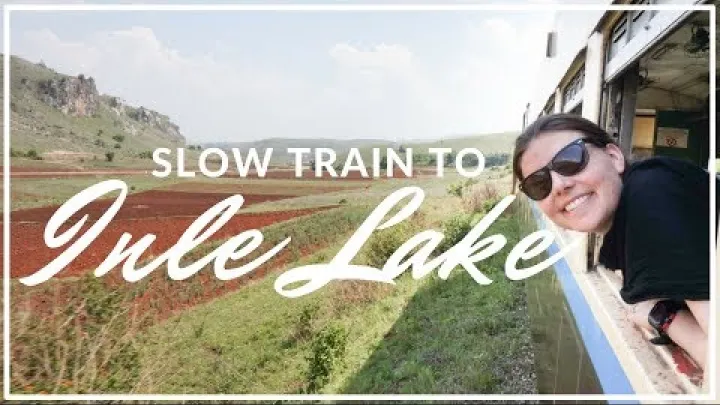
The rail approach through Thazi to Shwenyaung is a slow-travel option. It may appeal to travelers who enjoy changing scenery and local rail travel, but it is not a time-efficient connection to Nyaungshwe. The train journey ends at Shwenyaung, so the itinerary remains incomplete until you have a road transfer into town.

Rail service days, departure times, delays, station arrangements, and connections from your starting city require current confirmation. Traveler accounts can explain the route shape, but they may describe an earlier operating pattern. Do not reuse a historical fare or timetable as a current fact, and do not assume that a train connection will align with a same-day hotel or lake activity.
This route suits travelers with flexible schedules, light luggage, and genuine interest in the journey. It is less suitable when you must arrive by a fixed hour, connect to a confirmed boat or trek, or travel with luggage that is difficult to move between a station and a local vehicle.
Trekking and Multi-Modal Routes: An Alternative Approach
A multi-modal itinerary can combine a road journey to Kalaw, a guided trek, local road transport, and a boat journey on Inle Lake. This is an experience-based way to approach the area rather than a standard public transport route. It can add scenery and time outdoors, but it also adds decisions about guides, trail conditions, luggage, accommodation, and the final movement to Nyaungshwe.
Boats on Inle Lake are local continuation or sightseeing transport. They should not be understood as evidence of a regular long-distance ferry service directly into Nyaungshwe. Depending on the itinerary, a boat may take you to a lakeside hotel or sightseeing location, after which you may still need a road connection to the town.
Ask a trekking provider where the walk ends, how bags are transported, whether a guide is included, and whether the last transfer to your accommodation is included. Obtain current local advice before leaving established roads or committing to a trail. Choose this option for the experience, not because it is a simple replacement for a flight or bus.
Plan Routes from Major Myanmar Gateways
From the main arrival cities, there are usually two broad patterns: fly toward Heho and continue by road, or travel overland through a current bus, rail, or Kalaw connection. The route that works in one direction may not be available in reverse, so plan each journey independently.
From Yangon
From Yangon, the speed-focused route chain is Yangon to Heho Airport, then Heho to a Nyaungshwe hotel. It requires a suitable domestic flight and a separate road transfer. For international arrivals, remember that an international flight and a domestic flight are separate travel legs with separate operating conditions and booking terms. Do not build a fixed lake activity around an immediate connection after landing in Yangon.
The overland pattern is Yangon to a current bus or rail gateway, then onward to Shwe Nyaung or Shwenyaung, followed by the local road transfer. A Rome2Rio route page illustrates that Yangon to Nyaungshwe can involve multiple legs and that an aggregator’s total travel time is indicative rather than guaranteed. It also shows why a route described as Yangon to Nyaungshwe is not automatically a single direct bus journey.
Choose the flight pattern when time and comfort are more important than overland experience and the complete connection is confirmed. Choose the bus or rail pattern when you have more time, can manage a less predictable journey, and are prepared to verify the gateway transfer separately.
From Mandalay
From Mandalay, the air pattern is Mandalay to Heho Airport followed by a road transfer to Nyaungshwe. This can reduce the long overland portion, but the flight must be available on your date and the arrival transfer must be arranged. The full journey still includes the road from the airport.
Overland options may include a bus toward Nyaungshwe, Shwe Nyaung, or another nearby point. Some listings may describe a direct or semi-direct service, but frequency and endpoint should be treated as current operator questions. Ask whether the ticket finishes in central Nyaungshwe or requires a local vehicle at Shwe Nyaung or another stop.
A flight is generally the more time-focused choice when it is operating. A bus or other overland route may be preferable for travelers who want to reduce air travel, manage the journey in stages, or stop along the way. Compare the live fare and the complete arrival plan rather than selecting from a route name alone.
From Bagan and Other Overland Origins
From Bagan and northern Shan State origins such as Hsipaw, the journey to Nyaungshwe may require one or more road changes. Plan it by practical pattern rather than by assuming a stable direct service. One pattern uses Kalaw as a regional connection or trekking stop. Another uses a current bus hub before continuing toward Shwe Nyaung or Nyaungshwe. A third uses the Heho air gateway when a suitable domestic connection is available.
Ask a current local booking office to map the complete route, including each departure point, arrival point, transfer, and final road leg. If a bus ends at Kalaw, do not assume that another bus to Nyaungshwe will be waiting. If a trek ends near the lake, do not assume that your town hotel is included in the itinerary.
Route reliability can differ by date and direction. Information that describes travel from Nyaungshwe to another city should not automatically be reversed to plan the inbound journey. Travelers with fixed reservations should use a route with fewer independent connections, while those with more time can use Kalaw or an overland stop to make the journey part of the itinerary.
Complete the Last Mile into Nyaungshwe
The last local transfer can determine whether an otherwise workable route is comfortable and straightforward. Confirm it before arrival, especially when your long-distance ticket ends outside Nyaungshwe or your hotel is beside the lake rather than in town.
Heho Airport to Nyaungshwe
The normal airport sequence is to collect your luggage at Heho Airport, meet an identified driver or arrange a local taxi, and travel by road to the exact hotel address in Nyaungshwe. A private transfer can be arranged through the hotel or a provider before arrival. Finding transport after landing may offer more flexibility, but it can be less convenient if you arrive late, have special luggage, or cannot easily compare the destination and fare.
Published journey estimates vary. A Rome2Rio Heho Airport routes page shows a quickest airport-transfer option of about 52 minutes to the Inle Lake area, but that figure is an indication for a listed route, not a guarantee for every Nyaungshwe hotel. Traffic, weather, road conditions, the vehicle, and the exact destination can all change the duration.
Private-transfer products can quote a wider range, including 1-2 hours, which is a useful reminder to plan by a range rather than a single number. Give the driver the complete hotel name and phone number. If the destination is a lakeside property, ask whether the road transfer ends at a jetty or another meeting point and whether additional arrangements are needed. Confirm vehicle size and accessibility requirements in advance instead of assuming every vehicle is suitable.
Shwe Nyaung or Shwenyaung to Nyaungshwe
A bus or train may leave you at Shwe Nyaung or Shwenyaung rather than in central Nyaungshwe. The similar spellings are a common practical trap: one may describe a road stop and the other a railway station, and neither name by itself confirms a hotel drop-off.
A traveler account describes the Shwenyaung station to Nyaungshwe road leg as approximately 12 kilometers and records arranging a tuk-tuk for the additional journey. The Notes of Nomads report is useful for understanding the route shape, but its historical fare and local arrangements should not be reused as current prices or guaranteed availability.
- Read the ticket carefully and confirm whether the named arrival point is Nyaungshwe, Shwe Nyaung, Shwenyaung, or another stop.
- After collecting your luggage, identify the current local vehicle option through the operator, station staff, hotel, or a trusted booking contact.
- Agree on the total fare, payment method, luggage arrangements, and destination before the vehicle leaves.
- Give the driver the exact Nyaungshwe hotel address and keep the accommodation contact available if the location is difficult to identify.
Do not assume that every bus uses the same terminal or road stop. Ask the bus company where it will set you down and whether its staff can help arrange the final local connection.
Late Arrivals, Taxis, and Hotel Drop-Offs
A late arrival at Heho, Shwe Nyaung, or Shwenyaung can make the final road leg more difficult than the long-distance portion. Daylight, open booking offices, available local vehicles, and hotel reception hours may all be different from what you expect. Tell your accommodation the planned arrival time and confirm that someone can receive you.
For a late flight, bus, or train, pre-arrange a hotel pickup or use a driver identified by the accommodation or a vetted local provider. Keep the hotel name, address, and contact number written down. Before leaving the gateway, agree on the destination and total fare. Use an identified provider and do not accept an unsolicited taxi offer after dark.
This advice does not mean that every local driver is unsafe. It means that a clear provider identity, agreed destination, and known price reduce avoidable problems when you are tired or arriving in an unfamiliar place.
Book and Prepare for the Journey
Good preparation is less about collecting old timetables and more about confirming the exact details of each live travel leg. Keep the long-distance booking and the final Nyaungshwe transfer together in your planning notes.
Confirm the Operator, Terminal, and Departure Time
Before departure, confirm the following details with the official operator, airport, railway contact, terminal office, or a current local booking office whenever possible:
- Carrier, bus company, railway service, or flight number.
- Exact departure point, terminal name, station name, and meeting instructions.
- Departure date and local departure time.
- Destination wording and the exact arrival node.
- Whether the service is operating on your date and whether a separate local transfer is required.
- Booking reference, luggage allowance, payment method, and rules for changes or cancellation.
A useful message to an operator or hotel should ask them to confirm the carrier, departure point, departure time, arrival point, and the final drop-off into Nyaungshwe. Ask directly whether the ticket ends in town or at Shwe Nyaung, Shwenyaung, Kalaw, a junction, or a lakeside location.
Search aggregators and old blogs can reveal possible routes, but they should not be the final authority for a current schedule. Direct confirmation matters most when a route has a similar place name, a connection between separate companies, or a departure from a terminal that is different from the one shown online.
Allow Buffer for Transfers and Route Changes
Multi-stage travel has a chain effect. A delayed flight can cause a missed airport pickup; a delayed bus can remove the planned local connection; a changed train can affect both the station transfer and hotel check-in. These problems become more serious when every ticket is separate and no operator is responsible for the next leg.
Leave a substantial buffer between independently booked services. Avoid planning a fixed lake activity, trek, or onward departure immediately after the estimated arrival of a long-distance bus or train. If the route is connection-heavy, consider an overnight stop at a gateway instead of relying on a tight same-day transfer.
A practical planning order is to complete the long-distance leg first, secure the gateway-to-town transfer, check in at Nyaungshwe, and only then schedule activities with fixed start times. Keep a possible later departure or overnight alternative in mind, but do not assume that a taxi, bus, train, or flight will be available as a backup until you have confirmed it.
Prepare Payment, Documents, and Luggage
Separate tickets create separate terms for payment, cancellation, changes, luggage, and missed connections. Confirm the total quoted fare for every leg before boarding, including the final local vehicle. Ask which payment methods are accepted and whether an extra amount applies for luggage, a private vehicle, a late pickup, or a destination outside the town center.
- Keep booking references, ticket details, and operator contact information together.
- Carry your accommodation name, address, phone number, and expected arrival time.
- Write down the names of every arrival point, including Heho Airport, Shwe Nyaung, Shwenyaung, or Kalaw.
- Ask about luggage limits and how bags move between a bus, train, taxi, boat, or trekking service.
- Keep important details in digital and written form in case your phone battery or connection is unavailable.
There is no single document or payment rule that applies to every operator. Confirm the requirements for your own journey, retain the documents needed for your bookings, and keep enough practical access to the payment method agreed with each provider.
Choose the Best Route for Your Trip
There is no universal best route to Nyaungshwe. The right choice depends on available time, current service status, budget, luggage, comfort needs, and interest in scenery or trekking.
Best Choice for Speed and Simplicity
For travelers who prioritize a shorter and more comfortable approach, the usual choice is Heho Airport plus a pre-arranged road transfer. It reduces the long overland portion and gives you a clearer door-to-door plan when the flight, driver, and hotel location are all confirmed.
The route is simple only when both legs are secured. It depends on current aviation availability, a separate airport transfer, and the road conditions after landing. The main trade-off is less time on buses or trains but greater dependence on a domestic flight and a local road connection. Make one final access check immediately before departure and keep the driver and hotel contacts available.
Best Choice for Cost and Overland Experience
A bus-based route through a current road gateway is the main choice for travelers who prefer overland travel and are willing to accept a longer or less predictable journey. It may offer a lower total fare than flying, but the result depends on the live ticket price, luggage terms, endpoint, and cost of the final local ride.
Compare the options using the table below. The labels are relative planning tendencies, not current prices or promises about service frequency.
| Route pattern | Speed | Cost tendency | Comfort | Booking complexity | Endpoint certainty | Flexibility |
|---|---|---|---|---|---|---|
| Flight plus road | High | Higher | Higher | Medium | Medium | Lower |
| Bus plus local road | Medium to low | Often lower | Variable | Medium | Low to medium | Medium |
| Train plus road | Low | Potentially lower | Basic | High | Low | High |
| Kalaw trek or multi-modal route | Low for arrival | Variable | Active | High | Low | High |
Use a live fare and a confirmed drop-off point to make the cost decision. An apparently cheap bus or train ticket may require a private transfer, an extra night, or a change of plan after arrival. The overland option is most rewarding when the journey itself matters and you have enough time to absorb delays or route changes.
Best Choice for Scenic Travel and Flexibility
The Thazi to Shwenyaung train route and the Kalaw trekking approach suit travelers who value scenery and local travel more than speed. The train offers a slow rail experience followed by a road transfer. The Kalaw option adds walking, guide arrangements, luggage planning, and possibly lake transport before the final stay in Nyaungshwe.
Both choices need more planning than a flight or a straightforward bus. Service status, road connections, trail conditions, weather, and local access can change, making them less suitable for a fixed itinerary. They work best for travelers with light luggage, flexible accommodation, and time to confirm arrangements locally.
Choose the route that matches your priorities: fly through Heho for speed, use a current bus connection for an overland approach, or choose train and trekking routes for scenery and flexibility. Before setting out, confirm the route, identify the exact endpoint, arrange the last mile into Nyaungshwe, and leave a buffer before any fixed plan.
Select area
Create a post
Posting is free and no registration is required.