Nyaungshwe Budget: Daily Travel Costs, Prices, and Saving Tips
Nyaungshwe budget planning is easiest when you separate ordinary daily spending from one-time costs such as an airport transfer and an Inle Lake area fee. A practical working range is about $30-$45 per person per day for shoestring travel, $55-$100 for mid-range travel, and $100-$180 or more for comfortable travel. This guide explains what those amounts can cover, how town and lakeside accommodation change the total, and why boat sharing often matters more than saving a few dollars on meals. Because prices may be quoted in kyat, US dollars, or changing online conversions, use the figures as planning envelopes and confirm major costs locally before payment.
Nyaungshwe Budget at a Glance
Nyaungshwe can suit several travel styles, but the same advertised price does not affect every traveler equally. A room is usually priced per room, a boat is commonly priced per boat, and some fees are charged per visitor. The table below uses US dollars per person per day and shows a practical allocation rather than a guaranteed local tariff.
Daily Budget Ranges by Travel Style
Planning basis: all dollar figures are in US dollars unless kyat is shown, and the planning date is 7 August 2026. These are rounded working ranges based on available accommodation, transport, food, and activity snapshots, not guaranteed prices for every date. The component ranges are designed to fit within the stated total when a traveler chooses a matching level of service; a lake fee or boat payment may be paid on one day and averaged across the stay for planning.

| Travel style | Stay | Food | Local transport | Activities and fees | Miscellaneous | Total per person per day |
|---|---|---|---|---|---|---|
| Shoestring | $8-$12 | $5-$8 | $2-$4 | $10-$15 | $5-$6 | $30-$45 |
| Mid-range | $18-$30 | $10-$18 | $5-$10 | $12-$25 | $10-$17 | $55-$100 |
| Comfortable | $35-$60 | $20-$35 | $10-$20 | $25-$45 | $10-$20 | $100-$180 or more |
The shoestring stay assumption generally means a simple town room shared with another person, mostly local meals, walking or a bicycle for suitable errands, and a shared lake activity. A solo traveler paying for a whole room or a whole boat can move above that range even without eating at expensive restaurants. Mid-range travel usually assumes a shared comfortable room in town and a mixture of local food and restaurants. Comfortable travel allows more privacy, arranged transport, organized activities, and convenience spending. Older Myanmar-wide travel budgets can provide historical context, but they should not be treated as current Nyaungshwe prices because availability, currency conditions, and operating costs change.
What the Daily Figure Includes and Excludes
The headline daily figure covers a night in Nyaungshwe, ordinary meals, movement within or near town, planned activities, and small discretionary spending. It is intended to answer the question, How much should I have available for a normal day once I have arrived? It does not automatically include flights, an intercity bus or train, travel insurance, shopping, major equipment purchases, or an unusual private tour.
Keep one-time costs visible even when you average them for planning. For example, if a fixed fee is $10 and you stay four nights, it represents $2.50 per night in your mental average, but you may still need the full amount when it is collected. The same principle applies to an airport transfer. Do not make a low daily average look more comfortable by hiding a large arrival payment.
Sharing can change the result quickly. Suppose a room is quoted at $40 per night for three nights and two people share it. Each person pays $60 for the stay, while a solo traveler pays the full $120. If a boat quote is $80 for the vessel, two people pay $40 each and a solo traveler pays $80. In this example, sharing changes the cost by $100 per person before food or local transport. Always write room and boat costs as totals first, then divide them by the number of paying travelers.
Accommodation Costs in Nyaungshwe
Accommodation is usually the largest flexible daily cost after a lake excursion. Comparing the location, included breakfast, cancellation terms, and transport needs can be more useful than choosing the lowest room headline.
Budget Guesthouses and Hostels in Town
An available Expedia listing snapshot shows entry-level Nyaungshwe rooms from around $16. Treat that figure as an indicative online starting point for a room, not a guaranteed walk-in price, a per-person price, or a rate available on your dates. Online inventory, taxes, cancellation conditions, and the number of available rooms can change the final amount.
![Preview image for the video "[EngSub] Once the capital of Shan State | A 2 days 1 night budget trip to Nyaung Shwe".](/sites/default/files/styles/media_720x405/public/oembed_thumbnails/2026-08/KMWZfD623qh8swSF_YYXt4NV_080lM4oiNHjW4i4TtY.jpg.webp?itok=Eeo4UUlF "Preview image for the video \"[EngSub] Once the capital of Shan State | A 2 days 1 night budget trip to Nyaung Shwe\".")
For a budget guesthouse, compare more than the room rate. Check whether breakfast is included, whether the bathroom is private, whether the room has air conditioning or only a fan, and whether Wi-Fi and power are reliable enough for your needs. Also look for taxes, service charges, deposits, and restrictions on late arrival. A low price may not be good value if you need to buy breakfast elsewhere or arrange repeated transport to reach restaurants and boat booking points.
A town-based guesthouse can help control the rest of the Nyaungshwe travel budget. Restaurants, tea shops, the market, bicycle rentals, and local booking services may be easier to compare from town than from a lakeside property. Direct, walk-in, and online prices can differ, so compare the complete stay rather than assuming one booking channel is always cheapest. Availability can change quickly, particularly when travelers want a specific room type.
Mid-Range Hotels and Value Trade-Offs
For comfortable town-based accommodation, use a cautious planning bracket of roughly $30-$50 or more per room per night when a current quote supports it. This is a planning bracket, not a claim that every mid-range hotel falls inside it. A hotel may cost more because it offers a better bathroom, stronger bedding, air conditioning, breakfast, a quieter setting, or more dependable service.
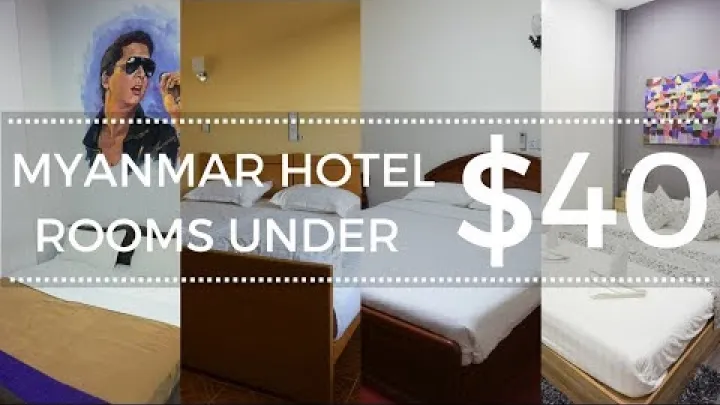
Room sharing is important when comparing this level. A $40 room costs $40 to a solo traveler but $20 each for two people. Over three nights, the difference is $120 for the solo traveler compared with $60 per person for the couple. That single calculation can determine whether a stay feels mid-range or comfortable in the daily budget.
Compare refundable and nonrefundable rates carefully. A nonrefundable discount may be useful when your dates and access are certain, but a refundable rate can have value when availability or operating conditions are less predictable. Check whether breakfast, bicycle use, drinking water, taxes, and other services are included rather than assigning the same value to every hotel with a similar room price.
Town Base Versus Lakeside and Nearby Villages
Nyaungshwe town, lakeside properties, and nearby village stays are different budget choices rather than interchangeable accommodation categories. The cheapest room rate is not always the lowest total trip cost. Location can affect meals, transfers, boat arrangements, and how easily you can compare alternatives.
| Base | Cost pattern | Convenience | Best fit |
|---|---|---|---|
| Nyaungshwe town | Broadest range of rooms and food choices | Good for walking, bicycles, markets, and comparing operators | Travelers who value flexibility and cost control |
| Lakeside | Location and service premium may raise the total | More dependent on arranged boats, transfers, or on-site dining | Travelers who value the setting and convenience of staying beside the lake |
| Nearby village | May be cheaper, similar, or more expensive depending on supply | Fewer choices may mean more planning for meals and transport | Travelers seeking a quieter base after confirming practical access |
Lakeside accommodation may reduce the need to travel to a departure point, but that benefit can be offset by higher room rates, arranged transport, and restaurant prices. A nearby village can offer a different setting, but limited accommodation or transport choices may make an apparent saving less useful. For most budget comparisons, start with a town room and then calculate the full lakeside or village cost, including meals and transfers.
Food and Drink on a Nyaungshwe Budget
Food costs are relatively easy to adjust because Nyaungshwe offers both local meals and visitor-focused restaurants. Breakfast inclusion, drinks, alcohol, and dietary preferences often create a larger difference than the price of a basic noodle meal.
Local Meals, Markets, and Shan Food
A traveler who mainly chooses local meals can use about $5-$10 per day as a cautious planning allowance. This is a budget allowance rather than a documented current menu average. It works best when breakfast is included at the guesthouse or when the traveler chooses tea shops, noodles, rice dishes, and other local meals instead of imported or specialty food.
Shan noodles and tea-shop meals are useful reference points for a low-cost day. Inle montee is another local food anchor. DVB describes Inle montee vendors around the Phaungdaw-U Pagoda area and at Nyaungshwe market. These places can help travelers look for local food, but a food location is not a promise of one fixed price or serving size.
A sample local-food day could be a guesthouse breakfast, Shan noodles for lunch, an Inle montee snack, and a local rice, curry, or noodle-soup dinner. Tea, bottled drinks, fruit, and snacks should be counted separately if they are frequent purchases. Alcohol can quickly move the food line above the local range. If a stall or restaurant has no displayed menu, ask for the current price and portion size before ordering. This is especially useful when several dishes or drinks will be shared.
Restaurants, Drinks, and Dietary Preferences
For a mid-range traveler who mixes local meals with restaurants, plan roughly $10-$18 per day for food. A more comfortable dining pattern can use about $20-$40 per day, especially when it includes visitor-focused restaurants, international dishes, desserts, wine, or other drinks. These ranges describe choices, not a typical bill that every traveler will receive.
Compare the full meal cost rather than only the main dish. Add drinks, side dishes, shared plates, desserts, service charges, and any delivery or convenience cost. A traveler can keep breakfast and lunch local while spending more on one evening meal, which gives more control than assigning the same amount to every meal.
Vegetarian and vegan travelers can find restaurants and menu options aimed at plant-based diners, but menus and opening hours may change. Ask how dishes are prepared if ingredients matter, and confirm the current menu and price when selecting a dedicated set menu. Dietary needs are a reason to compare several places rather than relying on one older listing or an online review.
Transport, Boat Tours, and Activity Costs
Transport in a Nyaungshwe budget has two parts: getting to town and moving around after arrival. A lake boat is a separate activity cost because its pricing is usually shaped by the whole vessel, itinerary, and group size rather than by a simple local fare.
Arrival and Everyday Transport as Budget Lines
An available Rome2rio fare snapshot places a taxi from Heho Airport to Nyaungshwe at about $20-$25 one way and describes a journey of about 30 minutes. Treat this as an aggregator estimate and fare snapshot, not a live universal tariff or an operator quotation. A shared transfer can lower the per-person cost, while a solo vehicle makes the full quote part of one traveler’s arrival budget.
| Transport mode | Budget role | Sharing potential | What to compare |
|---|---|---|---|
| Heho Airport taxi or transfer | One-time arrival or departure cost | Usually high when travelers share a vehicle | Total fare, pickup, luggage, waiting, and payment terms |
| Walking | No fare for suitable town errands | Not applicable | Distance, weather, luggage, and time |
| Bicycle | Low-cost daily movement category | Usually individual, although a pair can share a rental arrangement | Daily rate, deposit, condition, return time, and included equipment |
| Tuk-tuk or taxi | Flexible local trips and heavier luggage | Often possible if the vehicle and fare allow it | Fare basis, waiting time, luggage, and total price |
| Arranged vehicle | Higher-cost convenience for longer or less direct trips | Useful for couples or groups | Vehicle type, driver time, fuel, stops, and return conditions |
Walking and bicycles can reduce a daily transport allowance for suitable town trips, while tuk-tuks, taxis, and arranged vehicles are useful when distance, luggage, or timing matters. Intercity transport and flights should remain separate from the daily Nyaungshwe figure. Before travel, confirm the current Heho Airport transfer or local fare, vehicle type, pickup terms, and total price with the accommodation or operator. Also ask whether waiting time, luggage, or a late pickup changes the amount and whether payment is expected in kyat or another currency.
Boat Tours and the Inle Lake Area Fee
Inle Lake activities are easier to budget when you distinguish four separate items: the boat’s total price, the number of passengers, optional activities such as a canoe or guided stop, and the area fee. A quote per boat can be good value for a group but expensive for one person. A price described as per person may already include a shared departure, while a private departure may use a single total for the vessel.
Historical price warning: an available travel reference records an Inle Lake area fee of 13,500 kyat or $10 and a canoe price of 6,000 kyat for a day. Beenaroundtheglobe presents these as reference points from its travel account, not as a current official tariff. Do not use those figures as proof of the amount payable on your trip. Preserve the kyat figures when comparing the old reference, but obtain the current fee and activity quote locally.
Sharing economics are straightforward. In a hypothetical example, a boat quote of $60 would cost $60 for one traveler, $30 each for two travelers, and $15 each for four travelers. If a hypothetical $10 area fee were charged per visitor, the corresponding totals would be $70, $40, and $25 per person. The boat total is shared; the visitor fee is not. If you stay several nights, you can divide a fixed per-person fee across the trip for a daily average, but keep the full payment in the budget for the day it is collected.
Before departure, ask for the boat’s total price and passenger capacity. Confirm the itinerary, fuel, meals, planned stops, waiting time, and whether a canoe, guide, or other activity is included. Ask specifically whether the area fee is included or must be paid separately. A low headline quote can become less attractive if it excludes fuel, lunch, return timing, or a required fee.
Lower-Cost Activities Around Nyaungshwe
Not every day needs to contain a full private lake excursion. Lower-cost activities can stabilize the average while still giving you time to understand the town and local area.
- Walking: Town walks can replace short vehicle trips and leave room in the budget for an occasional paid experience.
- Cycling: A bicycle is a low-cost movement option when the rental terms, route, weather, and personal comfort make it suitable.
- Markets: Nyaungshwe market provides a concrete place to observe local commerce and look for food or small purchases without committing to a tour.
- Town-based cultural visits: The Phaungdaw-U Pagoda area and other local places can be combined with a food walk or market visit. Do not assume that every site has no admission, donation, guide, or transport cost.
- Optional paid activities: Wine visits and tastings, hot springs, guided village visits, and specialty excursions should be separate line items rather than hidden in the normal daily allowance.
Ask for the current admission, tasting, guide, and transport charges before committing to a paid attraction. A useful pattern is to place one major paid lake or cultural activity between lower-cost town days. This does not make the paid activity cheaper, but it prevents several high-cost days from being averaged into a budget that cannot support them.
What Makes Nyaungshwe More or Less Expensive
The biggest changes often come from availability and fixed-cost sharing rather than from the price of a basic local meal. Dates, room supply, boat supply, and the amount of flexibility you need all affect the final Nyaungshwe prices you see.
Season, Weekends, Festivals, and Availability
Peak travel periods, weekends, festivals, and limited room or boat availability can make flexibility expensive. When fewer suitable rooms or boats remain, a traveler may pay more for a convenient location, accept a higher cancellation risk, or use a private vehicle instead of sharing. The effect is often an availability premium rather than a published seasonal tariff.
Shoulder or lower-demand periods may offer more room for negotiation or a wider choice of accommodation, but a discount is not guaranteed. Lower demand can also mean that a preferred property, restaurant, boat, or attraction operates on a reduced schedule. Avoid building a budget around a discount until the actual quote and inclusions are known.
A practical decision guide is simple: book earlier when a specific room, date, or lake departure is essential; stay flexible when you can compare several operators and dates. Prefer refundable accommodation when the value of flexibility is greater than the discount on a nonrefundable rate. Before making a nonrefundable booking, check current official travel advice and the operating status of local transport and accommodation. Keep a contingency allowance for a changed transfer, an additional meal, or a replacement activity.
Currency, Payment, and Price Verification
The same service may be quoted in kyat, US dollars, another foreign currency, or an online platform conversion. These figures are not interchangeable. An online conversion may be for comparison only, while the local operator may require a different currency, a deposit, or a payment method that is not available to you.
Use one comparison currency for your spreadsheet, but preserve the original quote. For every major booking, record the date, currency, exchange basis used for your comparison, total amount, inclusions, taxes, deposit, and cancellation terms. This makes it easier to identify whether a price changed or whether two quotes simply use different inclusions.
Before paying, confirm the following points:
- Is the amount quoted in kyat or a foreign currency, and is it the total for one person, one room, or one vehicle?
- What is included, such as breakfast, fuel, meals, entrance fees, taxes, waiting time, or return transport?
- Is a deposit required, when is the balance due, and what happens if plans change?
- Does the venue or operator accept your intended payment method, and can you receive a receipt or written confirmation?
Keep a payment contingency for price movement and unexpected small changes, but do not rely on an unsupported exchange rate or assume that a platform’s converted amount will be accepted locally. Online listings and older travel reports are useful reference points, not guarantees of the amount payable at the destination.
Sample Nyaungshwe Budgets by Trip Length
The following examples show how the daily envelopes work in real calculations. They are illustrations that you can replace with current room, food, transport, and boat quotes. Intercity travel, flights, insurance, and shopping are excluded unless specifically stated.
Three-Night Shoestring Example
This example covers three nights and four days in destination. It uses an indicative $16 town room rate, a hypothetical $60 total boat quote, and a $10 area-fee placeholder based on the historical reference described earlier. The boat and fee amounts are not current package prices. The solo column assumes one person bears the whole room and boat quote; the shared column assumes two people share both costs.
| Line item | Solo traveler | Two travelers sharing |
|---|---|---|
| Accommodation, 3 nights | $48, or $16 x 3 | $24 each, or $16 x 3 divided by 2 |
| Local meals, 4 days | $32, or $8 x 4 | $32 each |
| Bicycle and local transport | $12 | $10 each |
| Lake activity boat | $60, if the quote is for one boat | $30 each from the shared $60 boat quote |
| Area fee placeholder | $10 | $10 each |
| Miscellaneous | $18 | $18 each |
| In-destination total | $180 | $124 each |
| Average per destination day | $45 | $31 each |
The airport transfer remains separate. Using the $20-$25 fare snapshot only as an example, one solo traveler would add about $20-$25 one way, while two people sharing the same vehicle would add about $10-$12.50 each. The first day may therefore require considerably more cash than the $31-$45 daily average suggests. A current boat quote, area fee, room rate, and airport fare should replace every placeholder before you use this calculation for a booking.
Three-Night Mid-Range Example
Here, two travelers share a comfortable town room quoted hypothetically at $40 per night. Food is a mixture of local meals and restaurants, and the lake activity uses a hypothetical $80 boat quote shared by two people. The area-fee line uses $10 only to demonstrate the arithmetic and must be replaced with the current amount.
| Line item | Per person for the example |
|---|---|
| Accommodation, 3 nights | $60, or $40 x 3 divided by 2 |
| Food, 4 days | $56, or $14 x 4 |
| Local taxis or tuk-tuks | $40, or $10 x 4 |
| One lake day and area fee | $50, using a $40 boat share plus a $10 fee placeholder |
| Miscellaneous | $40, or $10 x 4 |
| In-destination total | $246 |
| Average per destination day | $61.50 |
This result sits near the lower-middle part of the $55-$100 mid-range envelope. If one person takes the same room alone, the accommodation line rises from $60 to $120. If the $80 boat quote is not shared, the lake line rises from $50 to $90. Those two changes add $100 to the solo total, taking the example to $346 or $86.50 per destination day before any change in food or local transport. The calculation shows why a solo traveler should not use a shared-couple budget without adjusting the fixed costs.
Comfortable Example With a Paid Lake Day
Comfortable travel is not one fixed price. An ordinary comfortable day may fit near $100-$180 per person, while a resort stay, private transfer, or organized lake day can exceed that envelope. The following two illustrations show how the higher total is created by accommodation, convenience, and activity structure rather than by food alone.
| Line item | Shared comfortable day | Premium or private day |
|---|---|---|
| Accommodation | $45 per person in a shared $90 room | $100 for a higher-cost room or resort assumption |
| Food and restaurants | $30 | $40 |
| Private or arranged transport | $20 | $35 |
| Paid lake or organized activity | $65 as a shared planning allocation | $100 as a private or premium planning allocation |
| Miscellaneous | $15 | $25 |
| Illustrative total | $175 per person | $300 per person |
These are ceiling-and-buffer illustrations, not current resort or tour quotes. Couples and families may reduce the per-person amount by sharing a room, vehicle, or boat, while a solo traveler may carry the full private cost. A $300 day does not mean every comfortable day costs $300; it shows how one premium activity day can raise the trip total. Average high-cost days with ordinary comfortable days instead of assuming one number will fit every property and tour.
Ways to Save Without Sacrificing Value
The most effective savings usually come from choosing the right base and sharing fixed costs. Cutting every meal to the lowest possible price is less useful if a distant room requires repeated paid transport.
Choose the Right Base and Share Fixed Costs
Compare a town guesthouse with a lakeside property using the total daily cost. Add the room, breakfast not included in the rate, local transport, boat arrangements, and likely restaurant spending. Choose a town base when flexibility, local food, market access, and the ability to compare operators matter most. Choose lakeside accommodation when the setting and convenience justify the premium and the full package still fits your budget.
- Share a room when privacy needs allow it. A room price divided between two people can change the daily category more than a small meal saving.
- Share a boat or airport transfer with compatible travelers, but divide the total only after confirming capacity and inclusions.
- Stay additional nights when the accommodation rate is reasonable and you want to spread fixed fees and arrival costs across more days.
- Consider refundable accommodation when the value of flexibility is greater than a nonrefundable discount.
Value is not the same as the lowest headline rate. A slightly more expensive town room may save money through breakfast, walking access, bicycle use, or easier comparison of boat operators. A lakeside room may be worth its premium for a short special stay, but it should be compared with the cost of meals and transfers that the location may add.
Use Local Food and Flexible Transport
A practical low-cost pattern is to combine local food with one occasional restaurant meal. For example, choose an included guesthouse breakfast or a local tea-shop meal in the morning, a noodle or rice dish at midday, and a restaurant dinner when you want more choice. This keeps the food budget flexible without requiring every meal to be the cheapest option.
Use walking or a bicycle for suitable town errands and reserve taxis, tuk-tuks, or arranged vehicles for luggage, longer distances, or time-sensitive plans. Before booking a private boat, compare its total with a shared departure or another group’s available capacity. For solo travelers, this comparison can have a larger effect than reducing the cost of an individual meal.
Set a daily discretionary limit for drinks, snacks, tastings, and shopping. A sample pattern might reserve the main budget for accommodation, meals, and one planned activity, then use a separate small allowance for extras. When the allowance is finished, choose a market walk or town activity rather than letting several small purchases silently raise the daily total.
Book Ahead or Stay Flexible at the Right Time
Advance booking can protect access to a preferred town room or a specific lake departure during busy periods. Flexibility can be more useful when several guesthouses and operators are available and you can compare total prices. The right choice depends on whether access or price comparison is more important for your dates.
Before selecting a nonrefundable deal, check the cancellation rule, deposit, payment currency, final balance, and operator confirmation. Reserve essential accommodation earlier when losing access would create a large cost, but keep optional activities open when the itinerary and local quote can be decided later. Avoid paying a deposit based only on a vague promise that meals, transport, or fees are included.
A short budget-buffer checklist can cover the main risks:
- Price changes or a different currency conversion.
- A higher airport or local transfer total.
- An extra night or additional meals caused by a schedule change.
- A replacement activity if a planned tour is unavailable.
- One unplanned experience that you genuinely want to add.
This approach is more useful than applying one fixed buffer percentage to every trip. Assign the buffer to the cost categories most likely to affect your own plans.
Bottom Line: Plan a Flexible Nyaungshwe Budget
A workable Nyaungshwe budget is about $30-$45 per person per day for shoestring travel, $55-$100 for mid-range travel, and $100-$180 or more for comfortable travel. Town accommodation, local meals, walking or bicycles, and shared boats generally provide the most control, while lakeside rooms, private transport, and organized lake days can raise the total quickly.
Keep arrival and intercity travel separate, calculate rooms and boats by the number of people sharing, and treat older fees or online prices as planning references rather than guarantees. With a written comparison of inclusions, a clear payment record, and a buffer for the costs that matter to your itinerary, you can build a Nyaungshwe travel budget that is realistic without being unnecessarily restrictive.
Select area
Create a post
Posting is free and no registration is required.