Hsipaw Where to Stay: Best Areas and Practical Tips

Where to stay in Hsipaw depends first on whether travel is currently permitted and practical, and only then on the type of accommodation you prefer. If a visit goes ahead, the central town grid is usually the most useful base for first-time visitors because it keeps food, the market, local services, and transport within easier reach. Riverside, peripheral, and rural options can suit quieter or trekking-focused trips, but they add transport and permission questions. This guide explains how to compare Hsipaw accommodation without relying on outdated hotel rankings.
Check Current Access and Safety Before Booking Hsipaw Accommodation
Hsipaw accommodation should not be treated as a normal hotel-search problem. Current national advice, local access rules, transport conditions, and whether individual properties are operating can change the answer before location or price becomes relevant.
Treat Current Travel Advice as a Go-or-No-Go Decision
The latest advisory available for this guide is dated May 8, 2026. The U.S. Department of State travel advisory says not to travel to Burma for any reason because of armed conflict, unrest, arbitrary enforcement of local laws, poor health infrastructure, and related risks. This is country-level guidance, but it is directly relevant to any decision about staying in Hsipaw.
Read that advice as a go-or-no-go decision, not as a minor warning to place below a hotel list. Security conditions, road access, local enforcement, communications, and medical support can override the normal advantages of a central guesthouse or a scenic resort. A room with good historical reviews cannot establish that Hsipaw is currently accessible, safe for your circumstances, or suitable for foreign visitors.
Before searching for a room, take three steps:
- Read the latest travel advisory from your own government and any official Myanmar entry or travel information that applies to your nationality.
- Decide whether the trip remains acceptable to you given the stated risks, limited healthcare, and possibility of sudden changes.
- Only continue with the area comparison if travel is legally permitted, personally acceptable, and supported by current information from a reliable local contact.
The recommendations below are therefore conditional. They describe how the town was historically organized for visitors and how to think about the trade-offs if a current, lawful trip is possible. They are not a claim that any neighborhood or property is open today.
Verify Permission, Foreign-Guest Rules, and Area Limits
Publicly available information has reported a distinction between downtown Hsipaw and remote parts of Hsipaw Township. A restricted-area summary can be used as a lead, but it is not an official guarantee and may be outdated, incomplete, or applied differently on the ground.
Permission to enter Hsipaw does not automatically mean permission to stay in a village, cross into a rural area, join a trekking route, sleep at a monastery, or use an across-river property. The exact address matters. A property that appears close to town on a booking map may still involve a different local administrative area, road, crossing, or checkpoint.
Ask a relevant authority or locally established operator to confirm the rule for your nationality, travel dates, and exact destination. Then ask the accommodation to confirm the same address and whether it can legally accept foreign guests. The useful question is not simply whether Hsipaw is allowed. Ask whether this particular property, route, village, trek, and overnight arrangement are allowed now.
Keep a record of the answer, including the name and current contact channel of the person who provided it. If the answers conflict, do not assume that a booking platform or an old travel report is the stronger source. Resolve the conflict before making a firm accommodation choice.
Understand Hsipaw's Main Areas Before Choosing a Base
Hsipaw is easier to compare as a compact town center with several less central alternatives than as a city divided into formally defined hotel districts. The following areas are practical decision zones based on historical visitor patterns and recognizable local anchors, not a guarantee of current neighborhood boundaries or operations.
Central Hsipaw: Best for Walkability and Everyday Access
The central grid has historically been the practical default for visitors who want daily services close by. Use Hsipaw main market, Bogyoke Road, Auba Street, Sabie Street, and Mahawgani Road as map references when comparing addresses. Restaurants, teashops, guesthouses, small hotels, local transport, and ordinary errands were generally concentrated around this central area.
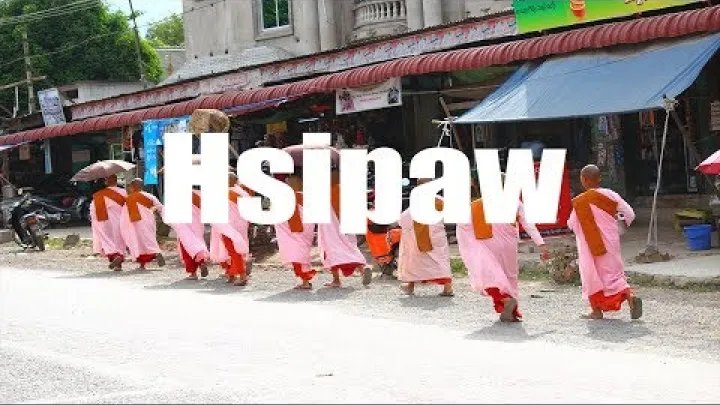
For a first-time visitor, that concentration matters more than a broad description such as city view or garden setting. A central base can make it easier to find breakfast, buy supplies, meet a guide, arrange local transport, and return to the room without planning every short trip. It is also the most straightforward staging point for a permitted trek or an early departure.
The central grid is not uniformly quiet. A property on a main road or close to the market may have more activity, vehicle noise, and early-morning movement. A room set slightly back, including in or near Taung Myo Quarter, may offer a calmer stay while remaining more convenient than an across-river or rural base. Compare the exact street and room position rather than treating central as a single noise level.
Choose the central area when walkability, simple arrival logistics, and access to everyday services are your main priorities. Treat it as a conditional default only after the property and local access arrangements have been confirmed.
Riverside and Across-River Stays: Quieter but Less Convenient
Riverside Hsipaw Resort is a useful documented example of an across-river, village-adjacent lodging option, although information about it is time-sensitive. A setting near the Dokhtawaddy River may appeal to travelers who value quiet, open surroundings, privacy, or a more self-contained stay.
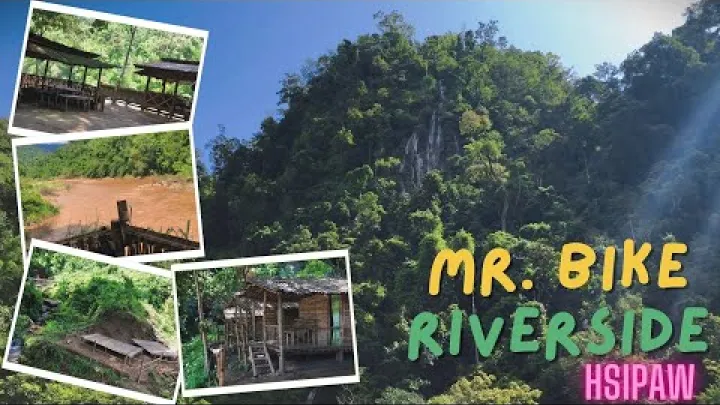
The trade-off is dependence on the connection between the property and town. The route may involve a boat, a road transfer, a bridge, or another arrangement, and the practical details can matter more than the distance shown on a map. Food, the market, local transport, guide meetings, and urgent errands may no longer be simple walks from the room.
Ask the property to explain its current boat or road transfer, operating hours, last crossing, and arrangements after dark. Also ask how a guest would reach town or medical help if the normal connection were unavailable. A quiet riverside location is not automatically safer; being separated from town can increase dependence on the property's own transport, staff, supplies, and communications.
Riverside lodging fits a traveler who deliberately wants a quieter, more self-contained base and accepts the additional logistics. It is a poor default for a short visit built around markets, restaurants, early transport, or several meetings in town.
Peripheral Lodging: A Compromise That Needs Transport Planning
Peripheral properties can offer more space or a calmer setting without the full isolation of a village stay. One useful location example is Yee Shin Guest House, whose Agoda listing describes it as about two kilometers from the city center. That statement is a location clue, not proof that the property is currently operating or accepting every type of guest.

Two kilometers may be manageable for some travelers, but the real question is how the route works for your arrival time, weather, luggage, mobility, and daily plans. A peripheral guesthouse may require a bicycle, taxi, motorbike, or longer walk whenever you want food or services. The apparent saving on the room can disappear if transport is needed repeatedly.
Check the exact address rather than relying on labels such as heart of Hsipaw. The available evidence does not define the boundary between built-up downtown and areas that may require additional permission clearly enough for a general rule. Look at the route to the market, the railway station, and the central streets, then ask about lighting, transport availability, and how easily you can leave the area.
Peripheral lodging is a reasonable compromise for travelers who want some quiet and do not mind planning transport. It is less suitable when you want to step outside for food, return easily between activities, or keep arrival and departure arrangements simple.
Rural Villages and Trekking Homestays: Experiences, Not Default Bases
Village homestays and monastery overnights historically formed part of guided trekking routes into surrounding Shan and Palaung communities. They were usually extensions of a route arranged through a guide or locally connected operator, rather than independent alternatives to a town guesthouse.
The appeal is rural immersion and a closer connection with village life. The practical trade-off is limited services, simpler facilities, uncertain communications, route conditions, and more difficult evacuation. A rural host may not be able to provide the same food choices, transport flexibility, power, internet, or emergency support that a town property could offer.
A permitted rural overnight requires confirmation of the host's availability, the exact route, local permission, current security conditions, communications, and the plan for returning to town. It should also be clear who is responsible for the arrangement if weather, road conditions, or local restrictions change.
Do not independently arrange a foreign-visitor stay in a village when current legal and security information cannot be verified. For most visitors, a verified town room before and after any permitted trek is the more practical arrangement. A rural homestay should be an optional guided extension, not the assumed base for a first visit.
Match the Lodging Type to Your Trip
The best Hsipaw accommodation category depends on how much time you will spend in town, how much independence you need, and whether the property itself can provide reliable food and transport. Names and descriptions from earlier travel periods are useful for understanding the historical mix, but they should not be read as a current ranking.
Central Guesthouses and Small Hotels for Short Town Stays
Small guesthouses and hotels in or near the central grid historically made up much of the visitor accommodation mix. Dated examples include Mr Charles Hotel, Tai House Resort, Mr Kid Guesthouse, Red Dragon Hotel, and The Northern Land. These names illustrate the kind of central lodging travelers once compared; they do not establish that any of them is open, staffed, reachable, or accepting foreign guests now.
A verified central guesthouse or small hotel is generally the most practical category for a short town stay, a night before a permitted trek, or a night after returning from one. The value comes from location and simplicity: food, the market, teashops, local services, and guide coordination may be easier than from a remote property.
Older descriptions may mention breakfast, Wi-Fi, bicycles, room standards, reception hours, or transport help. Treat those details as historical unless the property confirms them for your dates. Compare the exact room, bathroom, power, internet, water, meal, and transport arrangements instead of relying on an old review score or a familiar name.
For many first-time visitors, this category offers the clearest balance of access and cost. The important condition is that the specific property has confirmed its current operation and foreign-guest policy.
Resort-Style Lodging for Quiet and On-Site Facilities
A riverside or resort-style property may suit travelers who value quiet, gardens, scenery, privacy, or on-site meals more than immediate access to the central streets. It can work well when the purpose of the stay is rest and the traveler is comfortable spending more time at the property.
Riverside Hsipaw Resort is a historical example of this lodging category. Its name or earlier descriptions should not be used to infer current room quality, facilities, prices, staffing, or guest policy. Those details need direct confirmation for the intended dates.
Choose a resort-style stay only when the transfer arrangement, permitted location, emergency plan, and meal options are clear. The traveler must also be comfortable with a more self-contained routine. A property described as a resort does not automatically provide better access, stronger security, or greater availability than a small town guesthouse.
This category is best for a quiet-focused trip with dependable on-site arrangements. It is less suitable when your main goals are walking to the market, arranging several short town trips, or minimizing dependence on property transport.
Village Homestays for Guided Trekking Extensions
Village homestays are best understood as trekking extensions arranged through a local guide or operator. They can offer a more immersive rural experience than a town hotel, but usually with simpler facilities, longer travel, and less flexibility if the route changes.
Before choosing this category, establish who the host is, how the route is being arranged, what permissions apply, and how the group will return to Hsipaw. The operator should be able to explain the expected facilities, food, communications, and response plan if a traveler becomes ill or cannot continue.
Keep a verified town lodging option for the nights before and after a permitted trek. This avoids making an uncertain village overnight the foundation of the whole itinerary. No current village stay should be treated as available unless the operator can confirm the host, route, permission, and security situation for the specific trip.
Hostels, Apartments, and Longer Stays: Verify Rather Than Assume
There is not enough reliable current information to assume that Hsipaw has a stable inventory of hostels or serviced apartments. A search result using one of these labels may describe an old listing, a private room, or a property that is no longer operating in the way the platform suggests.
For a longer stay, ask directly about weekly or monthly availability, accepted guest status, utilities, power, water, internet, meals, cleaning, laundry, transport, and the exact payment terms. Confirm whether the quoted arrangement is for a whole unit or only a room in a guesthouse.
A simple guesthouse may be more realistic than an assumed apartment category, but that is not a universal rule. Choose based on what a property can confirm now, not on the category displayed by a search site. Do not assume that a longer booking guarantees stable utilities, a lower rate, or the same service level as a short stay.
Compare Hsipaw Bases by the Factors That Matter
Area names are useful only when translated into daily decisions. Compare how easily you can reach the market, food, local transport, the railway station, and a guide meeting point, then account for the quiet you want and the extra movement that a less central base requires.
| Base type | Daily convenience | Quiet | Extra logistics | Best fit |
|---|---|---|---|---|
| Central grid | Strongest access to town services | Varies by street and room | Lowest town-transfer burden | First-time and short stays |
| Side street or Taung Myo Quarter | Close to the central area if the address allows | Often a quieter compromise | Usually modest, but address matters | Sleep and town access together |
| Peripheral property | Less immediate access | May offer more space or quiet | Bicycle, taxi, or motorbike planning | Travelers accepting daily transport |
| Across-river property | More dependent on the connection | More self-contained | Boat or road transfer and emergency planning | Quiet-focused stays |
| Rural homestay | Not a walkable town base | Greatest separation from services | Guide, route, permission, and evacuation planning | Permitted trekking extension |
This is a decision framework rather than a current price table. The exact address, operating status, and route can change the result for an individual property.
Prioritize Walkability and Essential Services
For a first-time or short visit, proximity to Hsipaw main market, restaurants, teashops, guesthouse services, and local transport is usually more valuable than a scenic marketing label. A central location can reduce the number of uncertain short transfers and make ordinary tasks easier to combine with sightseeing or guide arrangements.
Use Bogyoke Road, Auba Street, Sabie Street, Mahawgani Road, and the main market as comparison points on a map. Do not assume that a property described as central is close to all of them. A listing may use broad promotional language, while the actual address may be on the edge of the built-up area.
The default rule is simple: when convenience is the priority, choose the most central verified location available. That does not promise that every central route is walkable, open at night, or suitable for every traveler. It means that the central grid normally creates the smallest dependence on additional local transport.
Balance Quiet, Noise, and After-Dark Movement
Main-road and market-area lodging may be more convenient but can bring earlier activity, traffic, voices, or other town noise. A side street, a peripheral property, or an across-river stay may be quieter. The benefit of quiet must be weighed against fewer nearby food choices, less spontaneous access to services, and more reliance on a property's own arrangements.
Ask a property specific questions about market or road noise, room orientation, lighting near the entrance, any curfew or transfer cutoff, and what happens if you need assistance after dark. These questions are more useful than assuming that a rural setting is peaceful in every room or that a populated central location is always noisy.
Quiet and safety are separate criteria. A less populated base may reduce noise while increasing isolation and dependence on a transfer. Choose it for the experience you want, not because the word quiet proves that it is safer.
Plan Transport Around the Base You Choose
Hsipaw's travel identity has historically included both the road journey and the Mandalay-Hsipaw railway journey. A historical account from Backpack Adventures discusses the railway's past importance and the repaired viaduct, but it should not be used as confirmation of a current schedule, ticket eligibility, route safety, or uninterrupted service.
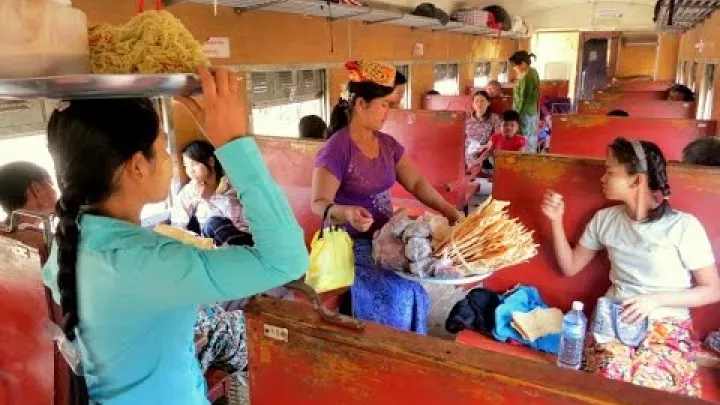
Check the road route and rail route as separate operational questions. Confirm whether the route is running, whether foreign travelers can use it, whether checkpoints or closures affect the journey, and whether the departure point is reachable on your dates. A historic train experience can explain why the railway station matters when comparing locations, but it does not make the train a current travel instruction.
A central town base usually simplifies arrival, departure, food access, and meetings with a verified guide. A riverside or rural base adds another connection before you even begin the main journey. For trekking-oriented visitors, town accommodation is therefore the logical staging point for permitted pre-trek and post-trek nights unless a current operator confirms a different arrangement.
Build a departure contingency around the base you choose. Ask what happens if the expected road, train, boat, or local transfer is delayed or unavailable. Make this question immediately before travel, using a current local source, because past schedules and traveler reports cannot confirm present route conditions.
Compare Total Cost for a Budget or Longer Stay
The cheapest room is not always the cheapest base. A lower room price can be offset by repeated taxi or motorbike trips, river crossings, meals at a property with no nearby alternatives, guide transfers, or an extra night caused by uncertain transport.
Historical room-price references can show how earlier travelers viewed the range of options, but they should not be presented as current Hsipaw rates. For a longer stay, compare the recurring cost of getting to town with the value of central access. Also compare the service reliability that the property confirms, including meals, internet, power, water, laundry, and onward transport.
Request a current, itemized quote in the relevant payment currency. Ask whether the amount covers the room only or also includes meals, transfers, taxes, crossings, extra guests, and late arrival. This creates a more useful budget comparison than comparing nightly room labels alone.
Verify a Hsipaw Property Before You Commit
Once a location appears suitable, treat the property as a specific operating arrangement rather than a name on a map. A short set of direct questions can reveal whether the room, route, services, and guest policy match your plans.
Confirm Current Operation and Acceptance of Foreign Guests
Old reviews, booking pages, and listings with current-looking dates do not prove that a property is open, staffed, reachable, or accepting foreign guests. A platform may continue to display a property after local conditions, ownership, communications, or guest rules have changed.
The Agoda page for Yee Shin Guest House is a useful example of this distinction. It presents a named Hsipaw property and a location description, but an online listing alone cannot confirm current service or legal accessibility. Use it as a lead, not as a final booking decision.
Contact the accommodation through a current channel and ask for a direct confirmation of:
- Operating dates and the exact room available.
- Whether the property can accept your nationality and travel purpose.
- Check-in documents, registration requirements, and arrival times.
- Whether staff will be present when you arrive.
- Current contact details for a manager or responsible local person.
When access is uncertain, compare the reply with information from a current, locally established operator or another reliable local contact. A clear answer about operation and foreign-guest acceptance is more valuable than a high historical rating. Do not describe a named property as an available option until those basic facts have been confirmed.
Check Location, Transfers, Services, and Nighttime Access
Request the exact address or a map pin. Compare it with the central grid, Hsipaw main market, the railway station, the Dokhtawaddy River, and any boat, bridge, or rural-road connection shown in the proposed arrival plan. This can reveal whether a property is genuinely central, peripheral, across the river, or outside the area you intended to book.
Ask what the property can actually provide now. Useful questions include whether meals are available on the dates of your stay, whether bicycles or local transport can be arranged, how power and water are handled, whether internet is working, and whether staff can help with onward travel. Do not infer current amenities from a historical review or from the word hotel or resort.
For a peripheral or across-river stay, get the last transfer time and the practical route to town in clear terms. Ask how you would enter after dark, what happens if the normal boat or road connection stops, and how emergency transport would be arranged. Use the exact location to determine whether the property is clearly within the permitted urban area or whether a separate permission question applies.
It is useful to ask for the information in one message so that the property can answer each point directly:
- Map pin and distance or route to the market and railway station.
- Available arrival and departure transfers, including the latest time.
- Meals, power, water, internet, bicycles, and local transport.
- After-dark entry and emergency transport arrangements.
- Any local access or registration condition linked to the address.
Check Price, Payment, Cancellation, and Flexibility Terms
Before paying, confirm the current total price, currency, deposit, payment method, taxes, extra charges, and what is included. Ask whether meals, transfers, river crossings, additional guests, and late check-in cost extra. An itemized answer helps you compare a central room with a cheaper-looking property that requires daily transport.
Flexible cancellation or delayed payment is especially important when permission, transport, or accommodation operation can change suddenly. Ask what happens if a checkpoint, local rule, route closure, or official restriction prevents you from reaching Hsipaw or the property. Clarify the deadline for changing dates and whether any deposit can be transferred to a later stay.
Keep the terms in writing and avoid a non-refundable commitment based only on an old booking page or an unverified property. The more uncertain the access and operating conditions are for your specific trip, the more useful it is to preserve the ability to change the booking. This is practical risk management, not a guarantee that every property can offer a refund.
The Practical Answer: Verify First, Then Prefer the Central Grid
If current official advice and local information allow the trip to proceed, the central Hsipaw grid is the best default for most first-time visitors. It offers the clearest access to the main market, food, teashops, local services, guide coordination, and transport, while a quieter side street or Taung Myo Quarter can provide a more balanced sleep-and-convenience option.
Choose an across-river or resort-style base only when quiet and on-site facilities matter more than easy town access, and only when the connection and emergency arrangements are clear. Choose a peripheral property when you accept daily transport planning. Reserve a rural homestay for a permitted, guide-arranged trekking extension rather than treating it as a normal hotel substitute.
The strongest answer to where to stay in Hsipaw is therefore a process: make the go-or-no-go decision, confirm the exact area and foreign-guest rules, contact the property, check the transport connection, and keep the payment terms flexible. Only then should location, room category, and price determine the final choice.
Select area
Create a post
Posting is free and no registration is required.