Hsipaw Getting There: Routes, Transport and Current Checks
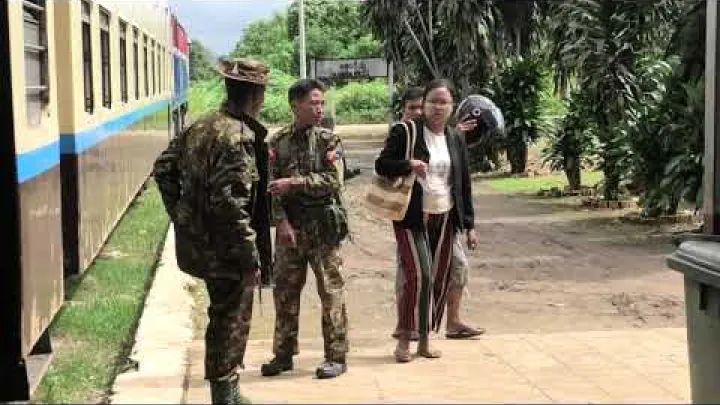
Getting to Hsipaw requires more than choosing a route on a map. Historical travel information describes road, rail, shared-car, and air connections, but schedules, fares, infrastructure, and access conditions can change. This guide separates those historical patterns from current confirmation and explains how to verify every important leg. It also covers arrival at Hsipaw bus and railway stations, daylight planning, and flexible alternatives if a connection cannot be confirmed.
Check Current Access Before You Travel
Begin with access, not with a preferred transport mode. The most attractive historical route may not be operating, and a technically possible route may still be unsuitable if the road, railway, airport, or final transfer cannot be reliably confirmed.
Why Older Hsipaw Transport Guides May Be Outdated
Older guides often describe a connected travel network in northern Myanmar. A traveler could historically travel overland from Mandalay through the Shan highlands, use a bus or minibus to Hsipaw, consider a shared taxi, or take the railway toward Lashio. Some accounts also describe flying to Lashio and continuing by road. These descriptions are useful for understanding the geography, but they are historical baselines rather than promises of current service.
There is an important difference between physical route information and operational information. A map can show Mandalay Central Railway Station, Pyin Oo Lwin, Nawnghkio, Kyaukme, Hsipaw, Lashio, and the roads between them. It cannot establish that a train is running today, that a bus is accepting passengers, that a road is open to visitors, or that a driver can complete the whole journey.
Security conditions, road controls, infrastructure damage, maintenance, weather, operator decisions, and changes in domestic aviation can all affect a journey. For that reason, there is no single route that should be presented as the best choice in every season or for every traveler. A route that was cheap in an old account may no longer be available, while a route that appears short may still require an uncertain connection.
Date-stamp any information you receive about a departure time, fare, journey length, or booking procedure. Treat undated schedules and prices as historical or indicative. Use them to form questions, not to make a fixed booking or a non-refundable onward connection.
How to Verify a Route Before Departure
Use a verification order that checks the whole journey rather than only the first ticket:
- Read current official travel advice. Check the relevant government travel advice and any current notices affecting the areas and roads on your proposed route.
- Check the transport infrastructure. Look for current information from the railway, airport, or other relevant transport authority. For a flight, confirm both the airport and the operating airline. For a train, confirm the exact destination and route section.
- Contact the operator or terminal. Ask a bus company, minibus operator, taxi contact, railway station, or airport representative whether the specific departure is running.
- Obtain recent local confirmation. Ask accommodation staff or a trusted contact in Mandalay or Hsipaw to confirm the departure point, arrival point, and conditions on the final leg.
- Check the arrival plan. Confirm where you will be dropped off, whether you can arrive in daylight, and how you will reach your accommodation if the vehicle arrives late or uses a different terminal.
Write down the date and time of each confirmation. Ask whether the road, rail section, airport, departure, and arrival conditions are all active. A person confirming that a bus leaves Mandalay does not necessarily confirm that it can reach Hsipaw, and an airline booking page does not necessarily confirm the onward road from Lashio.
Finally, distinguish between possible and advisable. If reliable current information is missing, delaying or canceling the journey is a reasonable decision. An old blog schedule should not replace a current official notice, operator confirmation, and local arrival plan.
Travel from Mandalay to Hsipaw by Road
Mandalay has historically been the main staging point for an overland journey to Hsipaw. Road travelers followed a route toward the Shan highlands, with Pyin Oo Lwin, Nawnghkio, and Kyaukme appearing as important intermediate points before Hsipaw. The exact vehicle, departure terminal, and journey length depended on the operator and conditions on the day.
Bus and Minibus Services
Historically, buses and minibuses were the most practical budget options from Mandalay. A road journey was usually planned as a long same-day trip, but the actual duration could change with traffic, stops, road controls, weather, and the condition of the vehicle. A minibus could offer fewer stops or a more direct arrangement, but it was not automatically more comfortable or more reliable.

The historical cost pattern was simple: a standard bus was generally the budget baseline, while a minibus or more flexible vehicle could cost more. Old fare listings should not be treated as current prices. Regional services have often depended on local terminals, agents, guesthouses, telephone contacts, or direct operator arrangements rather than a consistently available online booking system.
| Historical option | Journey pattern | Comfort | Cost pattern | Current status |
|---|---|---|---|---|
| Regional bus | Long road journey, usually planned for the same day | Basic to moderate; stops and seating vary | Historical budget baseline; old fares are not current quotes | Confirm the operator and departure |
| Minibus | Long road journey with potentially fewer stops | Variable; less space is possible | Historical fare depended on operator and seat | Confirm route, seats, and arrival time |
A terminal listing from BNF Express identifies an Hsipaw bus station at Khine Tha Pyay Ma Soe Gate and gives a telephone contact. This is a useful local name to show to an operator, but the listing alone does not prove that the terminal, telephone number, or schedule is still active.
Before paying, confirm the exact departure point in Mandalay, departure time, fare, seat availability, luggage rules, destination stop, and expected arrival time. Ask whether the vehicle reaches Hsipaw bus station or stops elsewhere. If the service is expected to arrive late, ask whether the accommodation can receive you and whether a local transfer is available. Keep the answer together with a road-based backup rather than relying on a screenshot of an old schedule.
Shared Taxi or Private Car
Shared taxis historically offered a compromise between a bus and a private vehicle. They could leave when enough passengers were present, use a more flexible pickup arrangement, and sometimes complete the route more quickly than a scheduled bus. The disadvantages included waiting for other passengers, limited luggage space, variable seat comfort, and uncertainty about the final drop-off point.
A private car offered greater control over departure time, stops, luggage, and the destination in Hsipaw. The trade-off was a higher total cost, especially when the fare was not shared. Driving style, vehicle condition, fuel arrangements, and the driver's willingness to complete the whole route could vary considerably.
These are conditional options only after the road corridor has been confirmed open and appropriate for the journey. An informal vehicle should not be treated as a way to bypass a checkpoint, closure, travel restriction, or local instruction. Do not select a driver only because the person promises the fastest trip. Use a currently trusted local contact or an accommodation-arranged option, confirm the destination and total fare before departure, and retain enough flexibility to stop the plan if the road arrangement changes.
Road Conditions, Checkpoints, and Daylight Travel
A historical journey time on the Mandalay–Hsipaw road is only a planning estimate. Mountain roads can take longer because of checkpoints, road controls, maintenance, traffic, weather, landslides, washouts, or detours. A vehicle may also wait for passengers, stop for repairs, or change its route. The distance on a map therefore says little about the time at which you will actually arrive.
Older travel accounts that describe an evening arrival should not be read as a recommendation. Darkness can make an unfamiliar drop-off more difficult, especially when local transport, food services, phone access, and emergency support are limited. A late arrival can also leave a traveler dependent on a driver or accommodation that has not been contacted in advance.
If the journey has been confirmed as appropriate, prefer a daylight departure that allows a margin for delay and aim to reach Hsipaw while the town is still active. Keep a flexible backup, such as remaining at the gateway or changing the travel date, rather than forcing the final road leg.
Postpone the journey if trusted current reports indicate fighting, a curfew, a road closure, severe weather, landslides, washouts, or no reliable emergency plan on the corridor. Do not describe the road as safe simply because another traveler completed it in the past. Transport logistics and current security conditions are separate questions, and both must have a satisfactory answer.
Travel by Train to Hsipaw
The railway is one of Hsipaw's best-known historical approach routes, but its scenic reputation should be separated from its present practical value. The line is slow and the service status of the full route must be established before it becomes part of an itinerary.
The Historical Mandalay–Hsipaw Railway Route
The historical route began at Mandalay Central Railway Station and ran through Pyin Oo Lwin, Nawnghkio, Kyaukme, and Hsipaw before continuing toward Lashio. These names help explain the geography of the journey and the connection between central Myanmar and eastern Shan State. Hsipaw Railway Station was the relevant local arrival landmark for travelers using the line.
A historical reference describes the Mandalay–Lashio line as taking about 11 hours and lists Pyin Oo Lwin, Kyaukme, and Hsipaw among its major stops. The Mandalay–Lashio Railway page is useful for the historical alignment, not as proof of a current timetable or open passenger service.
Compared with road transport, historical train journeys were slow, inexpensive, and basic. Their appeal came partly from the landscape and the experience of crossing the Goteik section, including the historic Goteik viaduct. That attraction explains why some travelers accepted a very long journey and limited comfort. It does not establish that a train currently reaches Hsipaw or crosses the viaduct.
All historical train times, fares, classes, and stopping patterns should therefore be labeled by date. Use them as context when comparing modes, not as details for a fixed departure.
Current Railway Status and the Goteik Section
The available information does not provide sufficiently current official confirmation of regular passenger service on the full Mandalay–Hsipaw route, the condition of every section, or the current status of the Goteik section. Do not assume that a train still runs to Hsipaw, that it follows a historical timetable, or that the famous viaduct is included in a current passenger journey.
Before buying a ticket, ask at Mandalay Central Railway Station whether the next train actually travels to Hsipaw or stops short of it. Ask whether the relevant track section is open, whether service is limited or canceled, whether delays are expected, and whether the train crosses the Goteik section. Also confirm the class, departure time, destination printed on the ticket, and likely arrival time.
Rail should not be the foundation of a fixed itinerary until the complete route and infrastructure have been confirmed directly. A historical railway page, a photograph, or a recent-looking traveler comment cannot answer all of these station-level questions. If the railway can only confirm part of the route, plan that partial journey separately and do not assume that a road connection will be waiting at the last station.
Tickets and Station Verification
Historically, travelers often checked or bought tickets in person at Mandalay Central Railway Station. That practice remains more useful than assuming that an online reference reflects live availability, but the station itself must provide the current answer. Ask for the next available departure and write down the time, destination, class, fare, and expected arrival.
- Confirm that the train goes to Hsipaw rather than only to an intermediate station.
- Ask whether the full route is open and whether there are route limits or planned cancellations.
- Ask how delays are normally communicated and what happens if the train terminates early.
- Check whether your luggage and onward accommodation plan remain practical if arrival is late.
- Keep a road-based alternative and avoid a non-refundable onward booking that depends on an unconfirmed train.
In Hsipaw, the railway station and the central market area are useful orientation landmarks. Walking directions between them and your accommodation should still be checked locally, because the best route may depend on the actual station exit, luggage, weather, and arrival time. Save the accommodation address in an offline format before leaving Mandalay.
Use Lashio and Domestic Flights Only If the Route Is Open
Lashio can appear attractive because it is closer to Hsipaw by road than Mandalay. In practice, an air-plus-road itinerary has several separate parts: a flight must operate, the airport must be receiving passengers, a vehicle must be available, and the Lashio–Hsipaw road must be suitable for the journey.
Lashio Airport as a Historical Gateway
Lashio Airport uses the code LSH and is associated with Lashio, a historical gateway for continuing by road toward Hsipaw. An airport database such as OurAirports helps establish the airport's identity and location context. An airport appearing in a database or flight-search result is not the same as a confirmed current civilian route.
Check an airline's own booking system and current airport information immediately before considering this option. The Myanmar National Airlines website is an official point for checking domestic availability, but its general booking presence does not by itself confirm a flight to Lashio. Confirm the specific date, operating carrier, flight number, baggage terms, and whether the flight is actually available to the public.
The theoretical advantage is a shorter air leg from a larger gateway. The uncertainty remains on the ground: the final road from Lashio to Hsipaw still needs its own confirmation. Do not book an air ticket simply because it appears to save time on a map.
Lashio to Hsipaw by Road
Historical route descriptions present the Lashio–Hsipaw road as a relatively short connection compared with the complete journey from Mandalay. Route planners and old fare listings may show a distance, driving time, or price estimate, but these figures are indicative rather than live information. They do not include waiting for a driver, local restrictions, road controls, weather delays, or a change in the drop-off point.
Before using Lashio as a gateway, confirm that a driver or shared vehicle is available on the day and that the vehicle will complete the route to your accommodation or an agreed Hsipaw stop. Ask about the expected arrival time, luggage, payment method, and what happens if the road journey cannot continue. A short distance does not make the transfer a simple last mile when the airport, Lashio town, and connecting road can each have separate operating conditions.
Consider the option only when the flight, airport operation, vehicle, road access, and arrival arrangement have all been confirmed. If one of those links is uncertain, Mandalay may be a better place to pause while you obtain current information, or postponement may be the more practical choice.
Mandalay and Heho as Imperfect Alternatives
Mandalay is the historically important staging point for Hsipaw because it connects the central part of Myanmar with the northern Shan road and railway corridors. That geographic role does not guarantee that Mandalay is currently an open or advisable gateway. It simply makes Mandalay the place where many travelers historically arranged the next land leg.
Heho, serving the Inle Lake area, may appear to offer another domestic-air approach. It does not remove the need to verify the onward road or rail connection into Hsipaw. The same principle applies to any itinerary that lands at another airport: the final land leg remains the critical decision point.
A useful planning sequence is:
- Choose a gateway with a currently confirmed arrival.
- Confirm the onward road or railway route into the Hsipaw area.
- Confirm a vehicle or ticket for the complete onward leg.
- Confirm an arrival point and accommodation contact in Hsipaw.
Abandon the air itinerary when no verified onward connection exists. An alternative airport is not automatically a way around restrictions, closures, or conditions affecting northern Shan routes.
Reach Hsipaw from Yangon, Bagan, or Inle Lake
Travelers starting in Yangon, Bagan, or the Inle Lake area normally need to connect through a larger gateway before approaching Hsipaw. These are multi-leg journeys, so a delay on the first section can affect every later booking.
Yangon to Hsipaw via Mandalay
The historical connection pattern from Yangon involved traveling to Mandalay by train, bus, or domestic flight, then using a separate road or railway leg to Hsipaw. International visitors arriving in Yangon should treat the airport or city as only the first stage of the journey. Each later leg needs its own current confirmation.
One historical route page describes a Yangon–Hsipaw train combination with a five-hour wait between trains and an overall journey span of about 18 hours for its connection pattern. The Myanmar Trains information is useful for understanding the old transfer structure, but it should not be read as a live timetable.
Two historical examples show how to think about the route:
- Rail plus rail: Yangon to Mandalay by train, a transfer or overnight buffer in Mandalay, then a separate train toward Hsipaw if service was available.
- Flight or bus plus road: Yangon to Mandalay by domestic flight or bus, followed by a separately arranged road journey through the Shan highlands.
Do not build a tight same-day international or domestic connection around the northern leg. A long transfer, a terminal change, a delayed arrival, or an unconfirmed train can make the whole plan fail. Keep the Mandalay stop flexible and book the Hsipaw section only after its current departure and arrival conditions are known.
Bagan to Hsipaw via Mandalay
The more realistic historical pattern from Bagan was to travel first to Mandalay and then continue toward Hsipaw by bus, minibus, shared taxi, private car, or train where available. This is a route sequence, not a claim that a direct Bagan–Hsipaw service operates.
Allow time for delays, a possible change of terminal, and an overnight stop in Mandalay. A traveler who arrives in Mandalay late may not be able to join a northern departure on the same day, even if an old schedule appears to make the connection possible. Accommodation in Mandalay can therefore be part of the transport plan rather than an unnecessary extra night.
Use a clear decision point: continue only when the Mandalay–Hsipaw road or rail leg is confirmed. If it is not confirmed, remain at the gateway, revise the route, or postpone. This is safer and more predictable than paying for a direct-looking itinerary assembled from separate, unverified legs.
Inle Lake or Nyaung Shwe to Hsipaw
Approaches from Inle Lake, Nyaung Shwe, or Kalaw historically involved long road journeys and several connecting services. The route can pass through different areas and may require a bus change, a private car, or a combination of local and long-distance transport. It is therefore more complex than starting in Mandalay.
An air connection through Heho or Lashio should be considered only when both parts are confirmed: the flight and the onward ground leg. A flight to a regional airport does not solve the final connection if no current road service, driver, or suitable arrival plan is available.
Treat this as a high-complexity option with more transfer points and more opportunities for delay. Do not use anecdotal or locally nicknamed routes as shortcuts when the road and current access conditions cannot be verified. If the complete chain cannot be confirmed, staying at Nyaung Shwe, returning to a larger gateway, or postponing the Hsipaw visit is an acceptable travel decision.
Compare Transport Options and Build a Flexible Plan
Price is only one part of getting to Hsipaw. A low historical fare may come with a long journey, limited booking protection, or a late arrival. Compare the whole experience: time, comfort, flexibility, confirmation difficulty, cancellation exposure, and the chance of arriving when local services are still operating.
Compare Time, Cost, Comfort, and Booking Difficulty
The table below describes historical patterns rather than current offers. The current-status column is deliberately separate because a route can be historically familiar but currently unconfirmed.
| Mode | Historical time pattern | Historical cost pattern | Comfort and flexibility | Booking difficulty | Current status | Arrival risk |
|---|---|---|---|---|---|---|
| Bus or minibus from Mandalay | Long same-day road journey; variable | Bus was the budget baseline; minibus varied | Basic to moderate; limited flexibility | Often terminal, agent, or direct operator | Confirm route and departure | Delay or late drop-off possible |
| Shared taxi | Historically potentially quicker than a bus | Shared fare varied by passengers and driver | More flexible; space and waiting vary | Local arrangement; limited booking protection | Confirm vehicle and road | Driver and arrival point can change |
| Private car | Flexible departure; road time remains variable | Highest total cost among road options | Most control over stops and luggage | Use a trusted current local contact | Confirm driver and corridor | Road conditions still control arrival |
| Train | Historically very slow but scenic | Historically inexpensive; fare and class varied | Basic comfort; little schedule flexibility | Station verification was important | Confirm full line and Goteik section | Cancellation, delay, or early termination |
| Lashio air plus road | Potentially shorter air leg; ground leg remains | Air cost plus separate road fare | More comfortable in the air; complex transfer | Two separate confirmations required | Confirm flight, airport, and road | Missed or unavailable onward transfer |
| Yangon, Bagan, or Inle Lake connection | Multi-leg and potentially very long | Several fares and possible overnight costs | Least simple; more transfer points | Each leg requires separate confirmation | Use only with a confirmed chain | Delay on one leg affects all others |
For a budget-focused traveler, a confirmed bus may have been the sensible historical choice, provided the arrival time and road conditions were acceptable. A shared taxi or private car offered more flexibility but required greater care with driver selection and total price. The train suited travelers who valued the historical railway experience and could accept slow, basic transport, not travelers with a fixed onward schedule.
An air-plus-road plan could reduce the first overland section but added another operational dependency. A journey from Yangon, Bagan, or Inle Lake added even more transfers. There is no universal best option: choose according to the information that is currently confirmed, your ability to change plans, your need for daylight arrival, and your willingness to postpone.
Choose a Gateway and Set a Backup Plan
Use this decision sequence before buying tickets:
- Confirm the corridor first. Establish whether the relevant road, railway section, or air route is operating and appropriate for your travel date.
- Select the gateway second. Mandalay has the strongest historical connection pattern, while Lashio or Heho may involve separate air and ground conditions.
- Choose the transport mode third. Compare the confirmed departure, fare, comfort, luggage rules, and arrival time rather than choosing from an old ranking.
- Arrange the Hsipaw arrival last. Confirm the terminal or station, accommodation address, local contact, and a daylight transfer if possible.
- Keep a backup. Allow a buffer day, avoid dependent non-refundable bookings, and decide in advance whether you will stay at the gateway or postpone.
A good backup is specific. It might mean an extra night in Mandalay, a refundable room, a second operator's telephone number, or permission to change the travel date. It should not mean boarding an unverified vehicle because the original plan has failed. Stopping at the gateway is a valid part of flexible travel planning.
Arrive in Hsipaw and Reach the Town Center
Even after the long-distance route is confirmed, identify the arrival point before leaving the gateway. Hsipaw's bus and railway landmarks are useful, but a service may use a different entrance, gate, or drop-off point than an old listing suggests.
Hsipaw Bus Station and Railway Station
The Hsipaw bus station is commonly associated with Khine Tha Pyay Ma Soe Gate. The English name and the local name are both useful: save them in your phone and show them to the operator or driver. The BNF Express listing is a practical reference for that terminal name, but confirm locally which station or gate is active for your particular service.
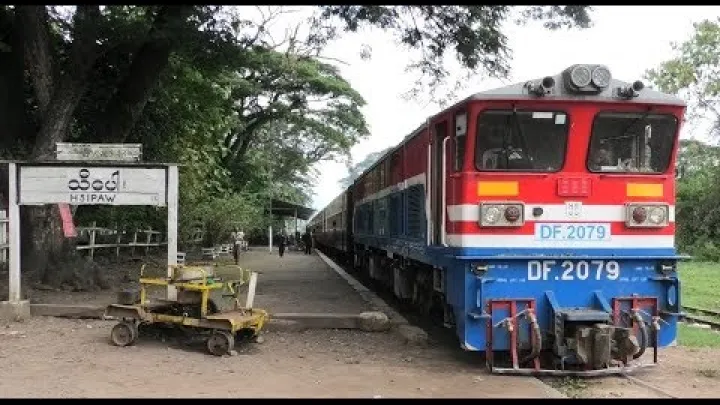
Hsipaw Railway Station and the central market area are helpful town-center landmarks. They can make it easier to describe your accommodation to a driver, but do not assume that the station exit, walking route, or drop-off point is unchanged. Ask your accommodation for current directions and whether staff recommend walking, a local ride, or a pickup.
In a compact town, the final transfer may be short, but luggage, rain, a changed drop-off point, or an unexpected arrival time can make it difficult. Before departure, save an offline map, the full accommodation address, a local telephone number, and a screenshot or written version of the address in case mobile data is unavailable.
Late Arrivals, Local Rides, and Traveler Traps
Prioritize a daylight arrival whenever the confirmed schedule allows. Streets, food services, local transport, and phone support may be more limited later in the day, and a traveler arriving after a long journey may have less ability to resolve a misunderstanding.
Ask the accommodation to arrange a transfer when possible, especially if the operator gives an uncertain arrival time or uses an unfamiliar terminal. Before boarding a local vehicle, confirm the destination and agree the fare or fare basis. Avoid an unverified driver who changes the destination, price, or route after you have loaded your luggage. This does not mean that every local driver or tout is dishonest; it is a simple way to reduce confusion in an unfamiliar arrival area.
Use the comparison table's arrival-risk column when choosing between routes. A historically fast option that reaches Hsipaw after dark may be less practical than a slower option that arrives during the day. Carry some local cash, keep your phone charged, retain the accommodation contact, and have offline directions available. If the only available connection creates an unplanned late arrival without a reliable transfer, change the plan rather than treating the final ride as an afterthought.
Final Takeaways for a Conditional Hsipaw Journey
Historically, Mandalay was the main overland gateway to Hsipaw, with road and railway routes passing through places such as Pyin Oo Lwin, Nawnghkio, and Kyaukme. Lashio Airport, Yangon, Bagan, and the Inle Lake area can appear in wider route plans, but each requires a separate connection and should not be treated as a guaranteed current gateway.
The most reliable planning method is conditional: confirm the complete corridor, choose the gateway, verify the operator or station, arrange a daylight arrival, and keep a backup. When current information is incomplete or conditions make the journey unsuitable, staying at the gateway or postponing is a sensible part of getting to Hsipaw safely and practically.
Select area
Create a post
Posting is free and no registration is required.