Hsipaw Budget: Daily Travel Costs in Eastern Myanmar

A Hsipaw budget can be moderate, but the final amount depends heavily on your room, transport, and trekking choices. This guide gives practical daily estimates for budget, mid-range, and comfortable travel, then separates accommodation, food, local access, activities, and arrival costs. It also explains why older kyat prices and online listings can be misleading. Treat every figure as a planning range in USD-equivalent terms and use a current local quote before committing money.
How Much Does a Hsipaw Trip Cost?
For most travelers, the best way to estimate a Hsipaw travel budget is to separate the cost of staying in town from the cost of reaching Hsipaw. The daily figures below cover accommodation, food, local transport, and a normal level of sightseeing during the Hsipaw stay. They exclude the one-way journey from Mandalay or another regional hub, international travel, and expenses in other Myanmar destinations.
Daily Budget Ranges by Travel Style
The following ranges are per person, per day. The budget and mid-range examples generally assume that two travelers share a private room. The comfortable range is deliberately flexible: it may describe a better room shared by two people, a solo private room, private vehicle hire, or several paid activities. A solo traveler should not simply divide every room or vehicle quote by two.

| Travel style | Daily range | Typical lodging | Food pattern | Transport approach | Activity level |
|---|---|---|---|---|---|
| Budget | US$25–40 | Basic guesthouse or shared room | Mostly local meals and tea shops | Walking and shared rides | Markets, Myauk Myo, and low-cost outings |
| Mid-range | US$40–70 | Comfortable private room shared by two | Local food plus cafés or restaurants | Some private or arranged rides | Several outings or one organized experience |
| Comfortable | US$70–100 or more | Higher-cost lodge or private room | Frequent restaurants, cafés, and drinks | Private rides or more flexible transport | Guided activities and additional excursions |
These are planning estimates, not guaranteed Hsipaw prices. They combine a low-cost travel pattern described in Daniel McBane's Hsipaw guide with accommodation listing signals and older traveler reports. The comfortable band is a planning ceiling rather than a precise local average. Replace it with current room, vehicle, and activity quotes for your dates.
What Each Daily Budget Includes
Use the same four categories throughout your planning: accommodation, food and drinks, local transport, and activities. The envelopes below show how a typical day might be organized. They are not separate tariffs, and adding every maximum together would create a day that is more expensive than the stated travel-style range.
| Travel style | Accommodation per person | Food and drinks | Local transport | Activities |
|---|---|---|---|---|
| Budget | About US$5–10 when sharing | About US$5–10 | About US$3–7 | US$0–10 for walks and simple outings |
| Mid-range | About US$10–20 when sharing | About US$10–18 | About US$6–12 | About US$10–20 for selected experiences |
| Comfortable | About US$20–35 or more | About US$18–30 | About US$10–20 or more | About US$15–25 or more |
Essential spending usually means a bed, basic meals, and the transport needed to reach the places you have chosen. Optional spending includes specialty coffee, alcohol, desserts, private rides, equipment, and guided excursions. If breakfast is included in your room rate, remove it from the separate food allowance. Likewise, do not add a vehicle cost twice when it is already part of a trek or homestay package.
Sharing changes the calculation most clearly. A room quoted as a nightly total is divided between two people, while a solo traveler carries the whole room cost. A private car works in the same way: compare the total quote, then divide it by the number of passengers only after confirming that the operator allows shared use and that the quote covers the full return journey.
Accommodation Costs in Hsipaw
Accommodation can determine whether Hsipaw feels like a low-cost stop or a mid-range destination. Compare the total nightly room price, not only the headline number, because occupancy, breakfast, taxes, payment conditions, and cancellation terms can change the usable cost.
Budget Guesthouses and Basic Rooms
An Hotels.com Hsipaw listing snapshot shows stays from around US$8. This is useful as a starting signal, but it is not a guaranteed price for every date, room type, or traveler. A low listing may apply to a particular room, occupancy, booking condition, or period of availability.

Budget accommodation usually means a simple guesthouse or hostel-style room where location and basic facilities matter more than extensive services. If a room were listed at US$8 per night and two people shared it, the starting room cost would be about US$4 per person. A solo traveler would pay the full room amount. That example is only a calculation of room sharing, not a promise that the room will be available at that price.
Before using a listing in your Hsipaw budget, confirm the following points:
- Whether the displayed amount is per room, per person, or per night.
- Whether breakfast, taxes, service charges, Wi-Fi, and other facilities are included.
- Whether the room has the occupancy, bathroom arrangement, and equipment you need.
- Whether the property accepts your payment method and currency.
- Whether the room is currently available and what the cancellation terms mean.
A basic room can be excellent value when you spend most of the day exploring, but a cheaper rate may not save money if it requires frequent paid rides or separate meals. Compare the room's location and inclusions with the activities you plan to do.
Mid-Range Rooms and Comfortable Lodges
For planning purposes, a comfortable private room can be placed at roughly US$15–30 per night, while more scenic or boutique-style lodging may fall around US$35–70. These are indicative bands based on incomplete and potentially dated listing information, not a complete live inventory of Hsipaw rooms.
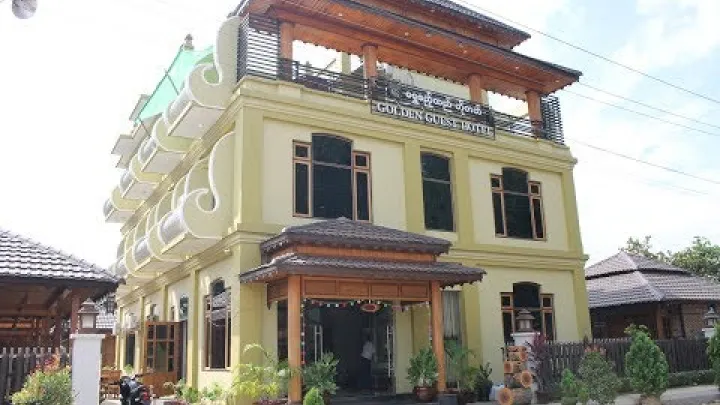
In this tier, value may come from breakfast, air conditioning, a central location, an on-site restaurant, a quieter setting, or a view rather than from a formal star category. Ask which features are included before comparing two properties. A US$30 room shared by two people costs about US$15 per person, and that may fit a moderate daily budget if breakfast replaces one separate meal. A solo traveler would need to include the full nightly room price.
Do not assume that a higher room rate includes breakfast, taxes, transport, or flexible payment. Confirm those details directly through the booking conditions or with the accommodation. Direct booking can sometimes use different payment terms from an online listing, so record the currency and total amount you were actually quoted.
Food and Drink Costs in Hsipaw
Food is one of the easiest parts of a Hsipaw budget to adjust. Local meals can keep daily costs low, while cafés, restaurant meals, drinks, and snacks can move the same traveler toward the mid-range or comfortable band without any change in accommodation.
Local Meals, Markets, and Tea Shops
A provisional baseline for a traveler who mostly eats local food is about US$5–10 per day. This is a planning allowance rather than a current menu price. It fits a simple pattern of Shan noodles, rice and curry dishes, tea-shop food, market snacks, fruit, and basic drinks, but the final amount depends on portions, appetite, location, and what is available when you visit.
Local food is usually the strongest choice for a budget traveler, but the lowest price may come with less menu information, simpler seating, or fewer familiar options. If you need a clear menu, more comfortable seating, or food at a particular time, allow room for a more tourist-oriented restaurant. Keep basic meals separate from coffee, alcohol, desserts, and shared snack plates so optional spending remains visible.
Budget-focused travel writing about Hsipaw often connects low everyday spending with local food and walking or trekking choices. Use that general relationship as guidance, but do not turn an older kyat amount from a blog or review into a current menu tariff.
Cafés, Restaurants, and Optional Extras
Older travel accounts mention places such as San Restaurant and Black House Coffee as examples of the café and restaurant choices available to visitors. Their historical prices are useful only for showing that venue choice affects a trip budget. Menus, opening status, portions, and payment methods can change, so ask for the current price when you arrive.
One or two coffees, a restaurant meal, alcoholic drinks, or desserts each day can move a traveler from the budget food pattern toward the mid-range pattern. A mixed approach is often more realistic: eat most meals locally, then allow for a café or restaurant when you want more comfort or variety. If you already know that coffee or drinks matter to you, create a separate discretionary line instead of hiding those purchases inside a US$5–10 basic-food allowance.
When comparing restaurants, focus on the cost decision rather than assuming that a venue is always open or accepts a particular payment method. Check the current menu, ask whether prices are per portion or shared plate, and keep enough flexibility to choose another option if a planned venue is unavailable.
Transport Costs to Hsipaw and Around Town
Transport has two different effects on a Myanmar trip cost: the one-time cost of reaching Hsipaw and the smaller but sometimes significant cost of reaching outlying attractions. Keep both categories separate from the daily in-town budget so a low room price does not create a misleading total.
Arrival Costs from Mandalay and Regional Hubs
The online Rome2Rio Mandalay–Hsipaw snapshot shows a cheapest option around US$23 and describes a quickest journey of about three hours. Treat that figure as an online reference point, not as a guaranteed local fare. It may not match a direct operator quote, the exact departure available on your date, or the inclusions offered by a hotel-booked minivan.
Older traveler reports provide useful historical context but should not be used as current prices. One report recorded MMK8,000 per person for a 12-seat minivan from Hsipaw to Mandalay. Another recorded MMK1,700 for ordinary rail and MMK3,950 for upper class on the Mandalay–Hsipaw train associated with the Gokteik Viaduct. Inflation, currency changes, service availability, and the age of these reports make direct conversion unsafe.
| Arrival option | Planning signal | Cost questions |
|---|---|---|
| Road or minivan | Online reference around US$23 one way; older reports are lower in kyat | Fare, seat availability, baggage, pickup, and booking method |
| Train | Older ordinary and upper-class kyat fares are historical only | Current fare, departure availability, class, and time value |
| Private car or taxi | Quote required; total cost may be high for one traveler | Return journey, fuel, waiting time, luggage, and number of passengers |
Road and rail are therefore budget choices as well as route choices. A cheaper headline fare may involve more time, less comfort, or more difficult booking. A private vehicle may make sense when several travelers share it, but the total quote must be compared with the per-person cost of seats in a shared service.
Arrival check: Ask your hotel, station, or transport operator for the current one-way fare, departure availability, and inclusions before paying. Confirm whether you are buying only a seat or also receiving pickup, baggage handling, and a confirmed departure. Keep the arrival and departure amounts as separate lines in your trip worksheet.
Local Transport to Waterfalls, Villages, and Trailheads
Walking can cover some central Hsipaw plans, especially when your accommodation is close to the market or the places you want to explore. Outlying villages, waterfalls, viewpoints, and trekking trailheads can require a bicycle, motorbike, shared vehicle, private car, or arranged transfer. The access cost may be much larger than an attraction's admission fee.
Nam Hu Nwe Waterfall shows the difference clearly. A local post reports no ticket fee and says that traveling by car takes about one hour and 20 minutes. That is a local lead, not a permanent access rule, but it illustrates why a free attraction can still require a substantial transport decision. The Nam Hu Nwe Waterfall local post is best used as context for the access time, not as a current fare source.
Compare transport in two ways:
- Shared vehicle: divide the total quote by the confirmed number of passengers. This often makes a distant waterfall or trailhead more practical for a small group.
- Private vehicle: budget the full quote for one traveler or divide it only when the operator agrees to carry your group at that price.
Ask whether a local transport quote includes fuel, waiting time, return travel, driver time, and any entrance or donation cost. Keep admission and access on separate lines. A quoted vehicle that takes you out but does not wait or return you can be cheaper at first and more expensive by the end of the day.
Trekking, Attractions, and Activity Costs
Hsipaw activities range from low-cost walks and market visits to guided treks with meals, village homestays, and transport. The important budget question is not only whether an attraction has a ticket. It is the total cost of reaching it, spending time there, and returning to town.
Low-Cost Walks and Attractions
Myauk Myo, Hsipaw market, Namtok Waterfall, and Nam Hu Nwe Waterfall can all be considered when building a lower-cost activity plan. Their budget effect depends on the access arrangement:
- Walkable or self-guided: Exploring the Myauk Myo old neighborhood or visiting the market may require little beyond food, drinks, and personal purchases if the current route and access suit you.
- Local transport required: A visit toward Namtok Waterfall or another outlying place may need a bicycle, motorbike, shared ride, or private vehicle. The ride can be the main cost even if admission is free or low.
- Guide or package required: A longer trail, village visit, or overnight plan may require a guide, meals, homestay, or arranged transport. Treat this as a separate activity line rather than a normal sightseeing expense.
Do not promise yourself that every attraction will be open, accessible, or free. A no-ticket report for Nam Hu Nwe Waterfall is a dated local lead, and a donation, access change, or transport requirement may still apply. For each outing, list the likely admission or donation, transport, food, equipment, and guide costs separately.
Guided Treks and Village Homestays
Trekking prices vary according to duration, guide service, meals, homestay arrangements, transport, group size, equipment, and entrance or community fees. An older benchmark from multi-day village trek reports is roughly US$25–30 per day, but that is historical context rather than a current Hsipaw operator rate.
A guided trek can become the largest single activity cost in an otherwise inexpensive trip. This does not make it poor value: the package may replace accommodation, meals, local transport, and several separate decisions. Compare the complete package with the cost of arranging each part yourself, not only the lowest advertised starting price.
Before booking, request a written message quote that names:
- The duration and starting and ending points.
- The guide service and the number of travelers covered.
- Meals, drinking water, and the type of homestay or other overnight stay.
- Vehicle transport, fuel, waiting time, and return travel.
- Entry fees, community contributions, equipment, and anything not included.
- The payment currency, deposit, cancellation terms, and what happens if access changes.
Ask a local operator or established accommodation for a current quote. Guide availability and access to villages can change, so a historical US$25–30 figure should never be treated as a guaranteed price or a promise that a particular trek is available.
Currency, Cash, and a Price-Change Buffer
A Hsipaw price can look cheap or expensive depending on the date, currency, and payment method used for the comparison. Plan with broad USD-equivalent ranges, but prepare to pay according to the local quote and the exchange method accepted by the provider.
Why Old Kyat Prices and USD Conversions Can Mislead
Older blogs, reviews, and forum posts may show kyat prices that are no longer usable. The available travel material describes substantial inflation, currency depreciation, and differences between exchange rates. A price that was affordable when published may therefore represent neither a current local tariff nor the purchasing power experienced by residents.
Avoid selecting one current MMK-to-USD rate when you do not have a reliable live rate for Hsipaw. Instead, record the date, payment currency, and exchange basis for every quote. For broad planning, USD-equivalent ranges such as US$25–40 for budget travel are easier to compare. For the actual transaction, the kyat amount, the provider's conversion method, or the booking platform's USD amount is what matters.
A room shown in USD may be settled in kyat at a rate chosen by the accommodation or booking service. A kyat quote may also convert differently from a card or foreign-cash payment. A favorable conversion for a visitor does not mean that local wages, food costs, or household affordability have changed in the same way.
How to Prepare Your Cash Budget
Payment constraints can change the practical cost of a trip even when the headline prices are low. Before departure, ask your accommodation about accepted payment methods and the available exchange option. Then confirm the same details with transport providers, guides, restaurants, and any small attractions you plan to use.
Use this cash-planning checklist:
| Budget line | Confirm | Plan separately |
|---|---|---|
| Accommodation | Total room price, currency, deposit, and payment method | Room balance and any breakfast or service charge |
| Arrival and departure | One-way fare, seat, departure, pickup, and baggage inclusions | Both directions, not only the arrival journey |
| Daily spending | Whether local eateries, cafés, and small providers accept your method | Food, drinks, short rides, and small purchases |
| Activities | Guide package, transport, meals, homestay, fees, and currency | Deposit, balance, donations, and equipment |
| Contingency | How you would pay if a planned method is unavailable | A separate cash reserve outside the daily estimate |
Build the trip around a realistic exchange assumption rather than the most favorable possible rate. Keep a separate cash contingency and do not use it in the daily spending calculation. Confirm these arrangements before a booking becomes nonrefundable, because the payment method can be as important as the quoted price.
What Raises the Cost and How to Save
Hsipaw does not have one fixed price level for every traveler. Costs rise when there are fewer rooms, fewer shared seats, fewer guides, or fewer transport choices. The most effective savings usually come from changing one large decision rather than cutting a small snack.
Peak Periods, Weekends, and Service Availability
Peak travel periods, weekends, local events, limited room inventory, and reduced transport or tour availability can remove the cheapest choices. That does not justify claiming a fixed Hsipaw surcharge percentage, because the available evidence does not establish one. It does mean that the same room, vehicle, or trek may be harder to arrange at short notice.
Before making a nonrefundable booking, confirm current accommodation availability, attraction access, transport operation, and the cancellation terms. Treat operating conditions as planning questions rather than assuming that an older listing or travel report describes the present situation. Where a flexible cancellation or reconfirmation option is available, it can protect your budget without requiring you to book every part of the trip at the last minute.
A short pre-booking check should cover the room total and inclusions, the transport departure and return, the attraction's current access, and the trekking operator's package terms. This is especially important when a low price depends on sharing a vehicle or joining a group.
Practical Ways to Save Without Cutting Key Experiences
Rank savings by likely impact:
- Lodging: Share a private room, compare the total rate, and choose a base that reduces repeated rides. A room near the Hsipaw market or your main walking plans may be more useful than a slightly cheaper room that requires transport for every outing.
- Private transport: Share a vehicle with compatible travelers when the operator permits it. Divide the confirmed total by the number of passengers and check that return travel and waiting time are included.
- Guided activities: Choose one well-defined trek or village experience and compare its complete inclusions. On other days, use walks, the market, Myauk Myo, or another low-cost plan that fits your access arrangements.
- Food and drinks: Mix local meals with occasional cafés or restaurants. This protects the budget without assuming that every meal must be the cheapest possible option.
- Small extras: Track coffee, alcohol, desserts, snacks, equipment, and spontaneous rides as discretionary spending so they do not quietly consume the activity budget.
A budget-style example might use a shared basic room, mostly local meals, walking around Myauk Myo and the market, and one shared ride to an outlying attraction. That pattern fits the US$25–40 daily band when the activity is low-cost and the transport is shared. A mid-range example might use a more comfortable shared room, included breakfast, a mixture of local and restaurant meals, occasional cafés, and one organized outing, placing the trip nearer US$40–70 per person per day.
The savings come from the room, vehicle, and activity structure. Removing one coffee rarely changes the total as much as sharing a room or replacing a private car with a confirmed shared ride.
Turning a Daily Estimate into a Total Trip Budget
Use this formula for a custom Hsipaw travel budget:
Total per person = accommodation nights + daily food and drinks + local transport + activities + arrival transport + departure transport + contingency.
If you use one of the all-in daily ranges, do not add accommodation, food, local transport, and basic activities a second time. If you build the budget from separate quotes, multiply the room's per-person nightly amount by the number of nights, then add each daily category and the two regional transport legs.
The table below uses the online Mandalay–Hsipaw reference of about US$23 each way only as an illustration. It assumes one traveler pays about US$46 for arrival and departure together. The daily range already includes normal lodging, food, local transport, and the activity pattern for that travel style.
| Travel style | Two-day stay | Three-day stay | Arrival and departure reference | Planning subtotal |
|---|---|---|---|---|
| Budget | US$50–80 | US$75–120 | About US$46 | US$96–126 or US$121–166 |
| Mid-range | US$80–140 | US$120–210 | About US$46 | US$126–186 or US$166–256 |
| Comfortable | US$140–200 or more | US$210–300 or more | About US$46 | US$186–246 or more, or US$256–346 or more |
In the final column, the first subtotal corresponds to two days and the second to three days. These examples are per person and exclude international travel, stays outside Hsipaw, and a separately quoted guided trek or private vehicle that is not already represented in the daily band.
For a shared-room scenario, divide the confirmed room total between the travelers. For a solo scenario, use the full room price. If a vehicle quote is a fixed total for your group, add that total and divide it only among the passengers using the vehicle. Add a guided trek or homestay package separately unless its accommodation, meals, transport, and activity costs are already included in your daily estimate.
Use ranges rather than false precision, keep a separate contingency, and recheck prices and payment conditions immediately before departure.
Hsipaw Budget Checklist and Final Takeaway
Before finalizing your Hsipaw budget, work through this checklist:
- Choose a daily travel style: budget at about US$25–40, mid-range at about US$40–70, or comfortable at about US$70–100 or more.
- Confirm whether your accommodation price is per room or per person and whether breakfast, taxes, and payment conditions are included.
- Separate the Mandalay–Hsipaw or regional arrival and departure costs from your daily in-town spending.
- Price local access separately from admission. A free waterfall can still require a vehicle, waiting time, food, or a return ride.
- Ask for a complete written trek quote covering the guide, duration, meals, homestay, vehicle, and fees.
- Record the currency and exchange basis for each current quote instead of relying on an old kyat conversion.
- Keep a cash contingency outside the daily estimate.
- Confirm current availability and cancellation terms before making a nonrefundable booking.
A realistic Hsipaw trip cost is shaped less by the price of one local meal than by the combination of lodging, private transport, and guided activities. Travelers who share rooms and vehicles, eat mostly local food, and choose low-cost walks can often plan around the budget range. Travelers who want better lodging, flexible rides, frequent restaurant meals, or a trek should use the mid-range or comfortable band and request current quotes. Treat the figures as a starting worksheet, then replace them with confirmed local prices and payment terms for your dates.
Select area
Create a post
Posting is free and no registration is required.