Mandalay Budget: Daily Travel Costs, Prices, and Ways to Save
Planning a Mandalay budget is easier when daily city spending is separated from one-off travel costs. A frugal traveler may manage on about US$25–35 per person per day, while mid-range and comfort travelers should plan for roughly US$35–55 and US$55–90 or more. This guide breaks down accommodation, food, local and intercity transport, attraction fees, currency, and cash planning. It also shows how sharing a room, using local restaurants, and limiting private tours can change the total cost of a Myanmar trip.
Mandalay Budget at a Glance
Mandalay can suit several travel styles, but the largest differences usually come from the room you choose, how often you use private transport, and whether you add organized experiences. The following snapshot is a practical starting point for in-city spending.
Daily budget ranges for three travel styles
| Travel style | Accommodation per person | Food and drinks | Local transport | Activities allowance | Daily planning range |
|---|---|---|---|---|---|
| Frugal | US$14–16 | US$6–9 | US$2–4 | US$3–6 | US$25–35 |
| Mid-range | US$17–25 | US$10–14 | US$4–7 | US$4–9 | US$35–55 |
| Comfort | US$30–40 | US$15–22 | US$5–10 | US$5–18 | US$55–90+ |
These are approximate planning ranges, not a guaranteed current price list. The component figures are working scenarios whose low and high ends add up to the stated daily bands; actual spending can fall outside them. A frugal day usually means a basic bed or simple private room, local meals, walking, and a limited number of paid sights. A mid-range day generally includes a private room, a mixture of walking and taxis, and more flexibility with restaurants. Comfort travel can include a better room, more air-conditioned or private transport, hotel dining, and paid experiences.

The same room price also produces different per-person budgets. A US$30 private room costs US$30 per person for a solo traveler but US$15 per person for two people sharing. Organized tours, frequent airport transfers, and long-distance travel can push any style above the stated band.
What the daily budget includes and excludes
The core daily model covers a bed or room, ordinary meals and drinks, city transport, and a modest average allocation for attraction fees and activities. It is designed to answer the practical question of how much you may spend while staying in Mandalay, rather than the total price of reaching Myanmar.
Keep visas, international flights, intercity buses, and major airport transfers outside the base daily figure. These are one-off or itinerary-wide costs. A zone ticket paid once during a three-day stay can be divided across three days for personal planning, but it is not a daily entrance charge. Keeping it as a separate line makes the budget easier to adjust if you stay longer or skip a paid site.
For example, a three-day Mandalay stay can be calculated as three times the selected daily rate, followed by the arrival and departure transfers, any bus or train journey, the archaeological-zone ticket, and a cash reserve. A full Myanmar itinerary needs the same method for every city, because a Yangon–Mandalay bus or a Bagan excursion should not be hidden inside Mandalay’s daily food or hotel allowance.
Accommodation Costs in Mandalay
Accommodation is normally the largest controllable part of a Mandalay travel budget, especially for people traveling alone. Compare the total room cost, the number of occupants, and the included services rather than judging a property only by its advertised nightly price.
Hostels, guesthouses, and budget hotels
Available listing snapshots show a wide spread in low-cost accommodation. The Agoda hostel page gives an average of around US$30 per night, while noting that location affects the price. That figure should be treated as a market illustration, not as a promise that every dorm bed costs US$30 or that a hostel is always the cheapest choice.

A separate Booking.com city snapshot advertises Mandalay accommodation from about US$15. Simple private rooms are often planned in a broad range of about US$20–30 or US$25–45, depending on the room standard, dates, and included services. These figures can overlap because a basic hotel, guesthouse, and hostel may be marketed to different types of travelers.
Separate the options before comparing them:
- Dorm bed: potentially useful for a solo traveler who values social space, but the lowest headline rate is not guaranteed.
- Guesthouse room: often a practical choice for travelers who need privacy and simple facilities.
- Budget hotel: may offer air-conditioning, a private bathroom, breakfast, or more predictable service.
- Private room shared by two: can be competitive per person even when its total nightly price is higher than one dorm bed.
Mandalay has fewer ultra-cheap dorm choices than some major Southeast Asian backpacker destinations, so check value rather than assuming that hostel means lowest cost. Compare air-conditioning, Wi-Fi, breakfast, taxes, reviews, location, and cancellation terms. A room that costs slightly more but includes breakfast and reduces taxi use may be cheaper for the complete day.
Mid-range and comfortable stays
For planning purposes, mid-range hotels commonly fall around US$30–60 in available listing snapshots. More comfortable, boutique, or full-service properties can reach US$60–100 or more. These are broad bands, not a stable citywide average, because the same hotel can show different prices for different dates and booking conditions.
Properties such as 79 Living Hotel and Hotel Yadanarbon can be used as illustrative comparison points when reviewing room inclusions and price positioning. They are not universal recommendations, and an example property should not be treated as available or priced the same for every trip.
Higher rates may be worthwhile when they include a reliable breakfast, a larger air-conditioned room, a rooftop or pool facility, stronger service, or a location that cuts down on repeated taxi rides. For a solo traveler, the room is paid in full by one person, so moving from a US$25 room to a US$50 room has a large effect on the daily budget. For a couple, the same upgrade is divided between two people, making comfort easier to fit into a mid-range plan.
Choosing a base and comparing room value
Central hotel areas and the 26th Street area are useful local anchors when comparing Mandalay room prices. Neither should be assumed to be the cheapest in every season. A lower rate outside the most convenient areas may be offset by longer rides to Mandalay Palace, Mahamuni Pagoda, Mandalay Hill, or evening dining areas.
Use a simple decision rule. A solo traveler who values meeting other visitors may accept a hostel price for its social facilities. A couple may prefer a basic private room if the per-person cost is lower than two beds. A traveler with limited time may save money overall by paying a little more for a central room and using fewer taxis.
When comparing properties, search the same room type for the exact dates and check whether breakfast, taxes, air-conditioning, Wi-Fi, and cancellation are included. A headline price without these details is not a reliable comparison. Also compare the final price after sharing: divide the room total by the number of travelers, but do not divide a single-person dorm bed between two people.
Food and Drink Prices in Mandalay
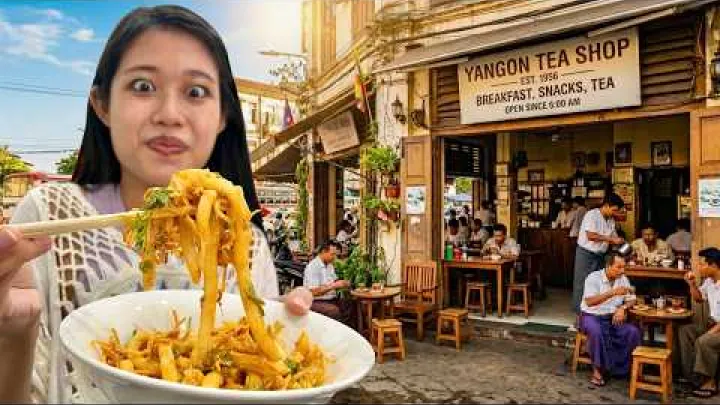
Food is one of the easiest parts of a Mandalay budget to adjust. Tea shops, local rice and noodle stalls, markets, and small Burmese restaurants provide a lower-cost pattern, while hotel dining, imported products, and frequent drinks can quickly move a day into a higher budget band.
Local meals, tea shops, and street food
Reported local examples put fried rice or noodles at around 2,000 MMK, Shan dishes at about 3,000–4,000 MMK, and simple Chinese meals at roughly 4,000–6,000 MMK. Use these figures as indicative planning examples, not as guaranteed current menu prices. Prices can vary by portion, setting, ingredients, and whether the food is sold from a basic stall or a more formal restaurant.
The stalls around 19th Street are a useful local anchor for looking for Shan noodle dishes. Unique Mandalay Tea Room is another recognizable reference point for a tea-shop-style stop. These places help show the difference between local food and hotel dining, but one stall or tea room should not be treated as representative of every meal in Mandalay. Check the current menu, opening conditions, and serving size when you arrive.
A local-food day can often be planned at roughly US$6–10 for many budget travelers when breakfast, lunch, dinner, tea, water, and simple snacks are kept local. The foreign-currency equivalent changes with the exchange rate, so MMK prices are the more useful basis for decisions. A traveler who adds several restaurant meals, imported drinks, or hotel breakfasts may spend much more without changing the number of meals.
Restaurants, breakfast, and international food
Separate local restaurants from mid-range dining, hotel restaurants, and imported or branded food. The main cost difference is usually the setting and ingredients, not simply whether a dish is Burmese, Chinese, or international. Broad reported cost-of-living benchmarks place an inexpensive restaurant meal near US$3 and a mid-range meal for two near US$15, but these are context figures rather than current menus for every Mandalay restaurant.
Breakfast deserves its own calculation. A room rate that includes breakfast can reduce the daily food total, especially for a couple or a traveler who would otherwise eat at a hotel. A paid buffet or international breakfast can do the opposite. Read the room description carefully rather than assuming that breakfast is included because a property describes itself as mid-range.
A practical mid-range pattern is a local breakfast and lunch, one more comfortable dinner, and limited imported drinks. This gives the traveler a place to enjoy a higher-priced meal without paying the higher restaurant rate three times every day. Budget travelers can replace the comfortable dinner with a tea shop or local restaurant and direct the difference toward a paid cultural site.
Drinks, water, and limited self-catering
Local tea, ordinary soft drinks, water, and local beer are usually easier to fit into a low-cost plan than imported alcohol, cocktails, hotel-bar drinks, or international products. Reported benchmarks place local beer and bottled water below US$1 in ordinary situations, but these are only planning context and should not be treated as current guarantees.
Frequent drinks are easy to overlook because each purchase is small. A traveler who buys several drinks at a hotel or international restaurant can shift a nominal mid-range day toward the comfort range. Markets and grocery shops can help with fruit, snacks, and basic supplies, although most short-stay visitors have limited access to a kitchen and cannot rely on full self-catering.
Keep this part of the budget decision-oriented: choose local beverages most of the time, carry a reasonable water allowance, and reserve imported products for selected occasions. Where no dependable local price is available, use the current menu or shelf price instead of copying a generic grocery catalogue.
Transport Costs in and around Mandalay
Transport costs in Mandalay are best handled as categories rather than as one fixed daily fare. Walking and shared rides can keep city spending low, while airport transfers, private taxis, scooter rental, and intercity buses need separate calculations.
Airport transfers: published and reported fares
The official baseline available from Mandalay Airport states that taxi counters are outside the baggage-claim area and lists fixed one-way categories of 4,000 MMK for a shared taxi, 12,000 MMK for a private taxi, and 15,000 MMK for an air-conditioned private taxi.

Some traveler reports have described a shared airport fare of about 10,000 MMK per person. The difference between that report and the published baseline may reflect changing fuel costs, timing, local operating conditions, or a different service arrangement. Present both as reference points rather than declaring one amount universally current.
Count the airport ride as a one-off arrival or departure cost, not as part of every day in the table. A private taxi can become reasonable when two or more travelers divide the total, especially if the alternative is several individual shared fares. On arrival, check the posted taxi-counter fare, ask which category applies, and keep a separate airport-transfer buffer so an unexpected difference does not disrupt the first day.
City taxis, shared transport, and motorbike choices
City taxis and pickup-style vehicles may be negotiated, shared, or arranged through an accommodation provider rather than consistently metered. Because of that variation, a single standardized city taxi fare should not be invented. The daily transport allowances in the opening table are scenarios for walking, shared rides, and occasional taxis, not verified fares for every journey.
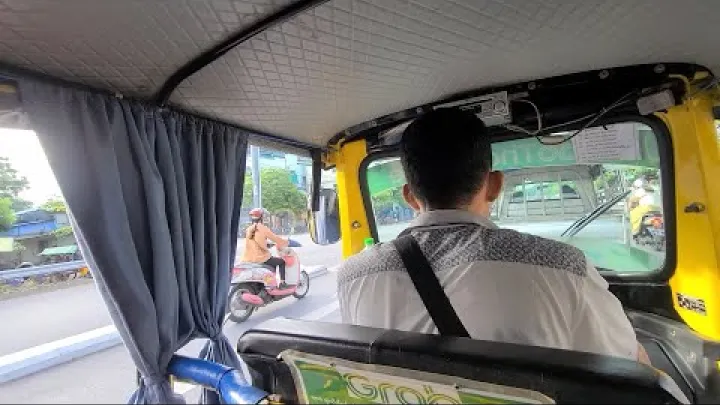
Walking is useful for short distances around a convenient base. Shared transport can lower the cost of reaching sights such as Mandalay Palace, Mahamuni Pagoda, and Mandalay Hill, while occasional taxis add convenience when heat, distance, or limited time makes walking impractical. Grouping nearby sights into one outing reduces the number of rides and the number of times a traveler must negotiate a fare.
A scooter may appear cheaper for a full sightseeing day, but compare the complete terms first. Confirm the rental price, fuel policy, deposit, helmet provision, insurance, and any restrictions before treating it as a budget option. The cheapest quoted vehicle is not automatically the lowest-risk or lowest-total-cost choice.
Intercity buses as separate one-off costs
Yangon–Mandalay, Bagan–Mandalay, and other long-distance legs should remain outside the core Mandalay daily rate. Including a long bus ride in a one-day city budget can make the city appear more expensive or cheaper than it really is.
Reported examples illustrate why the figures need careful labeling. One Yangon–Mandalay bus example is around 36,000 MMK, while an older report put a Kalay–Mandalay fare at about 10,000 MMK per passenger. These amounts refer to different routes and sources, and the older figure is not a current quote. Bus class, route length, fuel conditions, and booking channel can all change the final price.
Plan each long-distance leg on its own line. Record the route, operator, class, and travel date, then use the current operator fare when completing the trip total. After calculating the number of Mandalay city days, add the intercity tickets separately rather than spreading them across meals, taxis, or hotel costs.
Attraction Fees and Activity Costs in Mandalay
Mandalay sightseeing can be inexpensive when you combine free cultural stops with one or two verified paid sites. The main risk to the activity budget is treating a one-time zone ticket or an optional private experience as though it were a mandatory daily expense.
Zone tickets, Mandalay Palace, and major paid sites
The Mandalay Archaeological Zone creates a fixed sightseeing cost for many foreign visitors who want to enter Mandalay Palace and related cultural sites. The main available reference is 15,000 MMK for the Mandalay zone. The Authentique Myanmar fee page also gives context for the Mandalay and nearby zone arrangement.
Other traveler reports mention 10,000 MMK or different combinations of sites, so distinguish a zone fee from a separate site fee. A reported Mahamuni Pagoda charge of about 10,000 MMK should be treated as a separate possible ticket line, not automatically included in the archaeological-zone amount. The same principle applies to camera charges, donations, and optional services.
For planning, count the main zone ticket once during the stay. Do not multiply 15,000 MMK by every day in Mandalay. At the ticket office, confirm the current foreign-visitor price and exactly which sites are included before paying. This is particularly important when a ticket is described as covering several areas or when different local reports show different amounts.
Free and low-cost cultural stops
Walking across U Bein Bridge is generally treated as a free activity. The associated cost comes from getting to Taungthaman Lake and from optional services such as a boat, horse cart, or other local arrangement. Keeping transport and optional experiences in separate lines prevents a free walk from appearing more expensive than it is.
Many monasteries and pagodas may be free or donation-based, while other places can apply an entrance fee or camera charge. Treat donations as voluntary spending and mandatory charges as separate items. Religious-site arrangements can differ for visitors, so avoid building the entire activity budget around an assumption that every cultural stop has the same access rule.
Mandalay Hill is a variable-cost stop in reported accounts. Charges have ranged from a small camera fee to a separate visitor charge depending on the arrangement. A low-cost sightseeing day can therefore combine free or donation-based cultural stops, one paid site, and shared transport. This approach leaves room for an unexpected small fee without requiring a private tour.
Paid U Bein experiences and organized tours
Optional experiences around U Bein Bridge can cost more than the rest of a budget day. One listed private sunset boat experience is about US$49.24 per adult and excludes the Mandalay zone ticket. That example shows why a comfort activity allowance should be kept separate from ordinary local transport and food.
Reported horse-cart charges around Taungthaman Lake range from about 15,000 MMK to more than 30,000 MMK, depending on distance and service. These figures are not a universal tariff. A self-guided visit, a shared local service, and a private tour should be compared by what is included: transfers, boat time, drinks, guiding, waiting time, and the number of travelers.
Always determine whether an advertised amount is per person or per vehicle. A private boat may become better value for a group, while a per-person tour may be simpler for a solo traveler. Boats, horse carts, and guided sunset tours are optional splurges, not necessary costs for seeing U Bein Bridge.
Currency, Cash, and Payment Planning
The Myanmar kyat is the practical currency for many everyday purchases in Mandalay. A clear cash plan is more useful than converting every price into dollars once and assuming the result will remain unchanged.
Using MMK and handling exchange-rate uncertainty
Use MMK for local meals, taxis, tickets, markets, tea shops, and small purchases. Traveler-reported observations of roughly 4,000–5,000 MMK per US$1 can serve only as a rough planning reference. This is not an official live rate and should never be treated as a guaranteed amount for the day of travel.
The amount received can vary with the exchange location, the rate being offered, and the condition and acceptability of the banknotes. Differences between official and informal market rates can also affect the result. These uncertainties matter because a small change in the conversion rate affects every food, transport, and ticket estimate expressed in US dollars.
Use a conservative planning assumption, keep a separate contingency for currency and fuel-related changes, and confirm the current exchange rate before changing the full amount of travel cash. Also ask which note conditions are accepted. Changing only what you need initially can reduce the risk of committing the entire budget to an unfavorable or unsuitable exchange arrangement.
Cash-first assumptions and a practical reserve
Build the example budget around cash for local food, taxis, attraction counters, markets, and small vendors. Card acceptance may not be consistent across these categories, so do not design a city budget that depends on paying every small expense by card or on finding a particular payment facility.
A simple two-column method works well:
- Planning column: write the expected hotel, food, transport, and activity amount in US dollars or your home currency.
- MMK column: convert each expected amount after checking the rate you will actually use, then keep the cash lines separate.
Keep airport transfers, intercity tickets, attraction fees, and a one-day reserve outside the ordinary daily spending envelope. The reserve is a planning safeguard rather than a claim that every traveler will need the same percentage. It is intended to cover a delayed transfer, a higher quoted fare, a separate entry fee, or an extra night of basic spending without forcing you to reduce meals or leave an important payment unfunded.
How to Save Money on a Mandalay Trip
The most effective savings usually come from changing the accommodation and transport pattern, not from trying to reduce every individual meal by a small amount. Set the daily style first, then choose which comforts matter most to you.
Reduce the largest costs first
- Compare accommodation by total value. Check a hostel, a basic guesthouse, and a shared private room. For two travelers, a room with a higher total price may be cheaper per person than two beds, especially if breakfast or air-conditioning is included.
- Limit private transport. Walk short distances, share rides where practical, and group sights into one outing. Repeated air-conditioned taxis can add more to the budget than the difference between two local meals.
- Eat locally most of the time. Tea shops, local rice and noodle dishes, and small restaurants can support the frugal or mid-range bands. Choose one more comfortable meal rather than making every meal an international or hotel meal.
- Separate upgrades from necessities. Private sunset boats, horse carts, hotel bars, and frequent private taxis should come from an activity or comfort allowance. They are easier to enjoy when their cost is planned openly.
Clustering Mandalay Palace, Mandalay Hill, Mahamuni Pagoda, and other stops by area can reduce both ride frequency and bargaining exposure. A traveler does not need to visit every paid site to have a full cultural day. Combining free or donation-based stops with one verified paid attraction is usually more effective than cutting essential food or choosing an unsuitable room.
Build a sample day and total trip budget
Start with this formula: total trip budget = daily Mandalay rate × city days + airport transfers + intercity transport + zone ticket + separate attraction fees + contingency. The daily rate covers ordinary city spending; the other lines remain visible so the model can be adapted to a three-, five-, or seven-day stay.
| Travel style | 3 city days | 5 city days | 7 city days | Calculation basis |
|---|---|---|---|---|
| Frugal | US$75–105 | US$125–175 | US$175–245 | US$25–35 per day |
| Mid-range | US$105–165 | US$175–275 | US$245–385 | US$35–55 per day |
| Comfort | US$165–270+ | US$275–450+ | US$385–630+ | US$55–90+ per day |
For a five-day mid-range example, choose a working rate of US$45 per day and begin with US$225 for the city stay. Then add the airport transfer in MMK, the current archaeological-zone fee, any separate Mahamuni or other site charge, intercity tickets, and a contingency. The published shared airport figure and the 15,000-MMK zone reference can be placed in those separate MMK lines when they apply, rather than being silently converted into the daily rate.
For a solo traveler, use the full private-room price if that is the selected accommodation. For a couple, divide the shared room total between two people before adding it to the per-person daily estimate. A private room costing US$30 per night therefore contributes US$30 to a solo budget or US$15 to each person's shared-room budget. These are planning scenarios based on the ranges in this guide, not quotes from a hotel, taxi operator, or ticket office.
Peak periods, weekends, events, and price changes
Room availability and prices can become less flexible during busy periods, weekends, local festivals, events, or sudden group demand. There is no need to assume a fixed seasonal percentage increase when a reliable citywide figure is unavailable. Instead, compare the same room type and inclusions across the exact dates you plan to travel.
Fuel-price and exchange-rate changes can also affect transport and accommodation uncertainty. A listing snapshot is useful for setting a starting range, but it is not a stable average for every month. If you are booking close to arrival or traveling during a locally busy period, leave additional room in the budget rather than relying on the lowest displayed rate.
Compare cancellable rates for the exact travel dates and confirm final availability and the full amount before paying. This is especially important when a low headline price excludes breakfast, taxes, or flexible cancellation. A modest contingency can protect the rest of the Mandalay budget when the preferred room or transport option is no longer available.
Conclusion: Set a Flexible Mandalay Budget
A useful Mandalay budget starts with about US$25–35 per day for frugal travel, US$35–55 for mid-range travel, or US$55–90 or more for comfort travel. Keep accommodation, food, local transport, and activities visible, then add airport transfers, intercity travel, entry fees, and a cash reserve separately. Local meals, shared rooms, walking, and grouped sightseeing offer the strongest savings, while private transport and organized U Bein experiences are the main optional upgrades. Use the ranges as a flexible planning tool and adjust them to your room arrangement, travel dates, and current MMK prices.
Select area
Create a post
Posting is free and no registration is required.