Aomori Getting There: Train, Flight, Bus & Ferry
Getting to Aomori is straightforward once you choose the gateway that matches your final destination. The main options are the Tohoku Shinkansen to Shin-Aomori, flights to Aomori Airport or Misawa Airport, long-distance buses, self-drive routes, and ferries from Hokkaido. This guide compares the complete journey rather than only the fastest part, including the transfer into Aomori City center, booking difficulty, pass coverage, baggage, and seasonal reliability.
How to Choose the Best Way to Get to Aomori
The best route to Aomori depends on where you start and where you will stay. A traveler going from Tokyo to the waterfront area will usually compare the shinkansen with a flight to Aomori Airport. A traveler visiting Hachinohe, Towada, Shimokita, or rural coastal areas may save time by choosing an eastern gateway instead of traveling through central Aomori first.
Use Shin-Aomori for Tohoku Shinkansen Arrivals
Shin-Aomori is the principal high-speed rail gateway for travelers arriving from Tokyo, Sendai, and other Tohoku destinations. It offers a predictable overland journey and can be attractive when a rail pass covers all or part of the route. However, Shin-Aomori is not the same place as Aomori Station. It is the shinkansen gateway, while Aomori Station is the more useful endpoint for many hotels, the bayfront, city buses, and central sightseeing.
Allow time for the final local connection if your accommodation is near the city center. A shinkansen arrival at Shin-Aomori is therefore not always the end of the practical journey. When comparing prices, include the onward ticket or confirm that your pass covers it, as well as the time needed to leave the shinkansen area and walk between platforms.
| Arrival point | Best suited to | What remains |
|---|---|---|
| Shin-Aomori Station | Tokyo, Sendai, Tohoku, and Hokkaido rail routes | Local connection to central Aomori |
| Aomori Station | Central hotels, bayfront, and city buses | Usually the practical city endpoint |
| Aomori Airport | Aomori City and distant domestic or international origins | Airport bus or taxi into the city |
| Misawa Airport | Misawa, Hachinohe, Towada, and eastern Aomori | Regional rail, bus, or taxi connection |
| Aomori Port Ferry Terminal | Hakodate ferry itineraries | Connection between the terminal and your accommodation |
| Hachinohe Port | Longer Hokkaido ferry and vehicle itineraries | A separate journey to Aomori City |
Use Aomori Airport for Direct Air Routes
Aomori Airport is the main airport to compare when Aomori City is your destination and you are starting far from Tohoku. A direct flight can be useful from Kansai, Tokai, Hokkaido, or a nearby overseas gateway when the route operates on your date. The airport schedule may show services associated with Haneda, Osaka, Nagoya, Sapporo, Kobe, Seoul, or Taipei, but route patterns can be seasonal or limited to particular timetable periods.
Do not compare only flight time with train time. Add the journey to the departure airport, check-in and security, baggage collection, and the transfer from Aomori Airport into the city. Air can reduce the main-line travel time while still taking a similar amount of door-to-door time as rail, especially if you are already near Tokyo Station or another convenient shinkansen departure point.
Consider Misawa, Hachinohe, or Ferry Ports for Eastern Aomori and Hokkaido
Choose the gateway according to your first stop. Misawa Airport and Hachinohe are logical options for eastern Aomori, including itineraries centered on Misawa, Hachinohe, Towada, and nearby areas. Aomori Port is more natural for travelers arriving from Hakodate by ferry and planning to continue around Aomori City. Hachinohe Port is a different maritime gateway and should not be treated as an alternative station for central Aomori.
A lower ticket price does not necessarily mean a shorter or cheaper complete trip. Before choosing a flight to Misawa, a ferry to Hachinohe, or a port outside the city, add the regional connection, luggage handling, parking or taxi cost, and any waiting time after arrival. This destination-first approach prevents you from choosing a gateway that is efficient for the prefecture but inconvenient for your actual hotel.
Getting to Aomori by Train
Rail is the clearest option for many visitors from Tokyo, Sendai, and Hokkaido. It avoids airport procedures and provides a direct high-speed approach to Shin-Aomori, but travelers staying in the central city must still plan the final station transfer.
From Tokyo and Sendai on the Tohoku Shinkansen
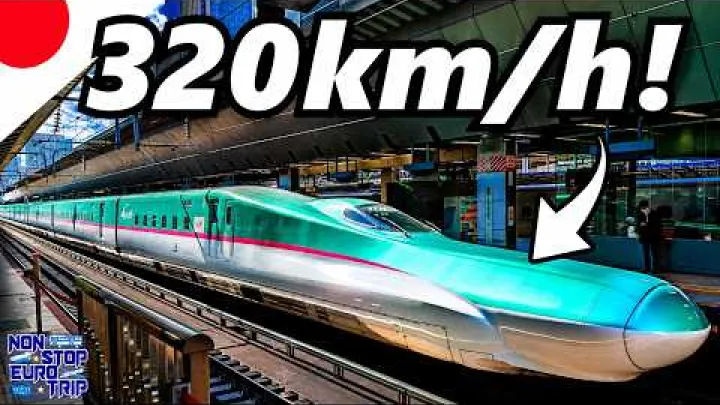
The main rail route from Tokyo and Sendai is the Tohoku Shinkansen to Shin-Aomori. The official Aomori access guide uses approximately three hours as a planning baseline for Tokyo to Shin-Aomori. It also provides approximate access information from Sendai, but exact journey times depend on the departure, service pattern, and connection. Use the current JR East timetable for the train you intend to take.
![Preview image for the video "[Hayabusa] From Tokyo to Aomori in Gran Class on the Tohoku Shinkansen [Bullet Train]".](/sites/default/files/styles/media_720x405/public/oembed_thumbnails/2026-08/uWvQmaacT5fjH1XRJjTUgv2b5bIEj0V9dLJ61DBQ8Pg.jpg.webp?itok=MIHU2Qt9 "Preview image for the video \"[Hayabusa] From Tokyo to Aomori in Gran Class on the Tohoku Shinkansen [Bullet Train]\".")
From Tokyo, the shinkansen is often attractive because it leaves from a central transport hub and avoids the extra trip to an airport. From Sendai, rail can be particularly simple because it keeps the journey within the same broad Tohoku rail corridor. The regular ticket price can be substantial compared with a discounted bus or advance air fare, so compare the live price with any eligible rail pass rather than assuming that a pass is automatically better.
Seat arrangements and reservation requirements vary by train and ticket. Reserve the applicable service before fixing a hotel check-in, airport connection, ferry sailing, or other tight onward plan. Before travel, check the current JR East timetable and train-status information, and make the reservation before committing to the local connection from Shin-Aomori.
For a route overview and approximate access examples, the Aomori Tourism access guide is useful. Treat its overview as a starting point and the operator timetable as the final source for a particular departure.
From Hokkaido via the Hokkaido Shinkansen
Travelers arriving from Hakodate or southern Hokkaido can use the Hokkaido Shinkansen between Shin-Hakodate-Hokuto and Shin-Aomori. This is the simplest rail connection across the Tsugaru Strait, but the station names matter: Shin-Hakodate-Hokuto is outside central Hakodate, and Shin-Aomori is outside the main Aomori waterfront area.
Compare the train with the Aomori–Hakodate ferry by looking at the complete itinerary. Rail normally offers a shorter crossing and a more straightforward station-to-station journey. The ferry may be more suitable if you want to carry a vehicle, prefer a sea journey, or find a sailing that fits your schedule and budget. Ferry fares can also change according to passenger type, accommodation, vehicle size, and travel period, so neither mode is always cheaper.
Pass coverage is another important difference. Confirm whether your particular rail pass covers the train and whether any restrictions apply to the service you want. If you choose the ferry, include the time and cost of reaching the terminal from Hakodate or continuing from Aomori Port after arrival.
Complete the Journey from Shin-Aomori to Aomori Station
If your hotel is near the bay, central Aomori, or Aomori Station, treat the local connection as part of the route rather than an optional detail. After leaving the shinkansen platform at Shin-Aomori, follow the signs for the conventional or local rail service, check the destination and platform, and board the short connection to Aomori Station.
Aomori Station is the more practical reference point for central hotels, city buses, waterfront walks, and nearby attractions. With large luggage, allow time for walking, platform changes, ticket gates, and finding the correct exit. Check whether your ticket or pass covers the local segment; do not assume that every shinkansen product includes every onward service in the same way.
Getting to Aomori by Air
Flying can be sensible when you begin in western or central Japan, or when a direct international service matches your date. The key is to compare the airport gateway and the city transfer with the train route, not to compare only the scheduled time in the air.
Aomori Airport from Haneda, Osaka, Nagoya, Sapporo, Kobe, Seoul, or Taipei
Use Aomori Airport's flight information and monthly schedule to identify a service from your departure city. The airport may serve domestic origins such as Haneda, Osaka, Nagoya, Sapporo, and Kobe, together with limited international routes such as Seoul or Taipei, but these services can change by season, airline timetable, or operating date. A route shown in a general destination list is not a guarantee of a flight on your travel day.

The airport's official website provides flight information, monthly schedules, terminal details, and access information. Confirm the operating date, destination airport, airline, baggage conditions, and flight status on the Aomori Airport website and the relevant airline site before purchase. This is especially important for international travelers comparing a limited route with a connecting itinerary.
When comparing air with rail, include airport access at both ends, the recommended check-in time, security, baggage collection, and the public-transport transfer from Aomori Airport to Aomori City. A flight may still be the best choice when the rail journey would require several connections, but an apparently short flight can lose its advantage if airport access or waiting time is difficult.
Misawa Airport for Eastern Aomori
Misawa Airport is an alternative gateway for an itinerary focused on Misawa, Hachinohe, Towada, or other eastern parts of Aomori Prefecture. It is not usually the first airport to choose for a hotel in central Aomori City because the final ground journey can be longer or more complex than the connection from Aomori Airport.
Check the official Misawa Airport information for destinations, seasonal flights, access, parking, and arrival details. The airport's flight information is date-sensitive, so use the current schedule for your trip rather than relying on a fixed service pattern. The Misawa Airport website is the practical starting point for this check.
Use a small destination test: if your first appointment or hotel is in eastern Aomori, Misawa may reduce the regional journey. If your first stop is Aomori City, compare the complete route to Aomori Airport, the Tohoku Shinkansen, and any connecting flight. A cheaper air ticket can be offset by the cost of a long local transfer, especially with luggage or a late arrival.
Choose Air or Rail from Tokyo
For a Tokyo departure, compare Haneda-to-Aomori air travel with Tokyo-to-Shin-Aomori rail from door to door. The flight comparison should include the trip to Haneda, airport check-in and security, boarding, baggage collection, the bus or taxi into Aomori, and any waiting between services. The rail comparison should include the journey to the shinkansen station and the local connection if your destination is Aomori Station.
Rail can be simpler when you are already near Tokyo Station, have heavy luggage, or want a predictable city-center departure. Air can be attractive when an advance fare is low, when you are coming from a distant Japanese city, or when a direct service avoids a long rail itinerary. Regular rail fares, advance airline fares, baggage rules, and rail-pass coverage can change the result.
For Narita Airport, make a separate calculation. If a direct Narita-to-Aomori flight is operating on your date, compare it with the airport-to-Tokyo Station transfer followed by the Tohoku Shinkansen. Do not confuse Narita and Haneda access, or assume that a flight from Narita reaches the same part of Aomori as the train. The correct choice depends on the live fare, the schedule, airport access, and your final destination.
Getting to Aomori by Long-Distance Bus or Car
Highway buses and self-drive routes are useful when price, overnight travel, or regional flexibility matters more than the shortest journey. Their practical value depends heavily on seat availability, road conditions, rental arrangements, and where you plan to go after reaching Aomori.
Highway Buses from Tokyo and Sendai
Highway buses connect Aomori with major cities including Tokyo and Sendai, and some services operate overnight. They are usually slower than the shinkansen but can offer a lower-cost alternative, particularly when an overnight seat replaces one night of accommodation. A daytime bus may suit a flexible budget itinerary, while an overnight bus may preserve daytime sightseeing time.
Compare more than the advertised fare. Check the seat configuration, reclining space, luggage allowance, rest-stop pattern, arrival point, and whether the bus runs on your date. Road traffic and route conditions can change the arrival time, so avoid making a very tight connection immediately after a highway bus. Booking availability can also be more limited around holidays and busy travel periods.
Use the current schedule from the operating company or the booking channel named for that service. Separate daytime and overnight options in your comparison: the overnight service may save hotel cost, but the comfort trade-off can affect how useful the following day will be.
Use the Tohoku Highway Bus Ticket Only for a Bus-Heavy Itinerary
The Tohoku Highway Bus Ticket is intended for international visitors using multiple eligible highway bus routes and selected local bus services in Tohoku. It is not a general ticket for every bus in the region, and a single Tokyo–Aomori ride may not justify buying it.
The official Japan Bus Lines information shows multi-day options, including a three-day price displayed at 11,000 yen in the available product information. Treat that amount as a reference and confirm the current price, validity period, purchase channel, visitor eligibility, route coverage, exclusions, and reservation rules at the time you buy.
To test whether the pass is worthwhile, list every planned highway or eligible local bus ride and compare the individual ticket total with the pass. Then check whether the exact Tokyo–Aomori or Sendai–Aomori service accepts the ticket, whether a seat reservation is still required, and whether your other planned buses fall inside the validity period. The pass is most useful when it supports several eligible journeys, not simply because it has a regional name.
Self-Drive Routes and When a Car Helps
Driving is most useful when Aomori is one part of a wider road trip or when you plan to visit rural, coastal, mountainous, or port areas that are not convenient by rail. It also makes sense for travelers carrying outdoor equipment, traveling in a group, or combining several smaller destinations without returning to a major station.
Budget for highway tolls, fuel, rental-car charges, parking, and any one-way rental fee. Check whether the rental company permits the intended return location and whether the vehicle size suits your route and parking arrangements. A car collected in one city and returned in another can be convenient, but the one-way charge may change the total cost substantially.
Route 4 and Route 279 may appear as regional access corridors in route planning, but they are examples for orientation rather than guaranteed travel-time estimates. Use a current navigation service and road-status information for the actual date. Keep the driving plan focused on the distance to your first Aomori destination; a car that is useful for Shimokita or the coast may be unnecessary if you will stay around Aomori Station.
Getting to Aomori by Ferry
Ferries are practical for travelers arriving from Hokkaido, especially those carrying a vehicle or preferring a slower sea crossing. The two main decisions are which port serves your itinerary and whether the sailing time, terminal access, and fare structure fit your complete journey.
Aomori-Hakodate Ferries
The Aomori–Hakodate ferry corridor provides a sea alternative to the Hokkaido Shinkansen. Services associated with Tsugaru Kaikyo Ferry and Seikan Ferry should be compared when they are operating on your travel date. The local transport information displays a ferry journey of about 3 hours 40 minutes in this corridor, but the full trip also includes reaching the terminal, boarding, and continuing from the port after arrival.
Rail is generally the faster choice for travelers who want a direct station connection between southern Hokkaido and northern Honshu. The ferry may be better for a vehicle-based itinerary, a traveler who values the sea crossing, or a schedule where the sailing fits better than the train. Compare passenger fares, accommodation or seating categories, vehicle charges, terminal access, and boarding procedures rather than comparing only the published crossing time.
Check the operator's current timetable, fare period, vessel information, terminal name, and boarding deadline before booking. Foot passengers and drivers may have different procedures, and a vehicle can change both the price and the time needed at the terminal. The Aomori Public Transport Portal provides a useful local access reference, while the ferry operator remains the source for the sailing you intend to use.
Hachinohe Ferries to Hokkaido
Hachinohe Port is an alternative maritime gateway for longer Hokkaido routes, including services associated with Tomakomai or Muroran when those services are operating. This option can suit a driver planning a broad northern road trip or a traveler who prefers an overnight or long sea crossing to a shorter rail journey.
Do not describe a Hachinohe ferry as a direct way to reach Aomori City. Add the connection from the Hachinohe urban or rail hub to Hachinohe Port, the terminal waiting and boarding process, and the onward journey from the port. For a central Aomori hotel, the additional land travel may outweigh the appeal of the sailing fare.
Confirm the current operator, terminal, sailing time, fare category, vehicle rules, and arrival connection. These details are especially important when traveling overnight, carrying a car, or arriving outside normal daytime transport hours.
Reach Aomori City Center from Each Gateway
Aomori City has several arrival points, and the last few kilometers can determine whether a route feels easy or complicated. Identify the exact station, airport, or port on your booking and then plan the final connection to Aomori Station or your accommodation.
From Shin-Aomori Station to Aomori Station
After arriving on a shinkansen platform at Shin-Aomori, follow station signs toward the local or conventional rail area. Check the destination and platform, pass through the appropriate gates, and take the short local connection to Aomori Station. If you are using a rail pass or through ticket, confirm its coverage before entering the next part of the journey.

Aomori Station is the useful central reference point for hotels around the waterfront, city bus connections, and nearby attractions. It is separate from Shin-Aomori, so include the transfer in your arrival plan. With luggage, allow time for station walking and for locating the correct exit rather than assuming that the shinkansen platform is already in the city center.
From Aomori Airport to the City Center
The airport bus is the main public-transport option for reaching Aomori Station from Aomori Airport. At the airport, use the marked bus stop and check the destination, departure time, payment method, and stop name before boarding. For a central hotel, Aomori Station is usually the most useful drop-off reference, after which you can walk or take a short local taxi connection if needed.
A taxi can be more convenient with large luggage, several travelers, or an arrival that does not match the bus. Aomori Tourism lists fixed-rate taxi services for travel to and from the airport, but confirm the service area, booking procedure, and current fare before relying on one. Compare the bus and taxi by total price, expected travel time, luggage convenience, and whether the service matches your flight.
The airport's access page and current timetable should take priority over an indicative travel time or fare. This is particularly important for early departures and late arrivals, when the next bus may not fit your flight schedule.
From Aomori Port, Misawa, or Hachinohe
Aomori Port may be the more natural maritime arrival point for visitors continuing to Aomori Station or the central waterfront. Misawa Airport and Hachinohe require a separate regional connection by rail, bus, or taxi before you reach Aomori City. Hachinohe Port is farther removed from the city itinerary than Aomori Port, so calculate the extra land journey before booking a sailing.
Use a local transport map to distinguish Aomori Station, Aomori Port Ferry Terminal, Misawa Airport, Hachinohe, and Hachinohe Port. The Aomori Public Transport Portal includes local rail and public-transport information, including the Aoimori Railway network. Check the final bus, rail, or taxi connection when a flight or ferry arrives outside normal daytime service.
For a safe and predictable transfer, use an official information counter, a marked stop, posted terminal information, or a confirmed operator. Do not accept unsolicited transport offers at an airport, station, or port. Confirm the posted or fixed fare before boarding a taxi, and keep the destination written in Japanese or saved in your phone if communication may be difficult.
Compare Time, Cost, Booking, and Reliability
The cheapest headline ticket is not always the lowest total cost, and the shortest scheduled leg is not always the fastest door-to-door option. Compare the main ride, access to the departure point, arrival transfer, baggage, meals or accommodation, and the amount of booking work required.
Compare the Whole Journey, Not Just the Main Leg
The following comparison gives a general planning position rather than a fixed ranking. Live fares and schedules depend on the travel date, ticket type, season, and availability.
| Mode | Time and comfort | Cost and booking | Arrival and final transfer |
|---|---|---|---|
| Shinkansen | Usually the fastest overland option; comfortable | Regular fare can be high; reservations and pass rules matter | Shin-Aomori, then local connection to Aomori Station |
| Flight | Short main leg; total time includes airport procedures | Fare varies by date, airline, baggage, and advance purchase | Aomori Airport or Misawa Airport, then ground transport |
| Highway bus | Longer journey; daytime or overnight seats | Often a lower-cost position; seat availability varies | Check the arrival stop and onward city connection |
| Driving | Flexible for regional travel; comfort depends on the vehicle | Tolls, fuel, rental, parking, and one-way fees can add up | Direct access to chosen area, but parking and road planning are needed |
| Ferry | Several hours or longer; useful for a sea or vehicle itinerary | Fare depends on passenger, seat, cabin, vehicle, and period | Aomori Port or Hachinohe Port, followed by land transport |
For time-sensitive travelers from Tokyo or Sendai, rail often has the simplest predictable structure once the station transfer is included. Budget travelers may prefer a highway bus or an advance air fare. A multi-city rail itinerary may improve the value of a pass, while a vehicle traveler may accept a ferry or self-drive route to avoid rental changes and regional transfers.
For late arrivals, match the arrival terminal to the final destination before accepting the booking. Confirm the last bus or rail connection from Aomori Airport, Shin-Aomori, Aomori Port, Misawa, or Hachinohe, and allow time for baggage collection and walking. If the final connection is not available, include a legitimate taxi, hotel, or next-day plan in the total cost instead of treating the main ticket as the complete journey.
Book Reservations and Passes in the Right Order
A sensible booking sequence reduces the risk of paying for the wrong gateway or missing a constrained connection:
- Write down the real destination first: Aomori Station area, Aomori Airport area, eastern Aomori, Hachinohe, a port, or a rural district.
- Choose the gateway that best matches that destination, not simply the ticket with the lowest advertised price.
- Confirm the current schedule and operating conditions with the relevant railway, airline, bus company, or ferry operator.
- Check rail-pass or bus-pass eligibility, coverage, validity, visitor conditions, and exclusions before purchasing the pass.
- Reserve the segment with the greatest availability risk, such as a required train, limited flight, overnight bus, or specific ferry sailing.
- Arrange the local connection from Shin-Aomori, an airport, or a port only after the main arrival time is fixed.
These modes use different booking systems. Rail reservations, airline tickets, highway-bus seats, ferry bookings, and regional passes should be treated as separate products unless the official provider clearly combines them. Save the booking reference, terminal name, departure time, baggage rule, and cancellation condition for each segment.
International visitors should confirm passport or visitor-status requirements for any transport pass before purchase. A pass may be good value on paper but unusable if the traveler, route, date, or reservation does not meet its conditions.
Check Schedules and Service Status Before Travel
Use a three-stage verification workflow. At the planning stage, check the railway timetable, airport monthly schedule, ferry calendar, and bus route information for the intended date. The day before travel, confirm departure times, terminal names, booking details, and the last local connection. On the travel day, check official rail, airline, ferry, and road-status information again before leaving for the departure point.
Service patterns can change between research and travel. Flights may be seasonal, ferries may have different sailing patterns, and highway buses can be affected by traffic or route changes. A booking confirmation proves that you have a reservation, but it does not replace a travel-day status check.
Winter requires extra attention in Aomori and northern Tohoku. Snow, wind, poor visibility, and road conditions can affect air, rail, bus, driving, or sea travel in different ways, so do not assume that one mode will always operate normally. Check same-day notices, leave a meaningful buffer for connections, and keep a practical alternative such as a later train, a revised hotel arrival, or an extra night when conditions are uncertain.
A Simple Arrival Checklist for Aomori
- Write the exact final destination and identify whether Aomori Station, Shin-Aomori, Aomori Airport, Misawa Airport, Aomori Port, or Hachinohe Port is the correct gateway.
- Compare the complete journey, including airport procedures, station transfers, port access, baggage, tolls, meals, overnight accommodation, and the final city connection.
- Check the current operator schedule and reserve the main train, flight, highway bus, or ferry before arranging a tight onward plan.
- Read the conditions for every rail or bus pass, including visitor eligibility, route coverage, validity, exclusions, and reservation requirements.
- Confirm the station platform, airport bus stop, ferry terminal, arrival stop, and payment method for the last connection.
- For Misawa or Hachinohe itineraries, calculate the regional journey to your first destination instead of using Aomori City as an assumed endpoint.
- Check official service status on the day of travel and allow additional time during severe winter weather.
- Use marked transport stops, official counters, posted fares, and confirmed taxi services when arriving at an unfamiliar gateway.
For many visitors from Tokyo and Sendai, the Tohoku Shinkansen plus the short connection from Shin-Aomori to Aomori Station is the simplest plan. For distant origins, a flight to Aomori Airport may be more efficient; for eastern Aomori, Misawa or Hachinohe can be better; and for Hokkaido or vehicle itineraries, compare the Hokkaido Shinkansen and ferries. Choosing the gateway by final destination, then checking the complete route and current status, is the most reliable way to plan getting to Aomori.
Select area
Create a post
Posting is free and no registration is required.