Harbin Getting There: Flights, Trains & Buses
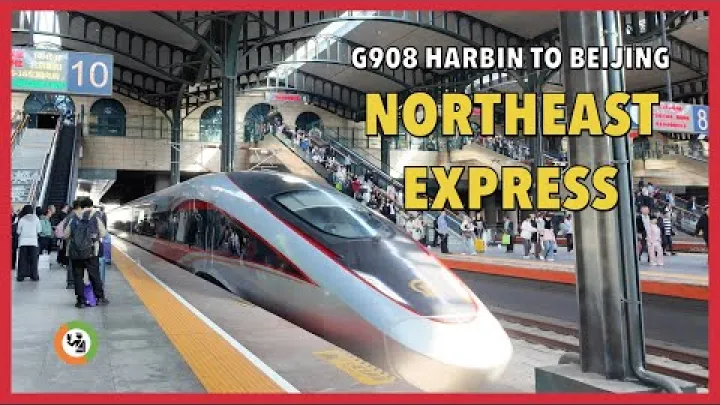
Getting to Harbin is straightforward once you match your departure city with the right gateway and transport mode. Harbin Taiping International Airport serves long-distance domestic and regional air routes, while several railway stations connect the city with Beijing and Northeast China. High-speed rail often offers a convenient city-center arrival, but flights can be more practical from distant Chinese cities or international gateways. This guide compares flights, high-speed and conventional trains, long-distance buses, cross-border routes, booking steps, winter planning, and the final transfer to Central Street in Daoli District.
Choose the Best Way to Reach Harbin
The best way to reach Harbin depends on more than the time shown for the flight or train. Include the journey to your departure airport or station, check-in or security time, baggage handling, the trip from your arrival gateway, and the ease of reaching your accommodation. A route that looks faster on paper may not be faster from your hotel to your hotel.
Start with Your Departure City and Travel Time
Start by identifying your actual departure city and the place where you will spend the first night in Harbin. Beijing is the clearest example for comparing air with high-speed rail. Shanghai and Guangzhou are more commonly considered as air routes because the surface journey is much longer. Changchun, Qiqihar, Mudanjiang, Dalian, and other Northeast China cities are useful rail comparisons because Harbin is part of a connected regional network.
International visitors should also separate their first arrival in China from the final journey to Harbin. If you enter China through a larger gateway, you may be able to continue by domestic flight or high-speed train. This can be useful when the international flight to Harbin does not fit your arrival time or budget, but it adds an airport or station transfer and possibly a separate ticket.
| Departure pattern | First comparison | Typical strength | Main planning issue |
|---|---|---|---|
| Beijing | Flight versus high-speed rail | Rail avoids airport procedures; air offers more departure flexibility | Compare complete downtown-to-downtown time |
| Shanghai or Guangzhou | Direct flight versus a connection | Air is usually the practical long-distance option | Flight frequency, fare, and airport access vary |
| Changchun or nearby Northeast cities | High-speed rail versus conventional rail | Rail can provide a direct urban arrival | Choose the correct Harbin station |
| International origin | Direct regional flight versus a Chinese hub | A one-stop itinerary may offer more booking choices | Check the complete itinerary and transit rules |
Use these comparisons as planning categories rather than fixed promises. Times and fares depend on the travel date, demand, train type, airline, and operating service.
Compare Air, High-Speed Rail, Conventional Rail, and Bus
Air is usually the broadest and fastest option from distant Chinese cities. It is often suitable for a short stay, a business trip, or an itinerary that begins far from Northeast China. The disadvantage is that airports are outside the city center, and the total journey includes airport access, check-in, security, baggage collection, and the transfer into Harbin.
High-speed rail is often attractive from Beijing, Changchun, and other cities served by the Northeast rail network. It can provide a comfortable daytime journey with an arrival at a Harbin railway station rather than an airport. The trade-off is that the fastest trains may cost more than conventional rail and may arrive at Harbin West or another station that is not the most convenient one for your hotel.
Conventional rail can be useful when price matters, when an overnight journey saves a hotel night, or when a direct train is easier than a flight connection. The journey is longer, and a late-night or early-morning arrival may reduce the value of the saving if you need an additional transfer or early hotel check-in.
Long-distance buses are mainly regional tools. They can reach towns and resort areas that are not convenient by rail, but they are less commonly the simplest choice for reaching Harbin from a distant Chinese city. Bus terminals, departure times, and English-language information can be less predictable than airport and railway information.
For families, rail may make luggage handling and city-center arrival easier. For budget travelers, conventional rail or a regional bus may reduce the ticket cost. For overnight travelers, a sleeper train can be more useful than a daytime seat. For visitors continuing through Northeast China, rail often makes it easier to link Harbin with Changchun, Qiqihar, Mudanjiang, or Dalian. No mode is best for every origin, so compare price, access, comfort, booking difficulty, and arrival location together.
Know Harbin's Main Gateways and City Anchors
Harbin has several different arrival points. The main names to recognize are:
- Harbin Taiping International Airport (HRB): the principal air gateway for domestic and regional international journeys.
- Harbin Railway Station: a major urban railway gateway with a different location and service pattern from Harbin West.
- Harbin West Railway Station: an important high-speed rail gateway.
- Harbin East Railway Station: a separate railway gateway that may be relevant for conventional or cross-border planning, depending on the current service.
- Harbin North Railway Station: another distinct station shown separately in transport searches.
- Harbin Nangang Bus Station: a long-distance coach reference for regional journeys such as travel toward Yabuli.
Central Street in Daoli District is a useful city-center reference, but it is not interchangeable with any airport, railway station, or bus terminal. Two tickets that both display Harbin can lead to different final journeys. Treat the complete gateway name as part of the route, not as a minor detail.
Fly to Harbin Through Taiping International Airport
Flying is often the simplest way to reach Harbin from distant parts of China or from a regional international gateway. Harbin Taiping International Airport is positioned as a regional air connection point in Northeast Asia, and the Capital Airport Group provides background on the airport's regional role. The airport is outside the central districts, so a flight decision should always include the final airport-to-city transfer.
Domestic Flights from Beijing, Shanghai, Guangzhou, and Other Chinese Cities
Typical direct-flight planning examples include about two hours in the air from Beijing, about three hours from Shanghai, and about four hours from Guangzhou. These figures describe approximate flight time, not the complete trip from a city-center hotel to Central Street. Airport access, check-in, security, baggage collection, and the ride from HRB can add significant time.
From Beijing, compare the flight with high-speed rail rather than assuming that air is automatically faster. A flight may offer more departure times or a lower fare on a particular date, while rail may be easier if your accommodation is near a Beijing railway station and your Harbin hotel is convenient to the selected station. From Shanghai or Guangzhou, the longer surface journey usually makes a direct flight the first option to examine.
Other Chinese cities may have direct flights to HRB, but route frequency and fares change with the airline, travel date, seasonal demand, and operating plan. A route displayed in a destination list is not a guarantee that a flight operates on the date you need. Compare the total itinerary, baggage rules, arrival time, and airport transfer rather than using the in-air time alone.
International Flights and One-Stop Connections
Regional international examples associated with Harbin route planning include Seoul, Tokyo, Khabarovsk, and Vladivostok. These names should be treated as possible or reported regional connections, not as a guaranteed current destination list. Airline networks and seasonal services can change, and a booking search may show a route only on selected dates.
Travelers from Europe, North America, Southeast Asia, and other distant origins may need to connect through a larger Chinese or regional hub before continuing to Harbin. A one-stop itinerary can provide more choices than searching only for a nonstop flight, but it creates another airport handoff. Check whether the itinerary is on one ticket or separate tickets, whether baggage is transferred, and how much time is available between flights.
Before purchasing an international itinerary, confirm the operating carrier, the airport used for each segment, the transit or entry rules for the connection, and the final arrival time in Harbin. Do not confuse a historical destination list or a third-party route display with current operating service.
Reach Harbin by High-Speed or Conventional Rail
Rail is one of the most useful ways to reach Harbin after arriving elsewhere in China. It is particularly competitive from Beijing and valuable for short Northeast China routes. The main decisions are train speed, seat or sleeper class, price, arrival station, and whether the arrival time works with your accommodation.
Beijing–Harbin High-Speed Rail
Published route examples place Beijing–Harbin high-speed rail at roughly 4.5 to 6.5 hours, depending on the train and stops. A reported second-class sample range is about CNY 595 to CNY 655. Treat both the journey time and the fare as dated examples, not as a current booking guarantee.
High-speed rail can compete well with flying from Beijing because the journey begins and ends at railway stations, avoiding airport check-in and some airport access time. It also provides a daytime seat and a clear arrival in the Harbin rail network. Flying may still be preferable when the fare is much lower, the departure airport is convenient, or the available train arrives at a station that is difficult for your accommodation.
When comparing a Beijing–Harbin train, record the exact departure station in Beijing and the exact arrival station in Harbin. Do not save only the city names. Compare the train's departure time with your route to the Beijing station, then compare the Harbin station with your hotel or onward connection.
Regional Rail from Changchun, Qiqihar, Mudanjiang, and Dalian
Changchun is the clearest short regional example. A published route page from China Airline Travel reports high-speed journeys of about one to one and a half hours and gives an example of frequent daily service. Because timetables change, use that information to understand the corridor rather than to assume that the same number of trains will operate on your date.
The Harbin–Qiqihar intercity corridor is another useful planning anchor. Published references describe a fastest journey of about 85 minutes, although the available trains, stops, and times can differ. Harbin also has rail connections toward Mudanjiang and along the Harbin–Dalian corridor. These routes make Harbin useful as a rail hub for wider Northeast China travel, but Dalian and other longer journeys can vary by train type, season, and current timetable.
For a regional trip, compare the station-to-hotel journey as carefully as the train duration. A 90-minute train can become a much longer door-to-door trip if you leave from a distant station, arrive late, or need to cross the city with heavy luggage. Rail is usually most attractive when the departure and arrival stations fit naturally into the rest of your itinerary.
Conventional and Overnight Trains
Conventional trains provide a slower alternative for travelers who want a lower-cost ticket, a direct route, or an overnight journey. Reported Beijing examples range from approximately 10 hours 22 minutes to 18 hours. These are route examples rather than fixed current schedules, and the arrival time matters as much as the duration.
The main classes can be explained simply:
- Hard seat: an assigned seat for the journey, usually the basic option for a daytime trip.
- Hard sleeper: a bunk in a shared sleeping area, useful for reducing the need to sit throughout a long journey.
- Soft sleeper: a more comfortable sleeper category, generally selected when rest and privacy matter more than the lowest fare.
An overnight sleeper can save a hotel night, but it may not provide a convenient arrival. Check whether you will reach Harbin early in the morning, whether your accommodation accepts early luggage drop-off, and how you will continue from the station. A cheaper ticket is not necessarily better value if it creates a difficult transfer or leaves you waiting for check-in.
Choose the Correct Harbin Railway Station
Harbin Railway Station, Harbin West, Harbin East, and Harbin North are separate destinations. Harbin West is an important high-speed gateway, while Harbin Railway Station and Harbin East can appear in different conventional, regional, or cross-border service contexts. Harbin North also has its own service pattern. The role of any station can depend on the train and date, so do not use the shortened label Harbin when making a transfer plan.

The selected station affects the final taxi or ride-hailing distance, possible metro or city-bus connection, luggage convenience, and the time needed to reach Central Street, Daoli District, or another hotel area. It can also affect whether you can make an onward train or bus connection on the same day.
Before leaving for the train, read the exact railway station name on the ticket and compare it with the route to your hotel. Check the Chinese or translated station name carefully if your booking application displays several Harbin stations. Save the station name together with the train number and departure time so that you do not arrive at the wrong railway gateway.
Use Long-Distance Buses and Overland Routes
Buses are most useful for regional destinations, resort areas, and towns that are not served as conveniently by rail. They can be practical when the terminal is close to your starting point or when the bus provides a direct trip. For the main journey from a distant Chinese city, however, air or rail is usually easier to compare and book.
Domestic Buses to Yabuli and Regional Towns
A commonly cited regional example is the route from Harbin Nangang Bus Station to Yabuli Town, reported at about 3.5 hours. China Highlights describes this route as part of Harbin's long-distance bus options. Use it as an indication of the type of regional journey available, not as a promise of a particular departure time or fare.

Harbin has more than one coach station, and bus routes can be redistributed between terminals or listed under different destination names. A route to a town may not use the same name as a nearby scenic area or resort. Confirm the departure terminal, destination wording, ticket channel, and luggage arrangements through the current bus station or operator. For a same-day connection from rail or an airport, allow time to travel across the city rather than assuming that all gateways are adjacent.
For regional bus travel, keep the terminal name and destination written in a form that can be shown at the station. If an online search gives several departure points, select the one printed on the issued ticket or confirmed by the operator. This is especially important when a bus is part of a larger itinerary to a ski area or another town outside Harbin.
Cross-Border Routes Toward Russia
Harbin can be included in overland or air itineraries toward Russia, with Vladivostok and Khabarovsk appearing as regional planning anchors. Flights, buses, and international rail may be possible at different times, but cross-border services are more sensitive to operating decisions and border conditions than ordinary domestic routes.
Overland travel can take longer and involves more complex border procedures. Its advantages may include avoiding a flight, creating an overnight travel experience, or linking several Northeast Asian destinations. Its disadvantages include border processing time, less predictable connections, and the need to coordinate the carrier, terminal, and border crossing.
Verify passport validity, visa requirements, transit permissions, border-entry rules, and the current operation of the specific route with the relevant authorities before booking a Russia itinerary. Also confirm the exact departure terminal and whether the service arrives at the border or continues through the crossing. Do not rely on an old travel description for legal or border information.
Driving and Winter Road Travel
Highway access makes driving possible for longer regional trips, but renting a car is usually a niche choice for reaching central Harbin. It may suit an experienced driver with a flexible regional itinerary, several stops, and local support. It is less attractive when the goal is simply to travel between major cities, because rail and air reduce the burden of navigation, parking, and changing road conditions.
Before choosing to drive, assess snow and ice, visibility, extreme cold, road-condition notices, tolls, fuel, parking, insurance, and the availability of assistance outside major urban areas. Ask the rental company and the relevant authorities about current licensing and insurance requirements instead of assuming that a document from another country will be accepted.
A cautious go-or-no-go test is useful:
- Choose driving only if you are comfortable with winter conditions and can reduce the schedule when roads are difficult.
- Avoid it when you have limited cold-weather driving experience, a tight connection, or no local support.
- Do not choose self-driving merely because train or bus booking looks inconvenient.
- Keep a plan for changing the route or using rail if the road journey becomes unsuitable.
Book and Verify Your Journey
Once you select a transport mode, keep the booking details organized as one complete itinerary. The departure city, arrival gateway, station name, passenger document, and transfer plan should all match. This is particularly important when an English-language search simplifies several railway stations into the single word Harbin.
Book Rail Through the Official Railway Channel
China Railway's 12306 channel is the primary reference for domestic train schedules, ticket availability, changes, and refunds. A third-party booking service can sometimes offer a more accessible interface or English-language assistance, but it may apply different fees or show different availability. Use the official railway details as the basis for confirming what has actually been issued.
- Search the exact departure and arrival stations for your date, not only the two city names.
- Compare departure time, journey duration, stops, seat or sleeper class, and arrival station.
- Enter the passenger record and travel-document information exactly as required by the booking channel.
- After purchase, retain the train number, date, departure station, arrival station, class, and passenger details together.
- Use the issued ticket information when planning the route from the station to your accommodation.
Do not assume that every third-party platform has identical availability, fees, change conditions, or refund rules. If a booking is important to an international itinerary, understand which company issued the ticket and which channel handles changes.
Verify Flight and Bus Schedules Close to Departure
Use a simple verification hierarchy. For a flight, check the airline and Harbin Taiping International Airport information. For a domestic train, use China Railway and the issued 12306 ticket. For a coach, use the current bus station or operating company. For a cross-border service, check the carrier, departure terminal, and relevant border information together.
Aggregators are useful for discovering routes and comparing approximate prices, but they may not reflect a late local change. A published route example can help you understand whether a connection exists while the operator remains the source for the live service.
Close to departure, confirm:
- the operating carrier and service status;
- the departure time and terminal or station;
- the arrival gateway and any change of station;
- the fare, baggage conditions, and passenger-document details;
- the latest change or refund conditions; and
- the route from the arrival gateway to your accommodation.
Save the confirmation in an accessible form and keep the exact Chinese or official gateway name available if translation creates ambiguity. This short final check is most important for regional buses, international rail, and cross-border services.
Build a Seasonal and Connection Buffer
Harbin's winter conditions can affect flights, airport transfers, roads, and the timing of rail services. Snow and ice may slow the journey to a station or airport even when the main service is operating. Extreme cold can also make a long outdoor wait with luggage uncomfortable, particularly after a late arrival.
Do not pair a late flight with an early train or bus when a missed connection would disrupt the rest of your trip. A longer buffer, an airport or station hotel, or one flexible night in Harbin can be better value than a tightly timed itinerary.
Before travel, use this buffer checklist:
- check the latest weather forecast for the departure and arrival cities;
- check current flight, rail, or bus service notices;
- allow extra time for the transfer from the gateway to the hotel;
- confirm when your accommodation accepts arrival or luggage drop-off; and
- keep a realistic backup plan if the first connection is missed.
Use cautious planning language for winter: a service may be delayed or an operating pattern can change, so leave enough time to make a safe alternative decision.
Connect from the Gateway to Central Harbin
Your long-distance journey ends at the airport, railway station, or coach station, not necessarily at your hotel. Plan the final handoff from the named gateway to Central Street in Daoli District, a railway station, or your actual accommodation. The best option depends on arrival time, luggage, price, and how clearly you can identify the official pickup point.
Choose the Safest Airport Transfer
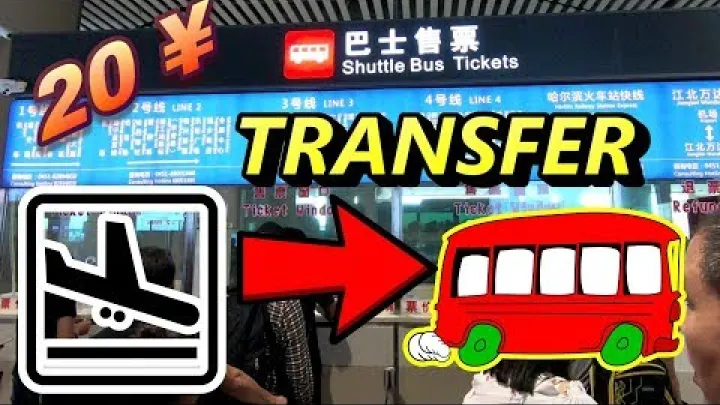
From Harbin Taiping International Airport, the main handoff choices are airport shuttle buses, official taxis, and ride-hailing. Published travel guidance describes several airport bus lines and gives a fare of around CNY 20 as an example, but routes, operating times, and fares should be treated as current-local information rather than fixed facts. The Asia Odyssey Travel guide provides background on these transfer options.
| Option | Best feature | Main trade-off |
|---|---|---|
| Airport shuttle | Usually a lower-cost city connection | Fixed route and departure pattern; luggage may take longer |
| Official taxi | Direct trip to a hotel, station, or Central Street | Price depends on distance, traffic, and local conditions |
| Ride-hailing | Door-to-door booking through an app | Requires finding the designated pickup area and matching the vehicle |
Use the marked airport taxi queue or an official shuttle or ride-hailing pickup area. Decline unsolicited rides, even if a driver approaches inside or near the terminal and offers a quick fixed price. During busy winter periods, take a moment to identify the official queue or pickup instructions before loading your bags.
Use Metro or Buses from Rail and Coach Stations
Harbin Railway Station, Harbin West, Harbin East, Harbin North, and major coach stations create different urban journeys. Depending on the station and hotel, metro or city bus may offer a lower-cost route, while an official taxi can be simpler with large luggage, a late arrival, or several travelers. Exact route numbers and operating hours should be checked for the station printed on your ticket.

Use this station-to-hotel decision flow:
- Begin with the exact station or coach terminal name on the ticket.
- Check whether the hotel is near Central Street in Daoli District or in another part of Harbin.
- Choose metro or city bus when the route is clear and you are traveling during operating hours with manageable luggage.
- Choose a taxi or ride-hailing trip when the transfer is late, the weather is difficult, or the luggage makes a public-transport connection impractical.
- If arriving late, check current metro operating hours and keep a backup transfer option.
The right transfer is not always the cheapest one. A slightly more expensive direct trip can be worthwhile after a long train journey, while public transport may be the better choice for a daytime arrival with light luggage.
Final Takeaway for Getting to Harbin
For distant Chinese cities, start with Harbin Taiping International Airport and compare the complete journey against rail. From Beijing and nearby Northeast China cities, high-speed rail can offer a strong balance of time and convenient urban arrival. Conventional trains and regional buses are useful when price, overnight travel, or access to a specific town matters more than speed.
Whatever you choose, keep the exact Harbin gateway in your itinerary, use the appropriate booking channel, allow a winter connection buffer, and plan the final route to your accommodation. With those details confirmed, getting to Harbin becomes a clear comparison rather than a last-minute transfer problem.
Select area
Create a post
Posting is free and no registration is required.