Harbin Budget: Daily Travel Costs, Prices & Saving Tips

Harbin can be an affordable city break on ordinary days, but winter festival demand, private rooms, major attractions, and trips beyond the city can change the total quickly. This Harbin budget guide gives indicative per-person spending ranges in CNY, with USD used only as an approximate reference. It breaks costs into accommodation, food, local transport, activities, access, and optional spending. Use the examples to plan ordinary sightseeing days and separate festival splurge days instead of relying on one daily average.
Harbin Travel Budget at a Glance
The most useful Harbin travel budget is a range rather than a single average. Accommodation and festival tickets usually create the largest differences, while local meals, walking, and public transport can keep ordinary city days manageable.
Daily Budget Ranges for Different Travel Styles
The following table describes ordinary in-city spending for one traveler. The ranges assume that international flights, long-distance arrival costs, shopping, winter clothing, and regional snow trips are priced separately.
| Travel style | CNY per person per day | Approximate USD | Typical assumption |
|---|---|---|---|
| Budget | ¥350–580 | US$50–80 | Dorm or shared room, local meals, public transport, and selected low-cost activities |
| Mid-range | ¥700–1,080 | US$100–150 | Private room shared by two or a modest hotel, mixed dining, and several paid sights |
| Comfortable | ¥1,400–2,200 or more | US$200–300 or more | Comfortable private hotel, frequent sit-down meals, taxis, and paid attractions |
These are indicative planning ranges, not guaranteed prices. A budget traveler who chooses only free city areas can spend less on one day, while a traveler who visits Ice and Snow World, books a private room alone, or adds VIP access can spend much more. The USD figures are rough conversions only. Recalculate all CNY amounts at booking time using the current exchange rate, and use the CNY figures as the working numbers when comparing local prices.
- Budget profile: Allow about ¥120–220 for a dorm bed or a low-cost shared-room contribution, ¥60–100 for food, ¥10–35 for routine city transport, and roughly ¥0–225 for activities. A paid attraction can move the day toward the top of the range.
- Mid-range profile: Allow about ¥350–500 per person for a room shared by two, ¥120–180 for food, ¥25–60 for local transport, and ¥200–300 for activities. A solo traveler using the same room pays the full room rate.
- Comfortable profile: Allow about ¥800–1,200 or more per person for a private hotel room, ¥200–350 for food, ¥60–150 for taxis and other local mobility, and ¥300–500 for activities. Five-star accommodation, private transfers, and tours can push the total higher.
What These Harbin Budget Ranges Include
The daily figures are designed for spending inside Harbin: one night of accommodation, meals and drinks, normal local transport, and selected activities. They are not a complete China trip cost. Keep international airfare, airport or railway arrival transport, intercity trains, regional snow destinations, shopping, equipment purchases, travel insurance, and major guided tours outside the standard city-day estimate.
A useful calculation separates nights from calendar days. For a four-night, five-day visit, estimate four accommodation charges, five days of food, five days of routine local transport, and each attraction as a separate one-time cost. In simple terms, the city subtotal is the number of nights multiplied by the nightly room or bed cost, plus the number of days multiplied by daily food and local transport, plus planned activities.
Always distinguish per-room prices from per-person prices. If a room costs ¥700 per night and two people share it, the accommodation input is ¥350 per person per night. A solo traveler must use the full ¥700 unless the room is priced per guest. This distinction can make a mid-range couple’s budget look much lower than a solo traveler’s budget even when both book the same property.
Accommodation Costs and Where to Stay
Accommodation is often the most changeable part of a Harbin travel budget. Location, winter demand, room type, heating arrangements, breakfast, cancellation terms, and the distance to the main sightseeing areas all affect the real value of a rate.
Hostels and Basic Private Rooms
Hostel prices should be read as booking-time signals rather than permanent tariffs. A HotelsCombined snapshot reported Harbin hostel searches with prices starting around US$12 per night and an average near US$31 in the stated search period. At a round planning conversion, that is approximately ¥85 at the low end and ¥220 for the average, but the CNY amount should be updated when you book.

Selected promotional listings can appear below the low end, but the cheapest result may have limited dates, unusual room conditions, or a price shown per bed rather than per room. Dormitories are usually the clearest choice for solo budget travelers. A guesthouse or basic private room may offer better privacy for a couple or two friends, but its total price must be divided between the occupants to compare it fairly with a dorm bed.
Before choosing the lowest listing, check whether the room has reliable heating, whether the bathroom is private or shared, the distance from Daoli District and Zhongyang Pedestrian Street, review patterns, luggage access, and cancellation conditions. A slightly more expensive central bed can reduce daily taxi use and make short trips on foot more practical. Conversely, a cheaper outer location may be good value if the room savings are larger than the expected transport cost.
Mid-Range and Comfortable Hotels
For planning purposes, indicative booking bands are roughly US$70–80 for a three-star hotel, US$90–100 for a four-star hotel, and about US$177–182 for a five-star hotel. These translate approximately to ¥500–580, ¥650–720, and ¥1,275–1,310 at a round exchange rate. Treat these as booking snapshots and broad comparison points, not guaranteed current rates for every Harbin property.
The effective price depends on whether breakfast is included, whether the rate is refundable, the room size, weekday or weekend dates, and distance from central attractions. Festival dates can change availability and pricing more sharply than the difference between hotel star categories. A well-reviewed three-star property with suitable heating and convenient transport can provide better winter value than a more expensive hotel whose main advantage is its label.
For two people, divide the room rate before comparing it with the mid-range daily budget. For one person, use the complete nightly room price. Also consider practical inclusions: breakfast may replace a separate meal, flexible cancellation may protect an expensive winter booking, and a central location may reduce repeated taxi fares. These factors matter more than the star category alone.
Central Harbin, Outer Districts, and Regional Bases
Daoli District and Zhongyang Pedestrian Street are useful reference points for comparing bases because they place a traveler near major city sightseeing, restaurants, and central public spaces. A central room may cost more because of convenience and demand, but the location can reduce short taxi trips and make walking a larger part of the itinerary.
Accommodation outside the central tourist area may have a lower nightly rate. The saving is real only if extra rides, longer travel times, and winter convenience do not erase it. Compare the total nightly price plus an expected daily transport amount rather than comparing room prices alone. This is especially important for a short trip, when time spent commuting has a larger effect on the experience.
Yabuli and Snow Town should be treated as regional snow-trip bases, not as ordinary Harbin neighborhoods. Their accommodation, transfers, meal arrangements, and activity prices belong in a separate regional package line. Rural guesthouses and resort lodging can have very different room standards and seasonal demand, so do not assume that a city hostel comparison applies to them. For peak winter dates, compare refundable accommodation rates early and confirm cancellation terms before paying.
Food and Drink Prices in Harbin
Food is one of the easier Harbin costs to adjust without removing the main travel experience. A day built around neighborhood eateries can be much cheaper than a day with hotel breakfast, coffee stops, imported drinks, and several sit-down meals.
Cheap Local Meals and Street Food
For inexpensive local eating, a practical range is about ¥12–30 per meal. A July 2026 cost snapshot from Numbeo listed an inexpensive restaurant meal at about ¥15, which is a useful local baseline but not a promise for every venue.

Low-cost choices can include noodles, dumplings, baozi, simple northern Chinese dishes, skewers, and takeaway meals. A broader China food guide places breakfast at about ¥3–20 and many lunch or dinner choices at ¥20–80; use that information as national context rather than as a precise Harbin menu. Portion size and whether dishes are shared also matter. Two travelers who share several northern-style dishes may spend differently from two people ordering individual Western meals.
Prices on Zhongyang Pedestrian Street, in shopping malls, at hotel restaurants, and at venues serving imported food can be higher than prices at neighborhood restaurants. Build the food budget meal by meal: identify a breakfast allowance, a local lunch range, a dinner range, and a separate amount for drinks or snacks. This is more useful than assuming every meal will cost the same.
Mid-Range Dining, Cafes, and International Food
As an indicative comparison, use about ¥155 for a three-course meal for two and about ¥36 for a fast-food combo. These figures are reference points for planning, not fixed prices for all Harbin restaurants. A fast-food meal may be convenient, while a local sit-down meal may offer more food for the same amount depending on the venue.
Cafes, Western-style brunch, international restaurants, hotel dining, coffee, alcohol, and specialty desserts can raise the daily food allowance quickly. Keep these items visible instead of hiding them inside a general meal average. A traveler who buys one coffee and one alcoholic drink each day may need a different food-and-drink budget from a traveler who drinks water or tea and eats mainly local meals.
When comparing restaurants, check the current menu and confirm whether drinks, service charges, set-menu items, or sharing fees are included. A three-course price for two should not be compared directly with a single-person meal, and a fast-food combo should not be treated as a full day of food. Use the price as a decision tool, not as a guarantee.
Set a Daily Food and Drink Allowance
For one person, a useful Harbin food budget is about ¥60–100 for inexpensive local eating, ¥120–200 for mixed dining, or ¥200–400 or more for frequent cafes, alcohol, specialty dining, and higher-end meals. These are spending choices, not required minimums.
A low-cost day might use ¥15 for breakfast, ¥25 for lunch, ¥35 for dinner, and ¥10–20 for snacks or drinks, producing roughly ¥85–95. A mixed-dining day might use ¥25 for breakfast, ¥40 for lunch, ¥30 for coffee or a snack, and ¥80–100 for dinner, producing about ¥175–195. The second pattern is still moderate but leaves less room for an expensive dessert or several drinks.
Connect the allowance to the wider travel style. Local meals support the budget profile, a mix of local and sit-down restaurants suits a mid-range profile, and regular cafes or higher-end dining belongs in the comfortable profile. Keep alcohol, coffee, and specialty food as optional add-ons so you can reduce them without cutting a priority attraction.
Local Transport and Access Costs
Routine city mobility can remain a small part of the Harbin budget when an itinerary combines walking with buses or other public transport. Taxis, airport transfers, attraction-area shuttles, intercity travel, and regional snow trips are different cost categories.
Public fares can change. Confirm current fares, service hours, and payment requirements through a local transport or operator channel before relying on them.
Buses, Metro, and Walking
Available public fare evidence gives a broad baseline of roughly ¥1–5 for bus rides, with about ¥2 used as an example of a local one-way ticket. A public transport discussion on Facebook gives a similar ¥1–5 range, but it is not an authoritative current operator tariff. Treat it as an indication of the scale of ordinary rides.
Two to four rides in a day could therefore produce a simple planning amount of about ¥4–20 before any special shuttle or longer journey. Allowing ¥10–35 per person for routine city transport gives more room for extra stops. Walking between nearby central sights can reduce this line, while outer attractions can require more time and more rides. Exact metro fares, network details, service hours, and accepted payment methods should be checked separately for your dates.
Keep attraction-area shuttles separate from city buses. A sightseeing vehicle, park bus, or private transfer may have a different fare even when it covers only a short distance. This separation makes it easier to see whether a low room rate is being offset by daily travel.
Taxis, Ride-Hailing, and Winter Convenience
A pre-research taxi snapshot used a ¥9 starting fare and about ¥2.45 per kilometer as an illustrative reference. A six-kilometer trip calculated from those figures would be about ¥23.70 before waiting time, traffic-related charges, platform fees, or other adjustments. This is a calculation example, not a guaranteed fare for every route or time.
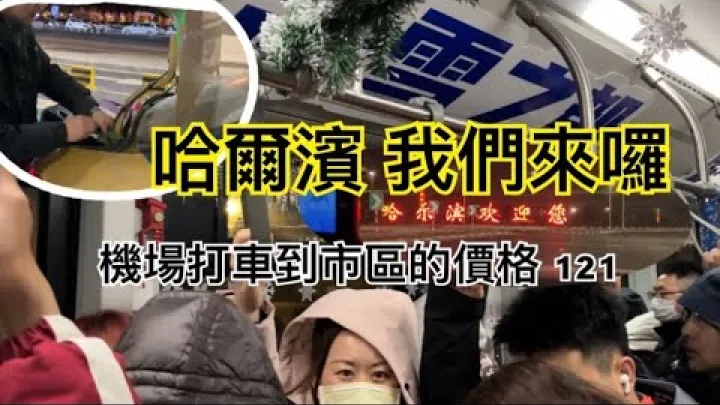
Separate the possible components: base fare, distance charge, waiting charge, airport or station transfer cost, and any ride-hailing platform amount. Several short taxi rides can turn transport from a minor daily expense into a significant category. This is especially visible when a traveler stays outside the central area or uses private rides for multiple attractions.
A taxi may be worth paying for when carrying luggage, traveling as a small group that can share the fare, connecting to an outer attraction, or choosing convenience in very cold conditions. For short central journeys, walking or public transport is usually the more economical starting point. Compare the estimated fare with the public transport alternative rather than treating taxis as an automatic upgrade.
Flights, Trains, and Regional Snow Trips
International flights and domestic arrival costs should not be included in a standard Harbin daily budget because the price depends on the traveler’s origin, booking date, season, airline, and route. The same applies to an intercity train from another Chinese city. Add these as separate one-time access costs in the trip worksheet.
Yabuli, Snow Town, and other regional snow destinations should also be priced as separate access-and-activity packages. A package may combine transport, accommodation, meals, guide services, attraction tickets, or equipment, while a self-guided trip may divide those costs across several bookings. Do not compare a bundled multi-day product directly with a single city bus or train fare.
A low in-city budget can still lead to a high total trip cost if the arrival flight, railway journey, or regional snow excursion is expensive. Price flights, trains, and regional snow-trip tickets from your own origin before setting the daily Harbin budget.
Attraction and Activity Costs
Harbin’s activity budget depends on whether the trip is centered on large winter installations, free city sightseeing, or a small number of paid attractions. List each ticket separately so one expensive experience does not disappear inside an average.
Ice and Snow World: The Main Festival Splurge
An available ticket snapshot for Harbin Ice and Snow World gives a broad range of about ¥240–800. China Odyssey Tours presents this range alongside a benchmark of about ¥198 for the Snow Sculpture Exhibition. These figures should be treated as indicative evidence rather than a permanent official tariff.
The wide Ice and Snow World range may reflect different dates, admission categories, packages, VIP access, or optional services. Do not assume that the lowest amount is available on your date or that a premium amount represents standard admission. Check the current ticket category, date, and inclusions before purchase, including whether transport, priority access, or other services are part of the product.
Even the lower end of the Ice and Snow World range can consume a large share of a budget traveler’s ordinary day. Build it as a separate festival splurge day: add the ticket to accommodation, food, and local transport rather than spreading it invisibly across every day. Treat the Snow Sculpture Exhibition as a related but separate cost unless the ticket terms clearly combine the two.
Sun Island Free Areas and Ticketed Experiences
Sun Island Scenic Area should be divided into free general areas, seasonal exhibitions, and optional internal transport. Some public areas may support a low-cost walk or photo-focused visit, but the presence of free areas does not mean every exhibition or attraction within the area is free.
For planning, use about ¥25 as an indicative sightseeing-bus cost and approximately ¥60–100 for selected bicycle rentals. These are optional internal mobility examples, not a general admission price. A low-cost Sun Island day can use free areas and walking, with no internal transport charge. A higher-cost day can add a seasonal snow exhibition and either the sightseeing bus or bicycle rental.
Keep park access, exhibition admission, and internal transport as separate rows in your budget. Seasonal operating status and current prices can differ by date, so confirm the specific experience you intend to visit before treating the free-versus-paid comparison as final.
Tiger Park, Polar Park, and Guided Tours
A pre-research estimate places Siberia Tiger Park admission at about US$18.53, or roughly ¥130–140 depending on the exchange rate. Optional feeding may add about ¥200 for meat, while a more interactive bus or special vehicle can carry another charge. Base admission should therefore be separated from feeding, vehicle upgrades, food, and local transport.
Harbin Polar Park is another paid attraction. One available booking listing has shown a price near US$29.25, or approximately ¥210 at a round conversion. Treat that as a listing example rather than a guaranteed ticket price. A guided tour may cost more than an independent visit because it can include transport, admission, a guide, meals, or other services. Compare group size, inclusions, pickup arrangements, and cancellation terms before comparing tour prices.
Most travelers do not need every major paid attraction in one itinerary. Choose one or two priorities, price the base ticket and extras separately, and use free city areas or a lower-cost day around them. This gives the activity budget a clear purpose instead of allowing optional upgrades to expand unnoticed.
Seasonal Price Changes in Harbin
Harbin has a strong seasonal difference because the winter festival creates demand for rooms, tickets, transport, warm clothing, and snow-related tours. Travel dates can matter more than small savings on individual meals or bus rides.
Winter Festival Peak Costs
The main winter festival period can place pressure on accommodation and activities at the same time. One hostel comparison illustrated the difference with a low price around US$6 in September and around US$18 in December. This is an example from particular searches, not a market-wide rule or a guaranteed percentage increase for every property.
Peak planning should include a festival ticket, possible attraction transfers, suitable winter clothing, and a larger accommodation allowance. Clothing may be rented, purchased, or brought from home, but it should appear as a separate line rather than being hidden in the daily food budget. Limited availability can also make an otherwise affordable room unavailable, leaving only higher-priced options.
Balance the trip by treating a major festival visit as a high-cost day and using lower-cost city-exploration days around it. A central walk through Daoli District and Zhongyang Pedestrian Street, local meals, public spaces, and selected free areas can help prevent every day from carrying the cost of the largest ticket.
Shoulder Seasons and Lower-Cost Travel
March, April, and May are often presented as quieter periods that may offer better package prices than the main winter demand period. This is a cost opportunity, not a promise that flights or hotels will be cheap on every date. Compare actual accommodation and transport searches for the dates you can use.
Travelers who do not require the main snow-and-ice experiences can focus on architecture, food, parks, riverfront areas, public city spaces, and cultural sightseeing. This can lower the activity budget and reduce the need for specialized winter clothing. The trade-off is that seasonal snow exhibitions or winter attractions may be closed, reduced, or unavailable outside their operating period.
Check the seasonal opening status of each intended attraction before choosing a shoulder-season itinerary. A cheaper trip is useful only if it still includes the experiences that motivated the visit.
Weekends, Events, and Flexible Booking
Weekends, public holidays, festival events, and limited room inventory can affect accommodation and tour prices even when a trip is outside the broad winter peak. A small weekday-versus-weekend difference observed in one search should not be treated as a universal rule, but comparing several date combinations can reveal a meaningful saving.
- Compare at least one weekday sequence with a weekend-heavy sequence.
- Check public holidays, festival events, and attraction dates before paying for a nonrefundable product.
- Search nearby arrival and departure dates rather than changing food or transport choices first.
- If flexibility matters, choose a rate with cancellation conditions you understand and compare its extra cost with the possible saving from changing dates.
Changing the dates of a room or festival visit can save more than removing several inexpensive meals. Keep weekend effects separate from the larger effect of festival demand so the budget does not overstate or understate the reason for a price change.
Currency, Payments, and Saving Tactics
Use CNY or RMB as the main planning currency and keep currency conversion separate from the local price. This makes it easier to update the budget when exchange rates, booking prices, or ticket categories change.
Budget in CNY and Track Exchange Rates
Record accommodation, food, local transport, activities, access costs, regional travel, and optional spending in separate categories. For each line, note whether the price is per person, per bed, per room, per day, or a one-time charge. This prevents a room price from being mistaken for a per-person price or a festival ticket from being treated as a daily average.
Date-stamp booking snapshots in your notes. Keep the underlying local amount, such as ¥700 per room, separate from the amount shown in your home currency. Recalculate the itinerary in your home currency shortly before booking and again before departure if the exchange rate has changed significantly. This approach is more reliable than trusting an old USD conversion in a travel article or booking result.
Payment Methods and Small-Expense Control
Mobile payment, bank cards, and cash may all be useful in Harbin, but acceptance can vary by merchant, transport service, payment setup, and location. Foreign-card linking, international card acceptance, transport payment requirements, and practices at small or rural vendors should be confirmed before travel rather than assumed.
Set up two payment methods and carry a small CNY cash backup. Check foreign transaction fees, ATM charges, card network fees, and currency-conversion settings. A backup method is especially useful if a card cannot be linked, a terminal does not accept the card, or a small vendor prefers cash.
Track small expenses each evening. Drinks, coffee, snacks, attraction extras, bicycle rental, waiting charges, and short taxi rides can each look minor but collectively move the daily total. A simple note with the date, category, CNY amount, and payment method is enough to show where the budget is drifting.
High-Impact Ways to Save Without Losing Key Experiences
Saving works best when it targets the largest and most changeable costs first. Use this order when adjusting a Harbin trip:
- Change dates before cutting essentials. Compare winter weekdays, weekends, event dates, and quieter periods. Accommodation availability and festival demand usually matter more than saving a few yuan on routine transport.
- Compare the full cost of your base. A central room in Daoli District may cost more but reduce taxis and commuting. An outer district may save on the room while increasing transport and time. Compare both totals before choosing.
- Choose priority attractions. Keep the experience that matters most, such as Ice and Snow World or one major animal park, and skip VIP access, feeding, special vehicles, or guided extras that are not priorities.
- Mix food styles. Combine local noodles, dumplings, baozi, and casual meals with selected sit-down dining. Keep coffee, alcohol, imported food, and specialty desserts as visible optional costs.
- Combine walking and public transport. Use walking for nearby central sights and public transport for routine longer trips. Price taxis, attraction shuttles, and private transfers separately instead of allowing them to become the default.
Booking checklist:
- Write a CNY nightly accommodation range and divide shared rooms by the number of occupants.
- Mark festival tickets, regional trips, flights, and winter clothing as separate one-time costs.
- Compare at least two bases using room price plus expected transport.
- Set a daily food and small-expense limit, then record actual spending.
- Keep two payment methods and a modest CNY cash backup ready.
Build a Total Harbin Trip Budget
A full-trip estimate becomes clearer when daily costs and one-time costs are placed in the same worksheet without mixing their units. Start with low and high inputs, then replace them with actual quotes for your dates.
Turn Daily Categories into a Full-Trip Estimate
Use this formula: city subtotal equals nights multiplied by accommodation, plus days multiplied by food, plus days multiplied by routine local transport, plus selected activities. Total trip cost equals the city subtotal, plus arrival and departure access, intercity travel, regional snow trips, optional spending, and a contingency amount chosen for your itinerary.
| Category | Cost basis | Low input | High input | Quantity | Subtotal method |
|---|---|---|---|---|---|
| Accommodation | Per bed or room per night | ¥120–220 per person when shared | ¥800–1,400 or more per person | Number of nights | Rate × nights |
| Food and drinks | Per person per day | ¥60 | ¥400 or more | Number of days | Rate × days |
| Local transport | Per person per day | ¥10 | ¥180 or more | Number of days | Rate × days |
| Activities | One-time ticket or service | ¥0 for free areas | ¥800 or more for a planned major ticket | Number of visits | Ticket × visits |
| Arrival and departure | One-time access cost | Quote from your origin | Quote from your origin | Required trips | Actual quote × trips |
| Regional snow trip | Transport or package | Separate quote | Separate quote | Planned add-ons | Package or transport total |
| Optional spending | Trip allowance | Your chosen amount | Your chosen amount | As needed | Allowance total |
| Contingency | Flexible trip allowance | Your chosen buffer | Your chosen buffer | One amount | Add the amount you choose |
For a solo traveler, use the full private-room price unless the property charges per guest. For a couple, divide a shared room rate before multiplying by nights. Use the low and high columns to show uncertainty rather than choosing an unsupported fixed average. The contingency line should reflect your own flexibility, planned transfers, and likelihood of paid extras; it is not a required fixed percentage.
Compare an Ordinary Day with a Festival Day
An ordinary city day can combine inexpensive local meals, public transport, free areas, walking, and budget lodging. A festival day adds a major ticket and possibly extra transport, so the difference should remain visible rather than being spread over the whole itinerary.
| Travel style | Ordinary city day | Festival day using a ¥240–800 major ticket | Typical pattern |
|---|---|---|---|
| Budget | ¥350–580 | ¥590–1,380 | Shared dorm, local meals, public transport, and low-cost or free sights |
| Mid-range | ¥700–1,080 | ¥940–1,880 | Shared private room or modest hotel, mixed dining, and some taxis |
| Comfortable | ¥1,400–2,200 or more | ¥1,640–3,000 or more | Private hotel, sit-down meals, convenient rides, and paid activities |
The festival-day figures are illustrative additions, not quotes. They add the broad Ice and Snow World ticket range to the ordinary-day range; a Snow Sculpture Exhibition ticket or another attraction should replace it rather than being added automatically. These examples exclude flights, regional travel to Yabuli or Snow Town, shopping, winter clothing, and optional tours.
Use a simple decision rule: choose the experiences that matter most, price those one-time costs first, and then adjust accommodation, meals, and routine transport around them. This produces a more realistic Harbin budget than cutting small daily expenses while overlooking the largest ticket or access charge.
Harbin Budget Takeaways
For ordinary in-city travel, plan roughly US$50–80 per day for a budget style, US$100–150 for mid-range travel, and US$200–300 or more for a comfortable trip. Work in CNY, separate per-room and per-person costs, and keep flights, arrival costs, intercity journeys, regional snow trips, shopping, clothing, and tours outside the city daily subtotal.
The largest savings usually come from flexible dates, early accommodation comparison, choosing a base with sensible transport access, and selecting only the paid attractions that matter most. Use local casual meals, walking, public transport, free city areas, and lower-cost days to balance a winter festival splurge. Track small expenses, maintain two payment methods, and update every important CNY price when booking so your final Harbin travel budget reflects your actual itinerary.
Select area
Create a post
Posting is free and no registration is required.