Phu Quoc Travel Guide: How to Plan Your First Island Trip
Phu Quoc is Vietnam’s largest island destination, combining sandy beaches, resort areas, fishing communities, forest landscapes, seafood, and boat trips to smaller southern islands. It can be an easy beach break after time in Ho Chi Minh City, or a slower holiday with several days based near the coast. This Phu Quoc travel guide explains how the island is laid out, where to stay, how to arrive, how to move around, and what to plan before you book. It also helps first-time visitors make realistic choices about weather, costs, safety, and time.
Plan Your Phu Quoc Trip at a Glance
Phu Quoc is in Kien Giang Province, off Vietnam’s southwest coast. The island has changed quickly, so a trip can range from a simple local guesthouse stay to a large integrated resort holiday. Your best plan depends less on finding one “best” beach and more on matching your base to the activities you want to do.
What Phu Quoc Is Best For
Phu Quoc suits travelers looking for a warm-weather island break with more variety than a single beach resort. Visitors come for swimming, sunset time, seafood meals, island-hopping outings, snorkeling when sea conditions allow, and resort facilities. Inland and northern parts of the island add a different dimension through Phu Quoc National Park, quieter roads, and forest scenery. The official Visit Vietnam tourism site presents Phu Quoc as a destination where nature, beaches, and larger visitor attractions sit alongside the island’s local identity.
It works especially well for couples wanting a relaxed resort stay, families who value pools and organized attractions, and first-time Vietnam visitors who want a beach-focused finish after city travel. Independent travelers can also build a lower-key trip around Duong Dong, local food, beach time, and one or two day trips. Phu Quoc is not a substitute for a mainland Mekong Delta journey: it is primarily a coastal and marine destination rather than a place of canals and floating markets.
Seafood is central to many meals, while fish sauce and pepper are products strongly associated with the island. You can balance beach time with a market visit, a seafood dinner, a short drive through rural areas, or a nature-focused excursion. At the same time, expect clear contrasts between developed resort corridors and communities where fishing, small businesses, and everyday island life remain more visible.
How Long to Stay and What to Prioritize
Three nights is enough for a compact first visit: settle into your beach area, take one southern marine or attraction-focused day, and spend one evening in central Phu Quoc. Four or five nights gives the trip a better balance. You can keep a full beach or resort day, choose a separate boat excursion, and still see the north, east coast, or national park without making every day a long transfer.
For a short trip, stay in one base. Duong Dong or nearby Long Beach is usually the most practical choice because it makes food, services, and several directions of travel easier. Split your stay only when you have a strong reason: for example, several nights near An Thoi for southern island activities followed by a quieter resort stay in the north. Moving hotels costs time, and the island’s spread-out zones mean a change of base should save more travel than it creates.
Prioritize one main activity zone each day. A southern boat trip, an evening around Duong Dong, and a slower beach day form a sensible first itinerary. Add the north or east coast only if you have another day. Trying to cover the northern resorts, An Thoi, and Ham Ninh in one day can turn an island holiday into a sequence of road transfers.
Phu Quoc and the Mekong Delta Context
Phu Quoc belongs administratively to Kien Giang Province and is often included in wider southern Vietnam or Mekong Delta planning. Geographically and experientially, however, it is distinct from the mainland delta. A mainland trip may focus on rivers, agriculture, canals, and market towns; Phu Quoc offers coastline, beaches, marine outings, and island-based resorts.
Ha Tien and Rach Gia are the main mainland gateways for ferry travelers. Combining Ha Tien with Phu Quoc can make sense if you want a short mainland stop before heading to the island. Rach Gia may suit a route through other parts of the delta. For a holiday of only a few days, flying between Ho Chi Minh City and Phu Quoc is usually simpler and protects valuable beach time. A ferry-based route is more rewarding when the mainland journey itself is part of the experience, not merely a way to reach the island.
Choose the Best Area to Stay in Phu Quoc
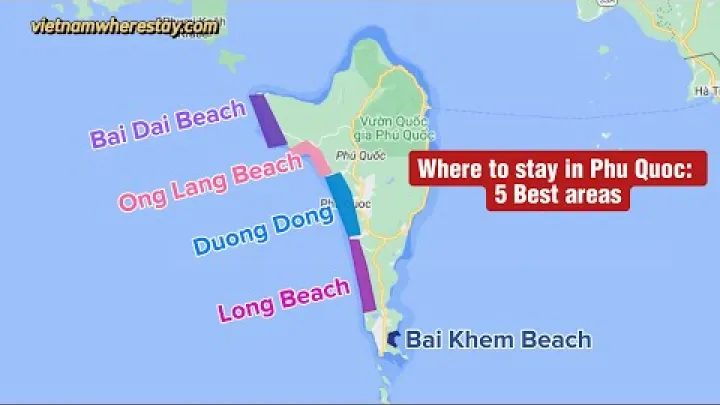
Phu Quoc is not one compact resort town. Choosing accommodation by map location is important because restaurants, beaches, departure points, and attractions are dispersed. Check the exact property rather than relying only on an area name; a hotel described as “near” a landmark may still require a vehicle.
Duong Dong and Long Beach for First-Time Visitors
Duong Dong is the island’s most practical central hub. It has a broad choice of restaurants, small shops, services, accommodation, and transport options. It is a useful base for visitors who want freedom to choose dinner each evening rather than depending on a resort’s dining. Duong Dong Night Market, the daytime market area, and Dinh Cau are helpful orientation points when looking at maps, although the atmosphere and opening patterns can vary.
Long Beach stretches along the west coast south of central Duong Dong and is a strong option for first-time visitors who want beach access without being far from town. It offers a wide range of hotels, from straightforward rooms to larger beachfront properties. The main trade-off is between a town-centered stay, which can be more convenient for daily errands and local meals, and a beachfront stay, which offers easier sea access and sunsets but may need short rides for some restaurants or sights.
Choose this area if convenience matters most, if you are only staying a few nights, or if different members of your group want different activity options. It is also a sensible base for travelers who do not plan to rent a motorbike. Beach quality and the immediate setting vary across this long corridor, so look at recent property information and identify whether your chosen hotel has direct beach access.
Ganh Dau and the North for Resort-Focused Stays
Ganh Dau and the northern part of Phu Quoc are better suited to visitors who want a resort-focused holiday. This area is associated with large resorts, entertainment complexes, and northern attractions. It can work well for families who value on-site pools, children’s facilities, structured activities, and a self-contained stay. Couples seeking a polished resort environment may also prefer the space and quieter setting compared with central Duong Dong.
The trade-off is distance. Regular trips to Duong Dong for markets, independent dining, or nightlife take longer than from Long Beach. Reaching An Thoi and the southern marine departure areas can take up a substantial part of the day. This does not make the north unsuitable for sightseeing, but it means that travelers should plan fewer cross-island journeys.
Before reserving a northern property, check its precise location, included airport transport, dining choices, beach setup, and the current access arrangements for attractions you expect to use. A large resort can be excellent value when its facilities are central to your trip; it can be less suitable if your priority is exploring local restaurants every evening.
An Thoi and the South for Marine Activities
An Thoi, in the south, is a practical base for travelers whose priority is marine activity. It is associated with southern-island boat departures, access toward Hon Thom, and nearby beach areas including Sao Beach and Khem Beach. The south is also where several major structured attractions are concentrated, making it convenient for visitors who prefer activity days over frequent drives across the island.

Stay here if you want to reduce the distance to island-hopping, snorkeling, cable-car, water-park, or southern sightseeing plans. A south-based hotel can make an early departure less stressful and may allow more time on the water. Check current operating hours, ticket conditions, and departure arrangements directly with the relevant venue or operator, as services and access can change.
The drawback is that An Thoi feels less central for casual evenings around Duong Dong. You may find suitable food and resort dining locally, but travelers who want a varied, walkable selection of restaurants and a night-market visit often prefer Long Beach or Duong Dong. Commuting south from a central base is possible for a single organized day; repeated southern activities are a stronger reason to stay nearby.
Ham Ninh and the East Coast for a Quieter Local Atmosphere
Ham Ninh and the east coast offer a quieter contrast to the west-coast resort corridor. Ham Ninh is commonly associated with a fishing-village setting, seafood stops, piers, and sunrise-facing views. It appeals to travelers who prefer a slower, more local-facing atmosphere and do not need nightlife or dense tourist services outside their hotel.

This side of the island can be a good choice for a quiet overnight stay, but it also works well as a half-day or full-day excursion from a central base. Services, accommodation standards, road conditions, and dining choices vary by exact location. Travelers should therefore select a specific property for its access and facilities rather than assuming the entire east coast has the same character.
Choose Ham Ninh if a peaceful setting, seafood, and a different view of island life matter more than immediate beach-resort convenience. For a first short visit, it is often easier to visit from Duong Dong and decide whether the atmosphere suits a future longer stay.
How to Get to Phu Quoc
Most visitors arrive by air, while ferries connect the island with mainland Kien Giang. The better option depends on time, budget, weather tolerance, and whether you want the mainland journey to be part of the holiday.
Flying to Phu Quoc International Airport
Flying to Phu Quoc International Airport, airport code PQC, is normally the fastest and least complicated arrival method. Flights connect the island with major Vietnamese cities, especially Ho Chi Minh City and Hanoi, and schedules can also include selected regional international hubs. Routes are seasonal and airline networks change, so compare live airline schedules rather than relying on a fixed route list.
For short holidays, the time saved by flying is often worth a higher ticket price. When comparing fares, include checked baggage, seat selection, arrival time, and the cost of reaching your hotel. A cheap flight that lands late may require a private transfer or lose a usable evening. Arrange onward transport with your accommodation or a reputable provider if you arrive at an inconvenient hour.
The airport is on the southern half of the island, so transfer time differs significantly by hotel zone. Confirm your hotel’s pickup details, vehicle capacity, and payment method before departure, particularly if you are traveling with children, large luggage, or an early activity booking the next day.
Taking the Ferry via Ha Tien or Rach Gia
The ferry route is a two-stage journey: first travel by bus, private car, or other overland transport to Ha Tien or Rach Gia, then cross to Phu Quoc. Ha Tien is generally the closer mainland gateway, while Rach Gia is another established option for travelers approaching through the delta. The route can be a good value choice and adds a coastal travel experience, but it requires more planning than a direct flight.
| Option | Best for | Main advantage | Main trade-off |
|---|---|---|---|
| Flight to PQC | Short trips and simple planning | Fastest arrival | Can cost more |
| Ha Tien ferry | Mainland delta combination | Shorter sea crossing | Needs an overland connection |
| Rach Gia ferry | Some southern Vietnam routes | Alternative mainland gateway | Longer overall travel day |
Ferry services are weather-sensitive and schedules, terminals, fares, baggage rules, and ticket policies can change. A provider listing such as Superdong can help identify a current service, but use the operator’s latest booking information for final decisions. Confirm the sailing timetable and leave a substantial connection buffer between your mainland bus and ferry; separate tickets should not be treated as a guaranteed through journey.
Combining Phu Quoc with Southern Vietnam
A simple first route is Ho Chi Minh City followed by a flight to Phu Quoc, then a return flight to continue your Vietnam trip. This works well for travelers with less than a week because it minimizes connections. A slower route might begin in Ho Chi Minh City, continue to a mainland delta stop, travel to Ha Tien or Rach Gia, and take a ferry to the island.
Use the ferry route when you genuinely want to see a mainland town and are comfortable with a longer transfer day. Use flights when Phu Quoc is the main holiday priority or when you are linking to an international departure. In either direction, avoid tight same-day connections between buses, ferries, and flights. Build enough time to handle delayed ground transport, changed sailing conditions, luggage collection, and airport check-in.
Getting Around Phu Quoc and Building an Itinerary
Distances can be deceptive on a map. Roads connect the island’s main zones, but travel between north, central, east, and south can consume a meaningful part of a day. Decide whether you value independence, comfort, or a planned excursion before choosing transport.
Choosing Between Motorbikes, Taxis, Cars, and Tours
Motorbikes offer flexibility for experienced riders who are properly licensed and comfortable with local traffic, heat, rain, and unfamiliar roads. They can make it easier to pause at beaches or small food stops, but they are not necessary for a successful Phu Quoc trip. Taxis, private cars, hotel transfers, and organized tours are often better choices for families, groups, inexperienced riders, or anyone who wants to relax between destinations.
Ride-hailing availability can differ by location and time, so do not assume it will work as consistently as it may in a large Vietnamese city. Ask your hotel about current options and keep a reliable local transport contact for more remote areas. A private driver can be practical for a full-day north, east-coast, or south itinerary when shared between several travelers.
Before renting a motorbike, verify local licensing, insurance coverage, road conditions, helmet availability, and your own riding experience. Inspect the vehicle, photograph existing damage, understand fuel and return terms, and do not let a tight schedule pressure you into riding in conditions that exceed your ability.
A Flexible Three-Day Phu Quoc Framework
Day one should remain light. Arrive, check in, visit the nearest beach, and get familiar with your immediate area. If you are based centrally, spend the evening around local restaurants or Duong Dong Night Market. This first day is for recovering from travel and learning your transport options, not for crossing the island.
On day two, choose one southern marine or attraction-focused outing. That could be an island-hopping trip, a snorkeling day if conditions are suitable, time near An Thoi, or a structured attraction in the south. Keep the evening free for dinner near your hotel rather than planning a second distant activity.
On day three, choose according to your energy and interests: a slower Long Beach or resort day, a northern attraction, a visit toward Phu Quoc National Park, or an east-coast drive including Ham Ninh. Selecting one of these directions is more enjoyable than trying to combine all three.
A Slower Four- to Five-Day Framework
With four or five days, separate your experiences. Reserve one day for the beach, pool, spa, or unplanned rest; another for a boat or marine outing; and another for a northern, forest, or east-coast trip. This approach leaves room for humid weather, late starts, and long lunches without making the holiday feel rushed.
A central base remains efficient for most travelers because it supports day trips in several directions. A split stay is worthwhile when you have a concentrated regional priority, such as multiple southern boat departures or a final resort-focused stay in the north. Otherwise, keeping one hotel avoids packing, checking out, and relocating during a short break.
Use the extra time for things that are easy to miss in a rushed itinerary: a seafood meal, a local market, an early sunrise on the east coast, a west-coast sunset, or simply a free afternoon. In hot and humid conditions, leaving open time is often more valuable than adding another attraction.
Choose the Best Time to Visit Phu Quoc
Phu Quoc stays warm throughout the year. The major planning difference is rainfall and sea conditions, which affect boat trips, beach time, snorkeling, and outdoor comfort more than small changes in temperature.
Dry, Shoulder, and Wet-Season Conditions
The broad climate pattern has a drier period in the later months of the year and the early part of the next year, transitional periods, and a wetter monsoon period through much of the middle of the year. The drier months often bring stronger demand and higher accommodation prices, especially around holidays. Wet-season months can offer lower prices and greener landscapes, but they also bring a greater chance of rain and disrupted outdoor plans.
Climate averages show that rainfall varies sharply across the year, with much lower totals in the driest months and much heavier rain in the wettest period. The monthly comparison from Climates to Travel is useful for understanding this pattern. Treat month ranges as planning guidance, not a guarantee for a particular week: weather can vary across the island and from one day to the next.
Travel during the drier season if reliable beach days and water activities are your main goals. Consider shoulder or wetter months if price, quieter resorts, and flexibility matter more than uninterrupted sunshine. A rainy forecast does not necessarily mean continuous rain, but it can make a tightly scheduled itinerary less dependable.
Match Weather to Beaches, Snorkeling, and Hiking
Calmer, drier periods are generally more favorable for beach days, boat travel, snorkeling visibility, and walks in forest areas. Marine excursions depend on sea state as well as rainfall; a warm day can still have conditions that are unsuitable or uncomfortable for a boat trip. Hiking and rural exploration are usually easier when trails and roads are less wet.
Wet-season travel can still work for visitors who are happy to use hotel facilities, enjoy shorter outings between showers, and keep alternate plans. Pack breathable clothes, sun protection, a light rain layer, footwear that can handle wet ground, and dry protection for phones and documents. Schedule your highest-priority outdoor activity early in the stay when possible, leaving a later day as a backup.
Check the forecast and sea conditions shortly before booking boat or snorkeling activities, and keep flexibility during the wetter months. Ask whether an operator will reschedule, alter the route, or refund a trip when conditions prevent the planned activity.
Budget, Payments, and Booking Decisions
Phu Quoc can be more expensive than many mainland stops because beachfront land, island logistics, and resort demand affect prices. It still offers a broad range of stays and meals, especially outside high-demand periods. Build your budget by category rather than relying on a single daily average.
Accommodation and Food Cost Ranges
Budget travelers can find guesthouses, simple hotels, and modest rooms, particularly away from premium beachfront positions. Mid-range properties usually offer more comfort, pools, breakfast, or a convenient location near Long Beach or Duong Dong. Resort-oriented stays range from comfortable beachfront hotels to large properties with extensive facilities, private beach areas, and included experiences.
Prices change substantially with season, weekends, holidays, location, room type, and booking lead time. A room that looks affordable in the wetter months may cost far more in the popular dry season. Compare the final price, not only the headline rate: taxes, breakfast, airport transfer, cancellation rules, and whether a property is actually walkable to the beach all affect value.
Food can remain affordable when you choose local meals, casual restaurants, and market-style seafood stops. Hotel restaurants, international menus, premium seafood selections, and resort dining cost more. Seafood prices may depend on species, weight, and preparation, so confirm the price and portion before ordering. Use current prices for your travel dates as planning figures rather than expecting one fixed island-wide range.
Transport, Tours, and Booking Checks
Beyond accommodation, the largest variable costs are airport or ferry transfers, daily transport, boat trips, snorkeling excursions, attraction entry, and private drivers. A low-cost tour can become less economical once transport, equipment rental, meals, entrance charges, or service fees are added. Compare the complete package rather than only the advertised starting price.
Booking through a hotel may be convenient and can simplify pickup arrangements. An established local agency may provide more choice, while booking directly with an operator can offer a clearer conversation about the specific trip. The best option is the one that gives you reliable details in writing and a policy you understand, not necessarily the cheapest listing.
Before paying for a tour, confirm the operator’s inclusions, safety equipment, meeting point, cancellation terms, and weather policy. Also ask about pickup time, group size, snorkeling equipment, meal details, island or park fees, and how the itinerary changes if conditions affect the route.
Cash, Cards, and Everyday Spending
Use a mixed payment approach. Cards are often accepted at hotels, larger restaurants, resorts, and organized businesses, while cash remains useful for smaller purchases, local food, tips, and some transport arrangements. Carry manageable amounts of Vietnamese dong and keep a backup card separately from your main wallet.
Plan ATM access before staying in a remote resort area or on the quieter east coast, where a convenient machine may be less close than in central Duong Dong. Check your bank’s overseas fees, inspect the amount before leaving an ATM, count cash carefully, and keep cards and valuables secure. Avoid carrying your full holiday budget during a beach day or boat excursion.
Safety, Health, and Entry Checks
Phu Quoc is a popular destination for independent travelers, couples, and families, but normal travel precautions still matter. Good planning is less about expecting problems and more about making safe choices around roads, water, money, health, and documents.
Everyday Safety, Roads, and Water Activities
Vietnam is generally suitable for travelers, although petty crime can occur in tourist areas. The current Travel.State.gov advisory highlights the need to stay aware of surroundings and take precautions against petty crime. Keep phones and bags close in busy markets, avoid displaying large amounts of cash, and arrange your return transport before heading to a less familiar area at night.
Road safety deserves separate attention. Traffic conditions, vehicle standards, uneven surfaces, rain, and limited visibility after dark can turn a casual motorbike plan into a serious risk. Use a helmet whenever riding, choose cars or taxis when tired or unsure, and do not treat a motorbike as a required part of the island experience.
For beaches and boat activities, follow warning flags and local instructions, use life jackets where appropriate, and choose operators that explain their safety arrangements. Conditions can change quickly around boats, currents, reefs, and remote beaches. Keep valuables secured, use a helmet when riding, and follow local warnings around beaches, roads, boats, and isolated areas.
Heat, Mosquitoes, Food, and Basic Health Precautions
Heat and humidity can affect travelers more than expected, especially after flights, during midday sightseeing, or on long beach days. Drink water regularly, use sun protection, wear breathable clothing, and build rest into hikes and road trips. A hat, refillable water bottle, and shade breaks make a noticeable difference.
Bring insect repellent for evenings and for time near forested or coastal vegetation. Use sensible food precautions: choose busy food vendors, make sure seafood is cooked as you prefer, and be cautious with food that has been sitting in heat. Do not touch unfamiliar animals, and seek professional medical advice promptly for serious illness, injury, dehydration, or a bite or scratch.
Before travel, check current destination health guidance, pack personal medicines in their original packaging when appropriate, and review travel insurance coverage. Insurance is particularly important if your plans include motorbike riding, snorkeling, diving, or other activities that may have exclusions.
Visa, Entry, and Document Verification
Vietnamese visa eligibility, permitted stay, and entry requirements depend on nationality, passport, route, and current regulations. A Phu Quoc-only holiday may be treated differently from an itinerary that also enters mainland Vietnam, so do not assume that an island-focused arrangement covers a wider Vietnam trip.
Make document checks part of the booking process, before purchasing non-refundable flights or ferries. Confirm passport validity, whether you need a visa or qualify for an exemption, which airport or seaport you will use, and whether your onward travel plans meet current requirements. Use official Vietnamese immigration, e-visa, or consular information for the latest rules rather than relying on old travel posts or another traveler’s experience.
Check the latest official Vietnamese visa and entry rules for your nationality and route before booking flights or ferries. Keep digital and printed copies of key confirmations where practical, including accommodation details, travel tickets, insurance, and any approved visa documentation.
Plan a Phu Quoc Trip That Fits Your Travel Style
The most successful first Phu Quoc trip is usually a focused one. Base yourself in Duong Dong or Long Beach for broad convenience, choose An Thoi for repeated southern marine activities, select the north for a resort-centered stay, or look toward Ham Ninh for a quieter local atmosphere. Fly when time is limited, consider the ferry when a mainland delta route is part of the journey, and leave enough space in the schedule for weather and rest.
With a realistic base, one main activity per day, and careful checks for transport, tours, and entry documents, Phu Quoc can offer both easy beach time and a more varied view of Vietnam’s island south. Book the essentials, keep your daily plan flexible, and let the island’s beaches, food, and coastal pace shape the rest of the trip.
Select area
Create a post
Posting is free and no registration is required.