Phu Quoc Getting There: Flights, Ferries, and Bus Routes

Getting to Phu Quoc is straightforward once you choose the right mainland or air gateway. Most visitors either fly to Phu Quoc International Airport, take a ferry from Ha Tien or Rach Gia, or combine a long-distance bus with a ferry. The best route depends on where you start, how much time you have, how much luggage you carry, and whether you are comfortable managing separate tickets. This guide compares the practical routes and explains how to arrive at Duong Dong, Long Beach, and other island areas with fewer surprises.
How to Choose the Best Way to Get to Phu Quoc
Phu Quoc is an island off Vietnam's southwest coast, so every journey ends either with a flight to the island or a sea crossing from mainland Kien Giang. A flight is usually the simplest choice from distant Vietnamese cities and overseas gateways. A ferry can make more sense when you are already traveling through the Mekong Delta, near Ha Tien, or arriving overland from Cambodia.
The Main Routes at a Glance
There are three usual ways to get to Phu Quoc: fly into Phu Quoc International Airport, known by the airport code PQC; take a passenger ferry from Ha Tien or Rach Gia to Bai Vong Port; or travel by bus to one of those mainland ports and continue by ferry. There is no passenger rail connection to the island.
| Route | Best for | Travel trade-off | Booking effort |
|---|---|---|---|
| Flight to PQC | Distant cities and tight schedules | Fastest overall, usually higher total fare | Low to moderate |
| Ha Tien ferry | Southwest Delta and Cambodia routes | Shortest sea crossing, mainland approach can be long | Moderate |
| Rach Gia ferry | Can Tho and some Delta itineraries | Longer sea crossing, may suit road connections | Moderate |
| Bus and ferry | Budget-focused mainland travel | Longest journey and more connection risk | Moderate to high |
The lowest headline ticket price is not always the lowest door-to-door cost. Include airport transfers, port transport, baggage charges, meals during a long overland trip, and a possible night near Ha Tien or Rach Gia. Flying also reduces physical transfers, which can be important for families, travelers with mobility concerns, or anyone carrying large luggage.
Which Gateway Fits Your Starting Point
For Ho Chi Minh City, Hanoi, Da Nang, and other cities with a service to PQC on your travel date, flying is normally the practical default. It avoids a full day or more of road and sea travel. From Ho Chi Minh City, a bus-and-ferry combination is possible, but it is primarily a choice for travelers who want an overland route or who find that the timing and total cost work better than a flight.
Ha Tien is the closer mainland approach to Phu Quoc and is often the natural choice for people already in the far southwest Mekong Delta or near the Cambodia border. Rach Gia Harbor is farther from the island, but it can fit better when your road journey comes from Can Tho or another central Delta location. Choose the port that creates the simplest mainland journey, not simply the one with the shorter crossing.
Start by mapping the complete journey from your accommodation or arrival airport to your hotel on Phu Quoc. A flight may involve one transfer from PQC, while a ferry route may involve a bus station, a port transfer, an early check-in, the sea crossing, and another island transfer. The most suitable option is the one with an achievable sequence of connections on the day you travel.
Fly to Phu Quoc International Airport
Phu Quoc International Airport is the island's principal air gateway. It is commonly the easiest arrival point for visitors coming from elsewhere in Vietnam or from a regional international airport. Its airport code is PQC, which is useful when comparing flight results and checking that you are booking the island airport rather than a mainland destination.
Domestic Flights to Phu Quoc
Domestic flights can substantially shorten the journey from Ho Chi Minh City, Hanoi, Da Nang, Can Tho, and other Vietnamese cities when a direct service is operating. Direct route availability changes by airline, season, and demand, so search for your exact date rather than relying on an old route map. The Phu Quoc Airport Guide can be a useful starting point for identifying the airport and checking current airline information.
The airborne segment is only part of the travel day. Add time for reaching the departure airport, check-in, baggage drop, security, boarding, collecting checked luggage at PQC, and continuing to your accommodation. A short flight from Ho Chi Minh City can still be much quicker overall than traveling by road to Ha Tien or Rach Gia, but it should not be compared only by its published flight duration.
Air fares can change sharply around weekends, Vietnamese public holidays, school breaks, and major events. Fare families may also differ in checked-baggage allowance, seat selection, flexibility, and change fees. When comparing a low-cost ticket with an overland route, look at the final payable amount with the luggage you actually plan to bring.
International Flights and Direct-Entry Checks
Some travelers can reach Phu Quoc on a direct international flight, which may be easier than changing planes in Hanoi or Ho Chi Minh City. These services can be seasonal, however, and a route shown in a search tool is only useful if it operates on your intended date. Regional flights and charter patterns may change between summer and winter schedules.
Entry requirements are separate from transport convenience. Before buying an international itinerary, verify current Vietnamese entry and visa requirements with an official Vietnamese immigration source or the airline. Check passport validity, your eligibility for any visa-free arrangement, the permitted length of stay, onward-travel requirements, and rules that apply to your nationality.
A connection through another Vietnamese airport may change the immigration analysis because you may clear immigration at the first Vietnamese airport rather than at Phu Quoc. Do not assume that an itinerary through Hanoi or Ho Chi Minh City has the same entry conditions as a direct international arrival at PQC. Confirm the requirements for the complete routing shown on the ticket.
What to Check Before Booking a Flight to PQC
Before paying, confirm that the destination is PQC, the airline is the one you intend to use, and the fare includes the baggage and flexibility you need. Read the ticket conditions for name corrections, changes, refunds, cabin baggage dimensions, and checked-baggage limits. If you book separate flights, allow enough time to collect and recheck luggage if required.
Close to departure, use live airport or airline information rather than a static timetable. Skyscanner flight status provides a way to monitor PQC arrivals and departures, but the operating airline remains the appropriate channel for instructions about a specific booking. Arrive with enough time for check-in, security, and any immigration formalities.
Also note your accommodation area before landing. PQC is not the same arrival point as Bai Vong Port, and a hotel near Long Beach may require a different onward journey than a resort on the island's north or east coast. Arrange or identify your final transfer before you leave the departure airport.
Take a Ferry from Ha Tien or Rach Gia
Ferries connect mainland Kien Giang with Phu Quoc and are the main alternative to flying. The two principal gateways for most independent travelers are Ha Tien Ferry Terminal and Rach Gia Harbor. Both routes commonly arrive at Bai Vong Port on the island's east side, although the exact terminal shown on a ticket should always be treated as the operational instruction.
Ha Tien to Phu Quoc via Bai Vong Port
Ha Tien is the closest widely used mainland gateway for Phu Quoc. The crossing from Ha Tien Ferry Terminal to Bai Vong Port is often described as taking roughly one to one and a half hours, depending on the vessel and service. This makes Ha Tien attractive if you are already in the southwest Mekong Delta or approaching from the Cambodian border area.
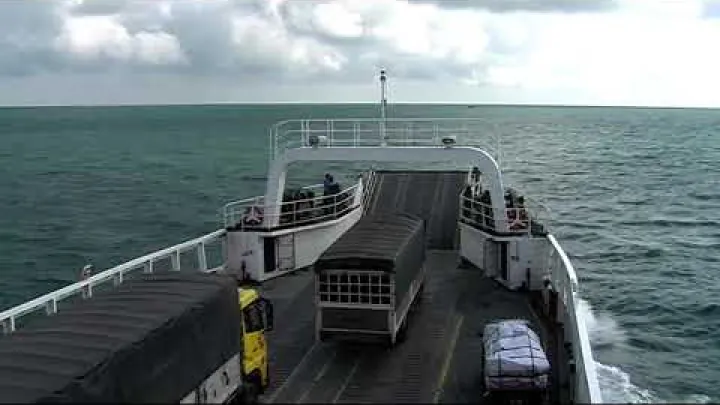
The short sea journey does not mean the route is automatically quick from every starting point. Reaching Ha Tien from Ho Chi Minh City or another Delta city can take several hours by road, and you still need to reach the terminal, complete ferry check-in, board, disembark at Bai Vong, and continue across the island. For a traveler staying near Ha Tien, it can be an efficient island connection; from a distant city, it is a multi-stage journey.
Available route information commonly identifies operators such as Superdong and Phu Quoc Express on the Ha Tien approach. A route overview from Authentik Travel gives useful context on this Mekong Delta connection, but use the ticketed operator's current information for your actual sailing.
Rach Gia to Phu Quoc via Bai Vong Port
Rach Gia Harbor is another important ferry departure point. Its sea crossing to Bai Vong Port is longer than the Ha Tien route and is commonly described as around two and a half hours. The longer crossing may still be worthwhile when Rach Gia is easier to reach by road from your previous stop, especially from Can Tho or other parts of the central Mekong Delta.
Think of the Rach Gia route as a road-and-sea decision. A traveler who can reach Rach Gia comfortably may prefer one longer ferry over a more complicated road journey to Ha Tien. Conversely, someone already near the border or in the far southwest may find Ha Tien more direct. Ferry listings can also include routes to other ports, so make sure the booking clearly states Rach Gia to Phu Quoc and names the correct arrival point.
Published departure windows and crossing counts are useful for initial planning but can change by season. Ferryscanner shows indicative Rach Gia route information; as an aggregator, it should not be treated as a guarantee of an operator's final timetable or fare.
Ferry Operators, Tickets, and Sailing Conditions
Services on these routes may be sold by operators including Superdong, Phu Quoc Express, and Thanh Thoi, but the operator serving a particular route, vessel type, or day can change. Buy a ticket only after confirming the route direction, mainland terminal, island terminal, passenger name, departure date, check-in requirement, luggage allowance, and any vehicle rules. Read the change and refund terms, and keep the electronic ticket and required identification ready for check-in.
Do not assume a published sailing list is permanent. Demand, maintenance, operational decisions, and sea conditions can affect service patterns. Before paying, confirm the current ferry operator, departure time, terminal, passenger details, and ticket conditions through the operator's booking channel. Before committing to a tight ferry connection, check the operator's latest sailing notice and local weather conditions.
Avoid arranging a same-day itinerary around the final sailing of the day unless you have enough room for a disrupted mainland journey. This is particularly important when you hold separate bus, hotel, and ferry bookings. If the ferry is a key part of an international or domestic onward connection, consider arriving at the mainland port the previous evening instead of relying on a narrow margin.
Travel by Bus and Ferry from Mainland Vietnam
A bus-and-ferry itinerary lets you reach Phu Quoc without flying, but it requires more planning than a direct air ticket. It can be a sensible option for travelers already moving through southern Vietnam, those carrying an itinerary across the Mekong Delta, or those prioritizing lower transport costs over speed. Treat it as separate stages unless your booking explicitly includes both the road and ferry segments.
Ho Chi Minh City to Phu Quoc Without Flying
The usual overland pattern from Ho Chi Minh City is a long-distance bus to Ha Tien or Rach Gia, followed by a ferry to Phu Quoc. Sleeper buses and limousine-style vehicles may appear in current booking results, but vehicle style, pickup location, arrival point, and departure time vary by operator. Mien Tay Bus Station is a major Ho Chi Minh City departure reference, although some services use city pickup points instead; follow the pickup location printed on your confirmed ticket.

This route can cost less than a flight in some circumstances, but it takes substantially longer and involves more points of failure. You may need to travel from your hotel to the bus pickup, manage an extended road journey, get from the bus arrival point to Ha Tien Ferry Terminal or Rach Gia Harbor, and then board the ferry. A schedule listing from 12Go bus schedules can help identify available services, but confirm the final pickup and arrival details with the bus provider.
Book a mainland bus that reaches Ha Tien or Rach Gia with a substantial buffer before your intended ferry departure, or stay overnight near the port. A road timetable can look compatible on paper while traffic, stops, or an unfamiliar drop-off point make the connection unrealistic. A night near the port often turns a stressful travel day into a manageable morning departure.
Can Tho and Other Mekong Delta Starting Points
From Can Tho, travelers generally travel by road to Rach Gia or Ha Tien before taking a ferry. Rach Gia can be the more convenient choice for some Can Tho itineraries because it may fit the road geography better, while Ha Tien can be preferable if your journey has already taken you toward the southwestern border area. The practical answer depends on the current road service and the ferry you can realistically reach.
From Ben Tre, My Tho, and other Delta cities, expect a multi-leg route rather than a direct connection to the island. You may first need to reach Can Tho, Ho Chi Minh City, Rach Gia, or Ha Tien, then continue to the ferry terminal. Count the transfers, waiting periods, and terminal changes before deciding that this route is cheaper or easier than flying.
Check whether an advertised package is a genuine through ticket or merely a platform that sells separate bus and ferry reservations. A through arrangement may simplify responsibility if a segment changes, while self-managed tickets give more flexibility but leave you responsible for making the connection. Keep terminal names visible offline because the road arrival point may not be directly beside the ferry check-in area.
Long Overland Routes from Northern and Central Vietnam
It is technically possible to reach Phu Quoc overland from Hanoi or central Vietnam, but the route requires traveling south to a mainland ferry gateway before the island crossing. This is a multi-day, transfer-heavy option rather than a practical direct route. When a suitable flight is available, flying normally saves substantial time and reduces the number of separate reservations.
An overland journey can still appeal to travelers who are deliberately exploring Vietnam by land and want to include the Mekong Delta before Phu Quoc. In that case, build the island crossing into a broader southern itinerary instead of treating it as a simple final connection from the north. Review the full sequence of bus or rail travel, local transfers, accommodation nights, and the ferry segment before purchasing non-refundable tickets.
Rail can form part of a Vietnam overland itinerary, but it does not reach Phu Quoc. The island has no passenger railway connection. Any rail journey must eventually be followed by road travel to Ha Tien or Rach Gia and then a ferry, or by a domestic flight from an airport with a PQC service.
Reach Phu Quoc from Cambodia and Regional Gateways
Travelers combining Cambodia and Phu Quoc have two broad choices: fly through a regional gateway, or travel overland to the Ha Tien border area and continue by ferry. The overland route can be rewarding for a flexible itinerary, but it has more moving parts than a flight because it combines road transport, a border crossing, a mainland port transfer, and a sea crossing.
Overland from Cambodia via Ha Tien
The physical route is Cambodia to the Ha Tien border area, then onward to Ha Tien Ferry Terminal and across to Phu Quoc. It should be planned as separate stages unless a provider clearly includes all of them. You may need one arrangement for the Cambodian road journey, time to complete border formalities, local transport to the port, and a separate Vietnamese ferry ticket.

Cross-border transport recommendations from other travelers can be helpful for understanding the route, but they are not a dependable current timetable. Confirm border opening conditions, passport and visa requirements, permission to enter or re-enter Vietnam, and the exact handover point for every transport segment through appropriate official channels and your providers. Travelers with children, substantial luggage, or a fixed onward booking should allow extra time for both the border process and the transfer to the port.
Do not assume a hotel drop-off in Cambodia, a border shuttle, or a ferry connection is included unless it appears in the booking terms. Ask which border crossing is used, whether you walk or transfer between checkpoints, what currency may be needed for incidental local transport, and where the service ends. A missed ferry after a border delay can require an unplanned night on the mainland.
Regional Direct Flights versus Multi-Leg Land Routes
A direct regional flight to Phu Quoc, when it operates on your date, is usually simpler than combining several land and sea tickets. Travelers may find relevant routings from hubs such as Bangkok, Kuala Lumpur, Singapore, Seoul, or Hong Kong, but these are examples rather than a permanent route list. Search current airline schedules for PQC and check whether a route is seasonal.
Compare the complete itinerary rather than the advertised flight duration or an individual low bus fare. Several overland tickets can add baggage costs, local transfers, accommodation near a port, food during a long journey, and the financial risk of a missed connection. The land route is best suited to people who want the journey itself to be part of a Cambodia and Mekong Delta itinerary and who have schedule flexibility.
For any itinerary with a Vietnamese connection, establish where immigration is completed and whether you meet the entry conditions for that routing. A flight to a Vietnamese hub followed by a domestic leg is not simply a transit arrangement if you must enter Vietnam at the first airport. Keep your accommodation details and onward plans accessible for border or airline questions.
Booking, Arrival, and Final Checks
The smoothest Phu Quoc trip is usually the one with the fewest fragile connections. Compare transport by total time, total cost, and the amount of coordination required. Once you choose a route, make sure the airport or port arrival point fits the part of the island where you are staying.
Compare Time, Cost, and Booking Effort
As a simple rule, fly when time and simplicity matter most, especially from Hanoi, central Vietnam, Ho Chi Minh City, or an overseas gateway with a workable PQC itinerary. Use the ferry when you are already close to Ha Tien or Rach Gia, when you are intentionally traveling through the Mekong Delta, or when the overall road-and-sea journey fits your budget and schedule.
Compare complete costs: flight or bus ticket, ferry ticket, baggage, transport to the airport or port, transfer from PQC or Bai Vong Port, and possible overnight accommodation. A ferry ticket alone is not comparable with an all-in flight price, just as a low flight fare is not comparable with an overland journey if checked baggage and airport transfers are extra.
Booking effort rises with each separate ticket. A direct flight is normally a single main booking. A bus-and-ferry trip may require separate reservations and careful timing. An international overland route adds border procedures and potentially several providers. If you have limited time, a rigid hotel check-in, or an onward flight, give priority to the route with the least connection exposure.
Coordinate the Mainland Leg with the Ferry
Plan the mainland journey backward from the ferry check-in time, not from the departure time alone. First identify the ferry you intend to take and its required arrival time at the terminal. Then estimate the bus or private transfer arrival, including the time needed to get from the road drop-off point to the correct check-in area, collect luggage, find the ticket desk if necessary, and board.
For example, a bus ticket that nominally arrives shortly before a ferry leaves is not a safe self-managed connection. Road delays, rest stops, traffic, and different terminal locations can remove the remaining margin quickly. A better plan is a road arrival that leaves enough time for delays, or an overnight in Ha Tien or Rach Gia followed by a morning ferry.
Check whether you have a through ticket or separate reservations. With separate bookings, the ferry operator is not generally responsible for a late bus, and the bus provider is not generally responsible for a missed boat. Save ticket files, terminal addresses, hotel details, and important phone numbers offline in case mobile data is unavailable during the journey.
Reach Duong Dong and Other Island Areas after Arrival
PQC and Bai Vong Port are different island arrival points. Duong Dong and Long Beach are common accommodation references, but travel time and convenience depend on your exact hotel location. A northern resort, an east-coast stay, and a hotel near Duong Dong can require very different onward routes from the same airport or port.
For the final leg, an identified taxi, a shuttle arranged by your accommodation, or a prearranged private transfer are the usual practical choices. Taxis and private transfers can be quicker and more convenient with luggage; a shared shuttle may be more economical where available. Confirm whether the service goes directly to your property or uses a drop-off point.
Use a clearly identified airport or port shuttle, taxi, or prearranged transfer. Confirm your destination and the fare before leaving the terminal, and compare any quoted last-mile fare with the current posted or confirmed price before accepting a taxi or private transfer. This helps avoid confusion when you arrive tired, have limited mobile data, or are unfamiliar with the island's geography.
Final Pre-Departure Checklist
- Recheck the status of your flight or ferry and the exact departure airport, terminal, harbor, or port.
- Make sure passenger names match your identification and that you understand baggage rules.
- Confirm the operating day for any seasonal or less frequent route.
- Keep tickets, accommodation details, transfer information, and relevant immigration documents available offline.
- For a multi-leg trip, know whether each segment is a through booking or a separate reservation.
- Have a practical backup plan, such as a mainland overnight stay, if an overland connection does not work.
For most visitors, flying to PQC is the best choice when speed and simplicity are the priorities. Ferries from Ha Tien or Rach Gia are excellent alternatives when the mainland route fits your Mekong Delta plans, while bus-and-ferry travel works best when you allow time for its extra stages. Choose the route that matches your real starting point and build enough time around every connection to arrive on Phu Quoc calmly.
Select area
Create a post
Posting is free and no registration is required.