Suwon Getting There: Trains, Buses, and Airport Routes
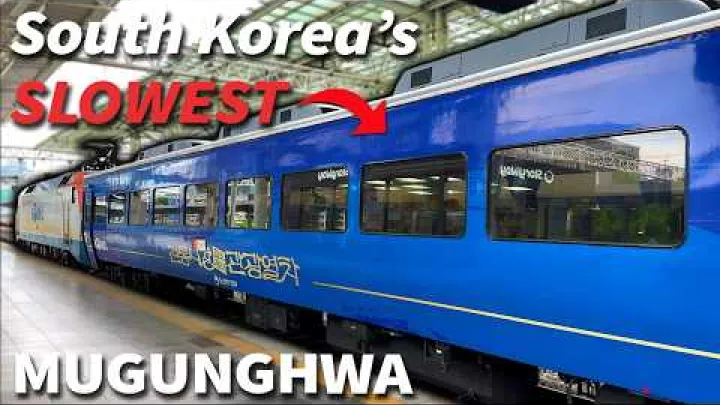
Getting to Suwon is straightforward once you choose the correct arrival hub for your starting point and final destination. Trains and Seoul Subway Line 1 are useful for central Seoul, direct buses can work better from southern Seoul, and airport buses reduce transfers with luggage. Long-distance rail and intercity buses connect Suwon with Busan, Wonju, and other Korean cities. This guide compares travel time, approximate cost, transfers, booking difficulty, late-night limits, and the final connection to central Suwon and local attractions.
Plan Your Arrival in Suwon
Suwon has two important arrival hubs: Suwon Station for rail and metro services, and Suwon Bus Terminal for many intercity bus journeys. They are not interchangeable. Your best choice depends on where you are staying, whether you are carrying large luggage, and whether you plan to continue to Hwaseong Fortress, a business district, or an attraction outside central Suwon.
Use Suwon Station and Suwon Bus Terminal as Arrival Hubs
Suwon Station is the main rail and metropolitan transport gateway. It is the natural arrival point for travelers coming from Seoul Station, other Line 1 stations, or longer-distance rail services that stop in Suwon. It is also useful when your accommodation is near the station or when you want to continue by local bus, taxi, or the Suin–Bundang Line.
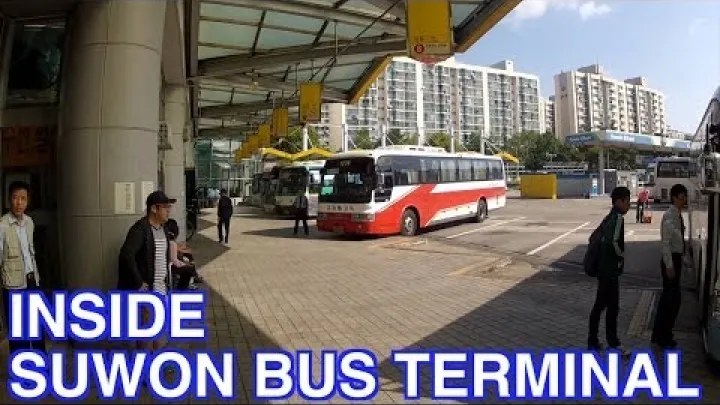
Suwon Bus Terminal is a major intercity bus gateway. It is particularly relevant for direct buses from places such as Wonju and for some routes from other regions. A bus ticket to Suwon does not necessarily mean that you will arrive at Suwon Station, so read the destination name carefully when booking.
Think of the journey in two stages. First, select the most suitable way to reach Suwon Station or Suwon Bus Terminal. Second, plan the short local connection from that hub to your hotel or destination. A route that looks fast on a timetable may be less convenient if it leaves you at the wrong hub with a heavy suitcase.
Choose Between Speed, Price, and Simplicity
No single route is the best way to reach Suwon for every traveler. The starting neighborhood, departure time, luggage, and tolerance for traffic or transfers all affect the decision. Use the following guide as a quick starting point:
- Choose KTX or another direct rail service when speed, a reserved seat, and a direct arrival at Suwon Station matter more than the lowest fare.
- Choose Seoul Subway Line 1 when you are near the Line 1 corridor and want a low-cost route without traveling first to another terminal.
- Choose an express bus when you are already near Sadang Station, Gangnam Station, or Guro and a direct road route avoids an unnecessary trip across Seoul.
- Choose an airport bus when you are arriving at Incheon International Airport or Gimpo Airport with luggage and the current service reaches a convenient Suwon stop.
- Choose a taxi or private transfer for a group, a large amount of luggage, a hotel away from the transport hubs, or an arrival time when public transport is difficult.
The times and fares in this article are planning estimates. Vehicle time is not the same as door-to-door time: getting to a Seoul station, finding an airport bus stop, waiting for a connection, or traveling from a Suwon hub to your accommodation can add substantially to the total.
Travel to Suwon From Seoul
Seoul offers several practical routes to Suwon. The fastest rail option usually begins at Seoul Station, while Line 1 is often the simplest low-cost choice from central Seoul. Express buses may be more convenient from the south and southwest of the capital because they avoid a cross-city transfer.
Take KTX or Conventional Rail From Seoul Station
A direct train from Seoul Station to Suwon Station is a good choice when you want a fast and predictable journey with a reserved seat. The supplied planning estimate for KTX is approximately 25 to 35 minutes. Conventional Korail services can be slightly slower, but they may offer a different departure pattern or a lower fare depending on the train and ticket type.
For comparison, an economy KTX ticket is often described in the approximate range of 10 to 15 US dollars. Treat this only as an indicative range. The current fare depends on the selected service, ticket conditions, and exchange rate, and conventional rail fares may differ.
Do not assume that every train traveling along the wider Seoul–Suwon corridor makes the same stops. Search your travel date in Korail and confirm in the itinerary that the selected train stops at Suwon Station before buying. This stop check is especially important when comparing KTX with other rail services.
Rail is most attractive when you are already close to Seoul Station or when road traffic is heavy. It is less convenient if you need a separate subway journey to reach Seoul Station, if the next suitable departure is far away, or if you are traveling with luggage that is difficult to carry through a large station. Even then, the direct arrival at Suwon Station may make the extra station access worthwhile.
Use Seoul Subway Line 1 for the Lowest-Cost Route
Seoul Subway Line 1 is the main budget corridor from central Seoul to Suwon. From areas near Seoul Station, City Hall, or Jonggak, the journey is commonly estimated at roughly 60 to 70 minutes, depending on your starting station and the service pattern. It is slower than KTX, but it can be economical and avoids the need to buy a separate intercity ticket.

A representative fare in the supplied research is about 2,150 won. This is an example rather than a guaranteed current price because metropolitan transit fares and card rules can change. A rechargeable transit card is usually the most convenient way for visitors to pay for Seoul and Gyeonggi local transport, although the exact fare is calculated by the transit system and journey distance.
The southern part of Line 1 has a hybrid character: it operates as part of the metropolitan subway network but also uses commuter-rail corridors and different service patterns. Check the destination display and route map before boarding, especially if you are unfamiliar with Korean station names. English signs are available at major stations, but allow time for platform changes and crowded passageways.
Line 1 works well for travelers with modest luggage who are staying near a station. It is less comfortable during busy periods, when standing with a suitcase can make the journey tiring. If you start far from Line 1, compare the time needed to reach the line with a direct bus from your neighborhood before deciding.
Take Express Buses From Sadang, Gangnam, or Guro
Direct express buses are useful when your starting point is already in southern or southwestern Seoul. Common route examples include bus 7770 from Sadang Station, bus 3000 from Gangnam Station, and bus 900 from Guro. These routes can be more practical than traveling north or east to Seoul Station simply to board a train.
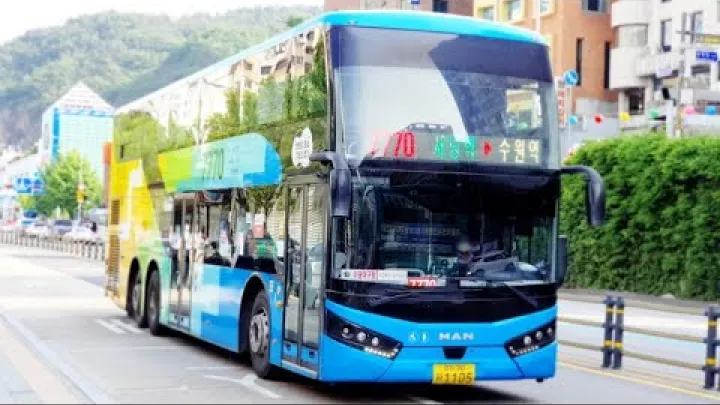
The main advantage is directness. You board near your current neighborhood, keep your journey on one vehicle, and may arrive closer to your accommodation or a useful Suwon transport point. A bus can also be easier than a subway transfer when you have one manageable suitcase. The disadvantages are road congestion, possible crowding, and less predictable arrival time during weekday commuting periods or busy travel hours.
Bus payment commonly uses a metropolitan transit card where the route accepts that payment method. Have a backup payment option and confirm the boarding stop, direction, and destination display. Route numbers and service hours are not permanent assumptions; the Gyeonggi Bus Information service provides route and late-night information for checking current details.
If the bus is a timed connection to a hotel check-in, train, or event, add a traffic buffer. A direct bus may be simpler than Line 1 from your starting location, but a nominal road journey does not guarantee a fixed arrival time.
Reach Suwon From Incheon and Gimpo Airports
Incheon International Airport is the main international gateway for most overseas visitors, while Gimpo Airport is closer to Seoul and handles many domestic and regional flights. From either airport, compare a direct airport bus, a rail-and-subway combination, and a taxi or private transfer. The best choice depends on the airport, arrival time, luggage, and the exact Suwon district where you are staying.
Take a Direct Airport Bus to Suwon
For many visitors arriving at Incheon International Airport, a direct airport bus is the simplest public-transport option. The supplied estimate is roughly around one hour to 1 hour 20 minutes, with an approximate fare of 13,000 to 15,000 won where the current route supports that range. The bus avoids a transfer at Seoul Station and normally provides luggage storage, making it attractive after a long flight.
Airport bus services do not all use the same Suwon arrival stop. Some serve Suwon-area locations or nearby districts rather than one universal city-center terminal. Before boarding, identify your airport terminal, the bus stop, the route number, the Suwon arrival stop, and the final local connection to your hotel. The official Incheon Airport bus-search page is a useful starting point for current airport routes and stop information.
For the Suwon side of the journey, the Gyeonggi Airport Bus operator information identifies airport services serving Suwon, Yeongtong, and other Gyeonggi locations. Use the airport information counter, official ticket channel, or operator listing to match the route to your actual accommodation rather than choosing a bus only because it says Suwon.
Check the airport and operator listings on the travel day for the route number, terminal, departure time, and fare. Airport services can have different schedules by terminal and destination, and a service that is convenient for one Suwon neighborhood may leave you far from another. Keep your booking or destination address available in both English and Korean if possible.
Combine Airport Rail, Metro, or Mainline Rail
A rail combination can be a useful alternative when the direct airport bus does not match your arrival time or destination. From Incheon, a common pattern is to take airport rail toward Seoul, continue to Seoul Station, and then use Line 1 or a Korail train toward Suwon. This can offer a relatively predictable rail journey and may cost less than a taxi, but it requires walking between platforms and managing luggage through major stations.
From Gimpo Airport, travelers may compare airport rail, a bus connection, or a route toward Line 1. Planning estimates in the supplied research range from about one hour to nearly two hours, depending on the selected combination and the time spent waiting for connections. A route with more transfers may be cheaper, but it is not always the best value after the effort of carrying bags and navigating unfamiliar stations.
Consider this option when you are comfortable with Seoul public transport, your luggage is manageable, and the rail schedule fits your arrival. It may be less suitable after a late flight, when a transfer requires a long walk, or when your hotel is not near Suwon Station. Direct airport rail to Suwon should not be assumed; confirm the current airport-to-Suwon sequence and the final arrival hub before leaving the airport.
Use a Taxi or Private Transfer for Door-to-Door Arrival
A taxi or licensed private transfer provides the most direct airport-to-hotel journey. It is often worth comparing for families, groups sharing the cost, travelers with several large bags, or passengers arriving when public transport is inconvenient. The supplied planning estimates suggest about 42 to 54 minutes in favorable traffic, but the actual drive can be much longer when highways and city roads are congested.
Airport fares are substantially higher than bus or rail fares and vary with the airport, vehicle type, destination, tolls, traffic, and booking conditions. Ask about the estimated fare and whether tolls are included before starting a private transfer. For a taxi, use the official airport taxi rank. For a pre-arranged car, use a licensed company and match the driver, vehicle, and booking information at the designated meeting point.
Do not accept an unsolicited ride offer in the arrivals area. An official taxi rank or a licensed pre-booked transfer gives you a clearer record of the service and reduces the risk of unclear pricing or an unlicensed vehicle. Door-to-door convenience is valuable, but it does not remove the need to allow a traffic buffer for an appointment, check-in deadline, or train connection.
Travel to Suwon From Other Korean Cities
Suwon is connected to major Korean cities by both long-distance rail and intercity buses. Rail usually has the strongest advantage on the Busan corridor, while a direct bus can be more convenient from regional cities that have a good connection to Suwon Bus Terminal. Compare the arrival hub as carefully as the travel time.
Take Long-Distance Rail From Busan and Southern Cities
From Busan, long-distance rail follows the Gyeongbu corridor toward the Seoul area, and selected services can arrive directly at Suwon Station. The supplied estimate is approximately 2 hours 41 minutes, with an indicative fare range of about 36,000 to 55,000 won. The exact result depends on the train type, seat class, departure, and travel date.
Rail is generally attractive for a long journey because it offers reserved seating, a direct arrival at Suwon Station on suitable services, and less exposure to highway traffic. It is especially useful when you are staying near Suwon Station or plan to make a local connection from there. A bus may still be preferable if its departure time is better or if the bus terminal is easier to reach from your starting neighborhood.
Search the exact date in the official rail booking system rather than assuming that every Busan service has the same duration, fare, or stop pattern. Check the departure station, destination station, train type, and seat availability before paying. If a result arrives at a different Seoul-area station, include the additional local journey in your comparison.
Use Intercity Buses From Wonju, Busan, and Other Regions
Intercity buses can provide a direct connection to Suwon Bus Terminal without routing through Seoul. The supplied Wonju example takes about 1 hour 45 minutes and costs approximately 8,900 to 15,000 won. This can be a sensible choice when the Wonju departure terminal is convenient and the bus arrives closer to your accommodation than a train at Suwon Station.
For Busan, the supplied bus estimate is roughly 4 hours 15 minutes, with a fare of about 34,000 to 48,000 won. That is longer than the rail example, but the bus may suit a traveler whose schedule matches its departure or who prefers a single vehicle. On a long road journey, traffic and rest stops can affect the actual arrival time more than they affect a rail itinerary.
Other regional cities may have direct services to Suwon, but departure times, terminal names, seat availability, and route patterns vary. Intercity bus information can also be more fragmented in English than rail information. Use a planning tool to discover possible routes, then confirm the final departure through the operator, departure terminal, or official booking channel.
Keep the arrival names separate in your notes: Suwon Station means rail and metro, while Suwon Bus Terminal means an intercity bus arrival. If you are meeting someone, booking a taxi, or arranging hotel pickup, give the full hub name rather than only saying Suwon.
Continue From Suwon’s Hubs to the City and Attractions
Reaching Suwon is only the first part of the journey for many visitors. The historic center, hotels, industrial areas, and attractions are spread across the city, so the last local connection can influence which arrival hub is most convenient. Plan that final leg before purchasing a long-distance ticket.
Reach Central Suwon and Hwaseong Fortress
Arriving at Suwon Station does not mean that you have arrived at the gates of Hwaseong Fortress or at every central Suwon hotel. From the station, the final connection may be a local bus, taxi, or a walk combined with a short local journey. The most suitable option depends on the fortress gate, hotel address, luggage, weather, and your willingness to walk.
A taxi is the simplest choice when you have heavy bags or a precise hotel address. A local bus may reduce the cost, but you need to match the stop and direction to your destination. Walking can be practical for some central locations, but do not judge the distance only from the name Suwon Station; use a current map for the exact entrance, hotel, or fortress point.
Once you are near the historic area, the Hwaseong Fortress tourist trolley can help connect named points such as Hwaseomun and Yeonmudae. It is a sightseeing service rather than a replacement for the main journey into Suwon. Treat it as a local option after reaching the appropriate part of the fortress and check its current boarding points and operating information if your visit depends on it.
Connect to Other Districts and the Korean Folk Village
The Suin–Bundang Line expands travel options between Suwon, Incheon, and districts toward eastern Seoul. It is useful when your origin or destination is outside the main Line 1 corridor, although the most convenient station may not be Suwon Station itself. Compare the line with a bus or taxi based on your final address rather than choosing it only because it appears on a citywide rail map.
The Korean Folk Village is an example of a destination beyond central Suwon. Supplied route examples include local buses 37 and 10–5, along with a limited shuttle service. These are onward sightseeing connections, not the main route from an airport or from another Korean city. A traveler arriving with luggage may find a taxi easier, while a local bus can be a lower-cost choice when the schedule and stop are convenient.
Check the current local bus or shuttle listing before leaving Suwon Station for the Korean Folk Village. Confirm the route number, boarding location, direction, operating day, and final stop. Attraction services can be more limited than ordinary city transport, so do not build a tightly timed itinerary around an assumed shuttle departure.
Book, Compare, and Check Your Route
The best route becomes clearer when you compare the full journey rather than only the vehicle time. Include the trip to the departure station, ticket collection, waiting time, transfers, luggage handling, and the final connection from Suwon Station or Suwon Bus Terminal.
Compare Time, Cost, Transfers, and Luggage
The table below uses approximate planning ranges from the route examples in this guide. Road traffic, service type, departure time, and the final local connection can change the door-to-door result.
| Route | Approximate time | Approximate fare | Transfers and luggage | Best for |
|---|---|---|---|---|
| Seoul Station rail | About 25–35 minutes by KTX; conventional trains may be slower | KTX about US$10–15; service-dependent | Direct when the train stops at Suwon; reserved seat; moderate station walking | Speed and a direct rail arrival |
| Seoul Subway Line 1 | About 60–70 minutes from central Seoul | About ₩2,150 as a representative example | Usually no line change from the corridor; crowded with large luggage | Low cost and simple access near Line 1 |
| Seoul express bus | Traffic-dependent | Varies by route | Direct road journey; easier than a cross-city transfer; traffic exposure | Travelers near Sadang, Gangnam, or Guro |
| Incheon airport bus | About 1 hour to 1 hour 20 minutes | About ₩13,000–₩15,000 where supported | No rail transfer; luggage storage; final Suwon stop varies | Airport arrivals with luggage |
| Airport rail combination | About 1 hour to nearly 2 hours, depending on route | Varies by airport and connections | One or more transfers; more walking with luggage; less road exposure | Flexible travelers seeking a rail-based option |
| Busan rail | About 2 hours 41 minutes in the supplied example | About ₩36,000–₩55,000 | Direct when the selected service stops at Suwon; reserved seating | Fast long-distance travel |
| Busan intercity bus | About 4 hours 15 minutes | About ₩34,000–₩48,000 | Usually one vehicle to Suwon Bus Terminal; traffic exposure | A suitable departure time or direct terminal access |
| Wonju intercity bus | About 1 hour 45 minutes | About ₩8,900–₩15,000 | Direct to Suwon Bus Terminal in the supplied example; check terminal access | Travelers starting in Wonju or nearby areas |
Vehicle time is only one part of the comparison. A KTX journey may be quickest after you reach Seoul Station, while Line 1 may be faster overall if you are already beside a suitable platform. An airport bus may cost more than a rail combination but save several transfers, and a direct regional bus may be preferable even when rail is faster if it avoids a long trip to another station.
Book Through Official Rail, Airport, and Bus Channels
For KTX and other eligible rail journeys, start with the English Korail booking platform. Search the exact date and destination, compare train types, and read the itinerary for the arrival station and intermediate stops. For high-speed services from Seoul or Busan, the train type and stop pattern matter as much as the departure time.
For airport arrivals, use the airport’s bus-search tool to identify the terminal-side service, then compare it with the relevant airport-bus operator listing for Suwon stops. This is important because an airport display may show several routes with similar destination names but different arrival districts. Ticket counters and airport information staff can help when an online result is unclear.
For intercity buses, information may be divided between national booking services, individual operators, and departure terminals. Use a route planner for discovery, but confirm the final departure time, terminal name, fare, and seat availability through the operator, terminal, or official booking channel. Save the Korean spelling of the departure and arrival hubs because it can make station and terminal searches more reliable.
Booking difficulty varies by mode. Subway and many local buses are usually paid at the time of travel with a transport card, while KTX and long-distance buses are better planned around a specific departure. Airport buses may use airport ticket counters, machines, or operator channels depending on the route. Keep a screenshot or written record of the route number and destination stop, especially when changing transport modes.
Handle Late Arrivals, Route Changes, and Common Mistakes
Rail and metro services operate within defined daily windows. Selected express buses may offer later alternatives, but a late bus is not a guarantee that every airport, station, or Suwon neighborhood remains connected. Late-night travelers should make a separate plan instead of assuming that the daytime route will still be available.
Before beginning a late-night journey, check the last available train or bus for each leg. Include the time needed to leave the airport terminal, collect luggage, walk to the platform or bus stop, and make any transfer. If the final service is missed, compare a licensed taxi or pre-booked transfer with a nearby hotel rather than accepting an unverified ride offer.
Common mistakes include selecting Suwon Bus Terminal when the hotel is near Suwon Station, boarding a bus in the wrong direction, and confusing a local stop with the final attraction entrance. Check the English and Korean station names, read the destination display, and keep your accommodation address ready to show a driver or station staff member.
Allow connection time when changing between a train, airport bus, local bus, or taxi. Route numbers, stop locations, and operating hours can change, so use the official ticket counter or transport information stand when the display and your booking do not match. A small amount of preparation is usually more useful than trying to save a few minutes on an unfamiliar transfer.
Final Advice for Getting to Suwon
For most visitors, the decision starts with the arrival hub. Use Suwon Station for suitable rail journeys and Line 1, Suwon Bus Terminal for direct intercity buses, and an airport bus when it reaches a convenient stop without a transfer. KTX is the speed-focused choice from Seoul or Busan, Line 1 is the low-cost choice from central Seoul, and express buses are useful when you are already near Sadang, Gangnam, or Guro.
Then plan the final local connection to your hotel or attraction. Compare total door-to-door time, not only the timetable, and give extra attention to luggage, road traffic, late arrivals, and the difference between Suwon Station and Suwon Bus Terminal. With the correct hub and a current route check, reaching Suwon can be simple, affordable, and well suited to your travel schedule.
Select area
Create a post
Posting is free and no registration is required.