Samal Getting There: How to Reach Samal Island from Davao City
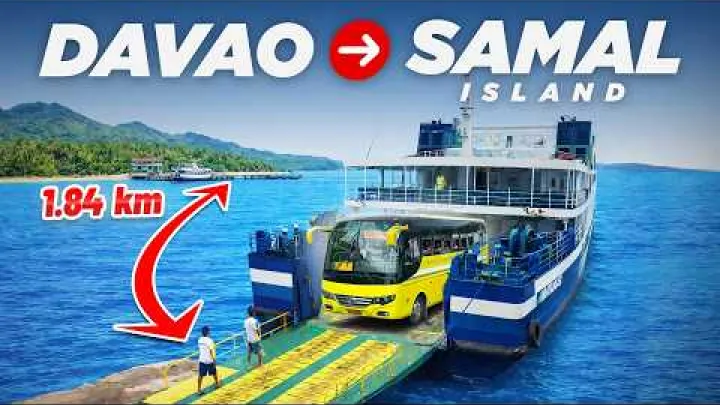
Samal getting there is usually a two-part journey: first reach Davao City, then cross the Davao Gulf to the Island Garden City of Samal. Most visitors arrive through Francisco Bangoy International Airport, also called Davao International Airport, and continue by taxi, bus, public ferry, passenger boat, or resort transfer. The best route depends on where you are staying: Babak and northern Samal, Peñaplata and central Samal, Kaputian, Talicud Island, or a private resort with its own boat. This guide explains the main routes, the wharves to choose, and the common transport mistakes to avoid.
Quick Answer: The Best Route to Samal
If you want the simplest starting point, travel to Davao City first. From there, choose the crossing that matches your final stop on Samal rather than choosing a wharf only because it appears closest on a map.
Start with Davao City
For most travelers, Samal is reached through Davao City. The main air gateway is Francisco Bangoy International Airport, widely known as Davao International Airport. Samal is a separate island city, so the usual trip combines a flight or long-distance bus to Davao, a land transfer to a wharf, a sea crossing, and a final ride on Samal.
The practical route logic is simple. If you are arriving at Davao Airport or staying in the city, decide whether your final destination is better served by Sasa Wharf, Sta. Ana Wharf, a Samal-bound bus, or a resort-operated boat. Sasa to Babak is the most common public crossing for flexible trips and vehicles. Sta. Ana can be useful for some Kaputian or Talicud Island trips when the boat schedule works. Resort transfers are convenient when your accommodation confirms them in advance.
Pick your route by island destination
Do not treat Samal as one single arrival point. Babak, Peñaplata, Kaputian, and Talicud Island can require different transport choices. A route that is convenient for a northern resort may be slow for southern Samal, and a boat that is ideal for Talicud may not help if you need to bring a car.
| Route | Best for | Main advantage | Main caution |
|---|---|---|---|
| Sasa to Babak RoRo | Babak, northern Samal, vehicles, flexible itineraries | Main public corridor for passengers and vehicles | Queues and vehicle loading can affect total time |
| Sta. Ana boats | Some Kaputian and Talicud trips | Can be more direct for southern destinations | More schedule-dependent and less useful for late arrivals |
| Direct bus | Budget travelers already in Davao City | Can combine land and ferry segments | Departure point and schedule must be confirmed |
| Resort boat | Guests or pre-arranged visitors | Simple transfer to a specific resort | Usually not available for general island transport |
Exact sailing times, terminal practices, and fares can change. Check with the terminal, operator, hotel, or local tourism office close to your travel day, especially if you are arriving late or traveling during rough weather.
Flights and Long-Distance Access to Davao
Davao City is the long-distance access point for most Samal trips. Your first decision is how to reach Davao, then how to connect from your arrival point to the correct wharf or transfer point.
Domestic and international flight connections
Francisco Bangoy International Airport is the practical aviation gateway for Samal-bound travelers. Airport data services list Davao City Francisco Bangoy International Airport with the code DVO, and current flight information can be checked through services such as Flightradar24. Use live airline or airport information before booking because schedules, aircraft, and fares change often.
Domestic travelers commonly reach Davao from major Philippine gateways such as Manila or Cebu when flights are available. Many international travelers enter the Philippines through Manila or Cebu, clear arrival formalities, and then take a domestic flight to Davao. If your international and domestic flights are on separate tickets, allow extra time for immigration, baggage claim, check-in, terminal procedures, weather delays, and missed-connection risk.
Do not assume Samal has a commercial airport for direct passenger flights. For normal tourist travel, plan around Davao International Airport, then continue by land and sea.
Arrival by bus from other parts of Mindanao
Travelers already in Mindanao may reach Davao City by long-distance bus. After arriving in Davao, you still need to continue to a wharf, a direct Samal-bound bus departure point, or a resort transfer location. Ecoland Bus Terminal and Agdao Terminal are useful local anchors, but departure points and routes should be checked locally because terminal assignments can change.
This option is most relevant if you are already in cities or provinces connected to Davao by road. It is less relevant for travelers flying into Davao unless a bus terminal is near their accommodation or onward route. There is no passenger rail option to Samal in the available practical travel evidence, so do not plan around train access.
From Davao Airport or City to the Wharf
After reaching Davao, your next task is getting to the correct Davao-side departure point. The most common choices are the Sasa and Panacan-Sasa ferry area, Sta. Ana Wharf near the downtown side, a city bus terminal, or a resort-specific welcome center.
Airport to Sasa and the RoRo terminals
The Sasa and Panacan-Sasa ferry area is the usual target for the Sasa to Babak crossing. This route is especially practical if you are staying in Babak or northern Samal, bringing a motorcycle or car, arriving with luggage, or keeping your schedule flexible.
From Davao Airport, a taxi or app-based ride where available is usually the simplest connection to the ferry area. Welcome Pickups describes taxi as an easy airport connector toward the Samal ferry area, but actual time and cost depend on traffic, terminal queues, route, and current fare conditions. Use official airport taxi queues, metered taxis, or reputable app-based services where available.
Carry small cash for terminal fees, ferry payment, and Samal-side local transport. Even if your airport-to-wharf ride is straightforward, the full trip can take longer than expected when there are vehicle queues, weekend demand, or weather-related delays.
Airport or downtown Davao to Sta. Ana Wharf
Sta. Ana Wharf is a Davao City departure point used for some passenger boat services toward Kaputian, Talicud Island, or resort-linked routes. It is not the same as the Sasa RoRo corridor. Choose Sta. Ana only when it matches your destination and when current boat timing is suitable.

A simple way to picture the geography is this: Davao Airport is north of central Davao, the Sasa ferry area is closer to the airport side, and Sta. Ana is closer to the downtown waterfront near Magsaysay Park. That does not automatically make one wharf better than the other. The correct choice depends on the island landing point and onward travel.
Sta. Ana boats can be useful, but they are more schedule-dependent than the main RoRo corridor. Arrive early, check the current boat status before committing, and avoid building a tight same-day itinerary around an unconfirmed departure.
City bus terminals and direct bus options
Travelers already in Davao City may be able to use Samal-bound bus services instead of arranging a taxi, ferry, and local ride separately. This can help solo travelers, budget travelers, and people carrying light luggage. It is less convenient for many airport arrivals unless the traveler is already near the correct terminal.
Some travel guides describe Island City Express services from Agdao Terminal toward Samal, and Guide to the Philippines is one source that frames direct bus access as an option for visitors already in Davao. Treat the exact departure terminal, operator, endpoint, and schedule as details to confirm before travel.
A direct bus is useful when it integrates the road and ferry segments, reducing the need for first-time visitors to manage each transfer independently. However, it may not be best if your resort is far from the bus corridor or if you are traveling with large luggage, a group, or a vehicle.
Public Boat Routes Across the Davao Gulf
The sea crossing from Davao to Samal is short compared with many Philippine island journeys, but it still requires practical planning. Weather, maritime safety decisions, vehicle demand, and terminal procedures can all affect the experience.
Sasa to Babak RoRo for passengers and vehicles
The Sasa to Babak RoRo is the main public crossing for passengers, motorcycles, cars, vans, and local traffic. It lands on the Babak side of Samal, making it practical for northern Samal and for onward travel toward Peñaplata and other parts of the island.
For walk-on passengers, the process is usually to arrive at the terminal area, follow the passenger payment and boarding procedure in effect that day, board the vessel, cross to Babak Port, then arrange onward transport. For vehicles, the process includes queueing, payment for the vehicle and passengers as required, loading, crossing, and unloading at Babak. Vehicle demand can make the total trip longer even when the water crossing itself is short.
Do not rely on old blog posts for exact 24-hour operations, fares, or vehicle rates. If late travel is important, check current terminal operations before leaving Davao Airport or your hotel. Weather advisories, maintenance, congestion, and safety decisions can change service availability.
Sta. Ana boats to Kaputian and Talicud
Sta. Ana boats can be more direct for Kaputian and Talicud Island when the schedule aligns. These are passenger-oriented boat services, not the main vehicle RoRo option, so they are not the right choice if you need to bring a car or motorcycle across.
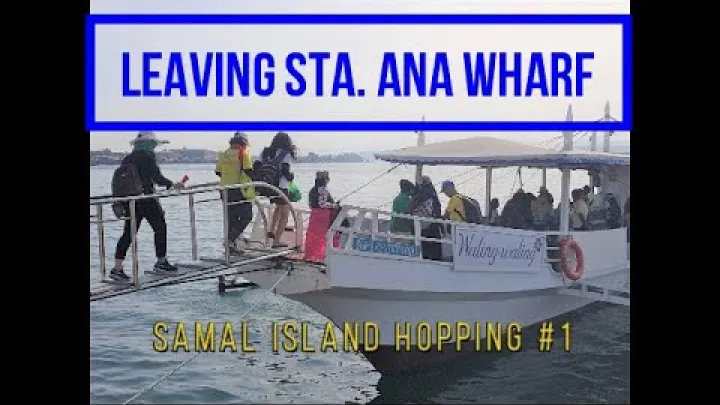
The trade-off is clear. Sta. Ana may reduce overland travel for southern destinations, but it can be less flexible than the Sasa to Babak corridor. Departures may be less frequent, more dependent on daylight conditions, and more sensitive to weather or operational changes.
If Sta. Ana timing fails, the practical fallback is often to use Sasa to Babak and continue overland where practical. This may add travel time, so ask your accommodation in Kaputian or Talicud which wharf is best before finalizing your arrival plan.
Resort-operated boat transfers
Some Samal resorts operate their own Davao-side welcome centers, jetties, or boat transfers. This can be the easiest option when you are staying at a resort that controls its arrival process. It is also the route least likely to help if you are not a confirmed guest or pre-arranged visitor.
Discovery Samal is one example of a resort-arranged access model. Its operator information describes arrival through a Davao Welcome Center and a short boat ride to the resort, according to Discovery Samal. Other resorts may use different piers, schedules, booking rules, or eligibility requirements.
Before arrival, confirm the boarding point, check-in procedure, luggage rules, parking availability, transfer times, and whether the boat is complimentary or charged. Private resort boats do not replace public ferries for general travel around Samal.
Choosing the Right Route for Your Final Stop
Your final stop on Samal should decide your route. The cheapest-looking crossing is not always the fastest once you include island-side transport, waiting time, luggage, and the comfort of your group.
Babak and northern Samal
For Babak and many northern Samal stays, the Sasa to Babak route is usually the most practical. It minimizes unnecessary island crossing after arrival and is the natural option for travelers bringing vehicles. It is also convenient for people who want a flexible public route from Davao Airport or the Panacan-Sasa corridor.
A sample route is: arrive at Davao Airport, take an official taxi or app-based ride to the Sasa ferry area, cross to Babak Port, then take a tricycle, multicab, habal-habal, or pre-arranged resort pickup. Do not assume a resort is within walking distance of Babak Port just because it appears nearby on a map. Heat, luggage, road layout, and waiting time can make a short distance uncomfortable.
Peñaplata and central Samal
Peñaplata is a useful central anchor for planning Samal trips. For many central destinations, travelers land at Babak and continue by local transport along main island corridors such as the Babak-Samal-Kaputian Road. Depending on the destination, the final leg may involve a bus, route vehicle, tricycle, habal-habal, multicab, or accommodation pickup.
If your accommodation is on or near a main road, a direct bus or public route vehicle may be practical. If it is down a side road, near a beach area, or away from frequent routes, you may still need a last-mile hire. Do not rely only on map distance when estimating travel time. Waiting time, stops, road conditions, and transfer availability can matter more than the number of kilometers.
Kaputian, southern Samal, and Talicud Island
Kaputian, southern Samal, and Talicud Island require more careful route choice because they are farther from Babak than northern destinations. A Sta. Ana boat may be more direct when it is operating at a useful time, while Sasa to Babak plus overland travel is often the more flexible fallback.

Talicud Island is separate from the main Samal Island. It may require a direct boat from Davao or another local transfer, depending on current services and your exact destination. Do not assume that arriving at Babak is automatically convenient for Talicud or Kaputian.
If you are staying in southern Samal or Talicud, ask your resort or host which wharf to use before committing to the final local leg. Avoid late arrivals unless your onward transfer is pre-arranged, because evening transport options can be limited outside the main arrival areas.
Getting Around After You Arrive on Samal
Reaching Samal is only part of the journey. Your last-mile transport can be simple or complicated depending on where you land, how much luggage you have, and whether your accommodation is on a main route.
Habal-habal, tricycles, multicabs, and local hires
Common Samal last-mile options include habal-habal motorcycles, tricycles, multicabs, and locally hired vehicles. Availability is usually better near ports, town centers, and main roads than at isolated beaches or late at night.
For negotiated rides, agree on the price before departure. Confirm the route, whether the price is per person or per vehicle, whether waiting time is included, and whether stops or return travel are part of the agreement. For longer rides or multi-stop tours, ask your accommodation staff for current local fare guidance before negotiating.
For motorcycle rides, consider luggage size, rain, road conditions, and night visibility. A habal-habal can be efficient for solo travelers, but it may not be comfortable or safe for large bags, children, or people who prefer more stable transport.
Buses and modernized public transport routes
Samal has had public transport route planning intended to improve connections across the island. Government-related reporting from the Philippine News Agency mentions developmental route anchors such as Poblacion Babak, Poblacion Katipunan, the Babak-Samal-Kaputian Road, Kinawitnon, Talicud Island, and Peñaplata to Kaputian.
For travelers, this means structured public transport can be useful when your accommodation lies near a corridor. It does not necessarily mean every tourist destination has frequent service, late-night service, or door-to-door convenience. In practice, buses or route vehicles may handle the main corridor while tricycles, habal-habal, multicabs, or resort pickups handle the final stretch.
Costs, Timing, Safety, and Common Mistakes
A smooth Samal trip is usually about managing small details: cash, terminal choice, schedule checks, weather, and last-mile transport. These details matter more when you arrive late, carry luggage, travel with children, or need to catch a flight after leaving the island.
Budgeting the full local journey
Budget the full journey in segments: flight or intercity bus to Davao, taxi or city transfer to the departure point, ferry or boat crossing, and Samal-side local transport. The sea crossing may be only a small part of the total cost, especially for solo travelers who use taxis or long private last-mile rides.
| Traveler type | Likely cost drivers | Budget tip |
|---|---|---|
| Walk-on passenger | Taxi to wharf, ferry, local ride on Samal | Carry cash and confirm last-mile fares first |
| Group | Shared taxi or van, luggage, resort pickup | Sharing a vehicle can reduce per-person cost |
| Vehicle traveler | Vehicle ferry charges, queues, fuel, parking | Use the RoRo route and check current rates |
| Southern Samal or Talicud guest | Longer transfers, schedule-dependent boats | Ask your host which wharf avoids backtracking |
Do not treat unofficial fare examples as guaranteed prices. Keep small bills for local transport and ask your hotel, host, or terminal staff for current guidance.
Schedule checks, weather delays, and night arrivals
Check ferry, boat, and bus status close to departure. Even when the distance between Davao and Samal is short, bad weather, sea conditions, terminal congestion, maintenance, or maritime safety decisions can disrupt crossings.
Late-night travel may be possible on some crossings only if current operations confirm it. The bigger problem is often not the water crossing itself but onward transport after arrival on Samal. If you land late at Babak, Kaputian, or another point without a pre-arranged ride, your choices may be limited.
Build buffer time before flights, hotel check-ins, tours, and onward connections. Do not schedule a tight ferry-to-flight connection from Samal to Davao Airport. Allow time for the Samal-side ride, ferry queue, Davao traffic, airport security, and unexpected delays.
Common terminal and fare mistakes to avoid
The most common mistake is confusing Sasa Wharf, Sta. Ana Wharf, Babak Port, and resort-specific transfer points. Sasa is the usual Davao-side route for the Babak RoRo. Sta. Ana is a different Davao-side wharf used for some passenger boats. Babak Port is on Samal. A resort pier or Davao Welcome Center may be limited to pre-arranged guests.
Choosing the wrong wharf can add backtracking, waiting time, or an unnecessary island crossing. For example, Babak is logical for northern Samal, Sta. Ana may work for some Kaputian or Talicud trips, and a resort pier may be best only when your resort confirms it.
Before leaving Davao, use this checklist:
- Confirm your final destination on Samal, not only the island name.
- Ask which Davao-side wharf or welcome center you should use.
- Check current boat, ferry, or bus status.
- Carry enough cash for small payments and local transport.
- Agree on local transport fares before boarding.
- Plan extra time for vehicle queues, rain, weekends, and evening arrivals.
Frequently Asked Questions
What airport should I fly into for Samal Island?
Fly into Francisco Bangoy International Airport, also called Davao International Airport. From there, continue by taxi, bus, ferry, public boat, or resort transfer depending on your final destination on Samal.
Which wharf should I use to get to Samal?
Use Sasa for the main RoRo crossing to Babak, especially for northern Samal or vehicles. Consider Sta. Ana for some Kaputian or Talicud trips when current boat schedules work. Use a resort-specific point only when your accommodation confirms it.
Can I bring a car or motorcycle to Samal?
Yes, travelers commonly use the Sasa to Babak RoRo for cars, motorcycles, vans, and other vehicles. Check current vehicle rates, queue conditions, and operating status before travel.
Can I travel from Davao to Samal late at night?
Late travel may be possible only when current ferry operations confirm it, but onward transport on Samal can be limited at night. If you arrive late, arrange pickup with your accommodation before leaving Davao.
What is the best way to get to Talicud Island?
The best route depends on current boat operations and your exact destination. Sta. Ana boats can be useful when schedules align, while Sasa to Babak plus onward transfer may be a fallback. Ask your resort or host which wharf is best before you travel.
Final Tips for a Smooth Trip to Samal
The easiest Samal route is the one matched to your final stop, not simply the one that looks shortest on a map. Start by reaching Davao City, then choose Sasa to Babak, Sta. Ana, a direct bus, or a resort boat based on your destination, luggage, arrival time, and need for flexibility.
For Babak and northern Samal, the Sasa to Babak RoRo is usually the practical default. For Kaputian and Talicud, check whether a Sta. Ana boat or resort-arranged transfer avoids a long overland ride. For central Samal, confirm whether your accommodation is near a main route or needs a last-mile hire.
Before you travel, verify current schedules, carry cash, allow buffer time, and confirm your pickup or local fare in advance. These simple steps reduce most of the common problems travelers face when getting from Davao City to Samal Island.
Select area
Create a post
Posting is free and no registration is required.