Bago Best Time to Visit: Monthly Weather Guide

The best time to visit Bago is usually from late November to February, when the historic city is generally drier and more comfortable for outdoor sightseeing. This window suits visitors staying in Bago city, exploring cultural sites, or using the Yangon-Bago day-trip corridor. March and early April can work for travelers who tolerate strong heat, while May to October requires more rain planning and schedule flexibility. This guide explains Bago’s seasons, gives a practical month-by-month weather overview, and separates long-term climate patterns from the live forecast for your travel dates.
The Best Time to Visit Bago at a Glance
For a first visit with a fixed sightseeing plan, choose late November through February. January and February are especially reliable choices for outdoor activities, while December offers a warm but relatively dry start to the main travel window. If your dates are flexible, shoulder-season months can provide useful compromises between comfort, heat, greenery, availability, and demand.
Best Overall: Late November to February
Late November through February is the strongest overall period for visiting Bago because rainfall is usually lower and the weather is less oppressive than during the hot pre-monsoon months. These conditions make it easier to spend time outdoors, move between cultural sites, take photographs, and combine Bago with Yangon without building the entire day around rain or extreme heat.
January and February are particularly suitable when predictable outdoor days are the main priority. Afternoons can still feel warm, but mornings and evenings are usually milder rather than cold. December is also a good choice, especially for travelers who want relatively dry conditions without the stronger heat of March and April. A light layer can be useful early or late in the day, but heavy winter clothing is normally unnecessary in Bago.
This recommendation describes a climate pattern, not a promise of rain-free weather. Myanmar has a broad cool and relatively dry season followed by hotter and wetter periods, as outlined by Britannica. An isolated shower can still occur during a generally dry month, so retain some flexibility for outdoor plans.
Best Shoulder-Season Alternatives
March and early April are useful alternatives for heat-tolerant visitors who prefer mostly dry conditions. March is generally the easier of the two because the hottest part of the pre-monsoon period has not fully developed. By April, strong heat can make long walks and exposed sites tiring, so early-morning visits, shaded breaks, and a slower pace become more important.
Late October and November form a different type of shoulder-season option. Conditions often improve as the monsoon withdraws, but residual showers can remain, particularly earlier in the transition. The landscape may look greener than it does later in the dry season. Late February and March can suit travelers who value drier conditions more than maximum comfort, while late October and early November can suit those who prefer improving weather and greener surroundings.
Demand and prices may be lower or availability may be better outside the most popular dry-season dates, but there is no dependable Bago-specific rule for accommodation or transport costs. Compare current rates and cancellation terms rather than assuming that a shoulder month will always be cheaper. The main trade-off is simple: more heat or residual rain may buy greater choice, but a short itinerary may benefit more from dry-season reliability.
Bago’s Climate and the Monsoon Calendar
Bago follows the broad seasonal rhythm of southern Myanmar, but the practical effect is more important than the season names. The key questions are how long you expect to be outside, how much heat you can tolerate, and whether rain would disrupt a day trip or cultural itinerary. Bago is a lowland city, so advice for cooler highland destinations or coastal beach trips should not be transferred without adjustment.
Cooler, Drier Months: November to February
November to February is the relatively cool and dry part of Myanmar’s annual monsoon cycle. In Bago, cooler means less intense heat and lower rainfall compared with the hot and rainy seasons, not cold weather in the temperate sense. Lightweight clothing is usually appropriate during the day, with a light extra layer useful for cooler mornings or evenings.

The lower likelihood of prolonged rain improves the rhythm of a city stay. Visitors can start early, spend more time walking or taking photographs, and plan a Yangon-Bago day trip with fewer weather-related interruptions. Bago’s conditions can be considered alongside Yangon when planning both places, but a Yangon climate record should be treated as a regional comparison rather than an exact measurement for every part of Bago Region.
These months are also a good fit for travelers who have only one day in Bago. A short visit has little spare time to absorb delays, so the relative predictability of the dry season can be more valuable than a possible saving on a less popular date.
Hot Pre-Monsoon Months: March to May
March through May is the hot transition season. March is often still relatively dry, but temperatures become more demanding as the season progresses. April is typically the most intense heat period for Bago, and high humidity can make conditions feel harder than a simple temperature reading suggests. By May, increasing showers and thunderstorms begin to mix with the heat as the monsoon approaches.
Heat-tolerant travelers can still visit during March or early April, particularly if they plan outdoor sightseeing for the first part of the morning and the later afternoon. Build in shade, drinking water, and a proper rest period during the hottest middle hours. Breathable clothing and sun protection are more useful than adding extra activities to a single hot day.
Late May should be treated as changeable rather than uniformly dry or uniformly wet. Some days may still feel dominated by heat, while others bring heavy showers or thunderstorms. This makes late May less suitable for a tightly timed outdoor itinerary than the earlier part of the dry season.
Rainy Southwest Monsoon: May to October
The rainy season generally begins around May and continues through October. The wettest and potentially most disruptive conditions are usually concentrated from June through September, although the exact timing varies by year. A Bago Region climate summary identifies August as the month that is typically wettest, while also describing May to October as the main rainy period; use this as a seasonal guide rather than a guarantee for a particular week. NearWeather provides that regional summary.
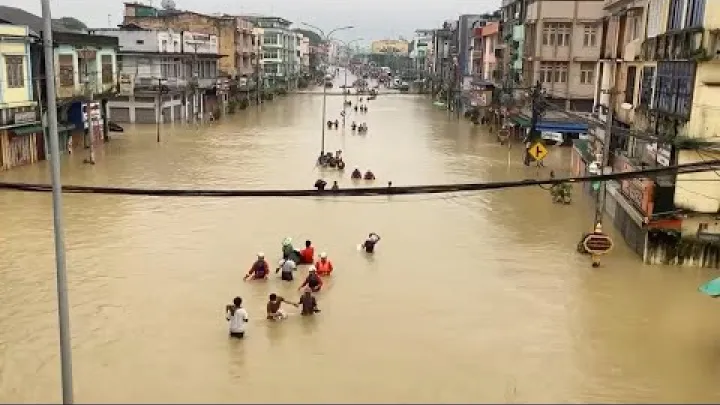
For visitors, cloud, humidity, and the timing of downpours can matter more than small differences in daytime temperature. Rain may arrive as a short, intense burst or affect much of a day, and the difference changes how easily you can walk, photograph sites, or move between stops. Bago’s inland lowland setting also means that coastal beach-season guidance is not a direct substitute for city-stay advice. During the monsoon, choose rain protection and flexibility rather than expecting every day to follow a fixed pattern.
Bago Weather Month by Month
The month-by-month guide below gives a simple sense of what a typical visit may feel like in Bago. It is intended for choosing a travel window, not for predicting conditions on a specific date.
A Simple January-to-December Weather Guide
Each month has a different planning balance between rainfall, heat, comfort, and flexibility. The transition months of May, October, and November deserve particular caution because monsoon onset and withdrawal do not occur on exactly the same date every year.
| Month | Typical feel | Planning approach |
|---|---|---|
| January | One of the cooler and driest months. | Strong choice for outdoor sightseeing and predictable day trips. |
| February | Very dry, with warming afternoons. | Excellent for photography, walking, and a short cultural visit. |
| March | Usually relatively dry but noticeably hotter. | Start early and avoid the most exposed midday hours. |
| April | Typically the peak-heat period. | Use a heat-aware schedule with water, shade, and longer breaks. |
| May | Variable transition between strong heat and monsoon showers. | Keep outdoor plans adaptable and expect changing conditions. |
| June | Established rainy season with cloud and frequent heavy showers. | Allow time for rain interruptions and use dependable rain protection. |
| July | Very wet conditions can affect outdoor plans. | Choose flexible activities and avoid an overpacked schedule. |
| August | Often the wettest month in Bago Region. | Monitor conditions closely and allow the greatest planning flexibility. |
| September | Still distinctly wet, although rain may begin to ease. | Suitable for travelers who accept wet weather and changing plans. |
| October | Transitional, with possible early-month rain and improving later conditions. | Later dates may be more comfortable, but keep a backup plan. |
| November | Residual showers may give way to increasingly dry conditions. | A useful compromise for improving weather and greener scenery. |
| December | Warm, relatively dry, and dependable for a short visit. | Good for combining Bago with Yangon and other lowland stops. |
This table describes typical climate patterns, not a live forecast. A dry-season month can still bring an isolated shower, and a wet-season month can include temporary dry periods. The forecast close to your travel date should determine the timing of outdoor activities.
Choose the Best Time to Visit Bago by Travel Priority
The best month depends on what you want to protect: comfortable sightseeing, a lower-cost booking, green scenery, or a fixed schedule. The following choices turn the seasonal information into practical travel decisions.
Culture, Heritage, and Outdoor Sightseeing
Choose late November through February if your main purpose is visiting cultural sites, walking around Bago city, taking photographs, or combining Bago with Yangon. Relatively dry conditions make it easier to spend several hours outside and move between stops without making rain protection the center of the day. January and February are especially strong choices when you want the most predictable conditions within this window.

March can also work if you prefer mostly dry weather and can manage strong heat. Schedule the most exposed activities early, pause during the hottest part of the day, and continue later when conditions are easier. Bago is best understood as a historic lowland city stop in this type of itinerary. It should not replace separate planning for a coastal beach trip or a cooler highland hiking destination, where the climate and practical conditions may be different.
Lower Crowds and a Flexible Budget
The most comfortable dry-season months can also attract stronger travel demand. Accommodation, transport, and day-trip availability may therefore require earlier comparison, especially when your dates cannot move. This does not mean every dry-season booking is expensive or every rainy-season booking is cheap; current provider prices and availability are more useful than a general seasonal assumption.
March, November, and selected transition dates can provide possible compromises. March may offer mostly dry conditions with more heat, while November may offer improving weather with some residual rain. Monsoon travel may sometimes bring fewer visitors or lower rates, but those savings should be weighed against shortened outdoor time and the possibility of changes to a tightly planned day.
A simple decision rule is useful: for a short Bago visit, pay more attention to dry-season reliability than to a possible low-season discount. Consider wet-season savings when you can change the order of activities, add extra time, and accept that weather may reduce what fits into one day.
Green Landscapes and Monsoon Atmosphere
The rainy season can refresh the countryside around Bago, producing greener landscapes, cloud cover, and dramatic skies. Travelers who value atmosphere over predictable walking conditions may find late September, October, or November appealing, particularly as conditions gradually improve later in the transition. The greener setting can add visual interest to a cultural itinerary without requiring the hottest months.
July and August may provide the strongest sense of monsoon weather, but they also bring the greatest likelihood of heavy rain and interrupted outdoor plans. A wet-season visit works best when rain protection, flexible timing, and realistic expectations are part of the plan from the beginning. Do not choose a specific green-season month on the assumption that it will guarantee better photographs or lower prices.
When to Avoid Bago for a Fixed Itinerary
If you have only a short visit and cannot reschedule, avoid relying on the core monsoon peak, especially July and August. The reason is reliability: frequent rain can reduce time outdoors and make a one-day plan harder to complete. This is not an absolute statement that Bago is inaccessible during the rainy season. It is a recommendation for travelers who have no spare day and want the clearest chance of following a fixed cultural itinerary.
Late May and October can also be changeable transition periods. They may be worthwhile when your priorities include flexible pricing or greener scenery, but travelers with fixed outdoor plans should treat them as less certain than January or February. For a first visit with limited time, late November through February remains the clearest default.
Practical Weather Planning for a Bago Visit
Once you choose a month, adjust your clothing, daily schedule, and transport assumptions to match the season. Bago is warm throughout the year, but heat, humidity, rain, and the need for schedule flexibility vary significantly.
What to Wear and Pack by Season
Pack for warmth rather than cold, and organize your choices around the season in which you will visit. Heavy cold-weather clothing is generally unnecessary for Bago unless your wider Myanmar itinerary includes highland destinations with cooler conditions.
- November to February: Choose lightweight daytime clothing and add a light layer for cooler mornings or evenings. Comfortable footwear for walking is more useful than heavy outerwear.
- March to May: Prioritize breathable clothing, sun protection, drinking water, and items that make it easier to rest during the hottest part of the day. A light rain layer becomes more useful as May progresses.
- May to October: Pack quick-drying clothing, reliable rain protection, and footwear that remains practical on wet surfaces. Use a waterproof pouch or other protection for phones, documents, and small electronic items.
For a day trip from Yangon, keep rain protection and water accessible rather than packed at the bottom of a main bag. A simple, season-appropriate setup makes it easier to continue the day when conditions change without carrying unnecessary equipment.
Climate Averages Versus the Live Forecast
Long-term climate patterns help you choose a month, while a short-range forecast helps you decide whether a particular day is suitable for outdoor plans. The two types of information answer different questions. A dry-season average does not rule out an isolated shower, and a rainy-season average does not mean that every hour will be wet.
Before departure, consult current updates from the Myanmar Department of Meteorology and Hydrology alongside a reliable short-range forecast. Check again shortly before outdoor activities, especially during the transition months and the southwest monsoon. If thunderstorms, intense rain, or other severe weather appear in the forecast, move exposed activities to a better time of day or use a backup plan rather than treating the climate average as a guarantee.
Official bulletins are also useful when broader monsoon or storm conditions may affect southern Myanmar. A current warning has more decision value for your travel date than a general statement that a particular month is normally dry or wet.
Rain, Flooding, and Transport Flexibility
Heavy rain is often a short-term inconvenience, but intense monsoon episodes can create more serious disruption in low-lying areas and along travel routes. The IFRC has documented periods when heavy monsoon rain caused rivers and waterways to overflow and led to severe flooding in Myanmar. This is important context for planning, not a claim that every rainy-season day in Bago is dangerous.
After heavy rain, conditions may affect local site access or the Yangon-Bago day-trip corridor even when average seasonal weather appears manageable. Do not rely only on a pre-booked schedule. Use these practical steps when the forecast or local conditions are concerning:
- Confirm the current Yangon-Bago route and local site access with a current provider or reliable local contact.
- Keep a time buffer so a delayed departure or slower journey does not remove all outdoor time.
- Have an alternative indoor activity or a shortened version of the day’s plan ready.
- Do not attempt to cross flooded roads or low-lying areas, and follow current warnings from local authorities.
These precautions are most important during the wetter part of the year and after unusually heavy rain. They allow you to distinguish normal monsoon inconvenience from conditions that require a genuine change of plan.
Bottom Line: Choosing Your Bago Travel Window
For the best overall balance of comfort, dry weather, and outdoor reliability, visit Bago from late November through February. Choose January or February when a short cultural itinerary and predictable day trips matter most. March and early April are reasonable alternatives for heat-tolerant travelers, while late October and November may suit visitors who welcome improving weather and greener surroundings.
July and August are not automatically impossible, but they are weaker choices for a fixed itinerary because rain can reduce flexibility. If you travel during the monsoon, make the decision for its atmosphere or potential value, not because the weather is expected to be dependable. Whatever month you choose, use climate averages to select the season and the live forecast to organize each day in Bago.
Select area
Create a post
Posting is free and no registration is required.