Dawei Getting There: Flights, Buses, Trains & Route Checks
Dawei getting there requires more than choosing the fastest route on a timetable. The city is linked with Yangon and the southern Myanmar transport corridor by domestic air services, long-distance buses, and the Tanintharyi railway line, but a listed route does not prove that a service is operating today. This guide compares the main options by time, relative cost, comfort, booking difficulty, and reliability. It also explains how to reach Dawei town from the airport, highway bus compound, or railway station, and why Thailand and sea routes should not be assumed to be standard passenger connections.
Check Current Access Conditions Before Travel
Start with access and operating conditions, then compare transport. The transport network has recognizable airports, roads, terminals, and railway infrastructure, while schedules, fares, border rules, and operator availability can change quickly.
What Getting to Dawei Looks Like Now
The practical answer is that Dawei has three main documented access patterns: a domestic flight from Yangon, a long-distance road journey by bus, and a slower rail route through the Tanintharyi Line. Travelers may also assemble regional road connections through places such as Mawlamyine or Ye. These options differ in more than travel time. A flight may be short but operate on limited dates; a bus may be easier to find on the southern road but take most of a day or night; and a train may offer a distinctive journey but be difficult to confirm.
There is an important distinction between infrastructure and current transport service. Dawei Airport exists, the Yangon–Dawei road route is established in published travel information, and the Ye–Dawei railway is part of the southern rail network. None of those facts alone confirms a particular departure, seat, fare, or passenger train for your travel date.
Safety must be the first decision point. The current U.S. Department of State advisory says not to travel to Burma for any reason because of armed conflict, unrest, arbitrary enforcement of local laws, poor health infrastructure, landmines, and unexploded ordnance. Read the latest government advisory relevant to your nationality and check current local conditions before booking or starting the journey. If the advisory or conditions make travel unsuitable, postponement is the responsible choice.
For transport information, treat older schedules and fares as indicative snapshots. A route page can help you understand the normal shape of a journey, but it should not be used as proof of a current daily service unless the operator or a trusted local ticket office confirms it.
Use Yangon as the Main Planning Gateway
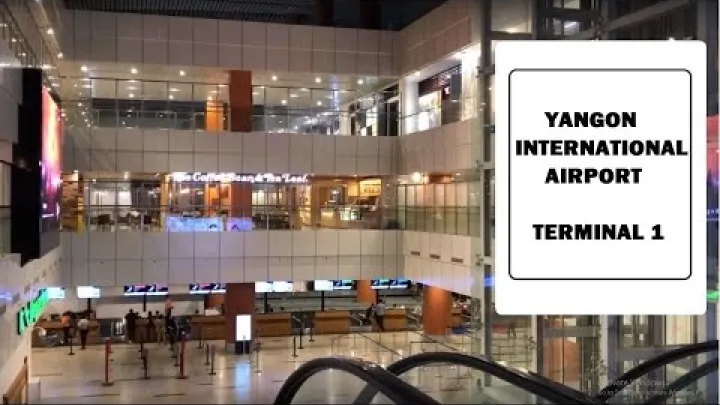
For most international planning, Yangon is the clearest gateway to use as a reference point. Yangon International Airport uses the code RGN, while Dawei Airport is a domestic facility rather than an international arrival gateway. An international visitor therefore needs a confirmed Myanmar entry point before taking a domestic flight or an overland route to Dawei. Do not assume that an international ticket and a Dawei connection can be treated as one continuous itinerary.
Yangon is useful for comparing the main choices. The first is to fly from Yangon to Dawei. The second is to take a direct long-distance bus, often arranged as an overnight journey with arrival on the following day. The third is to travel more slowly by road and rail through southern corridor towns such as Mawlamyine and Ye.
Allow contingency time between an international arrival in Yangon and onward transport. A separate domestic ticket, bus departure, or local connection can be affected by baggage collection, airport transfers, ticketing limits, late arrivals, or a changed departure time. A same-day connection may look possible on paper but still leave little practical margin.
Fly to Dawei Airport
Flying is the time-first choice when a current domestic service is operating and the fare and conditions suit the traveler. The important point is to separate the short time in the air from the full journey, which also includes the Yangon connection, airport procedures, and the transfer into Dawei town.
Follow the Yangon–Dawei Air Route
Dawei Airport is identified by the IATA code TVY and the ICAO code VYDW. The main documented domestic air route for planning purposes is Yangon International Airport, RGN, to Dawei, TVY. Published flight examples commonly describe a nonstop flight of roughly one to one and a half hours in the air. That is a useful comparison with an overnight bus or a very slow rail journey, but it is not a guarantee of the duration, aircraft, or operating pattern on a particular date.
The Myanmar Airways International website provides an airline-level reference because it includes route and booking information for Yangon and Dawei. Check the airline’s own booking path before relying on an aggregator or flight tracker. If Dawei is not ticketable for the date you need, the existence of a route map does not solve the transport problem.
International visitors should remember that Dawei is not the place to complete an international air arrival. The usual planning sequence is an international arrival through a confirmed Myanmar gateway, followed by a separate domestic leg if one is operating. This can mean collecting baggage, changing terminals or airports within the gateway city, and meeting any domestic check-in deadline.
Verify Flights Before Booking
Check the operating date directly with the airline shortly before purchase and again before departure. Confirm the departure airport, terminal if one is specified, flight number, baggage allowance, payment method, ticket name requirements, cancellation conditions, and whether the booking can actually be completed rather than merely displayed in a search result.
Do not treat an old fare example as a current price. Domestic airfares can vary with availability, payment arrangements, and changes to the operating schedule. If you compare prices on a third-party website, use the result as a cross-check and then compare it with the airline’s own ticketing information. Route maps, schedule aggregators, and flight trackers can lag behind cancellations, seasonal changes, or temporary service suspensions.
Take particular care with an international arrival on the same day. A short Yangon–Dawei flight does not make a tight international-to-domestic connection safe or dependable. Separate tickets normally create separate risks: a delayed international arrival may not be protected by the domestic booking, and a missed flight may be difficult to replace. Leave a generous buffer or plan an overnight stop in Yangon when the itinerary allows.
When Flying Is the Better Fit
Choose air travel when time is more important than price, the flight is ticketable for the required date, and the journey is appropriate under current conditions. In the simplest comparison, the flight is the fastest option and usually the higher-cost option. It can be useful for a short visit, a work schedule, or a traveler who cannot spend a night on the road.
Compare total door-to-door time rather than only the flight duration. Add the time needed to reach Yangon airport, check in, wait, collect baggage, leave Dawei Airport, and reach the accommodation. The difference will still usually favor air travel over the bus or train, but the margin may be smaller when the flight has an inconvenient departure time or a long connection in Yangon.
The main trade-off is speed versus resilience. A direct flight can save many hours, but limited frequencies provide fewer replacement options if the service changes. A bus is physically longer but may offer more possible departure patterns on some dates. Flying is therefore the best fit when the service is verified and the traveler can accept a higher relative cost and a schedule with less flexibility.
Travel Overland by Bus
Bus travel is the principal budget-oriented way to compare overland access to Dawei. It connects the city with the southern road corridor and can be more practical than rail for travelers who want a direct route, but the journey may occupy much of a day or night.
Take a Direct Bus from Yangon
Route pages have historically listed direct Yangon–Dawei buses, often with departures from Yangon’s highway-bus system and arrival in Dawei on the next day. Overnight travel is a common pattern in the published examples. This can reduce the need for a hotel night in transit, but it also creates a very early arrival and a long period in a seated position.

Dawei Highway Compound is the main local anchor for long-distance bus arrivals and departures. It should be treated as a transport gateway, not automatically as the location of a traveler’s accommodation or the exact city-center drop-off. The Myanmar Trains route page has historically shown direct bus examples, including departure and arrival patterns, but the listing should be treated as indicative rather than as a live operator notice.
Before buying a ticket, confirm the operator, departure terminal, departure time, seat class, expected arrival day, arrival point, baggage allowance, and cancellation or change policy. Reconfirm the bus departure time, terminal, arrival point, and expected arrival day with the operator or a trusted local ticket office, especially when a platform shows a route without a clear current operating date.
Direct bus travel is often attractive because it avoids a connection. It can also be less expensive than flying, although the price depends on seat class, operator, booking channel, and payment method. The lowest listed fare is not always the most useful choice if it involves a difficult terminal transfer, an unclear departure point, or a ticket that cannot be changed.
Connect Through Mawlamyine or Ye
The southern corridor can be understood in a simple sequence: Yangon in the north, Mawlamyine farther south, Ye after Mawlamyine, and Dawei beyond Ye. Road and rail services overlap along parts of this corridor, but that does not mean that every traveler can buy one through-ticket or make an immediate connection between services.
A connection through Mawlamyine can suit someone who is already in Mon State or who wants to travel south in stages. Mawlamyine is also a planning node for travelers coming from Hpa-an, although the onward vehicle and departure location must be confirmed separately. Ye can be useful as the final regional node before Dawei, particularly for travelers combining a local road journey with the rail corridor.
Regional travel may require changing vehicles, moving between a main highway terminal and a smaller local stop, or buying separate tickets. A minivan, local bus, or informal ticket counter may not use the same departure point as a long-distance coach. Ask for the exact place name in writing or save it in a phone message, and allow time between legs instead of assuming that an arrival and departure will be coordinated.
This option is more suitable for flexible travelers than for anyone with a fixed flight, border appointment, or business meeting. It can provide more route choices when direct information is unavailable, but it also creates more points where a delay or changed departure can disrupt the plan.
Compare Bus Classes and Booking Methods
Bus operators may distinguish between economy and VIP-style seats. The practical difference is usually a choice between a lower price and a more comfortable seat layout, but the exact configuration varies by operator and vehicle. A listing may show a wider seat, fewer seats across a row, or a different coach category; it should not be read as a promise of a meal, blanket, charging point, or toilet unless those details are stated and confirmed.
Possible booking paths include online bus platforms, operator counters, local ticket agents, and highway-terminal offices. Online platforms can help compare routes and seat categories, but international cards, foreign phone numbers, or last-minute bookings may not always work. An operator counter or local agent may know of a departure that is not visible online, but ask which company is actually carrying you, where you board, and what happens if the service changes.
Before paying, check the seat type, passenger name, baggage rules, departure time, terminal, arrival point, and whether any transfer between stations is included. Keep the ticket, booking message, and operator contact together. If the booking is made through an agent, ask whether the agent or operator handles cancellations and changes.
Use the Tanintharyi Line by Train
The railway is a possible southern route in infrastructure terms, but it should be considered only after current passenger service is established. It is slower and less predictable than the air and road choices described above.
Understand the Rail Route Through Ye
The Tanintharyi Line forms the rail route toward Dawei from the north, with Ye and Mawlamyine as important corridor points. Background information on rail transport in Myanmar describes the Ye–Dawei section as approximately 160 kilometres and single track. That information explains the physical route, not a current passenger timetable.
Reported rail travel on this section has been limited and much slower than a flight or road journey. Service patterns may involve long waits, changes, or departures that do not match older travel descriptions. A train may also arrive at a time that requires a separate transfer into Dawei town.
Ask locally whether the train is operating before committing money or arranging a connection. Use the railway only when the service, departure day, and boarding station are confirmed. Do not build a tight onward connection around one reported train, particularly if the next leg is a flight, bus with a fixed departure, or border-related appointment.
Know When the Train Is Worth Considering
The train is a niche choice for travelers who value a rail experience, want to observe the landscape slowly, or have enough flexibility to accept delays and basic comfort. It may appeal to someone already traveling through Ye or Mawlamyine who prefers rail where a current local service is available.
Most time-sensitive visitors will compare the train unfavorably with a verified bus or flight. Even when the fare is low, the total cost can include extra food, accommodation, local transport, and the opportunity cost of a very long journey. Basic carriages and uncertain timing also make the train a poor choice for travelers with limited mobility or a critical onward deadline unless the conditions are clearly understood.
A mixed road-and-rail itinerary is possible in principle. A traveler might reach Ye by road and continue by rail, or use rail for one section and a bus for another. Such a plan requires current local information, separate confirmation for each leg, and generous flexibility. Use rail only when passenger service is confirmed and no important onward deadline depends on it.
Compare the Main Routes
The table uses relative categories because live fares and schedules are not established by the available evidence. It shows the trade-offs rather than replacing operator confirmation.
Compare Time, Cost, Comfort, and Booking Difficulty
| Route | Indicative travel time | Relative cost | Comfort | Booking difficulty | Reliability and flexibility | Main uncertainty |
|---|---|---|---|---|---|---|
| Yangon–Dawei flight | About 1–1.5 hours in the air; longer door to door | Higher | Fast and relatively comfortable | Medium; depends on ticketability | Fast but fewer replacement options | Operating date, frequency, fare, and cancellation |
| Direct Yangon–Dawei bus | Usually overnight and next-day in older listings | Lower to medium | Depends on economy or VIP-style seat | Medium; online or local counter | More overland choice, but long and changeable | Current operator, terminal, arrival day, and seat availability |
| Regional road connection | Varies by connection through Mawlamyine or Ye | Lower to medium | Depends on each vehicle | Harder; often separate tickets | Flexible in stages but more transfer points | Local departure points and connection timing |
| Tanintharyi Line train | Much slower; no dependable current estimate | Lower in principle | Basic and slower paced | Hard; current service must be found locally | Low timetable confidence; needs maximum flexibility | Passenger operation, departure pattern, and delays |
Choose the flight when time is the priority and the ticket is genuinely available. Choose a direct bus when a verified operator offers a suitable departure and the lower relative cost matters more than speed. Choose a regional road itinerary when you are already in the southern corridor or want to divide the journey into stages. Choose the train only when the service is confirmed and the journey itself matters more than arriving quickly.
Reliability deserves its own comparison. A short scheduled flight is not automatically the most dependable option if there is only one suitable departure. Likewise, a bus is not automatically reliable simply because it has historically appeared on several booking pages. Reliability means confidence that the service is currently operating and that the ticket, departure point, and arrival point are understood.
Reach Dawei City from the Arrival Gateways
Long-distance transport does not end at the vehicle’s arrival point. Plan the final movement into town at the same time as the flight, bus, or train, especially when the arrival is early in the morning or later than expected.
Move from Dawei Airport into Town
Passengers arriving at Dawei Airport still need a local transfer to the city or accommodation. The airport should therefore be treated as the first arrival gateway, not the final destination. The best option depends on the arrival time, accommodation location, available vehicles, and whether a pickup has been arranged.
When possible, ask the accommodation to arrange or confirm a pickup after the flight is ticketed. Send the flight number, expected arrival time, passenger name, and accommodation address. If the flight time changes, update the accommodation rather than assuming that a driver will know about it.
Avoid relying on an unverified fixed fare or an assumed supply of taxis. Confirm the local vehicle option and price before traveling, and make sure the driver has the correct destination. No exact airport distance, standard fare, or guaranteed taxi availability should be assumed without current local information.
Leave the Highway Compound or Railway Station
Dawei Highway Compound is the relevant long-distance bus gateway for many road journeys. A booking listing for the compound can help identify the arrival and departure point, but it does not establish how far the terminal is from a particular accommodation or whether the bus will stop there in every operating pattern. The Omio listing identifies Dawei Highway Compound as a bus station with ticket and timetable information.
Dawei railway station is a separate arrival point for passengers using the Tanintharyi Line. Do not assume that a train station and highway compound are interchangeable. Before boarding, confirm the exact drop-off point and the address of the accommodation. If the ticket shows only Dawei without a clear terminal or station, ask the seller to clarify the location.
Arrange the local transfer before arrival when possible. If that is not practical, save the accommodation’s address and contact details in a form that can be shown to a driver. Confirm whether the property can receive an early arrival or hold luggage; an overnight bus may reach Dawei well before normal check-in.
Handle Early Arrivals, Touts, and Local Transfers
Overnight buses and early trains can create a difficult arrival window. Fewer vehicles may be available, accommodation reception may not yet be open, and a tired traveler may have less time to compare options. These are general arrival issues, not a claim about a Dawei-specific scam pattern.
Use simple precautions: confirm the driver’s name, vehicle, and destination before entering a car; agree on the fare before departure; show the accommodation address; and be cautious with unsolicited offers that cannot be connected to your accommodation, ticket office, or a clearly identified transport provider.
If the planned pickup is unavailable, contact the accommodation or ticket office before accepting an unverified ride. Keep the booking message available and wait in a visible, appropriate place where possible. A short delay is preferable to losing track of the planned destination or accepting terms that were not agreed in advance.
Treat Thailand and Sea Routes as Unconfirmed
Dawei’s position near the Andaman coast and Thailand can make cross-border or maritime routes appear logical on a map. The available transport evidence does not support treating either idea as a normal passenger itinerary.
Do Not Assume a Thailand–Dawei Passenger Route
Dawei has been associated with a proposed deep-sea port and special economic zone, including a planned road, rail, and pipeline connection toward Pu Nam Ron in Kanchanaburi Province. The background description from GEM Wiki describes that corridor as part of the development vision. A proposed corridor, partial infrastructure, or historical project announcement is not evidence of a regular public bus or train for international passengers.
Pu Nam Ron and Kanchanaburi should therefore be treated as unconfirmed route references, not ready-made gateways to Dawei. Do not plan a Thailand overland crossing unless current border rules, immigration requirements, road access, and a documented passenger service are all confirmed. Border access can depend on nationality, permits, security conditions, and the status of the specific crossing.
For a normal journey plan, assume entry through a confirmed Myanmar gateway and a domestic onward route. Do not create a timetable based only on a map distance between Thailand and Dawei. If a current operator and the relevant authorities later document a passenger connection, assess that information separately from the historical development corridor.
Do Not Treat the Coast as a Ferry Gateway
Dawei is a coastal city, but the available evidence does not establish a regular passenger ferry network connecting it with Yangon, Myeik, Thailand, or other major gateways. Coastal geography alone does not mean that a scheduled ferry is available, ticketable, or suitable for international visitors.
Separate maritime infrastructure from visitor transport. A deep-sea port project may be intended for commercial cargo, industrial development, or future logistics rather than ordinary passenger travel. It should not be used as evidence of a ferry terminal, public boat schedule, or standard immigration route.
Do not include undocumented boat or cargo arrangements in a normal Dawei route comparison. Their schedules, safety standards, legal status, passenger insurance, and departure points may not be verifiable. The appropriate wording is that no documented regular passenger service has been established in the available information, rather than claiming that no boat ever operates.
Build a Flexible Booking and Arrival Plan
Once the preferred route is identified, organize the details in two stages: information needed before buying a ticket and information to recheck on the travel day. This reduces confusion when an online listing, an operator counter, and a local driver provide different details.
Use a Pre-Departure Verification Checklist
Before booking, check the following:
- Access decision: Review the current government advisory relevant to your nationality and record whether the journey remains appropriate.
- Operating service: Confirm that the airline, bus operator, or railway service is currently offering the route for your intended date.
- Gateway: Record the exact departure airport, bus terminal, station, or local pickup point. RGN, TVY, Dawei Highway Compound, and Dawei railway station refer to different places and functions.
- Ticket conditions: Check the passenger name, payment method, baggage allowance, seat class, cancellation terms, and whether a separate ticket is required for each leg.
- Arrival point: Confirm whether the ticket ends at Dawei Highway Compound, Dawei railway station, Dawei Airport, or another local drop-off point.
- Accommodation: Save the full address, phone number, check-in time, and instructions for an early arrival.
- Final transfer: Arrange or confirm a pickup when the arrival time is early, late, or uncertain. Record the driver or vehicle details if provided.
On the travel day, recheck the departure time, terminal, boarding instructions, ticket status, and operator contact. Save screenshots or offline copies of the ticket and destination address because mobile data or platform access may not be reliable. If the ticket was purchased through an agent, keep the agent’s contact separate from the operator’s information.
Use flexible accommodation and onward plans when choosing a low-frequency or change-prone service. Avoid paying for a non-refundable connection immediately after a train or poorly confirmed bus. A plan with one spare night and a clear backup contact is easier to manage than an itinerary that depends on every departure occurring exactly as listed.
Choose the Fastest Verified Option
The final choice can be made by priority. Choose a verified flight when time matters most and the service is ticketable. Choose a verified direct bus when a lower-cost overland journey is more important than speed. Choose a regional road connection when you are already traveling through Mawlamyine or Ye and can manage separate legs. Choose the train only when current passenger service is confirmed and you have no critical onward deadline.
No option should be treated as dependable solely because an old schedule, route map, or booking page displays it. The route must match your date, departure point, payment situation, arrival plan, and available flexibility. A negative official advisory or unsuitable local conditions may make postponement more appropriate than choosing between transport modes.
Getting to Dawei is possible within the documented Myanmar transport network, but the practical route must be selected from current information rather than a proposed Thailand corridor, an assumed ferry, or an old timetable. Verify the service, confirm the final city transfer, and then choose the fastest verified option that matches your time, budget, and flexibility.
Select area
Create a post
Posting is free and no registration is required.