Dawei Travel Guide: Safety, Beaches, Transport & Planning

Dawei is a coastal city in southeastern Myanmar and the capital of Tanintharyi Region. Historically, travelers have used it as a base for quiet town walks, Buddhist sites, local food, and beaches on the Dawei Peninsula. However, a Dawei trip cannot currently be planned like an ordinary Southeast Asian beach holiday because safety, access, transport, and medical support may be limited or change quickly. This Dawei travel guide explains how to assess the trip, where to stay, how to move around, what to see, and how to build a flexible future itinerary.
Read This Before Planning a Dawei Trip
Dawei has long-term appeal, but current conditions should determine whether a leisure trip is appropriate. Read the risk and access guidance before comparing beaches or booking transport.
Check the Current Myanmar Travel Advisory First
The first decision is not which beach to visit. It is whether travel to Myanmar is appropriate for your circumstances at all. The U.S. Department of State travel advisory lists Burma at Level 4, Do Not Travel, with an issue date of May 8, 2026. The advisory cites armed conflict, unrest, arbitrary enforcement, and other serious risks. Other official travel notices may use different wording, so travelers should read the advisory issued by their own government as well.
These warnings make Dawei different from a normal beach destination. The risks can affect roads, checkpoints, communications, public gatherings, transport services, and the ability to obtain help. Medical care may be limited, and consular assistance may not be available in the way a traveler would expect in a major international tourism center.
A national advisory is not a beach-by-beach safety rating. Conditions may vary between Dawei town, the river area, and remote parts of the peninsula, and a quiet appearance does not prove that a location is safe or accessible. The attraction of Dawei can remain valid as a future travel interest while the present risk environment makes a leisure visit unsuitable.
Check the latest travel advisory and the current Myanmar situation before making a decision, and check them again immediately before departure. Postponing a non-essential trip is a reasonable outcome, not a travel failure.
Confirm Foreign Visitor Access and Local Rules
Being able to reach Dawei is not the same as being permitted to travel beyond Dawei town. Entry rules, visa conditions, local permissions, township access, curfews, checkpoints, and documentation requirements can affect different parts of a journey.
Before planning any movement outside town, confirm the following with official authorities or a current, reputable local operator:
- Whether your nationality and visa permit the intended entry and stay.
- Whether foreign visitors may travel to the specific township, beach, village, or coastal area.
- Whether a permit, local registration, guide, or other authorization is required.
- Whether curfews, checkpoints, road controls, or identification requirements apply.
- Whether the accommodation and transport providers are legally operating and accepting foreign guests.
An old blog post, map, hotel listing, or traveler report can describe a route that is no longer open. It can also omit a rule that was introduced later. Treat historical information as background, not as proof that a beach, road, hotel, or activity is currently available.
Make a Go-or-Postpone Decision
Use a simple decision framework rather than allowing a low price or a rare travel opportunity to make the decision for you. If relevant official advisories continue to recommend avoiding Myanmar, postponing ordinary tourism is the prudent choice. Dawei's beaches and heritage sites are not time-sensitive attractions that require travelers to accept an uncertain situation.
Travel should be considered only by people with a compelling reason and a realistic understanding of the risks. Minimum planning conditions for anyone who proceeds despite official advice include:
- Flexible transport and accommodation bookings with clear cancellation terms.
- Travel insurance that covers the actual destination and includes medical evacuation where available.
- Written emergency contacts, offline maps, copies of identification, and saved reservations.
- Enough money and supplies to manage an unexpected delay without relying on one payment system.
- A realistic exit plan that does not depend on one flight, bus, train, road, or border connection.
Do not treat remoteness, adventure, or the absence of other tourists as a reason to disregard an official warning. If the required information or backup plan is unavailable, postpone the trip.
Understand Dawei’s Setting and Character
For future planning, Dawei is easiest to understand as a town-and-coast destination. The central city provides everyday services and cultural stops, while the Dawei Peninsula leads toward beaches and rural coastal landscapes that historically have required more time and preparation.
Place Dawei in Tanintharyi Region
Dawei is the capital of Tanintharyi Region in southeastern Myanmar. The region is a long coastal area extending south from the rest of the country, with Dawei serving as an administrative and trading center. The Myanmar Ministry of Hotels and Tourism identifies Dawei as the regional capital.
On a broad regional map, Mawlamyine lies to the north, while Myeik and Kawthaung are farther south. These places form part of the geographic story of southeastern Myanmar, but a geographic connection does not guarantee that an open or practical travel circuit exists. Every overland connection needs separate, current confirmation.
Dawei matters to travelers because it combines two types of interest. The city offers a historic urban setting, markets, religious buildings, and local daily life. The Dawei Peninsula adds coastal scenery and beaches that have historically attracted visitors seeking a quieter alternative to more developed resort areas.
Read the Town, River, and Peninsula Layout
Begin with Dawei town center, where accommodation, markets, food, transport contacts, and local services have historically been concentrated. The Dawei River estuary provides an important geographic reference and may be relevant to riverside views or boat-based activities. The Dawei Peninsula then extends the travel experience away from the central urban area toward coastal villages and beaches.
This layout affects every itinerary. A short town visit can be relatively compact, but a beach excursion may involve a longer road journey, rough sections, a last-mile walk, or a return trip that takes longer than expected. Do not use old distance or travel-time estimates as fixed planning data. Road surfaces, checkpoints, fuel, daylight, and local operating conditions can change the practical journey.
Historically, Dawei has worked better as an excursion base than as one single beachfront resort. Staying in town can make it easier to adjust plans, obtain food, arrange transport, or return from a coastal outing.
Set Expectations for Dawei’s Travel Style
Dawei's appeal has traditionally been low-key. A visitor may spend time walking through colonial-era and locally influenced streets, visiting Buddhist sites, browsing markets, sitting in tea shops, viewing the river area, and traveling toward less developed coastal landscapes. The experience is more focused on observation and local atmosphere than on a large selection of organized tourist attractions.
Limited tourism infrastructure can be part of that character, but it also means fewer dependable services, less accommodation choice, and less redundancy when a plan fails. A general Wikivoyage Dawei guide is useful for stable orientation about the town's historical travel character, railway-end setting, and beaches, but historical attraction coverage does not confirm current operations.
Describe Dawei as less developed in tourism terms, not as untouched or risk-free. Residents, businesses, and visitors experience changing political and economic conditions in different ways. Travel plans should leave room for discretion, respect, and the possibility that a service or activity is unavailable.
Choose Where to Base Yourself
Where you stay affects transport, food, communications, emergency options, and the ability to change plans. Compare bases by practical resilience rather than by scenery alone.
Stay in Dawei Town for Services and Flexibility
Dawei town has historically offered the strongest concentration of accommodation, markets, restaurants, transport connections, and everyday services. It also provides access to central sights such as historic streets, local religious buildings, and the town's food and market areas.
For a first-time future visitor, the town is generally the most practical default base. It creates a better fallback if rain affects the peninsula, a beach road is not usable, a driver cancels, or a coastal site is closed. It also reduces the need to move luggage between locations in a setting where transport and accommodation availability may be uncertain.
Do not assume that an online listing is current. Confirm directly that the property is open, reachable, legally able to host foreign guests where applicable, and able to accept your intended payment method. A town base is a logistical recommendation, not a guarantee of safety, comfort, or availability.
Consider Maungmagan or a Beach Stay
Maungmagan Beach has historically been a popular coastal option near Dawei, with possibilities for simple food and accommodation. Its relative proximity can make it easier to consider than a more distant beach, although the practical advantage depends on the road, local permissions, and current operations.
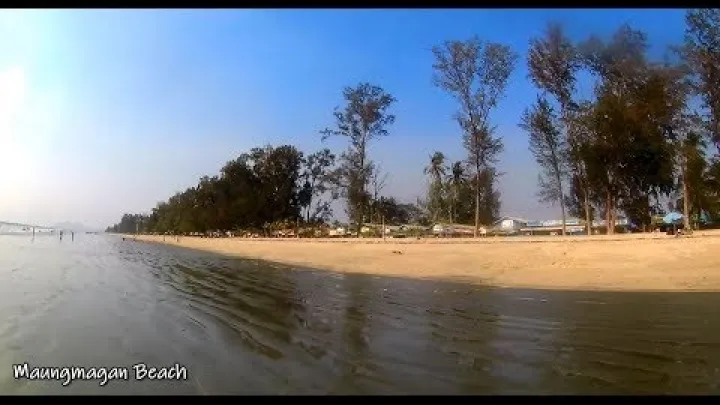
More remote beach stays around the Dawei Peninsula may offer greater seclusion and a stronger coastal setting. The trade-off is usually fewer services, harder road access, weaker communications, less food choice, and less emergency backup. A remote booking can also become a problem if the return route is interrupted or the accommodation closes unexpectedly.
Confirm a beach property directly before committing. Ask whether it is currently operating, whether it accepts foreign visitors, how guests reach it, what transport is available for the return journey, what payment methods work, and what happens if weather or local restrictions prevent arrival. Do not rely on an old room rate, review, or bungalow listing.
Choose a Base by Access, Not Just Scenery
The following comparison is a planning framework based on the historical character of each base. It is not a current availability or safety ranking.
| Base | Main strength | Main trade-off | Best fit |
|---|---|---|---|
| Dawei town | Services, food, transport, and flexible plans | Not directly on a remote beach | First visit or uncertain conditions |
| Maungmagan | Closer coastal setting and beach access | Fewer town services and transport alternatives | Confirmed short coastal stay |
| Remote beach | Seclusion and a rural coastal experience | Harder access and limited emergency backup | Confirmed access with flexible plans |
Choose a remote base only when transport reliability, daylight, food supply, connectivity, and a return option are clear. For a short trip or an uncertain trip, staying in Dawei town usually provides the most resilient logistics.
Getting to Dawei and Moving Around
Dawei has historically been connected by air and overland routes, but route existence and route operation are separate questions. Build transport plans around confirmation and flexibility.
Arrive by Air When Flights Are Operating
Dawei Airport serves the city and has historically handled domestic connections. Flight schedules, carriers, routes, and operating decisions can change because of commercial, security, weather, or infrastructure conditions.
Check a current airline or airport source close to departure. An archived route map or third-party booking page may show a service that is no longer operating, may not accept the traveler you are booking for, or may not run on the date required. The existence of Dawei Airport does not guarantee a usable route for a particular foreign traveler.
Allow generous time for connections and avoid an itinerary that depends on a same-day onward transfer. Keep a plan for a cancellation, a changed route, limited seats, or a delayed arrival. If the flight cannot be confirmed through a current operator, treat it as unavailable for planning purposes.
Compare Bus and Rail Connections
Buses and the Tanintharyi rail corridor have historically provided overland links between Dawei, parts of southeastern Myanmar, and Yangon through longer regional journeys. These trips can be slow and uncomfortable even under normal conditions. Current security decisions, infrastructure problems, road conditions, and operator choices can make historical timetables unreliable.
An Easybook page shows that a Dawei-to-Yangon bus booking channel exists. Treat such a listing as a lead, not as proof that the entire route is currently running. Confirm the departure point, operating date, foreigner eligibility, boarding instructions, cancellation policy, and any changes directly with the operator.
Rail information requires the same caution. A historical route description can explain how Dawei fits into the railway network, but it does not establish a current train timetable or a practical option for a foreign visitor. Do not build a tight itinerary around a historical schedule.
Get Around Town and Reach the Peninsula
For short visits, the central area has historically been manageable on foot. Walking can be useful for seeing streets, markets, tea shops, and nearby religious sites without arranging a vehicle for every stop.
Longer trips toward Maungmagan Beach and other peninsula locations have historically used taxis, motorbikes, or cars. Rural roads, dirt tracks, last-mile paths, fuel availability, and emergency support may be less predictable than in an established resort destination. A vehicle that is suitable in town may not be suitable for a remote beach road.
There is an important difference between independent motorbike travel and hiring a locally experienced driver or operator. Independent riding requires legal permission, a valid license, road confidence, navigation, fuel planning, and the ability to manage a breakdown. A verified local driver may understand the route and local controls better, but the operator still needs to be legally permitted and currently operating.
Use established routes, travel during daylight, and avoid unfamiliar remote tracks. Do not publish a transport plan around an assumed taxi fare, motorbike rental price, or car-hire rate. Obtain a current local quote and agree on the destination, waiting time, return arrangement, and payment method before leaving.
Build Backup Plans for Transport Disruption
A resilient Dawei itinerary assumes that one transport leg may fail. Leave generous time between connections, avoid tight same-day transfers, and keep accommodation and onward travel flexible enough to absorb a delay.
- Save reservations, tickets, identification documents, and operator contacts offline.
- Write down the address and phone number of each accommodation.
- Keep at least one realistic return option that does not depend on the same operator or route.
- Ask for confirmation of every air, bus, rail, or road leg shortly before departure.
- Use a clear cancellation rule: if the operator or relevant local authority cannot confirm a leg in time, postpone that leg rather than traveling to an uncertain departure point.
Road closures, checkpoints, weather, fuel shortages, security decisions, and cancellations can affect different forms of transport independently. A backup plan should therefore include time, money, and a safe place to wait, not only a second ticket.
What to See and Do in Dawei
Dawei's attraction mix is broad but simple: town heritage, religious sites, coastal landscapes, river settings, and ordinary food experiences. Treat each activity as conditional on access and local operating conditions.
Explore Dawei’s Historic Streets and Markets
The town center has been reported to contain British-era and locally influenced buildings. A walk through the central streets can provide more insight than a quick stop between beach transfers because it shows the relationship between older buildings, shops, homes, markets, and everyday movement.

Markets and tea shops are useful places to observe daily life and try simple local food. Riverside areas may provide another way to understand the town's connection with the Dawei River estuary. These are not merely waiting areas between organized attractions; they are part of the city's character.
Keep town exploration in daylight. Ask before photographing people, homes, shops, religious ceremonies, or officials. Avoid photographing checkpoints, security personnel, government facilities, or anything that could be interpreted as politically sensitive. A short, flexible walk is better than a fixed heritage route that assumes every street and building is accessible.
Visit Pagodas and Local Heritage Sites
Lawka Tharaphu Pagoda and Paya Ge Museum are possible cultural stops for a future Dawei itinerary. Their current opening hours, access arrangements, restoration status, entrance rules, and suitability for foreign visitors should be confirmed before they become fixed parts of a plan.

At pagodas and other religious places, wear modest clothing and remove shoes where required. Follow local instructions about photography, offerings, ceremonies, and movement through the site. Ask before photographing people, especially monks, children, worshippers, or private activities.
A museum or pagoda should be approached as a local cultural place, not only as a photo opportunity. Do not repeat unverified measurements, dates, or superlative claims from old travel blogs. If a named site is closed or inaccessible, replace it with a respectful daytime walk or another currently confirmed town activity.
Choose Beaches by Ease of Access
Organize the Dawei Peninsula beaches by practical access rather than by an unsupported ranking. Maungmagan Beach has historically been the nearer and more commonly discussed coastal option. Grandfather Beach, Sin Htauk Beach, and Paradise Beach have generally been considered more remote choices in travel planning, with greater dependence on roads, local knowledge, and suitable weather.

- Maungmagan Beach: Consider it when you want a coastal outing with a closer connection to Dawei and possible simple food or accommodation.
- Grandfather Beach: Treat it as a farther coastal option that may require more advance transport planning and a confirmed return.
- Sin Htauk Beach: Check road access, local permission, and the availability of services rather than assuming that a historical listing is active.
- Paradise Beach: Confirm the route, accommodation, and weather suitability separately; a remote setting can reduce alternatives if plans change.
Remote beaches may involve rough roads, walking sections, limited accommodation, and few alternatives if a booking or return journey fails. Current permissions, road conditions, weather, and local advice should determine which beach, if any, is appropriate on a particular day.
Add River, Seafood, and Everyday Food Experiences
The Dawei River and its estuary may provide a setting for a local boat excursion. This is an operator-dependent activity, so confirm the route, departure point, permissions, weather limits, and return time. Ask what safety equipment is provided and whether properly fitting life jackets are available before boarding.
Food experiences can be more reliable when approached as ordinary local activity rather than as a promised restaurant itinerary. Seafood, tea-shop snacks, market foods, and the regional sweet known as upha moe may be part of the local food experience, but availability varies by season, supply, opening hours, and current operations.
Choose locally owned eateries only when they are legally operating and doing so does not increase risk for residents or visitors. Avoid filming sensitive conversations, political activity, security events, or people who have not agreed to be recorded.
Best Season and Weather Planning
Seasonal averages can help with long-term planning, but they are only one part of a Dawei travel decision. Weather can directly affect beach roads, boats, daylight, and the ability to return to town.
Use November to February as a Historical Dry-Season Baseline
Historical travel and climate summaries commonly treat roughly November through February as the more practical period for beach travel in Dawei. This window is generally used as a planning baseline because it is associated with less rain and easier conditions for outdoor activities than the wetter part of the year.
Do not interpret this as a cool season. Dawei remains warm and humid, so visitors should plan for sun, heat, hydration, and clothing that works in a tropical coastal environment.
Seasonal averages do not override security, transport, or access restrictions. Use November to February only as an initial preference, not as a guarantee that a beach, road, boat, or hotel will operate.
Expect Heat, Monsoon Rain, and Flooding Risks
The hotter part of the year can make walking, waiting for transport, and riding a motorbike uncomfortable. Plan shorter outdoor periods, shade breaks, drinking water, and an early return if heat affects concentration or energy.
During wetter months, heavy rain can produce rougher water, flooding, muddy access roads, and slower travel. Dirt tracks, mangrove paths, small bridges, and last-mile roads can become difficult or unusable. A route that appears short on a map may be impractical after rain.
Weather also affects accommodation and emergency response. A delay at a remote beach may require an unplanned overnight stay, while a boat operator may cancel with little notice. Avoid precise month-by-month promises unless they are supported by current local weather information.
Match Each Day Trip to Current Conditions
Use this short morning checklist before leaving Dawei town for a remote beach or river activity:
- Check the current forecast and expected rainfall for the destination.
- Ask about recent rain and the present condition of the road, track, bridge, or walking section.
- Confirm that a boat operator is running and that the water conditions are acceptable.
- Calculate daylight for the complete outward and return journey, not only the activity itself.
- Confirm a reliable return vehicle, driver, or boat and keep the contact details offline.
- Consider the latest security and access information together with the weather.
After heavy rain, or when an operator cannot confirm conditions and a return plan, cancel the remote outing. Use a town-based alternative instead, such as a short daytime walk, a currently open cultural site, a market, or a local meal. A canceled excursion is preferable to being stranded on a difficult road or coast.
Costs, Health, Connectivity, and Responsible Travel
Dawei requires contingency planning because prices, services, communications, and emergency support may be less predictable than in a mature tourism market. Plan for flexibility instead of relying on one precise budget or one source of information.
Plan Costs With Ranges, Cash, and a Contingency
Build a Dawei travel budget around categories rather than an old daily figure. Include accommodation, airport or bus transfers, local transport, food, beach excursions, possible permits, connectivity, and an emergency reserve. Remote trips can cost more than expected when a driver must wait, a journey takes longer, or an extra night becomes necessary.
Older room rates, bus fares, taxi prices, and motorbike rentals can become misleading because of inflation, fuel costs, availability, and currency changes. A price displayed online may also apply only to a particular date or payment method. Obtain current quotes and confirm whether the price includes waiting time, return travel, entrance costs, luggage, or other charges.
Carry a practical cash reserve if this is legal and safe for your journey, but do not assume that every payment method will work everywhere. Confirm whether accommodation, transport, and food providers accept your intended payment method. Keep emergency funds separate from the money used for daily spending, and avoid carrying an itinerary that leaves no financial room for delay.
Prepare for Health and Emergency Limitations
Official travel advice warns that healthcare and emergency support in Myanmar may be limited or inadequate, particularly away from major centers. Do not assume that Dawei's status as a regional capital means it has reliable intensive care, rescue services, or rapid evacuation from a remote beach.
Travel insurance should cover the actual destination and include medical evacuation if a suitable policy is available. Read exclusions carefully, especially those related to official travel warnings, civil unrest, adventure activities, motorbike use, and remote areas. If insurance will not cover the journey, that is an important reason to postpone.
Carry essential medicines, copies of prescriptions, basic personal health information, and written emergency contacts. Keep a plan for leaving the area if appropriate treatment is unavailable. Tell a trusted person where you are staying and how they can reach you, while avoiding promises that local rescue or evacuation will be immediate.
Plan for Connectivity and Offline Information
Mobile data, internet access, electricity, and network coverage may be interrupted or weaker outside the town center and along the peninsula. Do not make a remote excursion dependent on a live map, a single phone number, or an online booking page.
Download offline maps and save reservations, transport details, accommodation addresses, identification documents, and important contacts before leaving a reliable connection. Carry a charged phone and a backup power source where practical. Keep paper copies of essential information in a secure place in case a device fails.
Use caution with politically sensitive photographs, messages, and online activity. Do not assume that a private conversation, photograph, or social media post will remain private. Share only the information necessary for safety and logistics.
Travel Respectfully Under Uncertain Conditions
Respect local customs at pagodas, markets, homes, villages, and places of work. Ask before taking photographs or entering private spaces, dress appropriately at religious sites, and avoid blocking roads or disrupting ceremonies.
Never photograph security personnel, checkpoints, military facilities, protests, or politically sensitive events. Do not ask residents to comment on conflict or politics for a recording. A visitor's curiosity can create risk for the person being filmed or questioned.
Tourism during conflict involves ethical complexity. Businesses and communities will not all view visitors in the same way, and a visitor cannot assume that spending money is always harmless or helpful. Use locally owned services only when they are legally operating and when doing so does not expose staff, hosts, drivers, or other residents to additional risk.
Build a Flexible Future Dawei Itinerary
A flexible itinerary should have one main activity per day, a town-based replacement, and enough time to return before dark. The following plans are frameworks, not fixed schedules.
One Day: Focus on Dawei Town
Use one day for a low-commitment introduction to Dawei. Begin with a daytime walk through the central streets and reported historic areas. Continue to a market or tea shop, where you can observe daily life and try food without depending on a distant reservation.
Afterward, visit one pagoda or museum that has been confirmed as open and accessible, such as Lawka Tharaphu Pagoda or Paya Ge Museum if current information supports the visit. Choose one site rather than attempting several distant stops. Finish with a local meal and return to your accommodation before dark.
If a site is closed, replace it with another central walk, a market visit, a tea shop, or a riverside area that is currently appropriate. If weather or access conditions are uncertain, keep the entire day in town. This is the most adaptable plan because it does not depend on a long peninsula road journey.
Two to Three Days: Add One Coastal Excursion
For two days, keep Dawei town as the base and use the first day for the central streets, market, food, and one confirmed cultural site. Use the second day for Maungmagan Beach or another currently verified coastal stop, provided the road, permissions, weather, and return transport are confirmed.
For a third day, add only one farther beach or a river activity if the operator and return route are dependable. Grandfather Beach, Sin Htauk Beach, Paradise Beach, or a boat excursion should not be combined in one rushed day. Select one anchor activity and leave time for slow roads, waiting, and an early return.
A beach accommodation can work for travelers who have confirmed access and accept limited services, but town remains the more resilient base when conditions are uncertain. Keep at least one buffer period for cancellations, heavy rain, route restrictions, or an earlier departure. If a critical transport leg cannot be confirmed, substitute a town day rather than forcing the original plan.
Final Takeaway: Plan Dawei for the Right Moment
Dawei offers a distinctive combination of a historic regional town, the Dawei River estuary, Buddhist and cultural sites, local food, and beaches across the Dawei Peninsula. Its long-term appeal is clear, but its present suitability depends on official travel advice, foreign visitor access, transport operations, weather, medical preparation, and the ability to leave if plans change.
For a future trip, start with the advisory and access decision, use Dawei town as the flexible logistical base, treat remote beaches as conditional excursions, and budget time and money for disruption. When conditions genuinely support travel, a slower and more adaptable plan will serve Dawei better than an overpacked beach itinerary.
Select area
Create a post
Posting is free and no registration is required.