Monywa Travel Guide: Sights, Routes, Seasons & Safety
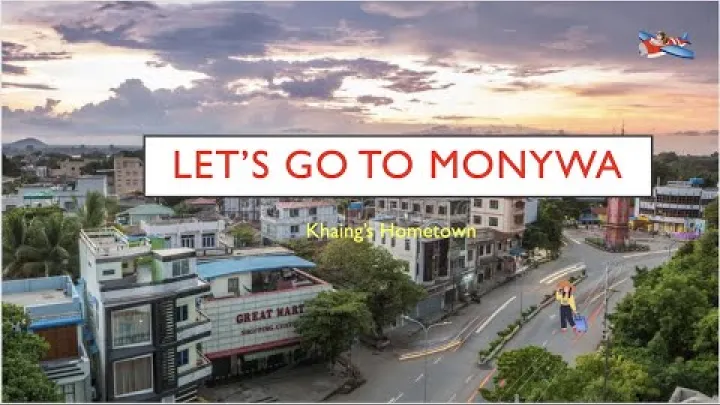
Planning a Monywa trip requires two kinds of information: the destination’s lasting cultural appeal and a current decision about whether travel is feasible. Monywa lies on the eastern bank of the Chindwin River in Central Myanmar’s dry zone, with major Buddhist landmarks outside the city and local markets and river areas in the urban core. This Monywa travel guide covers attractions, routes from Central Myanmar, places to stay, seasons, costs, transport and practical conduct. Because current access and security information can change quickly, use the historical destination context as planning background rather than as a promise that every route or site is operating.
Before You Plan: Current Conditions and Access
Monywa has been described in travel material as a useful Central Myanmar stop, but present-day feasibility must be considered before the itinerary itself. Start with official information, then make only the reservations and local arrangements that remain suitable for the conditions and your own risk tolerance.
Read the Current Travel Advisory Before Choosing a Route
Begin with the current official travel advisory, not with an old blog itinerary, hotel listing or route report. The U.S. Embassy Yangon page records a Department of State advisory renewed on May 8, 2026 and notes that protests and demonstrations against military rule can occur. That is national-level guidance, not a precise assessment of every street in Monywa, so read the full advisory and any relevant guidance from your own government.
Use this decision sequence before choosing a route:
- Confirm that entry into Myanmar and movement toward Monywa are permitted for your nationality, travel purpose and planned route.
- Check whether roads, checkpoints, permits and the attractions you want to visit are currently accessible.
- Ask your insurer whether the trip is covered under the latest advisory and whether medical evacuation or cancellation protection applies.
- Confirm that you have working communication options, emergency contacts and a realistic way to leave the area if plans change.
- Only then consider accommodation, drivers or transport bookings, preferably with flexible terms.
A local hotel, driver or guide may have useful information about conditions on a particular day, but local confirmation cannot override official restrictions. If the latest guidance advises against travel or the required movement cannot be confirmed, postponing the trip is the appropriate planning decision.
Separate Long-Term Destination Appeal from Present-Day Feasibility
Historically, Monywa appeared in overland itineraries linking better-known Central Myanmar destinations such as Mandalay and Bagan. Travelers used the city as a base for Buddhist monuments, river-area excursions and a less tourism-focused experience of the Lower Chindwin region.
That background explains why older Monywa travel guides may show a cluster of day trips and onward routes. It does not establish that a bus, boat, guesthouse, checkpoint crossing or religious site is operating now. Route changes, closures, permits, security restrictions and limited current reporting can affect a city-level itinerary even when the destination remains visible on maps and booking websites. Read older material for geography and cultural context, then treat every operational detail as separate information.
Understanding Monywa and Its Setting
Monywa is easier to understand as a regional travel node than as a conventional resort destination. The central city provides markets, transport and local services, while the best-known religious and craft attractions are spread outside the urban core.
Monywa's Location, Layout, and Regional Role
Monywa stands on the eastern bank of the Chindwin River in Sagaing Region, within Central Myanmar’s dry zone. For a first-time visitor, the useful orientation is simple: central streets and markets form the everyday city area; Monywa Bus Station is on Bogyoke Road; the riverfront lies toward the Chindwin; and major excursion sites are outside the center. The exact ease of moving between these points depends on current transport and road conditions.
The river setting is part of Monywa’s identity and helps explain its historical importance as a commercial and transport point for the Lower Chindwin area. Audley Travel presents Monywa as a city on the Chindwin associated with Buddhist shrines and pagodas. That description is useful for understanding the destination, but it should not be read as a current statement about boat services or visitor access.
What Monywa Feels Like Compared with Bagan and Mandalay
Monywa is generally approached as a provincial base rather than as a large archaeological tourism center like Bagan or a major metropolitan destination like Mandalay. Its appeal comes from the combination of nearby Buddhist monuments, local markets, river culture and ordinary urban life. Visitor services are historically more limited and less concentrated than in the country’s most established tourist bases.
This makes Monywa most suitable for travelers interested in religious art, regional history, craft production and a slower cultural itinerary. It is less suitable for someone who needs a wide choice of international hotels, frequent scheduled excursions or a highly predictable visitor infrastructure. Avoid describing the city as guaranteed to be authentic or untouched. It is a living regional center, and respectful travel means accepting that markets, neighborhoods and workshops are not arranged as performances for visitors.
Top Places to See Around Monywa
The main Monywa attractions form a mixture of monumental Buddhist sites, cave heritage, local commerce and craft traditions. A practical itinerary should select fewer places and allow time for travel rather than treating every landmark as a guaranteed stop.
Thanboddhay Pagoda and the Bodhi Tataung Area
Thanboddhay Pagoda and the Bodhi Tataung area are the main southeast excursion cluster associated with Monywa. Thanboddhay is known for its large scale and dense Buddhist imagery, while Bodhi Tataung is associated with monumental statues and a broad devotional landscape. The visual experience is very different from walking through the temple plain at Bagan: these sites emphasize large religious structures, strong vertical forms and concentrated imagery.
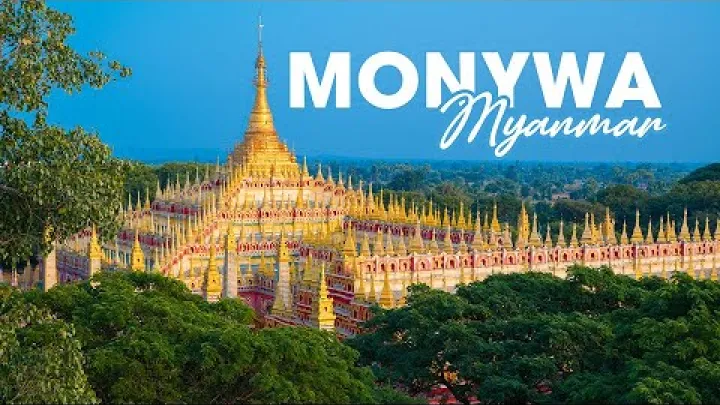
In more stable periods, travelers commonly combined the two areas in one half-day or full-day outing because they can be considered together as a southeast route from the city. Plan the visit around cooler hours, especially if there is substantial outdoor walking. Wear clothing suitable for an active religious site, carry sun protection and remove footwear where required. Rules can differ between locations, so follow signs and local instructions rather than assuming that one temple’s practice applies everywhere.
Phowintaung Cave Complex
Phowintaung is a Buddhist cave complex west of Monywa, associated with religious images, murals and a long devotional tradition. The site’s appeal is not only the individual artwork. The combination of caves, sandstone landscape and changing light creates a heritage experience that rewards slow observation rather than a quick collection of photographs.
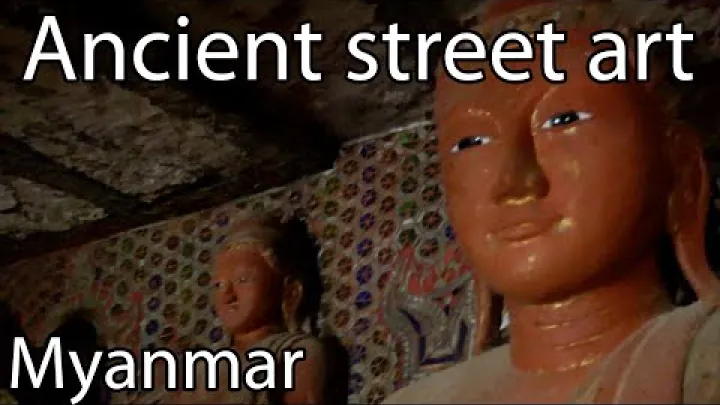
Older descriptions may refer to ferry, bridge or road arrangements used to reach the caves at different times. Those details are historical background, not a current excursion plan. Audley Travel provides broad destination context for Monywa, but precise cave history, conservation information, opening hours and present access require stronger current site or heritage information. If the excursion is permitted, confirm the route and opening status close to the visit, allow for uneven ground and do not assume that a former day trip remains available.
Markets, the Riverfront, and Kyaukka Lacquerware
Monywa’s central market and riverside areas provide a way to see local commerce and daily routines when conditions permit. The market is more useful as an observation of regional food, household goods and trading patterns than as a formal attraction. The riverfront can also help explain the city’s relationship with the Chindwin, although travelers should not assume that a developed promenade, regular boat tour or organized visitor activity is available.
Kyaukka is a nearby lacquerware-producing village and adds a craft dimension to a Monywa itinerary. A visit may include shops, workshops or conversations about the production process, but access should be treated as a privilege rather than an entitlement. Ask before entering a workshop or photographing workers, buy directly where appropriate and accept that a shop may be closed or unable to receive visitors. A respectful visit supports local businesses without turning a residential or religious community into a staged attraction.
How to Get to Monywa and Get Around
Monywa has historically been connected to other Central Myanmar destinations by road, with local vehicles used for excursions beyond the center. The practical question is not only which route exists in older travel information, but which service and movement option is available for the dates and traveler concerned.
Road Links from Mandalay and Bagan
Historically, travelers reached Monywa overland from Mandalay, Sagaing and Bagan by bus, shared vehicle, private car or taxi. This makes Monywa look like a possible link in a Central Myanmar road itinerary, particularly for travelers combining major cultural destinations with the Lower Chindwin area.
Do not publish an old travel time or fare into a new itinerary without a current operator or terminal confirmation. A route shown on a map, a journey listed by a search platform or a description written before recent changes does not prove that the service is running. Treat Mandalay–Monywa and Bagan–Monywa connections as route concepts until the actual departure point, permitted travel, vehicle arrangement and arrival plan are known.
Monywa Bus Station and Transfers into Town
Omio identifies Monywa Bus Station as being on Bogyoke Road in Monywa. This is a useful local anchor for planning accommodation and arrival directions, but a directory listing should not be treated as a guarantee that schedules, ticketing, parking or other facilities remain current.
Historically, onward travel from the station could involve a local taxi or tuk-tuk. Confirm the current option locally, and keep the accommodation name, address, telephone number and a backup contact stored offline before leaving the terminal. Confirm the current bus, driver and return arrangements directly, and keep an offline backup route in case a connection is cancelled or a planned road cannot be used. The station’s status as a recognized transport point does not by itself establish that any particular transfer is available or suitable.
Local Transport to Nearby Attractions
Tuk-tuks, taxis, motorcycles and hired drivers have historically been used to reach attractions outside Monywa’s center. For a cluster such as Thanboddhay and Bodhi Tataung, a driver who waits during the visit can be simpler than arranging separate one-way journeys. That convenience depends on the driver understanding the route and being able to return at the agreed time.
Before departure, agree on the destination, the waiting period, the return point and the total price. Use short, clear wording and write the arrangement down if possible. Do not assume that a meter, ride-hailing application or regular tourist vehicle is available. A driver’s familiarity with an area can help with logistics, but it does not replace the need for the route to be permitted and suitable on that day.
Chindwin River Travel as Historical Context
Monywa’s position on the Chindwin once made it a starting point for travelers heading farther upstream. Older accounts describe river journeys as multi-day logistical projects, with early departures, changing river conditions and fewer services than a normal road transfer. This history helps explain why the river is important to Monywa’s regional role.
Do not use an old boat account as a current itinerary. A river journey would require confirmation of permits, operator availability, security conditions, water levels, foreign access, departure arrangements and a reliable way to return or continue overland. For most first-time visitors, river travel is better treated as historical context unless every part of the plan has been confirmed through current official and local channels.
Where to Stay and How Long to Spend
Historically, Monywa made sense as a base because city services and transport were closer at hand than the outlying religious sites. The current choice of base should follow confirmed accommodation and transport options, not an assumption that the former visitor market is operating normally.
Using Monywa as a Base for Nearby Sights
A central Monywa base can bring the market, bus station and everyday city streets within easier reach while allowing separate excursions toward the southeast pagoda cluster or western river-area attractions. It can also reduce the pressure to change hotels between every part of the itinerary. This is the main historical reason travelers stayed in town rather than attempting to visit every site while passing through.
One or two nights has been a useful historical planning template: one night for a compact city stop and two nights for a more relaxed combination of the city and a permitted excursion. Treat that template as conditional. A stay is worthwhile only if the accommodation is operating, the relevant sites can be reached and the transport plan leaves a realistic margin for changes.
Choosing Accommodation and Confirming Services
The historical accommodation market in Monywa consisted mainly of local hotels and guesthouses, while current online inventory may be incomplete or outdated. A long list of properties or an aggregator rating is less useful than direct confirmation of the services you actually need.
Before paying, ask the property to confirm:
- Whether the room and reception are operating on your dates.
- How power, water, air conditioning or fans and basic maintenance are handled.
- Which payment methods and currencies are accepted, and whether a deposit is required.
- Whether staff can arrange a driver or explain current arrival options.
- What the cancellation, refund and date-change terms are.
- How you can contact the property if mobile data or online messaging is unreliable.
Named properties and online prices should be treated as leads for direct rechecking, not as current endorsements. A smaller local property may be practical if it can clearly confirm its operating status and essential services; a highly rated listing is not useful if the information cannot be confirmed.
Choosing Between a Day Stop, One Night, and a Longer Visit
A same-day stop is appropriate only when the road connection, arrival timing and intended site opening are already confirmed. It leaves little room for a delayed vehicle, a missed connection or a change to an excursion, so it works best for a traveler with a simple route and a clear onward arrangement.
One night historically offered more time for Monywa’s central areas and reduced the pressure of combining a monument visit with a same-day transfer. A longer stay or a Chindwin extension should be reserved for travelers who have confirmed accommodation, transport, permissions and a realistic exit plan. Do not add remote river travel simply to make an itinerary appear more complete.
Best Time to Visit Monywa
Seasonal weather affects comfort, road conditions and how much outdoor sightseeing is realistic. It should be considered after the current access decision, not used as a substitute for it.
Cool, Dry Season: The Most Comfortable Period
November through February is generally the most comfortable period for outdoor sightseeing in Central Myanmar. Conditions are usually drier and milder than during the hottest part of the year, which helps with temple grounds, cave approaches, markets and open landscapes.
Plan outdoor activity for the morning or late afternoon when possible, and use the middle of the day for rest or shorter indoor stops. Long-term climate information from Climate-Data.org is useful for understanding broad seasonal patterns, but its averages are not a forecast for a particular travel date.
Hot Season: Plan Around Midday Heat
March through May is generally the hottest period in Monywa. Heat can make long temple visits, exposed roads and several consecutive excursions tiring, especially when shade and refreshments are limited.
For any permitted visit, start early, carry drinking water, use sun protection and plan a midday rest. Reduce the number of sites rather than rushing through them. Heat can also influence the choice between an open local vehicle and a more comfortable private arrangement, but better timing does not remove other access, medical or transport considerations.
Monsoon Season: Build in Weather and Road Flexibility
June through September is generally wetter and more humid. Rain can make rural excursions less predictable, particularly on secondary routes serving caves, villages and hill sites. The main road network and a smaller local road should not be assumed to have the same condition.
Check the current forecast and rural road conditions before each excursion. Keep the schedule flexible, leave time for delays and be willing to cancel a visit if weather or road conditions deteriorate. A dry morning does not guarantee that a later return route will remain comfortable or passable, so avoid building the day around several unverified connections.
Costs, Booking, and Practical Logistics
Old Monywa prices are not a dependable basis for a current budget. A better approach is to identify every cost category, request a current total and retain enough flexibility to change the plan.
How to Plan Costs Without Misleading Old Prices
Build the budget around accommodation, intercity road transfers, hired vehicles, local transfers, meals, drinking water, site-related expenses and any guide or operator fees. Add a reserve for a changed route, an extra night or a replacement vehicle if the original connection does not operate.
The available information does not support a dependable current Monywa fare table or daily budget. Historical kyat amounts and online prices marked from a low starting rate may no longer apply, may exclude transport or taxes, or may describe a different room or service. Ask each hotel, driver or operator for the current price, what it includes, the payment method and the cancellation terms. Carry a payment backup and do not commit more money than you can afford to lose if the plan changes.
Connectivity, Offline Information, and Backup Contacts
A Monywa itinerary should not depend entirely on mobile data, online maps, booking platforms or real-time messaging. Coverage, electricity, application access and response times may not be consistent across a city stay and a rural excursion.
Store the following offline before departure:
- The accommodation name, address and telephone number.
- Transport contacts, pickup instructions and the agreed destination.
- Copies of identity documents, insurance details and important permits.
- Key addresses in a form that can be shown to a driver or hotel worker.
- A simple check-in plan with a trusted person outside the area.
Keep route information in more than one place. A paper note, saved map area and written telephone number can be useful when a phone battery is low or a connection is unavailable. Arrange a backup way to receive information about a closure or route change rather than assuming that one messaging service will work throughout the trip.
Build a Flexible Booking Workflow
Confirm the main transport arrangement before committing to tightly timed attraction visits or nonrefundable accommodation. When available, choose refundable or adjustable bookings and obtain written confirmation of pickup points, inclusions, waiting time and cancellation terms.
Leave daylight, route and exit buffers between major parts of the itinerary. A plan with one central base, one confirmed excursion and an open period is more resilient than a schedule built around several unverified buses, boats and site visits. Flexibility is not an invitation to ignore restrictions; it is a way to avoid being stranded by a change that cannot be controlled by a local booking agent.
Safety, Health, and Cultural Conduct
Monywa planning also requires attention to emergency support, environmental conditions and behavior at active religious and residential sites. These topics are separate from the attractions themselves and should be included before any booking is finalized.
Plan for Limited Emergency Support
Do not treat Monywa as a normal low-risk tourist stop simply because older travelers describe its temples or because a hotel appears in an online search. The U.S. Embassy Yangon advisory should be read together with the guidance of your own government and insurer. Emergency, medical and consular support may be constrained, especially away from major urban services.
If travel is permitted and you decide to proceed, share the itinerary and accommodation details with a trusted contact. Confirm that insurance includes the activities and destinations you are considering, understand evacuation limitations and keep essential contacts available offline. Avoid unnecessary night travel and isolated transfers. Stories from other travelers can describe their own experience, but they cannot establish current safety for a specific route, date or nationality.
Water, Heat, and Rural Excursion Precautions
Carry sealed drinking water or use water treated in a way recommended by a qualified medical professional. Bring essential personal medicines, sun protection and clothing suitable for heat and strong exposure. Pack enough for the planned outing rather than assuming that every rural stop will have the supplies you need.
Rural excursions require a practical return plan. Confirm the route, available services and the ability to return before dark, especially when traveling toward caves, villages or less-serviced areas. For vaccinations, prescription medicines, personal health conditions and travel insurance, seek professional medical advice and consult current government health guidance. General heat and water preparation should support a travel decision, not disguise a route that is otherwise unsuitable.
Temple Etiquette and Respectful Photography
At Buddhist sites, follow posted instructions and local requests. Remove footwear where required, dress modestly, keep a quiet manner and avoid blocking worshippers or ceremonies. Rules can differ between Thanboddhay, Bodhi Tataung, Phowintaung and smaller religious places, so site-specific instructions take priority.
Ask before photographing worshippers, ceremonies, monks, workers or private spaces. The same principle applies at Monywa’s market, Kyaukka workshops, villages and river communities. Spend locally where appropriate, ask permission before entering a work area and accept a refusal without argument. Respectful photography allows the place to remain a religious or residential setting rather than turning everyday life into a visitor display.
Final Monywa Travel Planning Checklist
Use this checklist to turn the destination overview into a responsible plan:
- Read the current official advisory and confirm that your entry and movement plans are permitted.
- Confirm the operating status of the accommodation, transport links and attractions you intend to use.
- Keep the Monywa Bus Station location on Bogyoke Road, your accommodation address and transport contacts available offline.
- Choose a realistic length of stay based on confirmed connections, not on an old fixed itinerary.
- Request current prices directly and keep a payment and booking backup.
- Pack water, essential medicines and sun protection for permitted excursions.
- Follow local instructions at religious sites and ask before photographing people, workshops or private spaces.
Monywa can be a rewarding subject for future planning because its Chindwin setting, Buddhist landmarks, markets and craft traditions offer a different perspective on Central Myanmar. The responsible Monywa travel guide is not the one with the most stops; it is the one that separates historical appeal from current feasibility and leaves room for an informed decision.
Select area
Create a post
Posting is free and no registration is required.