Monywa Budget: Daily Travel Costs in Myanmar
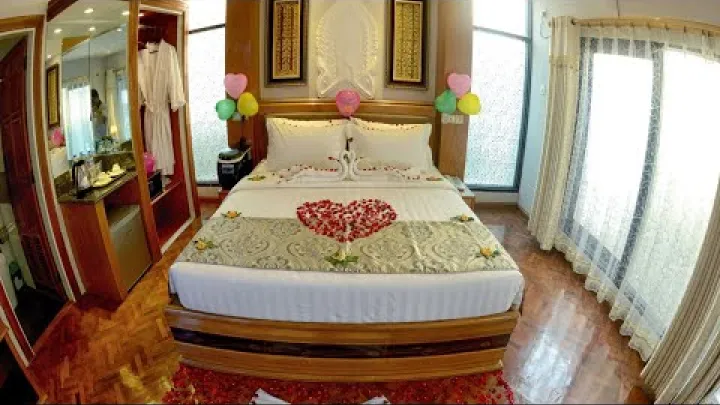
A Monywa travel budget can remain modest, but the total changes quickly when you add a private room, long rides to outlying sights, or resort accommodation. Ordinary local food and low-fee religious attractions may cost relatively little, while transport and one-off arrival costs can become the largest expenses. This guide gives practical daily ranges for budget, mid-range, and comfortable travel in Monywa. It also explains accommodation, food, local transport, attraction fees, seasonal cost pressures, cash planning, and ways to reduce the total without removing the experiences that brought you to the city.
Monywa Budget at a Glance
The most useful way to estimate a Monywa budget is to separate recurring daily spending from one-off travel costs. Your room, meals, city transport, and ordinary sightseeing make up the daily amount. Travel into Monywa, travel onward, and a private vehicle for a distant attraction should be added separately.
Budget Daily Spending for Independent Travelers
A practical low-cost planning band is about US$25–40 per person per day. This assumes an economical private room or a shared room, mainly local food, modest city transport, and mostly free or low-fee sights. The lower end is easier for two people sharing a room. A solo traveler paying the full room price should allow more, particularly when the room costs close to US$30.
The figures below are planning amounts, not guaranteed current prices. USD conversions are approximate and date-sensitive. The daily band excludes long-distance arrival and departure, visas, travel insurance, major shopping, and unusually expensive private excursions.
| Budget line | Illustrative amount | Main assumption |
|---|---|---|
| Stay | US$10–15 shared, or US$20–30 solo | Low-cost private room |
| Food | US$4–8 | Mostly local meals, with drinks and snacks controlled |
| Local transport | US$3–10 | Short city transfers and limited sightseeing travel |
| Activities | US$1–5 | Low-fee sights and modest donations |
| Daily total | About US$25–40 | Works best when the room and transport remain economical |
This tier suits travelers who are willing to choose local eateries, walk when practical, and organize outlying visits carefully. It does not mean that every day will cost the same. A quiet city day may stay near the lower end, while one day with a hired vehicle to Bodhi Tataung or the Phowintaung cave complex can exceed the normal daily allowance.
Mid-Range Daily Spending for More Comfort
Allow roughly US$50–80 per person per day for a more comfortable Monywa trip. This range can include a better private room, regular sit-down meals, paid local transport, and selected sightseeing rather than only low-cost activities. Two people sharing a room may remain close to the lower end, while a solo traveler or someone using private transport can move toward the upper end quickly.
The difference from the budget tier usually comes from four upgrades: a more comfortable room, more restaurant meals, transport arranged for convenience rather than the lowest possible price, and a larger activity allowance. A hotel breakfast, bottled drinks, air-conditioned dining, or an extra waiting hour for a driver can each add to the day without being obvious in the initial room or vehicle quote.
This is an assembled planning range based on accommodation and food anchors in Monywa plus broader Myanmar travel-budget comparisons. It is not a live city tariff, and it should not be read as a promise that every mid-range hotel or restaurant falls into one fixed price bracket.
Comfortable Daily Spending with Resort Stays and Private Transport
For resort-style accommodation, private vehicles, premium dining, and packaged sightseeing, start with a planning threshold of about US$90 per person per day. There is no reliable fixed upper limit for this tier. A comfortable budget can rise substantially when one traveler pays for a large room, a vehicle for a full day, waiting time between attractions, or an organized tour.
The main cost drivers at this level are lodging and transport, not ordinary local meals or small attraction fees. Win Unity Resort Hotel is a named resort-style option to consider, but a current nightly price should be obtained for the actual dates rather than inferred from a budget hotel listing. Paying more may buy grounds, a pool, a larger room, breakfast, or a quieter base. It may not make every sightseeing trip cheaper or more convenient.
Use US$90 as a decision point rather than a verified local price. If comfort is the priority, request current room and vehicle quotes first, then add food, entrance fees, and a contingency amount. Keep packaged tour prices separate from this daily Monywa estimate because a tour can include services that a normal hotel day does not.
Accommodation Costs in Monywa
Accommodation is often the largest controllable part of a Monywa travel budget. Compare the total payable room rate, the number of people sharing it, included meals, and the distance to the places you plan to visit. A lower headline rate is not always cheaper if it leads to repeated long vehicle hires.
Budget Rooms and Guesthouses
A cautious planning range for a reputable budget room is about US$20–30 per room per night, provided the dates, room type, taxes, and availability are checked. One sample listing for Present Hotel shows a rate around US$19 nightly and about US$20 total for a sample date on Hotels. This is useful as a local anchor, but it is a dated booking example rather than a guaranteed current rate.
Other booking snapshots can also place some Monywa budget rooms in the low-US$20s. Availability may be limited, and a room that appears inexpensive may exclude breakfast or require payment of a refundable deposit. Check whether the displayed amount is per room or per person and whether taxes, service charges, and extras are included.
Sharing changes the calculation substantially. A US$24 room costs US$12 per person when two people share, before any additional charges. A solo traveler pays the full room rate, so the same accommodation can make the difference between a US$25–40 budget day and a day above that range.
Mid-Range Hotels and Resort-Style Stays
For planning purposes, use about US$30–50 per room per night for a provisional mid-range private room, and US$60 or more for higher-end or resort-style accommodation. These are broad benchmarks, not current quotes for every property in Monywa. A current date search is essential when accommodation is central to your decision.
Room size, grounds, breakfast, location, pool access, air conditioning, and the booking channel can matter more than the label mid-range. A simple city hotel may provide better value for a sightseeing-focused trip, while a resort may be worthwhile for travelers who plan to spend more time at the property. If the hotel is outside the city or far from your preferred restaurants, include the cost of repeated transfers before comparing it with a central room.
Resort accommodation can increase the daily total even when local meals and attraction fees remain modest. Consider whether the extra cost buys a feature you will actually use. If you will leave early for Thanboddhay Pagoda, Bodhi Tataung, and Phowintaung, a cheaper room with convenient access may provide more value than unused resort facilities.
Breakfasts, Deposits, Taxes, and Room Sharing
The advertised nightly rate may not equal the amount needed at check-in. Breakfast can be listed separately, and taxes or service charges may appear only in the final booking stage. Some properties may also request a refundable cash deposit. These conditions vary by property and booking channel, so do not treat a headline price as the complete cash requirement.
Present Hotel booking examples illustrate why the terms matter: a displayed room price and a separate breakfast or deposit condition should be read as separate lines. A refundable deposit is normally a temporary cash requirement rather than a final trip expense, but it still reduces the money available during check-in. Ask the hotel to confirm the total payable amount, included services, deposit amount, and refund conditions before arrival.
Room sharing can provide better value than choosing the absolute cheapest room. For example, two travelers might share a US$40 room and pay US$20 each, while a solo traveler paying US$24 for a smaller room may have less comfort at a higher per-person cost. Compare the confirmed all-in cost per person, not only the room's advertised nightly figure.
Food and Drink Costs in Monywa
Food can remain one of the easier parts of a Monywa budget to control. Local eateries and street food usually support the lowest-cost travel style, while hotel breakfasts, imported drinks, snacks, and tourist-oriented restaurants add to the daily allowance. Keep food, souvenirs, and other small purchases in separate categories so that a low food estimate remains meaningful.
Local Eateries and Street Food
A local travel commentary reports that visitors can spend less than US$5 on food and souvenirs in Monywa, especially when relying on street food and local eateries, as described by Takeyourbackpack. Because that figure combines food with souvenirs and small purchases, it should be treated as a reported low-cost scenario rather than an itemized average for every meal.
For a transparent food budget, separate the choices into tiers. A very economical traveler can set a low allowance for local meals and water. A moderate allowance adds drinks, snacks, breakfast, and one occasional sit-down meal. A higher allowance allows hotel breakfast, air-conditioned venues, imported beverages, dietary substitutions, or larger meals without needing to monitor every purchase.
Do not use the under-US$5 figure as a universal promise. It may suit a traveler who eats locally and buys little else, but it may not cover a preference for packaged drinks, café food, frequent snacks, or special dietary requirements. A practical budget should include the meals you will actually choose, not only the cheapest available pattern.
Sit-Down Restaurants and Optional Food Upgrades
Chindwin River Restaurant is a named sit-down option that can serve as a reference point for travelers who want a more comfortable meal. It is described as reasonable but above many local alternatives. Without a current menu total, it is better to treat the venue as an optional upgrade rather than assign it an unsupported per-person price.
One restaurant meal can move a food budget above the local-eating baseline, especially when it is combined with imported drinks, dessert, hotel breakfast, or snacks. When exact spending matters, check the current menu or ask for prices before ordering. Platform price categories can indicate a general position, but they are not precise daily rates.
A simple method is to choose a local-meal baseline, add one optional upgrade, and keep drinks and souvenirs separate. For example, you might eat local food for most meals, choose one sit-down dinner, and set a separate small allowance for beverages. This gives you comfort without making restaurant dining part of every meal.
Local Transport and Access Costs
Transport is the least certain part of a Monywa budget because systematic current city fares are not well documented in the available evidence. Short city transfers and longer sightseeing hires should not be treated as the same expense. The distance to an attraction, waiting time, vehicle type, fuel costs, and the return arrangement can matter more than the attraction fee itself.
Getting Around Monywa and Reaching Nearby Sights
Do not publish or rely on one fixed taxi or motorbike tariff for every trip. A short city transfer may be priced differently from a vehicle hired for several hours. A dated example of a three-hour motorbike-taxi trip toward Bodhi Tataung is useful only as a rough indication that an outlying visit may be charged by duration or arrangement, not as a current standard fare.
Separate your transport plan into three lines: short movement within Monywa, travel to Thanboddhay Pagoda or Bodhi Tataung, and a longer trip to the Phowintaung cave complex. If the vehicle waits while you visit a site, waiting time may be part of the quote. A return arrangement is also important because a low one-way price may not leave you with a practical way back.
Before leaving for an outlying sight, confirm the current total fare, expected duration, waiting time, vehicle type, and return arrangement with the driver or your hotel. Ask whether fuel, parking, and any additional waiting are included. Put the agreed amount and services into your personal budget before treating the excursion as affordable.
Independent Transport Versus an Organized Day Tour
An organized tour can be much more expensive than an independent Monywa day, but it may include convenience that is difficult to reproduce locally. A Mandalay–Monywa full-day listing is priced at about US$158 per person on Best Price Travel. The listing describes hotel pickup, a guide, and transport to Monywa, but this is a quoted package rather than a normal local fare or a typical daily cost of staying in Monywa.
The package may appeal to travelers who value a planned vehicle, guide service, pickup, waiting time, and fewer logistical decisions. Independent travel may cost less, particularly for two or more people who can share a vehicle, but it requires more coordination and leaves more uncertainty around transport and timing.
Request an itemized written quote before paying. It should show transport, guide service, meals, entrance fees, hotel pickup, return transport, vehicle size, and group size. Compare the complete package with an independent plan rather than comparing US$158 only with the price of a short local transfer.
Intercity Travel as a Separate Budget Line
Travel into and out of Monywa is a one-off cost, not part of the normal daily city budget. Add it as a separate arrival row and departure row. The final amount depends on your origin, vehicle class, number of transfers, terminal access, and whether you use a private segment to connect with a bus or minibus.
Obtain current bus, minibus, or private-vehicle quotes for your actual origin. A price from a distant or complex route should not be used as the standard cost of visiting Monywa. Likewise, a cheap daily estimate inside the city can be misleading if the arrival journey takes a large share of the total trip budget.
For a short stay, divide the arrival cost across only a few days, so the effective daily cost may appear high. A longer stay spreads that one-off expense over more nights, although you should not assume a hotel discount unless the property confirms one.
Attraction Fees and Sightseeing Costs
Monywa's sightseeing budget has two different parts: official or stated attraction fees, and the cost of reaching and spending time at the attraction. Religious sites may have low entry costs, but a private vehicle, waiting time, guide, donation, or photography charge can make the complete outing more expensive.
Pagodas, Bodhi Tataung, and Phowintaung Fees
A time-specific travel listing gives the Thanboddhay Pagoda entrance fee as about 3,000 kyats, shown as approximately US$1.50 at the source date, on Trip.com. Keep the kyat amount in your planning notes and treat the USD conversion only as a comparison aid. Exchange-rate movement can change the dollar equivalent without changing the local fee.
Thanboddhay Pagoda, Bodhi Tataung, and the Phowintaung cave complex are the main local sightseeing anchors for a Monywa itinerary. The available evidence does not establish current exact fees for Bodhi Tataung or Phowintaung, so do not fill those gaps with a made-up tariff. Entry, donations, informal guide payments, photography charges, parking, and transport should each be considered separate lines.
Before committing to a private vehicle or a full-day sightseeing plan, verify the current opening status and entrance fee for each attraction locally. Also ask whether a stated fee is official, required, or a voluntary donation. A low pagoda entrance fee does not prove that the complete excursion will be inexpensive if the vehicle is the main cost.
Guides, Donations, and Optional Sightseeing Costs
Informal services can be useful at places where interpretation improves the visit, but their prices are not always official or standardized. A historical anecdotal benchmark reports a payment of about 5,000 kyats for roughly two hours for a guide at Phowintaung. Treat this only as background, not as a current required rate.
If you accept informal guiding, agree on the service, duration, meeting point, and expected payment before the tour begins. This avoids confusion about whether the guide is showing the cave complex, providing translation, or simply helping with directions. Keep the payment separate from the official entrance fee.
Donations, camera charges, small contributions, and optional guides can be modest individually but noticeable across several sites. Independent visitors can keep the activity budget low by visiting without a guide when they are comfortable doing so, while reserving money for local assistance when it adds clear cultural or practical value. Do not describe a fee as optional if the site or staff clearly require it.
What Can Push a Monywa Budget Higher
The largest increases usually come from limited availability and fixed-cost decisions rather than from an ordinary local meal. A full hotel, a vehicle needed at short notice, or a private trip to several distant sights can move a careful budget into the mid-range or comfortable tier.
Peak Season, Weekends, and Local Events
Travel commentary commonly presents November to February as a favorable period for visiting Monywa. Favorable weather can also mean greater demand for rooms and sightseeing transport. Weekends, festivals, and local events may reduce availability and leave travelers choosing a more expensive room or accepting a higher private-hire quote.
There is not enough current evidence to assign a fixed seasonal percentage increase. Instead, think in terms of availability risk. If only one suitable room remains, the choice may be between paying more, changing dates, changing your base, or reducing the length of the stay. A similar effect can occur when several visitors need vehicles for the same attraction on a busy day.
Compare several dates when your schedule allows. A small change in travel dates can save more than repeated efforts to reduce the cost of individual meals. Treat a low-season sample rate as an example for planning, not as a normal price for every weekend or local event period.
Currency Changes, Cash, and Payment Limits
Kyat prices and USD conversions in travel sources are time-specific. Exchange-rate movement can change the apparent dollar cost even when a hotel, driver, or restaurant has not changed its nominal kyat price. For this reason, use USD figures in this guide to compare budget levels, not as guaranteed payment amounts.
Plan to carry cash for small eateries, drivers, attraction fees, and hotel deposits. The available evidence does not establish current ATM coverage or card acceptance in Monywa, so do not assume that every provider accepts cards or that one withdrawal point will solve all payment needs. Ask your accommodation which payment methods are accepted and what cash you may need at check-in.
Check the current kyat price and exchange rate on the day of payment. Keep a separate reserve for transport, deposits, and emergencies instead of counting every kyat in the daily spending amount. A refundable deposit may not be part of the final cost, but it still needs to be available when you arrive.
Practical Ways to Save Money in Monywa
The most effective savings usually come from sharing fixed costs and choosing a travel base that fits your sightseeing plan. Cutting a small amount from every meal is less valuable if one unnecessary private vehicle or poorly chosen hotel adds much more to the trip.
Choose the Right Base and Share Fixed Costs
A well-priced city hotel may leave more money for sightseeing, while a resort-style base may provide more comfort but increase the daily total. Compare the confirmed room rate with the transport required to reach restaurants and attractions. A convenient base is not automatically the cheapest if it causes repeated long transfers.
Sharing a private room is one of the simplest ways to reduce the per-person accommodation cost without lowering the room standard. A US$24 room costs US$12 each for two travelers, while a solo traveler pays the full amount. The same principle applies to a private sightseeing vehicle when the driver allows several passengers and the route is suitable for everyone.
Compare an all-in room rate that includes the charges you will actually pay. A cheaper headline rate can lose its advantage if breakfast, taxes, deposits, or frequent transfers are added later. For a short visit, prioritize a base that reduces unnecessary transport; for a longer stay, a comfortable resort may be worth considering if you expect to use its facilities.
Keep Food and Sightseeing Local
Rely mainly on local eateries and use more expensive sit-down venues selectively. One restaurant meal can provide variety without making restaurant dining the default for breakfast, lunch, and dinner. Keep drinks, snacks, souvenirs, and donations outside the core food line so you can see where the budget is going.
Low-fee religious and cultural sights can help keep the activity budget manageable, but the transport plan still matters. A modest entrance fee may be followed by a costly private vehicle to an outlying site. Reserve money for a driver or guide when that service meaningfully improves access or understanding, rather than paying for convenience that you will not use.
Do not create false savings by omitting the return journey, a required entrance payment, a hotel deposit, or a vehicle's waiting time. A complete low-cost plan is more useful than an attractive total that cannot be followed once you are in Monywa.
How to Build Your Total Monywa Budget
A simple formula makes it easier to adapt the ranges to your dates, room choice, and sightseeing plan. Keep uncertain transport and resort costs as quote-needed fields instead of replacing them with false precision.
A Simple Monywa Budget Formula
Use this formula:
Total trip cost = nightly room cost divided by the number of occupants, multiplied by the number of nights, plus food, local transport, attraction fees, optional activities, contingency, arrival transport, and departure transport.
For a daily estimate, divide only the recurring parts by the number of travel days. Do not hide a long-distance bus, private transfer, or full-day vehicle inside the daily city figure. Keeping those items separate shows whether Monywa itself is inexpensive or whether the arrival journey is driving the total.
| Budget field | How to calculate it | What to record |
|---|---|---|
| Accommodation | Room rate × nights ÷ occupants | Taxes, breakfast, deposit, and room type |
| Food | Daily food allowance × travel days | Local meals, restaurant upgrades, drinks, and snacks |
| City transport | Estimated daily transfers | Short rides, waiting, and return movements |
| Sightseeing | Fees plus optional activities | Kyat entrance fees, donations, guides, and photography |
| Arrival and departure | Add as separate one-off lines | Bus, minibus, private segments, and terminal access |
| Contingency | Add a separate reserve | Price changes, extra waiting, deposits, and emergencies |
For uncertain items, write quote needed rather than inserting a number that looks precise. This is especially important for a private vehicle to Bodhi Tataung or Phowintaung, a resort room, and any organized tour. The formula should help you make decisions, not conceal uncertainty.
One-Day, Two-Night, and Longer-Stay Examples
For a one-day sightseeing plan with one overnight stay, use the daily bands as a starting point and show the components separately. A budget traveler might allow US$10–20 per person for a shared or economical room, US$4–8 for food, US$3–10 for local transport, and US$1–5 for low-fee activities. When these choices remain near their lower or middle values, the subtotal is about US$25–40 per person. Arrival and departure transport are extra.
A mid-range one-day plan might use US$20–35 per person for a shared private room, US$10–20 for food, US$10–20 for local transport, and US$5–10 for activities. That produces a planning subtotal of roughly US$50–80 when the transport plan is moderate. Private outlying transport, a solo room, or several restaurant meals can push it higher.
A comfortable one-day plan begins around US$40 per person for accommodation when sharing, US$15 or more for food, US$25 or more for private or highly convenient transport, and US$5 or more for activities. The resulting total begins around US$90, but it has no fixed upper limit because the room, vehicle, and tour arrangements are quote-dependent.
For a two-night, three-day stay, calculate the room twice and food three times. As an illustrative shared-room example, a US$24 room for two nights costs US$48 in total, or US$24 per person. Food at US$6 per person per day adds US$18, city transport at US$8 per day adds US$24, and low-fee sightseeing at US$5 adds US$5. A US$10 contingency would bring the illustrative subtotal to about US$81 per person, before arrival, departure, or a separate outlying vehicle.
A mid-range example could use a US$40 room shared by two people for two nights, US$15 per person per day for food, US$15 per day for city transport, US$10 for activities, and US$20 for contingency. That would be about US$160 per person before intercity travel. The number is an illustration of how comfort upgrades accumulate, not a current quote for a specific Monywa itinerary.
For longer stays, repeat the room, food, and ordinary city-transport lines for each day. Add a distant sightseeing trip only on the day it occurs, unless the driver quotes a multi-day arrangement. Arrival costs may represent less of the average daily total over a longer stay, but do not assume a hotel discount unless it is confirmed. Exclude visas, insurance, international travel, major shopping, and unusually expensive packaged tours from these examples unless you add them as separate lines.
Conclusion: Match Your Spending to Your Travel Style
A realistic Monywa budget starts at about US$25–40 per person per day for economical independent travel, rises to roughly US$50–80 for more comfort, and begins around US$90 when resort stays and private transport are central to the plan. The most important choices are the room arrangement, whether you share fixed costs, how often you eat at sit-down venues, and how you reach attractions outside the city. Keep arrival and departure separate, preserve a cash reserve, and treat transport and current kyat prices as the areas that need the most careful confirmation. With those lines visible, you can choose where to spend more for comfort and where a local option gives better value.
Select area
Create a post
Posting is free and no registration is required.