Sapporo Where to Stay: Best Areas for Every Trip
Choosing where to stay in Sapporo depends on whether your trip is centered on sightseeing, rail travel, nightlife, relaxation, or winter events. For most first-time visitors, Odori Park and the corridor toward Sapporo Station offer the best overall balance of access and convenience. Susukino and Nakajima Park suit different evening preferences, while Jozankei is better treated as an onsen destination than as a city sightseeing base. This guide compares Sapporo’s main areas, accommodation types, costs, and booking checks so you can choose a base that fits your itinerary.
Quick Answer: Where Most First-Time Visitors Should Stay
Sapporo is relatively easy to divide into practical lodging zones, but the best area changes with your daily plans. Start with the central corridor for a short urban visit, then move outward only when a specific priority makes the trade-off worthwhile.
Default Recommendation: Odori Park or the Central Corridor
For a first Sapporo visit, begin by looking for a hotel around Odori Park or between Odori Park and Sapporo Station. This central area combines sightseeing, food, shopping, subway access, and a direct connection to the underground pedestrian network. It is a useful default for travelers who want to explore without organizing every day around one transport route.
Odori Park gives the city a more open setting than the dense entertainment streets farther south. The station side is more practical for arrivals, departures, and rail journeys across Hokkaido. Between them, travelers can choose a location that balances access to central attractions with a reasonable route to trains and the Sapporo Municipal Subway.
This is a conditional recommendation, not a universal hotel ranking. Prices, room availability, noise tolerance, luggage, season, and the shape of your itinerary can all change the answer. Choose the neighborhood first, then compare individual hotels by their exact map location, room details, cancellation terms, and total price.
Choose a Different Base When Your Priority Changes
Choose Sapporo Station when rail access is more important than being close to the park or entertainment streets. Choose Susukino when restaurants, bars, ramen, and late-evening convenience are central to the trip. Nakajima Park is a better match for a quieter central stay, and Jozankei is the stronger choice when bathing, meals, and a resort atmosphere are the main purpose.
| Area | Best fit | Main trade-off |
|---|---|---|
| Odori Park | First-time sightseeing and events | Major events can increase crowds and demand |
| Sapporo Station | Rail travel and simple arrivals | More commercial and transport-focused atmosphere |
| Susukino | Nightlife and food | Some blocks are busy and noisy late at night |
| Nakajima Park | Quiet central and family stays | Some sights require a subway ride or longer walk |
| Jozankei | Onsen retreat and relaxation | Less convenient for intensive city sightseeing |
There is no need to stay in Susukino simply because it is famous, or at Sapporo Station simply because it is a transport hub. A neighborhood works well when it supports the way you will spend your evenings and move around each morning.
Sapporo Station and Odori Park: The Best Central Bases
Sapporo Station and Odori Park are the clearest choices for a central Sapporo stay. They are close enough to combine in one itinerary, but their atmosphere and practical advantages are different.
Sapporo Station for Rail Access and Wider Hokkaido Trips
Sapporo Station is the practical base for travelers arriving by rail, departing early, or planning several regional trips across Hokkaido. Staying nearby reduces the need to cross the city with luggage before a train and makes it easier to organize days around current JR services. It also suits business travelers who want a large transport and commercial center close to the hotel.
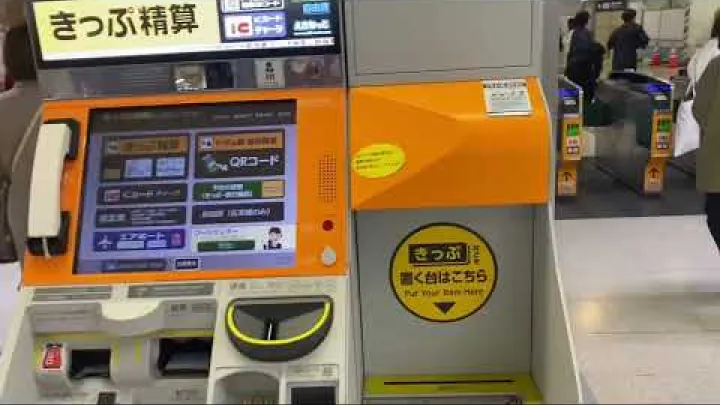
The station area offers shopping, restaurants, and connections toward the urban subway network. It can therefore work for sightseeing as well as transport, especially when your plans include areas outside central Sapporo. However, its character is more commercial and movement-oriented than the park-side atmosphere around Odori or Nakajima Park.
When reviewing current accommodation listings, do not treat the phrase near Sapporo Station as a precise location. The station complex has multiple exits and a hotel may be closer to one side than another. Look at the map pin, the actual entrance, and the route you will use with luggage. Separate rail convenience from general sightseeing convenience: a hotel can be excellent for trains without being the most pleasant base for walking to every central attraction.
Odori Park for Sightseeing, Events, and Central Walkability
Odori Park is the strongest general-purpose base for visitors who want central sights, food, shopping, and a more open urban setting. The park provides a clear reference point in the city center, with the Sapporo TV Tower, central streets, and access toward the station and Susukino. Nijo Market and Tanukikoji Shopping Street are also useful local anchors when comparing hotel locations on a map.
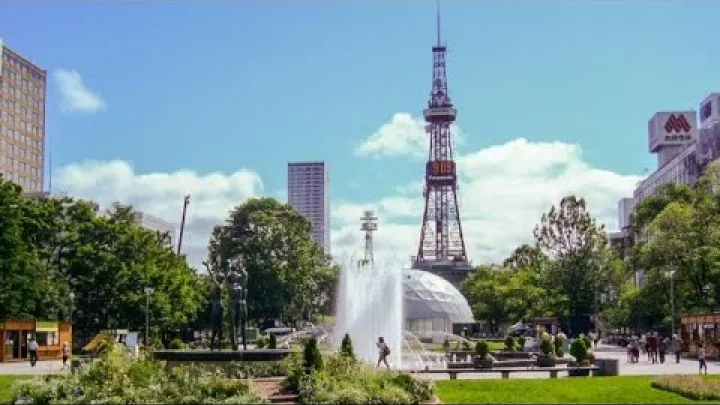
The exact edge of the park matters. A hotel on the north side may make the station and underground corridor more convenient, while one on the south or southwest side may shorten the route toward Tanukikoji and Susukino. The best location is therefore not necessarily the hotel closest to the middle of the park. Compare the side streets, the nearest subway entrance, and your likely morning and evening routes.
Odori Park can be especially convenient when the Sapporo Snow Festival or another central event is the main purpose of the visit. The same event role can also mean heavier crowds, faster sellouts, and higher prices. Check the dates for the year of travel and decide whether being beside the event is worth paying more, or whether a nearby central area would provide a better balance.
Chi-Ka-Ho and the Station–Odori Corridor in Winter
The station–Odori corridor can be a particularly practical lodging zone in winter because it includes access to Chi-Ka-Ho, the Sapporo Ekimae-dori underground walkway. The official Sapporo Tourism information describes it as an approximately 520-meter underground route connecting Sapporo Station and Odori Station, with a walking time of about ten minutes.
This connection expands the area that can function as a convenient base when snow, cold, or heavy luggage would make a fully outdoor walk uncomfortable. It can be useful for families with children, travelers carrying winter bags, and visitors planning several days around central events. A hotel between the two stations may offer a good compromise between rail access and Odori’s sightseeing position.
Underground access does not mean that every hotel has a direct indoor entrance. You may still need to walk outside from the correct station exit, cross a surface section, or carry luggage over conditions that are different from the route shown on a booking map. Before a winter stay, check current snowfall, walking conditions, and the official status of the underground route and station entrances. Also confirm which exit is practical for your property, because the nearest exit on a map is not always the easiest one with bags.
Susukino and Nakajima Park: Nightlife or Quiet
Susukino and Nakajima Park are both south of the central core, but they offer very different reasons to stay there. One prioritizes restaurants and entertainment; the other provides green space and a calmer return to the hotel.
Susukino for Nightlife, Dining, and Late Evenings
Susukino is Sapporo’s main entertainment district and suits travelers who want restaurants, bars, clubs, ramen venues, and late-evening activity close to their accommodation. Susukino Station provides a simple connection to Odori and the rest of the central corridor, while local food anchors such as Ramen Alley make the area useful for visitors planning meals around the neighborhood.
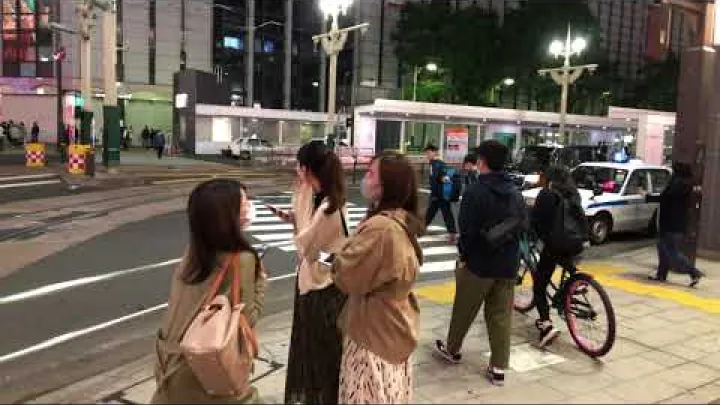
Staying in Susukino means that the walk back to the hotel can be short after dinner or drinks. That convenience is valuable when your itinerary is built around food and nightlife rather than early sightseeing. It also avoids having to plan the last subway journey of the evening. On the other hand, travelers who want quiet mornings or a less intense street environment may prefer to stay in Odori and visit Susukino for dinner instead.
Compare the hotel’s exact block rather than relying on the area name. Susukino contains busy commercial streets as well as quieter side streets, and individual hotels can feel very different depending on their entrance and surrounding businesses.
Susukino Trade-Offs for Families and Light Sleepers
The same density that makes Susukino convenient can affect comfort. Late-night street activity, traffic, restaurant deliveries, crowds, and adult-oriented venues may be close to some properties. A family or light sleeper does not necessarily need to avoid the district, but should treat room position and immediate surroundings as part of the booking decision.
Read recent hotel reviews for comments about street noise, elevators, corridors, and soundproofing, but interpret them carefully. Reviews describe one guest’s experience under particular conditions; they are not formal neighborhood crime statistics or a complete safety assessment. A quiet review may reflect a rear-facing room, while a noise complaint may reflect a lower floor facing a busy street.
If noise or nightlife surroundings matter, inspect the hotel’s exact block and request a higher-floor room before booking. Ask whether the room faces the street, whether soundproofing is specified, and whether the property can note a quiet-room preference. Families may find Odori Park or Nakajima Park more comfortable when an open setting and calmer evenings matter more than being steps from nightlife.
Nakajima Park for Quiet, Green Space, and Family Stays
Nakajima Park offers a quieter central alternative without requiring visitors to leave Sapporo. The park itself has green space, a pond, cultural facilities, and a different rhythm from the busiest entertainment streets. The area guide from Rakuten Travel highlights the park’s pond, observatory, concert hall, and urban park setting.
This area suits families, couples, longer-stay guests, and travelers who prefer a calmer place to return to after sightseeing. Nakajimakoen Station connects the neighborhood with central Sapporo, but some activities will involve the subway or a longer walk. That is a reasonable trade-off when park access, a less concentrated street atmosphere, or more space at the property is more important than immediate nightlife.
Do not assume that every hotel beside the park has the same level of quiet or the same family facilities. Check room size, bed configuration, breakfast, laundry, storage, and the route to Nakajimakoen Station at property level. Night-time walkability is best assessed through the actual route, lighting, nearby businesses, and your own comfort rather than through a broad label such as safe or quiet.
Jozankei Onsen: A Resort Base Outside Central Sapporo
Jozankei solves a different lodging problem from central Sapporo. It is a destination for bathing, meals, scenery, and relaxation, not simply a cheaper or quieter city neighborhood.
Stay in Jozankei When the Onsen Experience Is the Main Event
Choose Jozankei when the accommodation itself is a major part of the trip. An onsen stay can center on bathing, included meals, views, traditional room design, private bathing options, or time spent at the property. This makes the area a natural match for couples, relaxation-focused travelers, and visitors who want a slower segment after a busy city itinerary.
The official Jozankei Tourism accommodation directory lists a range of properties, including Jozankei View Hotel, Jozankei Manseikaku Hotel Milione, Shikanoyu, Hanamomiji, Jozankei Yuraku Souan, and GRAND BLISSEN. The list illustrates why Jozankei should be compared by property experience rather than by area name alone.
Read the meal plan, bath access, room style, private-bath rules, check-in time, and cancellation conditions carefully. Some guests want a full ryokan-style experience, while others prefer a resort hotel with more extensive facilities. Jozankei is less convenient than central Sapporo for intensive shopping, nightlife, and repeated city sightseeing, so the added value should come from the onsen stay itself.
Use Jozankei as a Split Stay Instead of a City Sightseeing Base
A two-base itinerary often gives Jozankei a clearer role. Spend the city portion near Sapporo Station or Odori Park, then move to Jozankei for one or more nights of bathing and relaxation. This avoids commuting back and forth while preserving access to central sights, markets, shopping, and evening dining.
The pattern works best when the trip is long enough to justify changing accommodation and when you want both urban activity and a slower resort experience. For a very short visit, the move may use too much time and create luggage-management work. In that case, staying in central Sapporo and treating Jozankei as a separate excursion may be simpler, depending on the day’s transport options.
If you plan to make Jozankei your only base, confirm the current bus or transfer arrangement with the property or an official Jozankei information source before booking. Check the departure point, service pattern, luggage arrangements, and any seasonal or road-related limitations. Do not promise yourself a fixed transfer time until the route is confirmed for your dates.
Sapporo Accommodation Types and Budget Levels
Sapporo offers several lodging formats, but the right choice depends on how much time you spend at the property and which services you need. Compare the experience included in the rate, not just the nightly room figure.
Business and Mid-Range Hotels for Reliable City Stays
Business and mid-range hotels are practical for short city stays, first visits, work trips, and travelers who value predictable facilities. They commonly compete on location, efficient rooms, breakfast, Wi-Fi, reception support, and sometimes a public bath or laundry area. Each of those features is property-specific, so read the current room and facility description rather than assuming that every hotel in the category offers the same package.
These hotels fit naturally around Sapporo Station, Odori Park, Susukino, and other central areas. A compact room may be perfectly suitable for one person who spends the day outside, but less comfortable for a family with large luggage or a remote worker who needs a desk. A central address also does not guarantee a quiet street, a large bathroom, or a spacious room.
Use current listings to compare the exact location, maximum occupancy, bed arrangement, breakfast price, laundry access, and cancellation flexibility. Choose a full-service mid-range hotel when support and convenience reduce planning effort; choose a simpler business hotel when the room is mainly a base for sleeping and storing luggage.
Hostels and Budget Stays for Solo and Long-Stay Travelers
Hostels can lower the cost of a Sapporo stay and are often a good fit for solo travelers, backpackers, flexible itineraries, and guests who enjoy communal kitchens or social spaces. They also offer a useful middle option when a private hotel room is too expensive but a shared dorm is not suitable. Check whether the property has private rooms, shared bathrooms, luggage storage, quiet hours, and a common area that matches your preferences.
A current Hostelworld listing page shows Sapporo hostel options from an indicative price of €13.29 and displays private-room examples such as Waya Hostel Sapporo, GRAND HOSTEL LDK SAPPORO, and SappoLodge. The page also shows guest-rating snapshots, including 8.9, 8.8, and 8.6 for listed properties at the time represented. These figures can change by date, occupancy, currency, and room type.
Compare dormitory prices per person with private-room prices per room, and use the same dates, taxes, occupancy, and cancellation conditions when comparing hostels with hotels. A private hostel room may improve privacy but still have shared facilities or fewer services than a hotel. Recent reviews are especially useful for checking cleanliness, noise, security arrangements, access, and the practical experience of storing luggage.
Luxury Hotels, Resorts, Ryokan, and Longer-Stay Formats
Luxury city hotels and Jozankei resort hotels provide different kinds of value. A luxury city hotel may prioritize service, dining, views, and a central address. A resort or ryokan may bundle meals, bathing, scenery, traditional rooms, or on-site experiences. Compare what is included before deciding that one is more expensive or better.
Ryokan-style lodging is most suitable when you want the stay to feel like a destination experience. Confirm whether meals are included, whether bathing facilities are shared or private, what clothing or room arrangements are provided, and how late you can arrive. In Jozankei, the room and meal plan may matter as much as access to the wider area.
Serviced apartments or apartment-style properties can be useful for families, remote workers, and longer stays, but only when the listing clearly verifies a kitchen, laundry, occupancy rules, storage, and location. Do not assume that Sapporo has a uniform supply of such accommodation or that an apartment listing provides hotel-style reception and housekeeping. Choose this format for self-catering and space only after confirming the facilities you actually need.
What Changes the Cost of a Sapporo Stay
The final cost depends on the neighborhood, accommodation type, travel dates, weekday or weekend demand, season, major events, room occupancy, and meal inclusion. A central hotel may cost more because of its location, while a Jozankei stay may appear expensive because meals, baths, and a destination setting are part of the package. A hostel may have a lower room rate but fewer private facilities.
When comparing prices, decide what you are paying for. The main value may be a short walk to a station, a larger room, breakfast, laundry, a kitchen, a quiet setting, or an onsen experience. Include transport costs when comparing Jozankei with a central hotel, and include breakfast or dinner when comparing a meal-included ryokan with a room-only rate.
Any rate displayed on a booking page is a time-sensitive snapshot. Record the currency, date checked, occupancy, room type, meal plan, taxes, fees, deposit, and cancellation deadline. Avoid mixing a per-person dorm rate, a private room, and a family hotel room into one simple price ranking.
Where to Stay in Sapporo by Traveler and Trip Type
The same area can be excellent for one itinerary and inefficient for another. Match the base to the time you will spend outside the hotel, the transport you will use most, and the atmosphere you want at the end of the day.
First-Time Sightseeing and Short City Breaks
For first-time sightseeing, stay around Odori Park or along the station–Odori corridor. This is the clearest default for reaching central food, shopping, and sightseeing areas with limited planning. Odori Park, the Sapporo TV Tower, Nijo Market, Tanukikoji Shopping Street, and Susukino can all serve as practical reference points when you compare locations.
Choose Sapporo Station instead when regional rail trips, airport arrival logistics, or an early departure dominate the itinerary. The station area is also a good choice when you plan to use Sapporo mainly as a starting point for wider Hokkaido travel. For a short city break, a central business or mid-range hotel usually reduces the effort of finding transport, meals, and basic services each day.
Do not spend too much time searching for a perfect district if your chosen hotel has a sensible route, suitable room, and fair cancellation terms. A well-located property in a nearby central zone can be more useful than a theoretically ideal area with a poor room or inconvenient access.
Families, Quiet Seekers, and Longer Stays
Nakajima Park and quieter parts of the Odori area are strong options for families, couples, and longer-stay guests who value park access and calmer evenings. A short subway ride can be a good trade-off when it provides more space, a better room arrangement, or a more comfortable return to the hotel after a full day outside.
For families, check maximum occupancy, bed configuration, bathroom arrangement, breakfast, laundry, storage, elevator access, and whether children can use the listed facilities. For longer stays or remote work, add desk space, Wi-Fi details, kitchen access, housekeeping frequency, and a place to dry or store clothing. These property details matter more than a general claim that an area is family-friendly.
Quiet atmosphere and formal safety assessment are different questions. Use the hotel’s map pin and the actual route to assess the surroundings, especially if you expect to return after dark. A park-side address can still have a busy road nearby, while a central hotel may have a quiet upper-floor room.
Nightlife and Food-Focused Trips
Stay in Susukino when walking access to bars, restaurants, ramen, and late-night activity is the main goal. Susukino Station and Ramen Alley provide clear local reference points, and the district connects easily with Odori for daytime sightseeing.
Choose Odori instead when you want to visit Susukino in the evening but prefer a calmer base. In either area, check whether the room faces the street, how high it is, and whether the property describes soundproofing. The difference between a convenient nightlife stay and a tiring one may be the room location rather than the neighborhood name.
Snow Festival, Skiing, and Regional Travel
Odori Park can be convenient when the Sapporo Snow Festival is the main purpose of the trip because the park is a central event setting. Demand, crowds, and availability can change sharply around major events, so check the dates for the relevant year and consider nearby Sapporo Station or Susukino if the preferred area is sold out.
Skiing requires a different decision. Sapporo is an urban base, and it should not automatically be treated as the most convenient base for every ski destination. A city hotel may work when you want restaurants and flexible evenings, but a resort-side property or a location near a confirmed transfer may reduce daily travel.
Before choosing a hotel for skiing or regional travel, identify the departure point, timetable, luggage rules, transfer arrangement, and flexibility available if weather affects service. Select Sapporo Station when rail or transfer logistics are central, but base that choice on the current operator information for your specific itinerary rather than on the station name alone.
Booking Checklist: Access, Comfort, and Current Availability
After choosing an area, compare properties using the details that affect your actual stay. A neighborhood label is only a starting point; the final decision should reflect the route, room, inclusions, and booking conditions.
Check the Route from Your Arrival Point to the Hotel
Open the hotel’s exact map pin and identify the station or bus stop you will use on arrival. Check the correct station exit, the surface route, crossings, slopes, stairs, elevators, and the distance you will walk with luggage. The same area label can cover very different routes from Sapporo Station, Odori Station, Susukino Station, or Nakajimakoen Station.
Underground access can be valuable in winter, but confirm whether the route actually connects to the hotel or ends at a surface entrance some distance away. Look for the exit that is practical with bags rather than simply the exit with the shortest map distance. A route that is easy without luggage may be tiring when carrying suitcases, using a stroller, or traveling with children.
For arrival and departure, confirm current airport, subway, rail, and Jozankei transfer information for the relevant time. Check the hotel’s instructions against the operator’s current route information, especially if you will arrive late or need an early connection. Use the hotel’s map pin to confirm the route from the arrival station or bus stop, including the correct exit and any luggage-unfriendly surface sections.
Match Room and Property Features to the Trip
Before booking, verify the details that affect comfort and practicality:
- Room size, bed configuration, and maximum occupancy.
- Private or shared bathroom and any restrictions on bath or onsen use.
- Breakfast, dinner, kitchen access, and whether each is included or charged separately.
- Laundry, luggage storage, Wi-Fi, desk space, and elevator access.
- Smoking policy, accessibility, room location, and quiet-room options.
- Check-in time, late-arrival procedure, and any reservation requirement for facilities.
These checks have different importance for different travelers. A solo guest may prioritize price and a social common area, while a family may need beds, storage, and a private bathroom. A remote worker may need a dependable workspace and laundry, while a couple choosing a ryokan may care more about meals, bathing, and room style.
Use the property’s current page and recent reviews together. Do not assume that an amenity is included because it appears in a broad booking category, and do not treat a public bath, breakfast, kitchen, or private bath as available without checking the property’s own conditions.
Compare Live Prices, Event Dates, and Cancellation Terms
Compare the exact travel dates, number of guests, room type, meal plan, taxes, fees, deposit, and cancellation deadline. A room-only rate and a dinner-included ryokan plan are not direct alternatives, and a dormitory price per person should not be compared with a private room price without adjusting the occupancy.
Major events and seasonal demand can change central availability and rates. If Odori Park is full or unusually expensive, compare Sapporo Station, the wider Odori corridor, Susukino, and Nakajima Park rather than abandoning the trip. A flexible central alternative may preserve access while providing better value.
Before final payment, verify the relevant event dates and current transport conditions through official or operator information. Compare the total price and cancellation terms for the exact travel dates before paying. The simple decision rule is: choose the area first, then choose the property by full cost, room suitability, route, and cancellation flexibility.
Final Recommendation: Match the Base to Your Priorities
For most first-time visitors, Odori Park or the central corridor toward Sapporo Station is the best place to begin the search. Move closer to Sapporo Station for rail and regional travel, choose Susukino for immediate nightlife and dining, select Nakajima Park for a quieter central stay, and reserve Jozankei for a dedicated onsen experience or a well-planned split stay. Once the area is chosen, let the exact route, room features, included meals, total price, and cancellation terms determine the hotel.
Select area
Create a post
Posting is free and no registration is required.