Hakodate Budget: Daily Travel Costs, Prices, and Saving Tips

A realistic Hakodate travel budget depends less on one fixed citywide price than on your room type, travel dates, food choices, and paid highlights. As a general planning guide, allow about ¥8,000–¥12,000 per person per day for a budget trip, ¥13,000–¥20,000 for a mid-range trip, or ¥21,000–¥30,000 for a comfortable trip. This guide breaks down Hakodate, Hokkaido travel costs for accommodation, local meals, transport, attractions, cash, and seasonal demand. It also shows how to keep local highlights such as the Hakodate Morning Market, Bay Area, Motomachi, Goryokaku, and Mount Hakodate within a controlled budget.
How Much Does a Hakodate Trip Cost?
The most useful Hakodate trip cost estimate separates recurring daily spending from one-time expenses. Lodging, meals, local transport, and ordinary sightseeing can be estimated per day, while airport transfers, intercity rail or bus travel, and special tours should be added separately. All amounts below are approximate planning ranges in Japanese yen, not live quotations.
Daily Hakodate Budget Ranges for Three Travel Styles
The table gives a practical starting point for one adult. The lodging figures are shown per person, so they assume either a dormitory bed or a private room shared with another traveler. A solo traveler paying for an entire room may need to use the upper end of a range or add more. A day with both the Mount Hakodate Ropeway and Goryokaku Tower can also be more expensive than the average.
| Travel style | Lodging | Food | Local transport | Activities | Daily total |
|---|---|---|---|---|---|
| Budget | ¥3,000–¥6,000 | ¥2,000–¥3,000 | ¥600–¥1,000 | ¥0–¥2,000 | ¥8,000–¥12,000 |
| Mid-range | ¥6,000–¥10,000 | ¥4,000–¥6,000 | ¥600–¥1,000 | ¥1,200–¥2,400 | ¥13,000–¥20,000 |
| Comfortable | ¥10,000–¥16,000 | ¥6,000–¥10,000 | ¥1,000–¥2,000 | ¥1,800–¥3,600 | ¥21,000–¥30,000 |
These daily ranges include lodging, food, Hakodate City Tram or bus travel within the city, and ordinary admission fees. They exclude flights, major intercity travel, shopping, travel insurance, private taxis, and other personal expenses. Hotel listing pages such as Expedia hotel listings can help identify the available range, but a headline price is not a guaranteed total for your dates.
What to Include and Exclude from a Daily Estimate
Start with costs that repeat each day, then add items that happen only once. This keeps an inexpensive sightseeing day from being confused with an arrival day that includes an airport transfer.
- Recurring costs: accommodation, breakfast and other meals, local tram or bus fares, and the attractions planned for that day.
- One-time or itinerary-specific costs: airport buses, travel to Shin-Hakodate-Hokuto, longer intercity connections, special tours, luggage services, and shopping.
- Room allocation: a private room is priced per room, while the daily budget is usually discussed per person. Two people sharing a ¥12,000 room pay ¥6,000 each before other costs.
For a simple three-night example, a solo traveler might pay ¥7,000 per night for a basic private room, ¥2,500 per day for food, ¥800 per day for local transport, ¥1,800 for one paid highlight, and ¥1,400 for a round-trip airport bus to Hakodate Station. The illustrative total is about ¥34,100 per person, excluding flights and shopping. A couple sharing a ¥12,000 room pays ¥18,000 each for three nights rather than ¥21,000 each, so the same plan becomes about ¥31,100 per person, or ¥62,200 for two people.
If you stay three nights but have four days of meals, add another food allowance. If you arrive at Yunokawa Onsen instead of central Hakodate, use the relevant airport transfer instead of the station bus. The calculation is simple: multiply each daily category by the number of days, multiply the room price by the number of nights, and then add one-off costs.
Hakodate Accommodation Costs by Type, Area, and Season
Accommodation is usually the largest flexible part of a Hakodate travel budget. The best value depends on whether you need a bed near Hakodate Station, a private room, a view in the Bay Area, or a hot-spring stay in Yunokawa.
Hostels, Guesthouses, and Basic Rooms
Dormitory beds, guesthouses, older inns, and simple business rooms are the main lower-cost choices. They can work well for a solo traveler who spends most of the day outside, but the lowest advertised price may involve a shared bathroom, a small room, limited reception hours, or no breakfast. Check whether laundry, luggage storage, lockers, and air conditioning are included if those services matter to your trip.
Research snapshots have shown hostel beds around US$26 and guesthouse examples around US$36–US$69. Using an illustrative exchange rate of ¥150 to US$1 only for mental arithmetic, those figures are approximately ¥3,900 and ¥5,400–¥10,350. The exchange rate changes, and the quoted amount may be a minimum for selected dates rather than a price available for your stay. For planning, a dormitory allowance of roughly ¥4,000–¥8,000 per person and a basic private-room allowance of roughly ¥6,000–¥12,000 per room can be a useful starting point, but the room or bed basis must be confirmed.
The trade-off is often more important than the lowest number. A room farther from the main sightseeing areas may save money but add tram fares and time. A guesthouse with a kitchen or laundry can reduce food and service costs, while a room with no breakfast may look cheap but require an early convenience-store purchase before visiting the Hakodate Morning Market.
Mid-Range and Comfortable Accommodation
Business hotels and standard tourist hotels are the practical mid-range category. They generally offer a private room, predictable check-in, and convenient access to the station or tram network. As a broad planning allowance, start around ¥10,000–¥18,000 per private room for a standard mid-range stay. A more comfortable bay-area hotel, boutique room, or well-equipped onsen property may begin around ¥18,000–¥35,000 or more per room, depending on the date and what is included.
Do not treat a booking-site entry price as a citywide average. One platform may show a low price from a limited selection, while another may calculate an average for a different group of dates, room types, or occupancy levels. Compare the actual room total and then divide it by the number of guests. A ¥20,000 room is expensive for one person but moderate at ¥10,000 each for two people.
Breakfast, a view, a larger room, hot-spring access, dinner, and a traditional ryokan meal can all move a property into the comfortable category. Yunokawa Onsen may justify the premium if bathing facilities are a central purpose of the trip. If you only plan a short visit to the baths and will spend the rest of the time around the station, Bay Area, or Motomachi, a simpler base may leave more money for food and activities.
Choosing a Base: Station, Bay Area, Goryokaku, or Yunokawa
Choose a base by comparing the total cost of the room, transport, and time rather than asking which district is always cheapest.
| Base | Works well for | Budget decision |
|---|---|---|
| Hakodate Station and Morning Market | Arrivals, business hotels, early food | Useful for short stays and simple connections |
| Bay Area and Motomachi | Waterfront atmosphere and historic walks | Can reduce short local rides, while views and location may raise room prices |
| Goryokaku | Fort, park, and tower visits | Good when several days focus on eastern sightseeing areas |
| Yunokawa Onsen | Hot-spring-focused stays | A premium can be worthwhile when bathing and ryokan services are priorities |
Hakodate Station is convenient when you arrive by train or want easy access to the Morning Market. The Bay Area and Motomachi suit travelers who value walkable historic streets and waterfront scenery. Goryokaku can make sense for a fort-focused itinerary, while Yunokawa is a deliberate resort-style choice rather than simply a cheaper substitute for central Hakodate.
How Season and Booking Timing Change Lodging Costs
Accommodation demand can change more than attraction admission prices. Typical booking snapshots often point toward late winter and some shoulder periods, including February, March, and November, as potentially less expensive. Summer and other high-demand periods can cost more, especially when travelers compete for a limited number of rooms. These are general tendencies, not a guaranteed cheapest-month calendar.
| Booking situation | Possible budget effect | Useful approach |
|---|---|---|
| Weekday and lower-demand dates | More room choice and sometimes lower rates | Compare flexible dates before choosing the hotel |
| Weekend or holiday dates | Fewer rooms and higher total cost are possible | Reserve earlier or consider a nearby base |
| Event or blossom-demand period | Availability may tighten around popular areas | Decide whether the seasonal experience is worth the premium |
Before booking, compare the final accommodation total for the exact dates, occupancy, taxes, fees, breakfast, and cancellation terms. A flexible rate can be useful when demand is uncertain, while a nonrefundable rate should only be chosen when the dates and room details are settled. Check the total at checkout rather than relying on a minimum displayed in a search result.
Food Costs in Hakodate
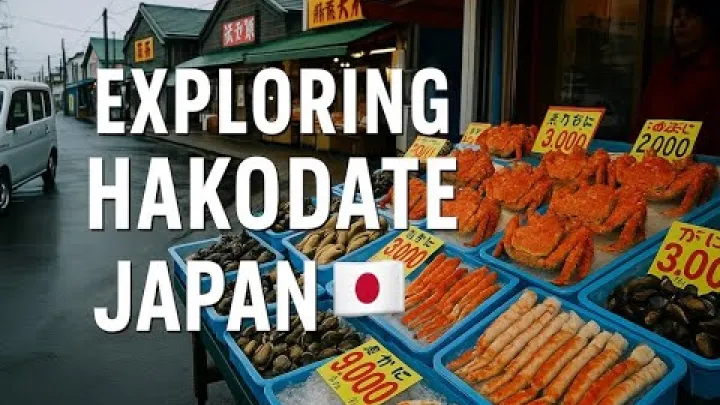
Hakodate is easy to approach at several food-price levels. You can eat local seafood at the Hakodate Morning Market, but you can also build an inexpensive day around bento, ramen, convenience-store items, and Lucky Pierrot. The important choice is how often you want premium seafood rather than whether every meal must be expensive.
Low-Cost Everyday Meals
A strict food budget of about ¥2,000–¥3,000 per person per day is possible when you mix inexpensive local meals with simple breakfast and snack choices. It leaves limited room for drinks, desserts, crab, large seafood bowls, or repeated market visits.
| Meal | Planning allowance | Examples |
|---|---|---|
| Breakfast | ¥300–¥600 | Convenience-store items or a simple bento-style choice |
| Lunch | ¥650–¥1,100 | Lucky Pierrot set or salt ramen |
| Dinner | ¥450–¥900 | Hasegawa Store yakitori bento or another inexpensive meal |
| Snack and drink | ¥200–¥500 | Small snack, tea, or soft drink |
Representative examples include a Hasegawa Store yakitori bento around ¥450–¥750, a Lucky Pierrot set meal around ¥650–¥900, and salt ramen around ¥870–¥1,100. These are planning ranges, not promises for every branch, portion, or menu. A strict day may use the bento for dinner, while a more comfortable low-cost day may choose ramen and add a market snack.
Local Dishes and Representative Price Bands
Hakodate food costs can be organized into three useful bands. The local examples below help you choose an experience without assuming that all seafood is a luxury. A local food guide such as Japan Activity provides representative dish and main-meal ranges, but individual menus can differ.

- Under or around ¥1,000: Hasegawa Store yakitori bento at approximately ¥450–¥750, a Chinese chicken burger or set at Lucky Pierrot around ¥650–¥900, and salt ramen at about ¥870–¥1,100.
- Standard local meals: ordinary main dishes often fall around ¥1,200–¥2,500. This is a useful band for a normal restaurant meal, ika-meshi, or a more substantial lunch that is not a premium seafood course.
- Morning Market choices: smaller seafood items may be around ¥500–¥1,000, while live squid sashimi, when offered, may be about ¥1,200–¥1,500. Availability and size affect the final amount.
- Premium seafood: seafood bowls at the Morning Market can range from approximately ¥1,850 to ¥6,000, depending on ingredients and portion. Crab and specialty seafood can move beyond that range.
This spread makes the Morning Market useful for more than one type of traveler. You can buy a small local item and continue walking, choose a standard bowl, or plan a premium kaisen-don as the main splurge of the day. Around the station, Lucky Pierrot and Hasegawa Store provide recognizable local anchors for travelers who want to control the average cost.
How to Budget for Seafood and Special Meals
For a traveler who wants one market meal plus ordinary ramen, fast food, bento, or an izakaya-style meal, a balanced food budget is roughly ¥4,000–¥6,000 per person per day. This is high enough for a local specialty without requiring premium seafood at every meal.
A premium seafood bowl, crab meal, drinks, or a formal seafood dinner can push one day toward ¥8,000–¥12,000 or more. Protect the trip-wide budget by alternating an expensive meal with salt ramen, a bento, or a lower-cost Lucky Pierrot meal. For example, a ¥2,500 market bowl can be balanced by a ¥900 ramen meal and a simple ¥600 breakfast rather than followed by another premium dinner.
Keep alcohol, extra drinks, desserts, service charges where applicable, souvenirs, and food gifts outside the basic meal allowance. A planned splurge is easier to manage when the menu price is separated from these additions.
Local Transport and Arrival Costs
Hakodate is compact enough for walking on some sightseeing days, but the tram and buses are useful when you combine Hakodate Station, the Bay Area, Motomachi, Goryokaku, and Yunokawa. Count planned rides before buying a pass, and keep airport or regional connections outside the ordinary local transport allowance.
Trams, Day Passes, and Walking
Adult Hakodate City Tram fares are generally around ¥210–¥260 per ride. The one-day tram pass is around ¥600. A one-day combined tram and bus pass is around ¥1,000, and a two-day combined pass is around ¥1,700. The Hakodate City Tram information is a useful starting point for comparing these options.
| Tram rides in one day | Single-fare estimate | Decision |
|---|---|---|
| Two rides | ¥420–¥520 | Single fares are usually lower than a ¥600 tram pass |
| Three rides | ¥630–¥780 | The ¥600 pass can begin to make sense |
| Four rides | ¥840–¥1,040 | A tram pass is usually the simpler comparison |
Walking through the Bay Area and Motomachi can make a low-cost day possible, especially when the planned stops are close together. If your day includes several tram rides or a wider move toward Goryokaku, compare the pass with the number of individual fares. Count the day’s planned rides and check the current pass terms before deciding, because prices, validity, and included services can change.
Airport, Yunokawa, and Regional Transfer Costs
For Hakodate Airport to Hakodate Station, allow approximately ¥340–¥700 one way, depending on the bus service and destination. The operator-level Hokkaido Airports information lists a station-direction shuttle at about ¥700 for an adult. A station round trip is therefore roughly ¥680–¥1,400 per person.
Airport access to Yunokawa Onsen can be much shorter and is reported at approximately ¥280–¥300 one way. That makes a round trip about ¥560–¥600. The local access range is described by Selected Ryokan, but the exact service and destination should be matched to your accommodation.
A connection toward Shin-Hakodate-Hokuto can add approximately ¥1,000 each way in a regional itinerary. Treat this as a separate intercity or regional transfer rather than hiding it inside the daily Hakodate transport figure. Longer travel to or from Sapporo, Tokyo, or another Hokkaido destination should also be budgeted separately.
For an arrival-day example, a traveler going from Hakodate Airport to Hakodate Station may spend about ¥700 on the airport bus and up to about ¥520 on two local tram rides, for roughly ¥1,220 before any pass or additional transfer. Before traveling, confirm the current airport bus route, destination, fare, and payment method on the operator’s current page.
Daily Transport Scenarios
Use the districts in your itinerary to choose a transport allowance rather than automatically buying the most comprehensive pass.
| Transport day | Typical allowance | Suitable plan |
|---|---|---|
| Walking-focused | ¥0–¥520 | Bay Area and Motomachi with one or two tram rides |
| Tram sightseeing day | About ¥600 | Three or more tram rides between central areas |
| Wide local day | About ¥1,000 | Several tram and bus movements across more districts |
For many sightseeing days, ¥600–¥1,000 is a sensible local transport allowance. Taxis and rental cars are optional exceptions and should not be silently included in the baseline. A taxi may solve a late arrival or mobility problem, but its cost depends on distance, passengers, luggage, and timing.
Attraction Costs and Free Experiences
Hakodate has enough free walking and public spaces to balance its major paid viewpoints. The key budget decision is whether you want one signature view, both major viewpoints, or a day centered on historic areas and markets.
Mount Hakodate Ropeway and Goryokaku Tower
The adult round-trip fare for the Mount Hakodate Ropeway is approximately ¥1,800, with a one-way fare around ¥1,200. The operator’s Mount Hakodate Ropeway fare page is the appropriate reference for current prices and operating information.
Adult admission to Goryokaku Tower is approximately ¥1,200 according to the Goryokaku Tower official price information. Adding both attractions costs about ¥3,000 per adult, or ¥6,000 for a couple. That is a meaningful addition to a budget day, especially after adding tram fares and a market meal.
One practical choice is to pay for one signature viewpoint and use Goryokaku Park, Motomachi, the Bay Area, or a museum for the rest of the day. A higher-spend day can include both viewpoints, while a strict budget can choose free scenery and reserve the ¥1,800 ropeway fare for the experience that matters most. Check the current Mount Hakodate Ropeway and Goryokaku Tower prices, hours, and operating notices before scheduling a paid viewpoint.
Museums, Historic Areas, Parks, and Markets
Walking through Motomachi, the Bay Area, and Goryokaku Park can provide a full sightseeing block without a general admission fee. These places still have optional costs for food, drinks, shopping, or paid buildings, so free entry does not mean that the visit must cost nothing.
The Hakodate City Museum is an example of a nominal-cost cultural stop. The Hokkaido Digital Museum listing gives adult admission as ¥100 and student admission as ¥50, with some children admitted free. Use the Hakodate City Museum information when checking the current admission and opening details.
The Hakodate Morning Market has no general sightseeing ticket, but the amount spent there depends entirely on what you eat or buy. Browsing stalls can be free, while a seafood bowl, live squid, drinks, and gifts can quickly turn the visit into a major food expense. Put market purchases in the food or shopping category rather than assuming that a free-entry market is a free activity.
How to Mix Paid and Free Activities
Pairing one paid highlight with free streets, parks, waterfront walks, and market browsing creates a varied day without paying admission everywhere. The following examples show transport and admissions for one adult only; food and shopping are excluded.
| Activity day | Transport and admissions | Possible combination |
|---|---|---|
| Low-cost | ¥0–¥520 | Free walking in Motomachi, Bay Area, or Goryokaku Park |
| Moderate | About ¥1,900 | Tram pass, Hakodate City Museum, and Goryokaku Tower |
| Higher-spend | About ¥4,000 | Combined local pass, Mount Hakodate Ropeway, and Goryokaku Tower |
A nominal-cost museum day can offset a ropeway day. Likewise, a free historic walking route can leave room for a premium seafood lunch. Judge an activity by its complete day cost, including transport and food nearby, rather than by the admission fee alone.
Peak Dates and the Main Cost Drivers
Accommodation timing, room sharing, seafood frequency, paid viewpoints, and regional travel have more influence on the total than a single inexpensive snack. Understanding these cost drivers lets you protect the experiences that matter most.
Seasonality and the Cost Mix
Seasonal demand mainly affects lodging prices and room availability. Standard attraction prices such as the ropeway and tower are comparatively stable reference points, although operators can revise them. Hotel snapshots often suggest that February, March, and November may offer lower lodging prices, while summer and some early autumn periods may be more expensive.
The less expensive period is not automatically the best period for every traveler. Consider daylight, preferred temperatures, food priorities, event plans, and how much time you want to spend outdoors. A cheaper room may be less valuable if the timing prevents you from enjoying the activities that motivated the trip. Treat seasonal price information as a range for comparing dates, not as a promise that one month is always cheapest.
Weekends, Holidays, and Events
Weekends, Japanese holiday periods, summer demand, and events near Goryokaku can reduce room availability. Popular dates may affect accommodation much more than the price of an individual ramen meal. If a weekday room hypothetically costs ¥12,000 per night and the same room costs ¥18,000 on a weekend, three nights create a ¥18,000 difference per room before food or activities.
That example is a booking comparison, not a forecast for a particular hotel. It shows why flexible dates can matter. Decide whether the event, seasonal view, or holiday atmosphere is worth the additional lodging cost before locking in a nonrefundable room. A small saving on meals may not compensate for a large increase in accommodation.
Choices That Move the Total Budget
The largest budget levers are usually accommodation category, room sharing, travel dates, premium seafood frequency, paid viewpoints, taxi use, and intercity connections.
| Choice | Likely budget effect | Experience trade-off |
|---|---|---|
| Change accommodation category | High | Lower room cost may mean fewer amenities or a less central base |
| Share a private room | High | Same room and location, but less privacy than solo occupancy |
| Move from peak to weekday dates | High | Potential savings, but less flexibility around an event |
| Reduce premium seafood meals | Medium to high | Keep local food by substituting ramen, bento, or a smaller market item |
| Choose one paid viewpoint | Medium | One signature view instead of two |
| Use taxis or a rental car | Medium to high | More convenience, but higher and less predictable transport spending |
| Add intercity connections | High | More regional travel, outside the basic Hakodate daily budget |
Changing from a premium Yunokawa Onsen plan to a simple station-area room can have a larger effect than removing occasional snacks. Separate fixed essentials, such as the room and arrival transfer, from flexible experiences, such as a second paid viewpoint or another premium meal. This makes it easier to cut costs without removing the main reason for visiting Hakodate.
Cash, Cards, and Yen Management
Payment planning is part of the Hakodate travel budget because markets, small restaurants, and independent businesses may use different payment methods. Keep the main allowance in Japanese yen, and treat foreign-currency conversions as estimates until your card or bank processes the transaction.
Cash, Cards, and Yen Planning
Card acceptance is venue-specific. A larger hotel or chain may accept cards while a small market stall or older restaurant may use a different payment rule. Confirm card acceptance at each market or small restaurant you plan to rely on, and carry enough yen for essential purchases plus a backup amount.
For food and local costs, a flexible mid-range day can use approximately ¥5,000–¥8,000 per person before major paid attractions or shopping. A simple cash-envelope method is to separate the planned amount for the next day from a small reserve for an extra tram ride, an unexpected meal, or a venue that does not accept your card. You do not need to carry your entire trip budget as cash.
Keep accommodation, attractions, and emergency funds separate in your tracking system. This prevents a large hotel payment from being confused with the daily food allowance and makes it easier to see what remains for the rest of the stay.
ATM Fees, Exchange Rates, and an Emergency Buffer
The cost of obtaining yen can include more than the amount shown by the ATM. Consider the local ATM operator fee, your home bank fee, a foreign transaction charge, and the exchange-rate spread used by the card or bank.
- Check whether your debit or credit card charges a foreign transaction or cash-advance fee.
- Check your bank’s exchange-rate policy and whether it adds a separate withdrawal charge.
- Ask whether the ATM will show its own fee before confirming the transaction.
- Use a practical withdrawal schedule instead of making many very small withdrawals.
- Do not assume that every ATM accepts every international card; keep another payment method available.
Set an emergency buffer separately from your planned daily spending. The right amount depends on your arrival time, access to cards, number of travelers, medical or mobility needs, and whether you have already paid for accommodation. The buffer is for payment problems or essential transport, not for silently expanding the shopping budget.
How to Build and Control a Hakodate Travel Budget
A useful budget has a ceiling for accommodation, a daily allowance for ordinary spending, and a separate amount for one-off highlights. Build it in that order so a high room rate does not consume the money reserved for food and activities.
Three Sample Daily Spending Plans
The examples below use three paid nights and three full spending days. They include an illustrative round-trip airport transfer to Hakodate Station of ¥1,400 per person, but exclude flights, intercity travel, shopping, insurance, and unusually expensive tours. The daily average spreads the three-night total across three days, so it includes one-off costs for comparison.
The budget solo example assumes a basic private room at ¥7,000 per night. The budget couple example assumes a shared private room at ¥12,000 per night, or ¥6,000 per person. The mid-range examples use ¥14,000 per night for a solo private room and ¥18,000 per night for a shared room. The comfortable examples use ¥20,000 per night for a solo upgraded or onsen-oriented room and ¥30,000 per night for a shared room.
| Style | Daily average per person | Solo total for 3 nights | Couple total per person | Total for couple |
|---|---|---|---|---|
| Budget | About ¥11,400 | ¥34,100 | ¥31,100 | ¥62,200 |
| Mid-range | About ¥21,100 | ¥63,300 | ¥48,300 | ¥96,600 |
| Comfortable | About ¥29,500 | ¥88,400 | ¥73,400 | ¥146,800 |
The budget plan uses about ¥2,500 per day for food, ¥800 for local transport, and one ¥1,800 paid highlight. The mid-range plan uses ¥5,000 per day for food, ¥1,000 for local transport, and about ¥1,900 for admissions. The comfortable plan uses ¥7,000 per day for food, ¥1,000 for local transport, and about ¥3,000 for both major viewpoints. A solo traveler can lower the first example by choosing a dormitory, while a couple benefits most clearly from sharing the private room.
These examples are not package prices. Add a fourth day of meals if your travel schedule requires it, and add any airport transfer to Yunokawa, Shin-Hakodate-Hokuto connection, shopping, or intercity travel that applies to your itinerary.
Saving Tactics That Preserve Hakodate Highlights
Prioritize savings by their likely effect on the total rather than by how easy they are to notice.
- Change dates first: Compare weekdays and shoulder periods before cutting local experiences. A room-price difference multiplied across several nights can be substantial.
- Share the room when practical: Two travelers dividing a private room can keep a better location within a mid-range per-person budget.
- Choose a useful base: A room near Hakodate Station or a walkable central area may reduce repeated local rides, even if the room itself is not the lowest advertised price.
- Alternate food levels: Plan one seafood splurge, then use salt ramen, Hasegawa Store bento, convenience-store breakfast, or Lucky Pierrot on another meal.
- Use one paid viewpoint: Choose the ropeway or Goryokaku Tower, then pair it with free historic streets, parks, and waterfront walks.
- Buy passes selectively: Count the day’s tram rides and compare the result with the applicable pass instead of buying a pass automatically.
These are substitutions and timing choices, not a list of restrictions. They preserve a Morning Market visit, one memorable seafood meal, and a major Hakodate view while reducing the less important repetition around them.
A Pre-Booking and On-the-Ground Budget Checklist
- Dates: Set the travel dates and note whether they include weekends, holidays, seasonal demand, or an event near Goryokaku.
- Room: Record the accommodation ceiling and whether every quoted amount is per room or per person. Note taxes, breakfast, cancellation terms, and included facilities.
- Food: Set a daily food ceiling, then decide how many market meals or premium seafood dishes fit inside the full-trip amount.
- Transport: Count planned tram rides, compare single fares with a pass, and list airport or regional transfers separately from ordinary local travel.
- Activities: Price the ropeway, Goryokaku Tower, museums, and any tours as one-off items. Pair paid highlights with free areas such as Motomachi, the Bay Area, or Goryokaku Park.
- Buffer and tracking: Keep a separate reserve for payment or transport problems, and record actual spending under lodging, food, transport, activities, and miscellaneous purchases.
Review the categories after the first day and adjust the remaining meals or paid activities if necessary. A useful Hakodate budget is a range shaped by dates, base, room sharing, food priorities, and selected highlights rather than a single exact number.
Hakodate Budget Takeaways
For a practical starting point, plan on ¥8,000–¥12,000 per person per day for a budget Hakodate trip, ¥13,000–¥20,000 for mid-range travel, or ¥21,000–¥30,000 for a comfortable stay. Accommodation and room sharing usually have the greatest effect, followed by travel dates and the frequency of premium seafood meals.
Keep airport and regional transfers separate, use walking and local passes according to your itinerary, and balance one or two paid highlights with Hakodate’s free historic streets, parks, waterfront areas, and market browsing. This approach gives you a clear yen allowance while leaving room for the local experiences that make a Hokkaido trip memorable.
Select area
Create a post
Posting is free and no registration is required.