Tianjin Travel Guide: What to See, Where to Stay and Tips

This Tianjin travel guide explains how to plan a first visit to one of North China's major port cities. Tianjin combines the Haihe River and Bohai Gulf setting with historic European-influenced streets, traditional Chinese commercial areas, riverfront landmarks, and modern maritime attractions. You will find practical advice on when to go, how to arrive from Beijing or Tianjin Binhai International Airport, where to stay, and how to organize one to four days. The guide also shows when Binhai New Area or an outlying excursion is worth the extra travel time.
Tianjin at a Glance
Tianjin is easiest to understand as a city of contrasting zones. The central districts hold the most convenient concentration of historic architecture, shopping, riverfront walks, and cultural sights, while Binhai New Area offers a more modern coastal and maritime experience. A first-time itinerary works best when it groups nearby places together instead of treating the whole municipality as one compact sightseeing area.
Why Visit Tianjin on a North China Itinerary
Tianjin grew around its relationship with water. The Haihe River leads through the urban center, while the city's wider coastal setting opens toward Bohai Gulf. That maritime identity helps explain the contrast between riverfront promenades, old commercial streets, port-related attractions, and newer museums and development zones.
The city also has a distinctive architectural mix. Five Great Avenues is known for tree-lined streets and historic villas and townhouses, while Ancient Culture Street presents a more traditional commercial and temple setting. The Italian Style Area, the Tianjin Eye, and selected museums add different ways to experience the city without requiring a long-distance journey from the central core. The Tianjin Municipal Government tourism pages provide a useful official starting point for the city's heritage, riverfront, and maritime attractions.
Tianjin is therefore more than a transfer point between Beijing and another destination. It can be a focused day trip, a relaxed overnight stop, or a two- to four-day city break. Travelers who enjoy architecture and urban history may prefer the central districts, while families, maritime enthusiasts, and visitors with more time may choose to add Binhai New Area.
What First-Time Visitors Can Cover
The central sightseeing core can include Five Great Avenues, a section of the Haihe riverfront, Ancient Culture Street, Tianjin Eye, and one or two museums or historic residences. These places represent different sides of Tianjin, but they should not all be treated as adjacent. A map check before each day helps you combine a walkable district with a nearby landmark rather than spending the day crossing the city.
- One day: Choose one main heritage area, add a riverfront walk, and finish with one landmark or museum. A compact plan is usually more satisfying than a checklist of every famous place.
- Two to three days: Separate the architectural sights from Ancient Culture Street and the Haihe area. This leaves time for food, indoor attractions, slower walks, and evening views.
- Three to four days: Add Binhai New Area or one optional excursion such as Yangliuqing Ancient Town or Huangyaguan Great Wall. Give the extension its own day rather than combining several distant areas.
The best length depends on your route. A traveler arriving from Beijing may need only a central overnight, while someone using Tianjin as a base for several local interests may benefit from a longer stay.
Best Time to Visit Tianjin
Tianjin has four distinct seasons, and the best travel period depends largely on how much walking and outdoor sightseeing you want. Spring and autumn are generally the easiest seasons for a first visit, while summer and winter can still work if the itinerary is adapted to the weather.
Spring and Autumn for Walking and Heritage Districts
Late March through May and September through mid-October are commonly recommended for Tianjin travel because they tend to offer a more comfortable balance for walking, architecture tours, parks, and riverfront sightseeing. The broad seasonal recommendation from CITS is useful as planning context, not as a promise of particular conditions on every day.
Spring is a good choice for travelers who want to spend long periods outdoors. Plan the day around Five Great Avenues, the Haihe riverfront, or another pedestrian-friendly area, and bring layers because temperatures can change between morning and afternoon. Autumn often provides similarly favorable walking conditions, but the first part of October can overlap with a major domestic travel period. Accommodation demand and crowds may be higher even when the weather is attractive.
These shoulder periods are also useful for a mixed itinerary. You can schedule outdoor heritage districts earlier in the day, place a museum or historic residence after lunch, and reserve the evening for a riverfront walk. Pack comfortable shoes, a light outer layer, and protection from sun or rain rather than assuming that the whole season will be dry and mild.
Summer and Winter Travel Trade-Offs
Summer is typically hot, humid, and wetter than the rest of the year. Heavy rain or thunderstorms can interrupt a long outdoor route, and heat may make a full day on foot tiring. Start outdoor sightseeing earlier, keep indoor museums or shopping areas as alternatives, and avoid placing a distant excursion immediately before an important departure.
Winter is cold and comparatively dry. It can suit visitors who prefer fewer outdoor hours and more time in museums, restaurants, shopping areas, or historic buildings with indoor sections. Shorter riverfront walks can still be enjoyable, but a day built around exposed coastal or mountain areas may be uncomfortable in cold wind.
For outdoor-heavy days, check the current Tianjin forecast and air-quality information before setting the route. Pack layers, rain protection for summer, and sun protection for any season. A flexible plan is particularly important when the weather determines whether a riverfront walk, Tianjin Eye visit, or peripheral excursion will be pleasant.
Getting to Tianjin and Around the City
Tianjin is connected to major North China cities by rail, has its own international airport, and has an urban metro network that is useful for many central journeys. The most convenient transport choice depends on where you start, which Tianjin station you use, the location of your hotel, and how much luggage you carry.
Arriving Through Tianjin Binhai International Airport
Tianjin Binhai International Airport is the main air gateway for the city. The airport has a direct metro connection toward Tianjin Railway Station, with Tianjin Metro Line 2 serving as an important reference for airport-to-city planning. Reaching a central hotel may still require another metro ride, a taxi, or a walk from the station.
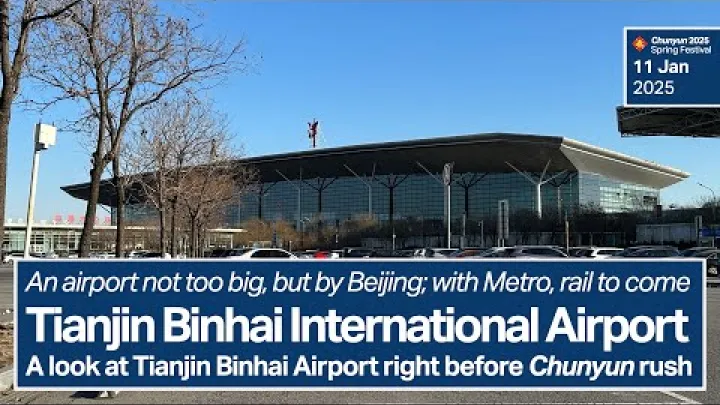
For travelers with manageable luggage and an arrival during metro operating hours, the metro is usually the most straightforward low-cost option. Airport buses can be useful when their route matches your accommodation, while a taxi is more convenient for heavy luggage, several passengers, or a hotel that is not close to a station. A third-party route estimate from Rome2Rio lists an example journey of about 26 minutes and a fare of roughly ¥2–9 for the metro, but treat those figures as indicative rather than guaranteed current service details.
Before a late-night or early-morning arrival, confirm the current airport metro operating hours, route, and station access. Also identify a backup taxi or bus option and keep the hotel address in Chinese characters. If you arrive outside normal metro service, the final transfer to the hotel may take longer than the airport-to-city portion itself.
Beijing–Tianjin High-Speed Rail
The high-speed connection between Beijing South Railway Station and Tianjin makes the city practical for a Beijing day trip, an overnight stop, or a wider North China route. Rail can be especially convenient when you are already near Beijing South, because it avoids returning to an airport for a short regional journey.

Do not plan only around the train's departure and arrival time. Different services can use different Tianjin-area stations, and the best station for one hotel may be inconvenient for another. Match the arrival station with your accommodation and first attraction, then allow time for reaching the platform, leaving the station, and making the local metro, taxi, or walking connection.
When booking with a passport, follow the current booking and identity-check process shown by the railway service or your booking platform. Confirm the departure station, arrival station, departure date, ticket availability, and the spelling of each passenger's document details before paying. A tight same-day itinerary is less comfortable if a station transfer or ticket collection step is unfamiliar, so leave a practical buffer between rail arrival and a timed attraction.
Metro, Buses, Taxis, and Walking Areas
The Tianjin Metro is the practical backbone for many visitors. It links central districts, railway stations, and the airport, and it can reduce the uncertainty of road traffic for longer urban journeys. Line 2 is particularly relevant to airport arrivals, while other lines may be more useful depending on the exact hotel and attraction.
Buses extend coverage beyond the metro, but route planning can be harder when you cannot read Chinese or when several services use similar stops. Taxis are helpful for last-mile connections, luggage, rainy weather, and late arrivals. Save the Chinese name and address of your hotel and destination rather than relying only on an English spelling or a verbal description.
Walking is an important part of the Tianjin experience. Five Great Avenues, Ancient Culture Street, and portions of the Haihe riverfront reward slow exploration, but the distances between these clusters can be greater than they appear on a simple city map. Use public transport between districts and walking within a chosen sightseeing zone.
Understanding Tianjin's Layout
Use the Haihe River as your first mental map. The central districts sit around the river and contain most first-visit attractions, while Binhai New Area lies farther toward the coast and requires a separate transport decision. District names are useful for choosing a base, but the exact hotel address and nearest metro station matter more than the district label alone.
Central Districts for First-Time Visitors
Heping, Nankai, Hexi, Hebei, and Hongqiao form the main central planning area. Heping is associated with central shopping and Five Great Avenues. Nankai is a useful reference for Ancient Culture Street and other traditional or cultural stops. Hexi includes parks, residential areas, and accommodation options that may appeal to visitors who want a less concentrated base.
Hebei and Hongqiao add further riverfront, historic, and station-side attractions. Hongqiao is especially relevant when Tianjin Eye or a particular railway connection is important. These associations are only a simple orientation tool: an attraction or hotel may be close to a district boundary, and two addresses in the same district can have very different transport convenience.
For a first visit, organize the central stay around three things: a useful metro station, reasonable access to the Haihe River, and a walkable heritage zone. This makes it easier to return to the hotel between activities and reduces the need for long cross-city journeys every day.
Binhai New Area and the Coastal Zones
Binhai New Area feels different from the historic center. Its identity is more modern, maritime, industrial, and large-scale, with broad development zones and coastal attractions rather than a continuous sequence of old streets. It can add a valuable dimension to a Tianjin itinerary, but it should be treated as a separate zone.
The National Maritime Museum of China is a strong reason to consider the coastal side for visitors interested in ocean science, maritime history, and China's relationship with the sea. TEDA Aircraft Carrier Theme Park offers a different, more specialized attraction connected with military and industrial themes. Choose based on your interests rather than assuming that every visitor should include both.
Binhai is part of Tianjin, but it is not a compact extension of the central tourist core. Transport time, opening arrangements, meal options, and the return journey should all be considered before selecting a central hotel or a Binhai base. A focused day is generally easier than trying to combine several distant coastal sites with a full central sightseeing program.
Where to Stay in Tianjin
For most first-time visitors, central Tianjin is the simplest base. The right hotel is less about choosing the most famous district and more about matching your priorities: heritage walks, river views, shopping, railway access, business meetings, or a Binhai-focused itinerary.
Best Base for Central Sightseeing
Central Heping is the default choice for a short visit, especially when Five Great Avenues, shopping, historic buildings, and central transport are high priorities. Nearby parts of Nankai or Hexi can also work well, particularly when the hotel offers easy access to a metro station or when you prefer a quieter residential setting.
Staying near Five Great Avenues favors architecture walks and a relaxed half-day in Heping. A base near Ancient Culture Street puts traditional shops, temple gates, and the Haihe area closer at hand. Accommodation around Binjiang Avenue or a major station may be more useful for shopping, evening movement, and onward rail travel, although the immediate atmosphere may be more commercial than historic.
Check the exact address, nearest station, walking route, and surrounding streets before booking. A hotel that is technically in a central district can still be inconvenient if it is far from a station or separated from attractions by a major road. For a first trip, a clear transport connection often matters more than a small difference in room features.
When to Choose Hongqiao, Binhai, or an Outlying District
Hongqiao can suit travelers who want convenient access to Tianjin Eye, nearby riverfront attractions, or a particular station connection. It is also worth considering when a hotel there fits your transport route better than a hotel in Heping. Compare the exact door-to-door route rather than assuming that the district name guarantees convenience.
Binhai is a sensible base for a maritime-focused visit, business commitments in the development area, or several days devoted to coastal attractions. It is less practical when your main goals are Five Great Avenues, Ancient Culture Street, and central evening walks. A central-to-Binhai commute may be manageable for one planned day, but it can become tiring if repeated throughout a short trip.
An outlying district can work for a specific event, venue, family requirement, or hotel that is substantially better for your current dates. The trade-off is usually additional daily movement. Do not assume that a peripheral hotel will always be cheaper or quieter; compare the live location, transport, services, and total travel time.
Match Your Base to Your Trip Length and Priorities
For one or two nights, choose a central base near a useful metro station. This is the most efficient arrangement for combining Five Great Avenues, Ancient Culture Street, the Haihe riverfront, and Tianjin Eye without changing hotels. It also works well for visitors arriving from Beijing and continuing to another North China destination.
A longer stay can justify a second accommodation zone only when a peripheral place is a primary objective. For example, a Binhai stay may make sense for a maritime program, while Yangliuqing or another outlying area might suit a slower cultural itinerary. Changing hotels just to be slightly closer to one optional attraction usually adds packing and check-in time without improving the trip.
Choose the priority that matters most: central convenience, neighborhood atmosphere, hotel facilities, or access to onward rail. Trying to optimize all four can produce a hotel that is not particularly convenient for any of them. A clear base and a simple daily route are usually more valuable than covering every possible district.
Central Attractions and Experiences
Tianjin's central attractions are best experienced as connected themes rather than as a ranking. Combine architecture with a slow walk, traditional culture with the river, and a landmark view with an indoor museum or historic residence.
Walk the Five Great Avenues
Five Great Avenues is a dense historic area of tree-lined streets, villas, townhouses, and other buildings associated with Tianjin's layered urban past. The appeal is not one isolated monument. It is the changing details across a walk: façades, gates, setbacks, gardens, street corners, and the relationship between residential architecture and later city life.
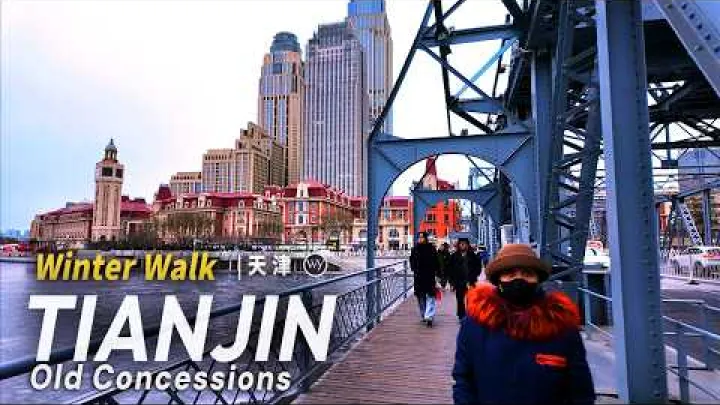
A self-guided walk works well if you prefer to move slowly and stop for photographs. An interpretive visit, museum, or former residence can add context when you want to understand who used the buildings and how the district developed. Because the area is spread across several streets, choose a manageable route instead of trying to inspect every block.
Allow roughly half a day in your planning, without turning that into a fixed timetable. Five Great Avenues can be paired with nearby cafés, shopping, or another Heping attraction. Visit earlier if you want a calmer architectural walk, or leave room later in the day for an indoor stop if the temperature is uncomfortable.
Explore Ancient Culture Street and the Haihe Riverfront
Ancient Culture Street is a pedestrian complex on the west bank of the Haihe River, with temple gates, Qing-style architectural decoration, shops, crafts, snacks, and Tianhou Temple. It is a useful place to see how Tianjin presents traditional culture in a busy visitor-oriented setting.
The street's relationship with the river also matters. Tianhou Temple and the area's maritime associations connect the commercial district with Tianjin's history as a port city and a place shaped by waterborne trade. A visit becomes more meaningful when you notice both the traditional visual language of the street and the active urban river beyond it.
Expect a mix of heritage presentation, shopping, food, and souvenirs rather than a quiet preserved village. Be respectful around temple spaces, follow local signs, and avoid treating commercial activity as evidence that every building or product has an untouched historical origin. Pair the street with a Haihe riverfront walk to experience the traditional district and the wider city landscape in one outing.
Add the Italian Style Area, Tianjin Eye, and Central Museums
The Italian Style Area offers another view of Tianjin's historic urban landscape, with streets and buildings that differ in atmosphere from Five Great Avenues. It is useful for travelers who want architectural variety and a central neighborhood that can be explored at a slower pace.
Tianjin Eye provides a landmark experience centered on elevated views over the Haihe River. It is often a natural evening-oriented stop, but its value depends on your interest in city views, the weather, and current operation. Do not build an important connection around a fixed ride time without checking the venue's current information.
Complete the central program with selected museums, former residences, or indoor cultural venues. Choose by interest: architecture for Five Great Avenues and the Italian Style Area, traditional culture for Ancient Culture Street, views for Tianjin Eye, and indoor history or science for museums. Check current opening information and ticket arrangements for the particular venue you choose, because an attraction list is not a substitute for an operating schedule.
Binhai, Optional Excursions, and Sample Itineraries
Extensions beyond central Tianjin can make a longer trip more varied, but they also add route planning. Select one theme for each extra day and resist the temptation to combine every outlying attraction with the central highlights.
Spend a Day Around Binhai's Maritime Attractions
A Binhai day can focus on the National Maritime Museum of China, TEDA Aircraft Carrier Theme Park, or another clearly selected coastal attraction. The museum may suit visitors interested in ocean science, maritime history, and port development, while the aircraft carrier park offers a more specialized industrial and military-themed experience. Families and travelers with different interests should discuss the main purpose of the day before choosing.
Plan Binhai as a focused zone. One substantial attraction plus a second nearby or compatible stop is usually more realistic than collecting several distant sites. Allow time for local transfers, meals, entry procedures, and the return journey to central Tianjin if that is where you are staying.
Binhai is especially worthwhile when it adds a subject you cannot experience in the central heritage districts. It is less necessary for a short visit focused on architecture, traditional streets, and riverfront views. If the coastal attractions are the central purpose of your trip, staying in Binhai may be more logical than commuting from Heping every day.
Consider Yangliuqing Ancient Town or Huangyaguan Great Wall
Yangliuqing Ancient Town offers a cultural and traditional-town extension, while Huangyaguan Great Wall changes the trip into a mountain and heritage excursion associated with Tianjin. They represent different experiences: choose Yangliuqing for townscape, local cultural atmosphere, and a slower historical visit; choose Huangyaguan for landscape, mountain walking, and Great Wall scenery.
Either choice turns a central city visit into a partial- or full-day outing. The route may involve more complicated transfers than a central attraction, and the practical experience depends on the date, weather, transport availability, and access arrangements. These places are optional additions, not required items for a first Tianjin itinerary.
Before committing to either excursion, check the current opening status, ticketing process, and door-to-door transport route. Make the decision only after considering your available daylight, luggage, fitness, and onward travel. If you have limited time, a deeper central visit may be more rewarding than a rushed trip to an outlying location.
Itinerary Patterns for One to Four Days
Use these patterns as planning frameworks rather than fixed schedules:
- One day: Build a geographically efficient central route around one heritage district, one section of the Haihe riverfront, and one landmark or museum. Choose either an architecture-focused or traditional-culture-focused day instead of trying to cover both in detail.
- Two days: Give one day to Five Great Avenues, the Italian Style Area, or related central architecture. Use the second for Ancient Culture Street, Tianjin Eye, the riverfront, and a selected indoor venue. This division allows more time for food and unplanned stops.
- Three days: Keep two days for central Tianjin and use the third for Binhai or another clearly chosen interest. A central base remains practical if the extension is only one day.
- Four days: Add Binhai and one optional excursion only if both are genuine priorities. Otherwise, use the extra day for museums, slower neighborhood walks, weather flexibility, or a more relaxed pace.
The logic is simple: group nearby sites, protect the arrival and departure days, and treat every distant addition as a transport commitment. A shorter list with enough time at each stop is usually better than an itinerary that looks complete only on paper.
Typical Costs and Booking Logistics
Tianjin travel costs vary with hotel category, district, season, holiday demand, booking date, rail class, attraction choices, and the number of taxis or excursions you use. Build the budget by category so that a change in one item does not make the whole plan unusable.
Build a Flexible Tianjin Travel Budget
Start with the costs that are easiest to identify: accommodation, intercity rail, airport transfers, and any booked attraction. Then estimate daily local transport, meals, and optional admissions. Write the budget in CNY and separate confirmed prices from estimates that depend on a live booking page.
- Accommodation: Compare the total price for the exact dates, district, room type, cancellation policy, and taxes or fees shown by the booking platform.
- Transport: Include the airport or railway transfer, daily metro and bus journeys, taxis for last-mile connections, and the cost of reaching Binhai or an outlying excursion.
- Attractions: Check the current price and any reservation or timed-entry requirement for museums, the Tianjin Eye, theme parks, and excursion sites.
- Food: Allow separate amounts for quick meals, restaurants, snacks, and drinks. Your food budget will change more with dining style than with the city name alone.
- Optional days: Treat Binhai, Yangliuqing Ancient Town, and Huangyaguan Great Wall as separate additions so you can remove one without rebuilding the central itinerary.
Low-cost public transport can help control spending, but do not assume that every day will cost the same. A taxi after a late arrival, a higher rail class, a central hotel during a busy period, or a paid excursion can change the total quickly. The airport metro example cited earlier is an indicative route price, not a universal daily transport budget.
Payment, Reservations, and Navigation Preparation
Advance planning is most useful for high-speed rail, accommodation, and popular attractions during major Chinese holiday periods or busy local events. Reserve the parts that determine your route first, then keep less important museums, shopping, and walks flexible.
Before arrival, examine the hotel's exact map location, reservation conditions, check-in arrangements, and payment options. Save the booking confirmation and the Chinese address. If a hotel is described as near a landmark, measure the actual route to the nearest metro station and to the places you expect to visit.
Prepare an offline map, a translation tool, and a short note with the hotel name and address in Chinese characters. Save the route from Tianjin Binhai International Airport or your railway station before leaving the airport or station. These steps are useful even for travelers who normally rely on mobile data, because a familiar map and written destination reduce confusion during a transfer.
International visitors should not assume that every hotel, attraction, taxi, bus, or digital service uses the same payment method or provides the same language support. Review the options shown by your accommodation and transport providers, and make sure you know how you will pay for the first transfer and first night.
Safety and Final Planning Checklist
Good Tianjin planning is mostly about avoiding preventable problems: choosing a realistic route, leaving transfer time, preparing the hotel address, and checking current official information. Keep safety advice practical and specific rather than relying on broad claims about the city.
Current Advisories, Entry Requirements, and Local Rules
Before departure, read a current government travel advisory relevant to your nationality and consult official Chinese entry and exit information. U.S. travelers can also consult the U.S. Department of State China travel advisory; travelers of other nationalities should use their own government's guidance as well.
Keep your passport, visa or other required travel documents, booking details, and important contact information secure and accessible. Follow posted rules at museums, temples, railway stations, and public spaces. Do not rely on a general description of entry or exit practice when your own nationality, travel history, or itinerary may create a different requirement.
As part of this final planning check, confirm how your accommodation and planned transport accept payment. Carry a practical backup such as local currency in case a preferred card, app, or digital connection is not usable at a particular point. This is a simple preparation step, not a statement that one payment method works everywhere in Tianjin.
A Simple Arrival-Day Checklist
Immediately before departure, revisit the government advisory relevant to your nationality and the current official Chinese entry and exit information. Use the latest information for your own circumstances, especially if your trip involves a visa, a transit arrangement, a long stay, or onward travel to another country.
- At the airport or station: Confirm the hotel address, the selected transport route, and, for rail arrivals, the correct Tianjin station.
- Before entering the metro: Check the line direction and the required interchange or exit. Tianjin Railway Station and other Tianjin-area stations are not interchangeable for every hotel.
- During the first transfer: Keep essential documents, booking details, and the hotel's Chinese address accessible. Allow extra time if you have luggage or need to change between rail, metro, taxi, and walking.
- For the first attraction: Avoid scheduling a tightly timed visit immediately after arrival. A delayed train, a longer station exit, or an unfamiliar hotel check-in can use more time than expected.
For a first Tianjin visit, a central base near a useful metro connection is usually the safest planning choice. Favor late spring or early autumn when possible, and add Binhai New Area, Yangliuqing Ancient Town, or Huangyaguan Great Wall only when the available time, weather, and current access fit your priorities.
Select area
Create a post
Posting is free and no registration is required.