Haiphong Getting There: Air, Train, Bus, Car & Ferry

Haiphong getting there is usually straightforward, but the best route depends on where you start, how much luggage you have, and whether Haiphong is your final stop or a gateway to Cat Ba Island and Halong Bay. The city has its own airport, Cat Bi International Airport (HPH), a central railway station, frequent road links from Hanoi, and ferry-linked routes to nearby islands. This guide compares air, train, bus, limousine van, private transfer, and ferry-connected options in practical terms. Times, fares, and schedules can change, so treat all ranges as planning guidance and check current details close to your travel date.
Quick Answer: The Best Way to Get to Haiphong
For most travelers, the easiest choice is simple: fly to Cat Bi International Airport if you are coming from central or southern Vietnam, and use a bus, limousine van, train, or private car if you are coming from Hanoi. If you are arriving internationally, Hanoi Noi Bai International Airport (HAN) is often the stronger gateway because it has far more long-haul and regional connections.
Best Options by Starting Point
The best transport to Haiphong depends mainly on distance. The Hanoi corridor is well served by road and rail, while routes from Ho Chi Minh City, Da Nang, Nha Trang, Da Lat, Phu Quoc, and other distant cities are usually more practical by domestic flight when available. Travelers coming from Cat Ba Island or Halong Bay should pay close attention to ferry, shuttle, and port details, because the route may include both road and water transport.
| Starting point | Best mode | Typical time | Cost level | Booking difficulty |
|---|---|---|---|---|
| Hanoi city | Bus, limousine van, train, or private car | Usually a few hours | Low to medium | Easy |
| Noi Bai Airport | Pre-booked van or private car | Usually half a day including airport procedures | Medium to high | Moderate |
| Ho Chi Minh City | Domestic flight to Cat Bi | Fastest by air | Medium | Easy when flights operate |
| Da Nang or Central Vietnam | Domestic flight when available | Fastest by air | Medium | Easy to moderate |
| Halong Bay | Regional shuttle, taxi, or private transfer | Variable by pickup point | Medium | Moderate |
| Cat Ba Island | Bus-boat route, ferry, or speedboat connection | Variable by ferry schedule | Low to medium | Moderate |
| Long-haul international origin | Fly to Hanoi, then transfer to Haiphong | Depends on layovers and transfer | Variable | Moderate |
Use the table as a first filter, not as a fixed timetable. For the fastest long-distance arrival, choose air. For the cheapest Hanoi-to-Haiphong route, compare standard buses and trains. For the most comfortable door-to-door arrival, especially with family or business luggage, a private transfer is usually the simplest.
What to Verify Before You Book
Before booking any Haiphong transport, confirm the exact departure point, arrival point, departure time, baggage rules, payment method, and cancellation policy. This is especially important for buses and vans, because a service described as “Hanoi to Haiphong” may leave from a station, a company office, a hotel pickup zone, or a different district than you expect.
- For flights, confirm the airport code, airline, baggage allowance, and whether the ticket is direct or requires a connection.
- For trains, confirm the station name, seat or berth type, and current rail schedule.
- For buses and vans, confirm the pickup address, drop-off point in Haiphong, luggage policy, and hotline number.
- For private cars, confirm the vehicle size, tolls, waiting time, late-night surcharge, and driver meeting point.
- For ferry-linked routes, confirm the terminal, last departure, weather conditions, and whether the ticket includes the road legs.
If you are connecting from an international flight to a bus, train, ferry, or cruise, build in extra time for immigration, baggage, traffic, and delays. A route that looks possible on paper can become stressful if a flight is late or if a ferry stops operating earlier than expected.
Arriving by Air at Cat Bi International Airport
Cat Bi International Airport is the main air gateway for Haiphong. It is useful for domestic travelers, business visitors, and tourists who want to reach Haiphong, Cat Ba Island, or parts of the northern coast without routing through central Hanoi.
Direct Domestic Flights to Haiphong
Cat Bi International Airport (HPH) serves Haiphong and is the most convenient airport when your final destination is the city itself. The airport describes domestic services linking Haiphong with cities such as Ho Chi Minh City, Phu Quoc, Pleiku, Nha Trang, Da Lat, and Da Nang, though routes and frequencies can change; check current airport and airline listings before buying a ticket through Cat Bi International Airport.
For travelers coming from southern or central Vietnam, flying is usually much faster than taking trains or buses all the way north. Even if the airfare is higher than an overland ticket, the total value can be better once you include hotel nights, meals, transfers, and lost travel time. This is especially true for short holidays, business trips, and itineraries that continue to Cat Ba Island.
Do not assume that every city has a direct flight every day. Seasonal demand, airline network changes, and aircraft schedules can affect availability. Search using both “Haiphong” and the airport code “HPH” to reduce confusion with flights to Hanoi.
International Flights and When Hanoi Is Still Better
Haiphong has international status and may have limited regional international services when operating, but it is not a major global hub. If you are traveling from Europe, North America, Australia, the Middle East, or most long-haul origins, Hanoi Noi Bai International Airport is usually the more practical international gateway because it has a wider range of airlines, connections, and fares.
If you are considering a regional flight into Haiphong, compare total trip time, not only the flight time. A route with two layovers and a long wait may be less convenient than flying into Hanoi and taking a direct road transfer to Haiphong. Airline availability can change, so verify current flights with official airline channels such as Bamboo Airways or the airline operating your chosen route.
Be careful when using separate tickets. If your international and domestic or regional tickets are not on one booking, you may need to collect baggage, clear immigration, re-check bags, and pass security again. Confirm visa rules, baggage limits, minimum connection times, and the consequences of a missed connection before choosing a complicated routing.
From Cat Bi Airport to Your First Stop in the City
Cat Bi Airport is within Haiphong city, so the first step after landing is usually simple. Taxis, app-based ride-hailing where available, hotel transfers, and pre-arranged private cars are practical options for reaching hotels, offices, Haiphong Station, or ferry-linked pickup points.

If you are staying in Haiphong, use a reputable taxi company, a ride-hailing app, or a hotel-arranged pickup to reduce fare disputes. Confirm the destination in Vietnamese, check the vehicle plate if using an app, and keep your luggage visible until you are inside the vehicle.
If you are continuing immediately to Cat Ba Island or Halong Bay, do not automatically go into the city center first. Check whether your shuttle departs from the airport, a city office, Binh ferry terminal, Dong Bai ferry terminal, or another pickup point. The best next step depends on the time of day and whether ferries or speedboats are still operating.
Getting to Haiphong from Hanoi
Hanoi is the most common overland gateway to Haiphong. The route can be handled by standard bus, limousine van, train, private car, or a combination depending on your starting point in Hanoi and your final destination in Haiphong.
Bus and Limousine Van from Hanoi
Buses and limousine vans are among the most common ways to travel between Hanoi and Haiphong. Services may use major Hanoi bus stations such as Giap Bat Bus Station, My Dinh Bus Station, Nuoc Ngam Bus Station, or Gia Lam, while Haiphong arrivals may use Niem Nghia Bus Station, a company office, or a roadside drop-off. Route guides from operators such as Cat Ba Express can be useful for understanding the main options, but current times and pickup points should always be confirmed.
![Preview image for the video "🇻🇳 하이퐁 찐로컬 여행 | 무조건 가야하는 로컬 맛집 | 하노이에서 가는 가장 저렴하고 편리한 방법 [베트남 여행 05]".](/sites/default/files/styles/media_720x405/public/oembed_thumbnails/2026-07/p4k6EGkmMaTBWmXo9Y-QL-aPEIRBmRzDG2QSfl0wios.jpg.webp?itok=7JcgfHWF "Preview image for the video \"🇻🇳 하이퐁 찐로컬 여행 | 무조건 가야하는 로컬 맛집 | 하노이에서 가는 가장 저렴하고 편리한 방법 [베트남 여행 05]\".")
Standard buses are usually the budget choice. Limousine vans cost more but often offer better seats, fewer passengers, and more convenient pickup or drop-off arrangements. Tourist-oriented shuttles may be easier for travelers who do not speak Vietnamese, but they can be less flexible if your hotel or destination is outside the normal service area.
| Option | Best for | Comfort | Main point to confirm |
|---|---|---|---|
| Standard bus | Budget travelers | Basic to moderate | Station and final drop-off |
| Limousine van | Couples, solo travelers, light luggage | Moderate to high | Pickup zone and luggage space |
| Private car | Families, business trips, late arrivals | High | Total price, tolls, and waiting time |
Travel time varies by traffic, pickup location, and whether the vehicle uses the Hanoi–Haiphong Expressway (CT.04) or slower local roads. If your Haiphong hotel is far from the drop-off point, add time and money for a local taxi or ride-hailing trip.
Train from Hanoi to Haiphong Station
The train from Hanoi to Haiphong Station is a comfortable and relatively predictable alternative to road travel. It is especially useful if you prefer a clear station-to-station journey, want more space than a van, or are staying in central Haiphong.
The Hanoi to Haiphong train journey is commonly described as taking a few hours, but departure times, seat availability, and station procedures should be checked through current Vietnam railway ticket channels before travel. Avoid relying on old train numbers or screenshots from travel forums.
The main advantages of the train are comfort, a fixed arrival station, and less exposure to highway traffic stress. The disadvantages are fewer departures than buses, less door-to-door flexibility, and the need for an onward taxi or ride from Haiphong Station to many hotels, port areas, industrial districts, or ferry transfer points.
Private Car from Hanoi and Noi Bai Airport
A private car is the easiest option from Hanoi or Noi Bai Airport if you are traveling as a group, arriving late, carrying heavy luggage, or going directly to a specific address. It costs more than a bus or train, but the price can be reasonable when shared by several people.
The main road route is usually the Hanoi–Haiphong Expressway (CT.04), with National Highway 5 as the older parallel corridor. Exact travel time depends on airport procedures, traffic leaving Hanoi, weather, toll stops, and your final address in Haiphong. Travelers landing at Noi Bai Airport often prefer a pre-booked airport-to-Haiphong transfer because it avoids entering central Hanoi just to change transport.
Before travel, confirm the total fare, whether tolls are included, how waiting time is charged, the vehicle type, the amount of luggage space, child seats if needed, and any late-night surcharge. Ask the driver or company how they will identify you at the airport. Self-drive is not usually the simplest choice for visitors who are unfamiliar with Vietnamese road conditions.
Getting to Haiphong from Other Parts of Vietnam
From outside northern Vietnam, the best arrival route is usually determined by distance. Domestic flights are normally the fastest option, while trains and buses suit travelers with more time or a specific overland itinerary.
From Ho Chi Minh City, Da Nang, and Central Vietnam
From Ho Chi Minh City, Da Nang, and much of central Vietnam, a direct domestic flight to Cat Bi International Airport is the default choice when available. It saves substantial time compared with a long rail or bus journey and avoids the need to transfer through Hanoi.
Overland travel can still make sense for slow travelers, rail enthusiasts, and budget travelers who want to stop along the way. In many cases, however, a train or bus from the south will require a long journey north and may involve changing in Hanoi before continuing to Haiphong.
When comparing costs, look beyond the base airfare. Add baggage fees, airport transfers, seat selection if important, and the cost of reaching your final destination from Cat Bi. For long routes, also compare the cost of meals, accommodation, and time spent in transit if you choose train or bus.
From Halong Bay, Van Don, and Quang Ninh
Haiphong is close enough to Halong Bay and parts of Quang Ninh for regional road transfers, shuttles, and private taxis to be practical. The best option depends on your exact pickup point: a cruise marina, a hotel in Bai Chay, a pier, an airport, or a town outside the main tourist zone.
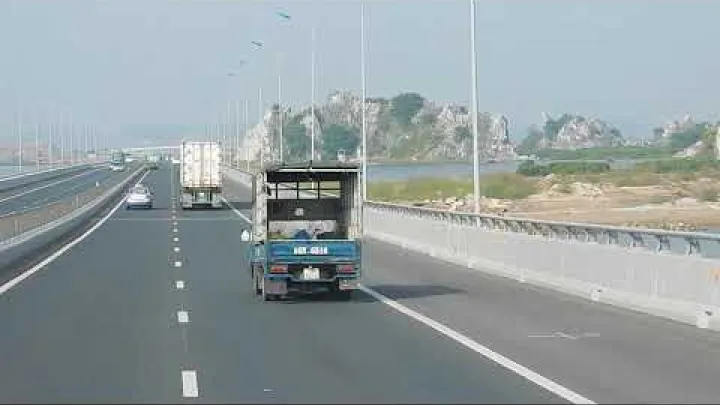
Van Don International Airport can be useful for some Quang Ninh itineraries, but direct public transport from Van Don to Haiphong may be less straightforward than travel from Hanoi. You may need a private transfer, a shuttle connection, or a route through a larger transport hub. Confirm current options with your hotel, cruise operator, or transport provider before assuming a direct bus exists.
Be precise about your destination. Haiphong city, Cat Bi Airport, Cat Ba Island, Halong Bay, and a Halong cruise marina are different places, even though they may appear close on a map. If your cruise or hotel can arrange a pickup or drop-off in Haiphong, that may reduce transfers and prevent confusion.
Ferry and Island Routes Connected to Haiphong
Ferries and speedboats matter most when Haiphong is connected to Cat Ba Island or other coastal movements. They are not usually part of a long-distance arrival into Haiphong city, but they can strongly affect same-day travel plans.
Cat Ba Island to Haiphong and Haiphong to Cat Ba
The common route between Haiphong and Cat Ba Island combines a road leg, a water crossing, and another road leg on the island. Depending on the service, travelers may use ferry or speedboat connections involving terminals such as Binh ferry terminal, Dong Bai ferry terminal, Cai Vieng ferry terminal, or Phu Long port.
For tourists, integrated bus-and-boat tickets can be convenient because one operator coordinates the land and water sections. Cat Ba route operators such as Cat Ba Express describe combined Haiphong to Cat Ba services, but times, fares, and operating methods should be checked near your travel date.
A ferry is generally better for vehicles or standard crossings, while a speedboat can be faster for passengers when operating. A combined bus-boat service is often easiest for visitors because it reduces the need to negotiate separate tickets and terminals. Do not assume late-night ferry or speedboat availability.
When Ferries Affect Your Arrival Plan
Ferries affect your plan when you are connecting between Cat Bi Airport, Haiphong city, Cat Ba Island, and Halong Bay. Weather, maintenance, seasonal demand, and busy Vietnamese holiday periods can all affect reliability or waiting time.
If you must reach Cat Ba on the same day, try to arrive in Haiphong earlier in the day. Late flights, late trains, or delayed road transfers can leave you with fewer onward options. The safest rule is to avoid tight ferry-to-flight, ferry-to-train, or ferry-to-cruise connections.
When returning from Cat Ba through Haiphong, build a buffer before flights or trains. A morning departure from the island is much safer than a last possible crossing when you have a fixed ticket from Cat Bi Airport or Haiphong Station.
How to Choose Between Air, Train, Bus, and Private Transfer
There is no single best way to get to Haiphong for every traveler. Choose by distance, budget, comfort needs, luggage, arrival time, and your exact final destination.
Fastest, Cheapest, Most Comfortable, and Easiest Choices
For long distances, air is usually fastest. For the Hanoi corridor, standard buses and trains are often the cheapest practical choices. For comfort, the train can be pleasant if the station locations fit your plan, while a private car is the easiest door-to-door option.
| Mode | Best use case | Cost level | Comfort | Main drawback |
|---|---|---|---|---|
| Air | Central and southern Vietnam | Medium to high | High for time saved | Schedules and fares vary |
| Train | Hanoi to central Haiphong | Low to medium | Moderate to high | Fewer departures than buses |
| Standard bus | Budget Hanoi travel | Low | Basic to moderate | Pickup and drop-off may be inconvenient |
| Limousine van | Convenient Hanoi corridor travel | Medium | Moderate to high | Luggage space can be limited |
| Private car | Groups, families, business travelers | High | High | Requires price confirmation |
| Ferry-linked service | Cat Ba Island connections | Low to medium | Variable | Weather and schedule coordination |
Solo budget travelers should compare train and standard bus prices. Couples often find limousine vans a good balance of comfort and value. Families and business travelers may save time and stress with a private car. Late arrivals should prioritize confirmed door-to-door transport over the cheapest ticket.
Booking Difficulty and Reliability
Flights and trains usually have clearer booking systems than buses and ferries. Airline and rail tickets normally show the date, time, departure point, passenger name, and baggage or seat details more clearly than informal bus or ferry arrangements.
Buses and vans may be booked through company offices, station counters, hotel desks, hotlines, messaging apps, or third-party platforms. This flexibility is useful, but it also makes it important to save confirmations and verify details. Confirm the Vietnamese place name, the pickup time, the vehicle type, and the phone number to call if the vehicle is late.
Ferry-linked journeys require more coordination because they may combine a bus, a boat, and another bus. If you do not speak Vietnamese, ask hotel staff to confirm the pickup point or terminal for you. A screenshot of your destination and booking confirmation can prevent misunderstandings.
Common Arrival Traps and Practical Safety Tips
Most journeys to Haiphong are routine, but practical caution helps. Be wary of unofficial ticket sellers, unclear pickup points, fare disputes, pressure from touts, and unrealistic connection promises. If a price or schedule sounds unusually convenient, confirm it through a known operator, hotel, or reputable booking channel.
For taxis and private cars, agree on the price or confirm the meter before departure. If using a ride-hailing app, check the license plate and driver details. Keep luggage with you until the vehicle is confirmed, and avoid paying large deposits to unknown contacts found only through social media or unofficial messages.
Late-night arrivals reduce public transport choices. If your flight lands late at Cat Bi or Noi Bai, a pre-booked hotel transfer, van, or private car can be safer and simpler than searching for a last-minute bus or ferry connection.
Suggested Arrival Routes for Common Travelers
The following scenarios show how different travelers can choose a practical Haiphong arrival route without overcomplicating the journey.
First-Time Visitors Landing at Hanoi
If you land at Hanoi Noi Bai Airport and want to continue directly to Haiphong, the simplest options are a pre-booked airport-to-Haiphong van or a private transfer. This avoids traveling into central Hanoi first and is especially useful after a long international flight.
If you plan to spend time in Hanoi before Haiphong, take the train or a bus from the city when you are ready to move on. Choose the train if you want a clear arrival at Haiphong Station. Choose a bus or limousine van if the pickup and drop-off points are more convenient for your hotel.
Do not book a tight onward ferry to Cat Ba after an international arrival unless you have a large buffer. Immigration, baggage collection, airport pickup delays, and traffic can make same-day island connections risky late in the day.
Travelers Continuing to Cat Ba or Halong
Some travelers use Haiphong mainly as a gateway rather than a final destination. If you are continuing to Cat Ba Island, check whether it is better to go directly from Cat Bi Airport to a ferry, speedboat, or shuttle point instead of entering central Haiphong.
![Preview image for the video "[4K] Vietnam Motorbike Tour to Cat Ba Island (Haiphong) Part 1-From Cat Bi Airport to Cat Hai Island".](/sites/default/files/styles/media_720x405/public/media-icons/generic/video.png.webp?itok=-zQKInLP "Preview image for the video \"[4K] Vietnam Motorbike Tour to Cat Ba Island (Haiphong) Part 1-From Cat Bi Airport to Cat Hai Island\".")
For Halong Bay, road transfers from Haiphong may be practical, but the correct destination matters. A Halong hotel, a cruise marina, Cat Ba Island, and Haiphong city are not interchangeable. Confirm the cruise pier, hotel district, and pickup point before choosing a transport ticket.
Similar-sounding names can cause mistakes. Keep the exact destination in Vietnamese and show it to the driver or ticket office. If your accommodation or cruise operator offers a verified transfer, it may be worth paying more for a smoother connection.
Business Travelers and Short Trips
Business travelers should prioritize punctuality and destination accuracy. Direct flights to Cat Bi are best when available from your origin city. From Hanoi, a private car, limousine van, or train can all work depending on meeting time and location.
Haiphong is a port and industrial city, so business addresses may be outside the tourist center. A cheap bus to a central station may not be efficient if your meeting is in another district or industrial area. Confirm the exact district, hotel, office, or factory address before selecting your arrival mode.
Share the destination address in Vietnamese with the driver and keep a phone number for your host or hotel. When punctuality matters, the cheapest route is not always the best route.
Frequently Asked Questions
What is the best way to get to Haiphong from Hanoi?
The best way depends on your priority. Bus and limousine van services are usually the most flexible, the train is comfortable for central Haiphong, and a private car is easiest for groups, luggage, late arrivals, or direct hotel travel.
Which airport should I use for Haiphong?
Use Cat Bi International Airport (HPH) if you can find a suitable domestic or regional flight. For most long-haul international trips, Hanoi Noi Bai International Airport (HAN) is usually more practical, followed by a road or rail transfer to Haiphong.
Is there a direct train from Ho Chi Minh City to Haiphong?
Most travelers should not plan on a simple direct train from Ho Chi Minh City to Haiphong. Long-distance overland travel usually involves traveling north toward Hanoi and then continuing to Haiphong by train, bus, or car. Flying to Cat Bi is usually much faster.
Can I go directly from Noi Bai Airport to Haiphong?
Yes, you can go directly from Noi Bai Airport to Haiphong by pre-booked private car or, when available, van transfer. This is often easier than entering central Hanoi first, especially after an international flight.
Do I need to worry about Cat Ba ferries when arriving in Haiphong?
You only need to worry about Cat Ba ferries if you are continuing to or from Cat Ba Island. If Haiphong city is your final destination, ferries are usually irrelevant. If you are connecting to Cat Ba, avoid late-day or tight connections.
Is bus or train better between Hanoi and Haiphong?
The train is better if you want a clear station arrival and more space. Bus or limousine van is better if you want more departures or a pickup and drop-off point closer to your hotel. Confirm the exact locations before booking either option.
Final Tips Before You Travel to Haiphong
Haiphong is well connected, but your best arrival route depends on distance and final destination. Fly to Cat Bi when coming from faraway Vietnamese cities, use bus, train, van, or private car from Hanoi, and treat Cat Ba ferry connections as a separate planning step.
Before you travel, confirm the exact airport, station, bus stop, ferry terminal, pickup time, baggage rules, and cancellation terms. Build buffer time for flight arrivals, road traffic, and ferry-linked journeys. With the right route choice and a few checks, getting to Haiphong can be simple, efficient, and comfortable.
Select area
Create a post
Posting is free and no registration is required.