Incheon Getting There: Air, Rail, Bus, Ferry and Road

Getting to Incheon, South Korea, is straightforward only after you identify which Incheon destination you mean: the international airport, a city district, a ferry terminal, or a transport hub. Incheon International Airport is on Yeongjong Island, while central Incheon, Songdo, Incheon Bus Terminal, and Incheon International Ferry Terminal are separate arrival points. This guide compares air, rail, intercity bus, ferry, taxi, rental car, and road approaches from Seoul, Gyeonggi, and other Korean cities. It focuses on end-to-end time, cost, luggage, booking effort, transfers, and the checks that matter when schedules or service conditions change.
Plan Around Your Exact Incheon Arrival Point
The most important transport decision is choosing the correct arrival node before selecting a ticket. A route to Incheon International Airport may be convenient for an international flight but unsuitable for accommodation in central Incheon or Songdo. Treat the airport, city, port, and bus terminal as different destinations.
Decide Whether You Are Going to the Airport, Port, or City
Use the full accommodation, campus, office, or venue address when planning your trip. Incheon International Airport, often shown as ICN, is located on Yeongjong Island and has Terminal 1 and Terminal 2. It should not be described or treated as central Incheon. Central destinations may instead be near Incheon City Hall, Incheon Bus Terminal, Bupyeong, or another subway station.
Songdo is another distinct destination in southern Incheon. A hotel in the Songdo International Business District may require a different final train, bus, or taxi connection from a hotel near City Hall. Incheon International Ferry Terminal is also separate from both the airport and the urban rail network. A ferry ticket that arrives in Incheon does not place you at the airport or at your accommodation.
Before booking, copy the exact address into a map and identify the nearest practical station or stop. Note whether the address is closer to Gyeyang Station, Bupyeong Station, Incheon Bus Terminal, City Hall, Songdo, or the port. This simple step prevents a common mistake: buying a ticket to a well-known Incheon gateway and discovering that a second cross-city journey is still required.
Think of the journey as three separate stages: reaching South Korea or the capital region, reaching the wider Incheon area, and completing the last mile to your address. The best gateway can change at each stage.
Compare Speed, Cost, Coverage, and Booking Effort
There is no single fastest or cheapest way to get to every part of Incheon. Compare the complete journey rather than only the first vehicle. A train may be predictable but require a subway transfer. A bus may stop closer to a hotel but be affected by traffic. A taxi may be simple for a group but expensive for one traveler. Ferry travel is relevant only when the sea route is part of the itinerary.
| Option | Best use | Main arrival node | Booking and checks | Main trade-off |
|---|---|---|---|---|
| International flight | Overseas arrival | Incheon International Airport | Flight booking; confirm terminal | Requires a ground connection |
| KTX or national rail | Long-distance travel within Korea | Seoul Station or another capital-region station | Reserve long-distance rail; plan the final leg | May require a transfer into Incheon |
| Intercity coach | Direct access from selected Korean cities | Incheon Bus Terminal or a route-specific stop | Confirm destination, seat, and departure | Coverage and traffic vary |
| Ferry | A planned sea itinerary | International ferry terminal or island port | Reserve sailing; confirm check-in and status | Longer and more weather-sensitive |
| Taxi or private car | Groups, heavy luggage, or remote addresses | Exact address | Arrange recognized service; check traffic and parking | Variable road time and total cost |
Prices, departure times, route coverage, and booking rules are date-sensitive. For an international arrival, the flight only gets you to an airport. For a domestic journey from cities such as Busan or Daegu, rail or a direct coach may bring you closer to the city side of Incheon. A useful decision rule is to begin with the final address, then choose the gateway that minimizes the most difficult part of the journey: a late transfer, heavy luggage, uncertain traffic, or a long walk.
Arrive Through Incheon International Airport
For most overseas travelers, Incheon International Airport is the natural entry point. The airport has several ground transport modes, but the right one depends on whether you are continuing to Seoul, central Incheon, Songdo, Gyeonggi, or another Korean city.
Use the Airport’s Main Ground-Transport Options
Start by confirming whether your flight arrives at Terminal 1 or Terminal 2. The terminals are separate places, so the terminal affects where you collect baggage, find transport information, and meet a driver. An airline connection or a change of terminal can add time to the ground journey.
The airport provides train, bus, taxi, call-van, and airport shuttle information. Rail is useful when your destination has a manageable connection to AREX or the metropolitan subway. A bus can be better when its published stop is close to your accommodation and you want to avoid changing trains with luggage. A taxi or call van offers a door-to-door option for groups, late arrivals, or addresses that are inconvenient to reach by rail.
The Incheon Airport official public transportation page is the appropriate starting point for terminal-level transport information, including train, bus, taxi, and call-van guidance. Use the destination rather than the word Incheon when searching. A Seoul-bound airport limousine is not automatically a route to an Incheon neighborhood, and an airport train station is not the same as a city-center station.
Keep the first airport decision simple: identify the terminal, select a mode that serves the correct district, and leave the detailed city transfer for the next stage of the trip.
Connect Through Gimpo Airport or Plan a Late Arrival
Gimpo Airport and Incheon International Airport serve different roles. If your itinerary uses Gimpo for a domestic flight and then continues to Incheon, you need an airport-to-airport leg before the city journey is complete. Do not assume that a domestic flight arrival at Gimpo is equivalent to arriving at an Incheon station or hotel.
Calculate the connection from the time you leave the aircraft, not only from the scheduled landing time. Include immigration when applicable, baggage collection, the walk to the airport station or bus stop, waiting for the next service, and any change between airport and city transport. A connection that looks short on a route map can become impractical if the first flight is delayed or baggage takes longer than expected.
A rail connection between the airports may be possible for some itineraries, but the specific route, service pattern, and final destination still need to be checked. If the planned arrival is close to the last train or bus, look up the final public transport departures before leaving your origin airport. This is especially important when the next morning involves a flight, ferry, exam, work appointment, or other fixed commitment.
Use a clear late-arrival decision path. First, compare your actual landing and exit time with the last available rail and bus services. Second, if public transport is no longer practical, use an official taxi rank or recognized call-van service, or arrange accommodation near the airport. Third, avoid depending on an unconfirmed connection after midnight. A realistic overnight plan is safer and often less stressful than trying to force a missed last service.
Reach Incheon by Rail From Seoul, Gyeonggi, and Other Korean Cities
Rail is often the most useful long-distance combination for travelers already in South Korea. The key is to separate national rail from the metropolitan connections that complete the trip into Incheon.
Continue From KTX and Korail Stations
KTX and other Korail services generally bring long-distance travelers to a major station in the capital region rather than directly to every Incheon district. From that station, continue by AREX, subway, bus, or taxi. Seoul Station is an important example because it connects with airport rail, but it is not the best interchange for every origin or every Incheon address.

For example, a traveler arriving from Busan could take KTX to Seoul Station and then plan an Incheon connection. If the final address is near the airport, the onward route may use AREX. If it is in central Incheon or Songdo, the route may require a metropolitan subway connection after leaving the national rail station. This is an example of the planning pattern, not a claim that Seoul Station is always the fastest interchange.
Travelers from other Korean cities should compare the available destination stations instead of automatically routing through Seoul Station. The best choice depends on the station served by the long-distance train, the time of day, the amount of luggage, and the final district. A KTX ticket is only the long-distance portion of an end-to-end Incheon trip.
Foreign visitors can review current train bookings, eligible services, and KORAIL PASS rules on Korail. A rail pass is designed for foreign visitors using eligible Korail passenger trains, but it should not be assumed to cover every metropolitan subway or to cost less than individual tickets. Check the current eligibility and conditions against your actual itinerary.
Use AREX and the Metropolitan Subway for Urban Incheon
AREX is the airport rail link. At a high level, its Express service is intended for the airport–Seoul Station journey, while All Stop service serves more intermediate airport-rail stations. The distinction matters because travelers going to Seoul and travelers going to urban Incheon may need different exits from the airport rail system.
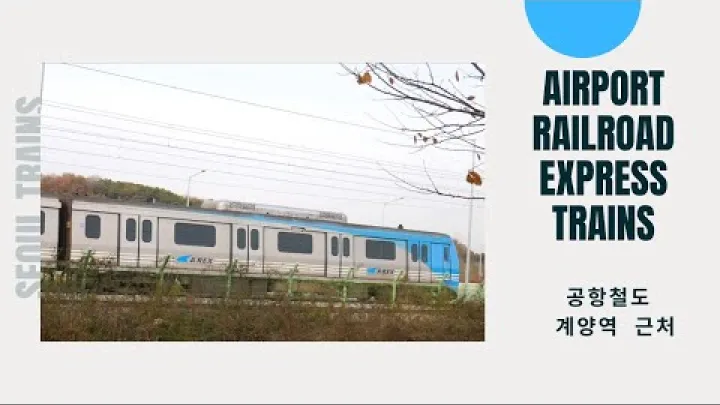
For an airport-to-Incheon journey, a common planning pattern is to use an appropriate All Stop service to Gyeyang Station and then continue on Incheon Subway Line 1. This places the trip on the city-side network rather than sending the traveler first to Seoul Station and then back toward Incheon. The exact train, transfer, and destination station depend on the address.
Central Incheon, Incheon City Hall, Incheon Bus Terminal, and Songdo are not one station. After the airport rail segment, you may need to continue along Incheon Subway Line 1, change through a metropolitan station such as Bupyeong, or use a bus or taxi for the last section. Songdo destinations can require a longer city-side continuation than an address near Gyeyang or Bupyeong.
Check the direction carefully. A traveler who sees Seoul Station prominently on an airport map may take the wrong service for an Incheon city destination. The AREX site provides current route and ticket information. Use it together with a current subway map so the transfer sequence is based on your actual destination rather than on the airport name alone.
Travel by Intercity or Airport Bus
Buses can simplify a trip when a direct route exists, but the word bus covers several different services. Incheon Bus Terminal handles long-distance coaches, while airport limousine and regional buses use route-specific stops.
Use Incheon Bus Terminal for Long-Distance Coaches
Incheon Bus Terminal is a major city-side node for long-distance coaches and is connected to Incheon Subway Line 1. It is a useful destination when you are traveling from another Korean city and want to reach central Incheon without first transferring through Seoul. It is not the same place as Incheon International Airport or the international ferry terminal.
A direct coach can avoid a national-rail transfer, but only selected cities and operators serve the terminal. Destinations, departure times, fares, seat classes, and booking channels vary. Do not infer nationwide coverage from the terminal’s importance. Search for the exact origin and select a ticket whose destination is Incheon Bus Terminal, not an airport, Seoul terminal, or another regional stop with a similar name.
A practical coach workflow is to confirm the departure terminal in your origin city, search the destination as Incheon Bus Terminal, check the arrival date and seat conditions, and save the Korean terminal name for use with maps or taxis. When you arrive, compare the accommodation address with the nearest Line 1 station, city bus, or taxi pickup point. A coach may remove one long-distance transfer while still leaving a separate urban journey.
This option is especially useful for travelers whose origin has a convenient direct departure and whose final destination is near the terminal or a simple city connection. If the coach arrives far from your address, compare its total walking and transfer burden with KTX plus subway.
Choose an Airport Limousine or Regional Bus
Airport limousine buses are route-specific services, not one universal Incheon bus. Each route has its own published stops, timetable, ticket arrangements, and destination area. Some well-known airport bus examples serve Seoul districts such as Dongdaemun, Cheongnyangni, Daerim, and Seoul City Hall. Those routes should not be confused with services for Incheon or Gyeonggi destinations.
Use the Incheon Airport bus search to match four details: your arrival terminal, the destination district, the stop closest to the address, and the departure window. Then check the relevant operator information for boarding instructions and payment. A route number that appears in an old travel post may no longer be the correct service for your destination.
A direct airport bus can be convenient when the stop is close to your accommodation, particularly with suitcases. It can also reduce the number of platforms and stairways compared with a rail itinerary. Rail may be easier when traffic is heavy or when the final address is near a station. A bus may be better when the stop is close and the timetable fits your arrival. The correct choice is determined by the stop and the total route, not by the word limousine.
Use Ferry Routes Through Incheon’s Port
Incheon’s port is a separate gateway for travelers whose itinerary specifically arrives by sea. It should be planned independently from airport, rail, and city bus routes.
Consider International Ferry Access to Incheon
Incheon International Ferry Terminal is mainly relevant to a sea-based itinerary, rather than to an ordinary journey from Seoul or another Korean city. Ferry travel can be useful when the port route itself is important, but it is normally a longer and more structured experience than flying. Plan for a sailing schedule, terminal check-in, immigration, passport controls, and any cabin or vehicle requirements associated with the booking.
Do not name a current international route, sailing day, fare, port fee, or surcharge from a general travel description. These details belong to the specific ferry operator and port notice for your travel date. Check the active route, booking deadline, boarding time, luggage conditions, and passport requirements directly with the operator. A ticket may also have separate conditions for cabin selection, terminal fees, or changes.
Arrival at the ferry terminal is only the beginning of the Incheon journey. From the port, you still need a road or public transport connection to central Incheon, City Hall, Songdo, or another district. Save the final address in a format that can be shown to a driver and allow more time than a simple map distance suggests if you are carrying ferry luggage.
Take Coastal Ferries to Nearby Islands
Coastal ferries to islands such as Baengnyeong, Deokjeok, and Ijak are regional or onward journeys, not the default way to reach Incheon city. Consider them when the island is your destination or when a specific island itinerary is part of your travel plan.
Island services may have limited departures, reservations, capacity controls, and operator-specific boarding rules. A ferry can also be delayed or canceled because of wind, waves, visibility, or a decision by the operator. Check the departure status and marine conditions on the day of travel before leaving for the terminal. Do not rely only on a timetable saved weeks earlier.
Protect the rest of the itinerary with a substantial buffer after the ferry. If you must connect to an airport, KTX train, examination, or fixed appointment, consider arriving in the port area earlier or staying overnight. Keep the ferry-terminal transfer separate from the island booking so a late vessel does not create an unsafe rush through an unfamiliar transport hub.
Drive to Incheon From Seoul and Gyeonggi
Road travel can be practical for travelers starting in Seoul or Gyeonggi, especially when the destination is away from a station. It is also the most flexible option for groups, equipment, and several pieces of luggage, but capital-region traffic can change the end-to-end journey substantially.
Reach Incheon by Expressway and Private Car
When using Incheon City Hall as a map anchor, possible regional approaches include the Gyeongin Expressway, Second Gyeongin Expressway, Capital Region First Ring Expressway, and Seohaean Expressway. These roads serve different origins and districts, so the useful approach depends on where you start and whether the destination is in western, central, or southern Incheon.
Do not quote one standard driving time from Seoul or Gyeonggi. An address near City Hall, the airport, the port, and the Songdo International Business District can produce very different routes. Congestion, roadworks, incidents, weather, bridge approaches, and peak travel periods can make a live journey much longer than a basic map estimate.
Before choosing to drive, use live navigation for the exact origin and destination. Check whether the route includes tolls or bridge and expressway charges, and decide how those costs will be paid. For central destinations, check parking availability and restrictions near the accommodation or venue. Parking near a transit station can sometimes reduce the final driving burden, but use it only when current local information confirms access, fees, and opening conditions.
Private car travel is most attractive when the door-to-door benefit is greater than the cost and uncertainty of the road. For a solo traveler going to a station-side address, rail may be simpler. For a family going to a residential or business district with luggage, the private-car option may be worth the variable traffic time.
Use a Taxi or Rental Car When Convenience Matters
Choose among a regular taxi, a larger or premium taxi, a recognized call van, and a rental car according to group size, luggage, arrival time, and destination. A larger vehicle may reduce luggage problems for a group, while a regular taxi may be adequate for one or two people. A rental car gives flexibility for several stops, but it adds driving, parking, navigation, insurance, and document requirements.
For an airport pickup, use the official taxi rank or a recognized booking channel. Give the driver the complete destination address, including the district and building name when available. Before departure, confirm that the meter or agreed booking terms apply, and ask how tolls and any applicable nighttime or service surcharge will be handled. Avoid accepting an unsolicited ride from someone who approaches inside the terminal instead of directing you to the official pickup process.
For a rental car, check the current rental company rules for accepted licenses, required translations or permits, insurance, deposit, age, and payment. Requirements can differ by company and traveler status, so do not rely on a general statement from an old guide. Also check whether your accommodation has a usable parking space and whether your route enters dense central districts where parking and navigation are more difficult.
Taxi and rental-car prices change with distance, traffic, vehicle type, tolls, and booking conditions. Avoid using a fixed fare example unless it matches the current route and operator. The useful comparison is the total price for your group against the number of public transport transfers and the amount of luggage you must carry.
Choose the Best Route for Common Incheon Journeys
The best route depends on the traveler profile and the exact destination. Use speed, predictability, price, transfer effort, and luggage handling together instead of ranking transport modes in isolation.
Best Option for Speed and Predictability
Define speed as the time from leaving your origin to reaching the actual accommodation or venue. Time to Seoul Station, Incheon International Airport, or Incheon Bus Terminal is only an intermediate measurement. Add the final walk, transfer, waiting period, and time needed to find the correct exit.
Rail is often a strong choice when there is a suitable direct segment and the transfers are easy to understand. For a traveler arriving at the airport and staying near a convenient Incheon subway station, airport rail followed by the appropriate city connection may offer a more predictable journey than a road trip through congested parts of the capital region. For a traveler from Busan or another distant Korean city, KTX followed by a metropolitan connection can reduce long-distance road exposure, although it still requires a transfer.
Road transport may be faster door to door for a group going to an address far from rail, but it should not be called universally fastest. Ferry status and missed connections can also change the ranking. A simple scenario-based choice is useful: use rail for a well-matched station itinerary, a direct coach when its stop is close and its schedule fits, and a taxi or private car when the group values direct access more than a fixed travel time.
Best Option for Lower Cost or Fewer Transfers
Metropolitan subway and bus combinations are usually the first options to compare for a budget-focused urban journey. A transportation card can make multi-leg travel easier and may support integrated bus-subway transfers under the current fare rules. Check the applicable rules rather than assuming that every transfer, service type, or passenger category is treated identically.
An intercity coach can offer a direct arrival at Incheon Bus Terminal from a city with suitable service, which may remove a transfer even if the road journey is slower. KTX generally requires a higher rail budget than ordinary metropolitan transport, but it can reduce long-distance road time. A taxi usually costs more than public transport, while the cost per person can become more reasonable when divided among several travelers.
For example, a solo traveler with light luggage may prefer a subway connection with more walking if it avoids a taxi charge. A family with two large suitcases may choose a direct coach or taxi even when the ticket price is higher because fewer transfers reduce the physical burden. Compare the full cost, walking distance, reservation effort, and delay exposure rather than labeling one mode as best for everyone.
Best Option for Luggage, Groups, and Door-to-Door Travel
Door-to-door road transport is often the simplest choice for several travelers, heavy luggage, mobility limitations, or a destination that is not close to a station. A regular taxi, larger taxi, or recognized call van can take the group directly to the address. Compare the total vehicle cost with the combined public transport cost and the time required for every traveler to move through stations.
An airport or intercity bus may be a useful middle option. It can reduce luggage handling between transfers when its stop is near the hotel, university, or office. However, a stop that looks close on a map may still involve stairs, a busy road crossing, or a second local bus. Check the final segment before choosing the bus, especially when arriving late or carrying equipment.
Accessibility should be part of the route decision. Stations and buses do not all have identical lift locations, platform layouts, escalator access, or level boarding arrangements. Travelers using wheelchairs, traveling with children, or unable to manage stairs should check the relevant station exit and vehicle information and allow time for a staff-assisted route when needed. A route with one additional transfer may be easier if it offers a confirmed lift or a shorter platform walk.
Complete the Last Mile to Incheon’s Main Urban Nodes
Once you reach the wider Incheon area, the last mile can determine whether the route feels easy or difficult. Use city landmarks only as planning anchors, then match the final station or stop to the exact address.
Reach City Hall, Incheon Bus Terminal, and Central Incheon
Incheon City Hall and Incheon Bus Terminal are useful central-city anchors, but they are not interchangeable destinations. Incheon Bus Terminal is a long-distance coach node connected to Incheon Subway Line 1. City Hall is a separate urban destination with its own surrounding stations and bus connections. A hotel described simply as being in central Incheon may be closer to one than the other.
From Incheon International Airport, a high-level rail pattern can involve airport rail to Gyeyang and a continuation on Incheon Subway Line 1 toward the appropriate city-side station. From an arriving intercity coach, the next step may be a local subway, city bus, or taxi from Incheon Bus Terminal. From the ferry terminal, road transport may be more practical depending on the port location, luggage, and time of arrival.
Use the accommodation address to select the exit and final connection. Avoid relying on an approximate walking direction from a general landmark because central Incheon covers multiple neighborhoods. Save the address in both its original form and a map-friendly form that can be shown to a driver.
Continue to Songdo and Other Districts
Songdo and the Songdo International Business District are southern Incheon destinations, not extensions of City Hall or Incheon Bus Terminal. From the airport, travelers may use airport rail and continue along Incheon Subway Line 1, or select a bus or taxi when the route and arrival time make a direct road connection more convenient.
The best final leg depends on the specific Songdo station, building, hotel, or campus. One address may be close to a subway stop, while another may require a local bus or a short taxi ride. The same principle applies to other districts: airport, port, central-city, and Songdo arrivals are separate end-to-end journeys even though they share the Incheon name.
A transportation card can reduce friction on local bus and subway journeys, subject to current fare and transfer rules. For the final leg, use a current map and transport information together. Check the station name, direction, last connection, and whether the selected bus stop is on the correct side of the road. Carrying luggage, arriving late, or traveling with a group may justify a taxi for only the final segment rather than the entire journey.
Final Checklist for Getting to Incheon
Transport information can change, especially for airport buses, ferries, late-night services, and temporary route adjustments. Complete this short checklist before departure and again when your travel date is close.
Confirm the Route Before You Travel
- Identify the exact node. Write down whether you are going to Incheon International Airport, Terminal 1 or Terminal 2, central Incheon, Incheon Bus Terminal, Songdo, or Incheon International Ferry Terminal.
- Confirm the operator and terminal. Match the ticket to the airport, station, port, bus terminal, or railway operator. Make sure a similarly named Seoul or regional stop has not been selected by mistake.
- Check current departure, arrival, and service information. Review the relevant airport, AREX, Korail, bus, ferry, or local transport page shortly before travel. Pay particular attention to route changes, booking requirements, ferry departure status, and the final rail or bus service after a late arrival.
- Estimate the complete transfer. Add immigration, baggage collection, station walking time, platform changes, waiting, and the final trip from the arrival node to the address. Do not use only the vehicle’s scheduled travel time.
- Prepare payment and address details. Keep the booking confirmation, a usable payment method, the full destination address, and the name of the nearest station or stop available offline. This helps when a driver or station staff member needs clarification.
- Keep a realistic backup. Know whether the alternative is a later train, another bus, a recognized taxi or call van, or an overnight stay near the airport or terminal. A backup should be practical for your arrival time and luggage, not only theoretically available.
As a final decision rule, use rail when it provides a suitable and predictable connection, choose a bus when its coverage or direct stop reduces transfers, use a ferry for a specific sea itinerary, and choose road transport when flexibility and door-to-door access justify variable traffic and cost. Once the exact Incheon node is clear, getting there becomes a comparison of manageable trade-offs rather than a search for one universal route.
Select area
Create a post
Posting is free and no registration is required.