Lake Sebu Getting There: Routes via General Santos and Davao

Lake Sebu getting there is usually a road-based journey through South Cotabato, even if you begin with a domestic flight from Manila, Cebu, Davao, or another Philippine gateway. The destination has no commercial airport, railway station, or seaport, so most travelers reach it by combining an airport arrival with vans, buses, and local transport. This guide explains the easiest route, the main gateway choices, the important transfer towns, and the practical checks to make before you travel. It is written for travelers who want a realistic plan rather than a fixed schedule that may no longer be current.
Quick Answer: The Easiest Way to Get to Lake Sebu
For most visitors, the simplest route is to fly to General Santos, continue to the city terminal area, and then travel by van or by bus connections through Koronadal and Surallah. If you are already in Davao City, you can also travel overland from Davao, but the road segment is usually longer.
Best route for most travelers
The best route for most travelers is: fly to General Santos International Airport, transfer to the General Santos city terminal area, look for a van to Lake Sebu, or use the backup chain of General Santos to Koronadal, Koronadal to Surallah, and Surallah to Lake Sebu. This route uses the most practical regional gateway and keeps the overland portion shorter than starting from Davao or Cotabato.

Lake Sebu is an upland municipality in South Cotabato. Because it has no commercial airport or railway station, the last part of the journey is always by road. That road journey may be simple on a good travel day, but waiting time, van loading, road works, rain, and terminal transfers can change the total trip time.
A useful planning assumption is to allow about half a day from General Santos to Lake Sebu if using public transport. Some trips may be faster, especially with a direct van or private vehicle, while others may take longer if you need to transfer through Koronadal and Surallah or if you arrive late in the day.
| Route snapshot | Typical path | Best for |
|---|---|---|
| Fastest common plan | General Santos airport, city terminal, van or bus route to Lake Sebu | Most first-time visitors |
| Reliable backup | General Santos, Koronadal, Surallah, Lake Sebu | When direct vans are unavailable |
| Davao approach | Davao Ecoland Bus Terminal, South Cotabato hubs, Lake Sebu | Travelers already in Davao |
When Davao or Cotabato may make sense
Cotabato City and Awang Airport are more specialized options. They may be useful for travelers already in that part of Mindanao or for visitors traveling with local contacts who understand current routes and conditions. They are not usually the standard choice for general leisure travelers whose main goal is Lake Sebu.
Davao can make sense if you are already in Davao City, if flight availability is much better, or if Davao is part of a wider Mindanao itinerary. It has more urban infrastructure than smaller gateways, but for Lake Sebu specifically it usually adds a longer overland leg. The practical trade-off is simple: Davao may be easier for flight shopping, while General Santos is usually more direct for the final route to Lake Sebu.
Before choosing a less common gateway, check current road conditions, security guidance, terminal information, and onward transport availability. This is especially important when the route depends on multiple local connections rather than a single frequent intercity corridor.
Where Lake Sebu Fits in the South Cotabato Transport Network
Understanding the local transport geography makes the trip easier. Lake Sebu is not a major long-distance transport hub, so the journey is usually built around nearby towns and terminals in South Cotabato.
Lake Sebu is an upland destination reached by road
Lake Sebu is in South Cotabato, within the Soccsksargen region of Mindanao in the southern Philippines. It is known for lake scenery, Tboli culture, resorts, and attractions such as Seven Waterfalls, but from a transport point of view it is best understood as an upland road destination.
Long-distance travelers normally enter the region through General Santos, Davao, Cotabato, or another Mindanao city, then continue by bus, van, or private vehicle. The closer you get to Lake Sebu, the more local the transport becomes. This is why route planning should focus on road hubs such as General Santos, Koronadal, Marbel, and Surallah rather than on direct air or sea access.
If you are coming from outside South Cotabato, expect more than one segment. A typical trip may include a flight, an airport-to-terminal transfer, a regional bus or van, and a final local ride to your accommodation or attraction.
Koronadal and Surallah are the key transfer points
Koronadal, also known as Marbel, is the main provincial interchange that many travelers encounter before going deeper into South Cotabato. You may see references to Koronadal city, Marbel, and terminal names such as YBL Marbel Station. In practical travel terms, these often point to the same general transfer area for continuing buses and vans.
Surallah is the common last lowland jump-off point before the road continues toward Lake Sebu. If a direct van from General Santos to Lake Sebu is not available, the Koronadal-Surallah-Lake Sebu chain is the most useful backup to understand.
Direct vans may operate on some days or routes, but travelers should not rely only on an old online schedule. At the terminal, ask for the vehicle going to Lake Sebu, Surallah, or Koronadal depending on what is available next. If the direct option is full, delayed, or not operating, the transfer route gives you a practical alternative.
Main Gateway Choices for Lake Sebu
Your gateway choice affects both travel time and stress. General Santos is usually the most efficient air gateway, Davao is a useful secondary gateway, and Cotabato is best treated as a situational option rather than the default route.
General Santos International Airport
General Santos International Airport is the primary gateway for most Lake Sebu trips. Route-planning sources identify General Santos as the nearest listed airport to Lake Sebu, with Davao also appearing as another nearby airport option, according to Rome2Rio. For travelers arriving by air, this usually means less overland travel than starting from Davao.
The broad onward route is straightforward: airport to General Santos city terminal area, then van or bus connections toward South Cotabato. Bulaong Terminal is commonly cited by travelers as a key terminal area for regional departures. From there, you can ask for direct vans to Lake Sebu or use connections toward Koronadal and Surallah.
Flight schedules should be checked directly with airlines or booking platforms before travel. Even if the road route is clear, a late flight arrival can reduce your public transport options, so daytime arrival is preferable when possible.
Davao International Airport
Davao International Airport is a secondary gateway for Lake Sebu. It may offer more convenient flight times, better fares, or a better fit for travelers already visiting Davao City. However, it usually requires a longer overland journey toward South Cotabato before you can continue to Lake Sebu.
The usual direction is from Davao City to Davao Ecoland Bus Terminal, then onward by bus toward Koronadal, General Santos, or nearby South Cotabato hubs depending on available routes. After reaching the South Cotabato side, you still need to continue toward Surallah or find a van connection that reaches Lake Sebu.
Choose Davao if it makes your overall itinerary easier, not because it is the shortest route to Lake Sebu. If your only goal is to reach Lake Sebu with the fewest road hours, General Santos is normally the more practical gateway.
Cotabato and Awang Airport
Cotabato City and Awang Airport can be possible gateways, but they are less commonly recommended for first-time leisure travelers going specifically to Lake Sebu. The onward route may involve central Mindanao road links and more complex local decisions than the General Santos route.
This option is more suitable if you are already in Cotabato City, traveling with local guidance, or combining Lake Sebu with other destinations in the area. Before using this route, check current road, transport, and local safety guidance from reliable local sources. A route that looks short on a map may still be less convenient if public transport connections are limited or indirect.
How to Get to Lake Sebu from General Santos
General Santos is the most important route to understand because it is the usual starting point for travelers arriving by air. The trip can be direct if vans are available, but you should also know the transfer route through Koronadal and Surallah.
Step 1: Travel from the airport to the city terminal area
After landing at General Santos International Airport, you normally need to travel into the city terminal area before taking onward public transport. The exact transfer method depends on arrival time, luggage, budget, and whether you have arranged a pickup.

Taxis, local public vehicles, hotel transfers, or private arrangements may be available depending on the time and your plans. Confirm the fare before leaving the airport area, especially if you are not using a metered or clearly priced service. If your accommodation in Lake Sebu offers a pickup or can recommend a driver, that can be useful for late arrivals or groups.
Bulaong Terminal is a commonly mentioned departure point for vans and buses heading toward South Cotabato destinations. Once there, ask at counters or marked vehicles for Lake Sebu, Surallah, or Koronadal rather than relying only on people approaching you outside the main terminal area.
Step 2: Look for direct vans to Lake Sebu
Traveler reports often mention direct vans from General Santos to Lake Sebu. When available, this is the simplest public transport option because it reduces transfers and takes you closer to the destination in one segment.
However, direct van services may not have a fixed timetable that is easy to confirm online. Vans may leave when full, change departure points, or operate more frequently at certain times of day. Treat any old schedule, fare, or last-trip time as a clue, not as a guarantee.
Arrive early if you want the best chance of finding a direct van, especially if you need to reach your accommodation before dark. Early travel also gives you time to switch to the Koronadal and Surallah route if the direct option is not available.
Backup route: General Santos to Koronadal, Surallah, and Lake Sebu
If you cannot find a direct van, use the main transfer chain: General Santos to Koronadal or Marbel, Koronadal to Surallah, then local transport to Lake Sebu. This route is useful because each segment follows a more established local movement pattern.
Yellow Bus Line is a key regional operator on routes in South Cotabato and nearby Mindanao corridors. Public route summaries such as Commutetour list Yellow Bus Line route and schedule ranges, but these should be treated as planning references rather than a promise of the exact trip you will take on the day.
| Segment | What to ask for | Planning note |
|---|---|---|
| General Santos to Koronadal or Marbel | Bus or van to Koronadal, Marbel, or YBL Marbel Station | Confirm the exact platform and departure time at the terminal |
| Koronadal to Surallah | Bus or van to Surallah | Surallah is the usual last major transfer before Lake Sebu |
| Surallah to Lake Sebu | Local van, jeepney, tricycle, or motorcycle option depending on availability | Confirm where in Lake Sebu you will be dropped |
At every transfer point, confirm the fare, destination, and last trip locally. This matters most late in the afternoon, when a missed connection can force you to hire private transport or stay overnight in a transfer town.
Routes from Davao, Manila, Cebu, and Other Origins
Travelers often begin far from South Cotabato, so the best Lake Sebu route depends on the first gateway. The fastest route usually combines a domestic flight with the General Santos road connection, while overland and ferry-first routes require more time and flexibility.
From Davao City to Lake Sebu
From Davao City, the common public transport approach starts at Davao Ecoland Bus Terminal. Look for buses heading toward Koronadal, General Santos, or other South Cotabato-connected routes, then continue toward Surallah and Lake Sebu after reaching the appropriate hub.
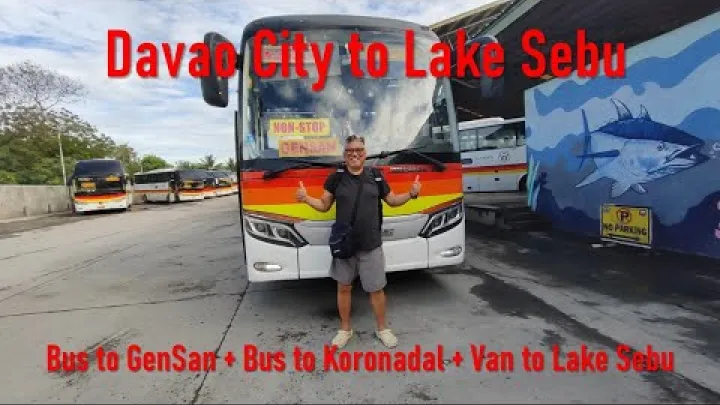
This route is practical if you are already in eastern Mindanao or if Davao is part of your itinerary. It is usually less direct than General Santos because you still need to cover a long intercity bus leg before the final Lake Sebu approach.
Use Davao when the flight price, schedule, or broader travel plan justifies the extra road time. If you are comparing two otherwise similar flights, the General Santos option is usually easier for a Lake Sebu-focused trip.
From Manila to Lake Sebu
From Manila, the fastest pattern is to fly to General Santos and continue by road to Lake Sebu. There is no single direct Manila-to-Lake Sebu public transport service that takes you all the way to the town without transfers.
Route comparison platforms show multiple Manila-to-Lake Sebu combinations, including flight-first routes and much slower ferry or bus-ferry combinations; Rome2Rio lists ferry-and-bus options as significantly longer than flying. Treat these estimates as route-planning references, not live schedules.
The decision rule is simple: choose a flight to General Santos for speed and simplicity. Consider Davao only if fares, flight timing, or your wider itinerary make the longer road journey acceptable. Consider ferry-first routes only if you have a specific budget, cargo, or overland travel reason and enough time for a multi-day journey.
From Cebu, Iloilo, and the Visayas
From Cebu, Iloilo, and other Visayas origins, the most practical route is usually to fly to General Santos when a suitable flight is available, then follow the same road route to Lake Sebu. If direct flights are not convenient, connecting through Manila, Cebu, or Davao may be necessary depending on airline schedules.
Because domestic flight networks change, it is better to use a route formula than a fixed itinerary: reach General Santos if possible, transfer to the city terminal area, then continue by direct van or by the Koronadal-Surallah route. If you arrive through Davao, allow more time for the overland segment.
Ferry options exist in the wider region, but they are usually slower and more complicated for short leisure trips to Lake Sebu. They may make sense for travelers with flexible schedules or those combining several islands and Mindanao destinations.
Last-Mile Transport in Lake Sebu
Reaching the municipality is not always the same as reaching your resort, lakeside accommodation, or attraction. Plan the last mile, especially if you are arriving with luggage or near sunset.
Arriving from Surallah or the Lake Sebu town terminal
Depending on the vehicle you use, you may arrive in Lake Sebu town proper, at a local terminal, or at a roadside drop-off. From there, you may still need a short ride to your resort, homestay, lake area, or attraction. Do not assume your accommodation is walkable from the terminal.

Local transport may include vans, tricycles, and motorcycle taxis, depending on time of day and location. Give the driver the exact resort or attraction name, not just “Lake Sebu,” because accommodations and sights are spread across the municipality.
If you have luggage, arrive late, or are unfamiliar with the area, ask your accommodation in advance about the best drop-off point. Some properties can help arrange a pickup or explain which local vehicle to take from town.
Getting around attractions and resorts
Trips to Seven Waterfalls, lake resorts, viewpoints, and cultural stops are separate from the intercity journey. Even after you reach town, distances, hills, rain, and road layout can make walking impractical.
Motorcycle taxis or tricycles are often more useful for short local rides. For multi-stop visits, agree on the fare, waiting time, and return arrangement before you start. If you want the driver to wait while you visit an attraction, confirm whether the price includes waiting time.
Use basic safety judgment. Ask for a helmet when riding a motorcycle, avoid overloaded vehicles, and be cautious in heavy rain or low visibility. If you are not comfortable with motorcycle transport, ask your accommodation about tricycle, van, or private car options.
Planning the return trip
The return trip can be more stressful than the arrival because you may be trying to catch a flight, a long-distance bus, or a connection in Davao or General Santos. Build more buffer time than you think you need, especially when relying on vans that may wait for passengers.
If you are returning to General Santos for a flight, consider leaving Lake Sebu early in the day. For a morning flight, it may be safer to sleep in General Santos the night before rather than depend on a very early multi-segment public transport trip.
Confirm the last van or bus locally the day before departure if possible. Ask your accommodation, local drivers, and the terminal, because local knowledge is often more current than old online posts.
Schedules, Road Conditions, and Travel Safety
Lake Sebu is reachable, but the route works best when you treat schedules as something to confirm locally. This is especially true for vans, last-mile vehicles, and late-day departures.
How to verify schedules and fares
Provincial and rural transport schedules can change because of demand, vehicle availability, route approvals, fuel costs, road works, or local operating decisions. Vans are especially variable because they may depart when full rather than at a fixed time.
Before you travel, confirm details with terminal counters, transport operators, your accommodation, or local tourism offices. Ask three practical questions: where does the vehicle leave, what time is the last reliable departure, and where exactly will it drop passengers in or near Lake Sebu?
South Cotabato has been working on public transport route planning through its Local Public Transport Route Plan process, as described by the South Cotabato Provincial Government. This is a reason to stay alert to evolving route formalization, not a reason to assume that every service has already changed.
Road quality, rain, and daylight travel
Road access in South Cotabato continues to improve, and provincial road development has been highlighted by the South Cotabato Provincial Government. Even so, local road conditions can vary by segment, weather, and ongoing works.
Rain, fog, upland roads, and construction can slow travel even when the main route is open. This matters most for the final approach to Lake Sebu and for return trips tied to flight departures. Avoid planning a tight connection based only on map distance.
Arriving before dark is a good goal for first-time visitors. Daylight makes it easier to identify terminals, negotiate local rides, find your accommodation, and adjust if a van or bus is not available as expected.
Terminal practicalities and common traveler mistakes
At terminals, verify destinations at official counters or with clearly marked vehicles when possible. If someone approaches you offering a ride, still confirm the destination, fare, and drop-off point before boarding. This is practical caution, not a reason to avoid public transport.
Common mistakes include arriving too late in the day, assuming direct vans depart on demand, trusting a single outdated fare or schedule, and booking a tight flight connection from General Santos after leaving Lake Sebu the same morning. Carry enough cash and smaller bills because local vehicles and small terminals may not accept cards or digital payments reliably.
Also keep your route names clear. Koronadal and Marbel may refer to the same city in travel conversation, while Surallah and Lake Sebu are different stops. If your accommodation is outside the town proper, ask whether you should get off at the terminal, a junction, or a specific resort access point.
Frequently Asked Questions
What is the nearest airport to Lake Sebu?
General Santos International Airport is generally the nearest and most practical airport for Lake Sebu. From there, travelers continue by road through the General Santos terminal area, with either a direct van or transfers through Koronadal and Surallah.
Is there a direct bus or van from General Santos to Lake Sebu?
Direct vans are reported by travelers and may be available, but schedules can change and vans may leave when full. If no direct van is available, use the backup route from General Santos to Koronadal, then Surallah, then Lake Sebu.
How long does it take to get to Lake Sebu from General Santos?
Plan for about half a day by public transport, depending on airport transfer time, waiting time at terminals, road conditions, and whether you find a direct van. A private vehicle or well-timed direct van can be faster, while multiple transfers can take longer.
Can I reach Lake Sebu from Manila in one day?
Yes, it is possible if you take an early flight from Manila to General Santos and continue by road the same day. It is safer to avoid late arrivals because onward vans and local transport may be limited later in the day.
Is Davao a good gateway for Lake Sebu?
Davao is a useful gateway if you are already in Davao City or find much better flights, but it is usually less direct than General Santos. Expect a longer overland trip from Davao toward South Cotabato before continuing to Lake Sebu.
What should I verify before leaving Lake Sebu for a flight?
Verify the first available local transport, the last reliable van or bus, the travel time to your gateway, and the buffer needed for airport check-in. For morning flights from General Santos, consider staying in General Santos the night before.
Conclusion: The Smartest Way to Reach Lake Sebu
The smartest way to reach Lake Sebu is to treat General Santos as the main gateway, travel early, and keep the Koronadal-Surallah route as your backup. Direct vans can make the trip easier, but they should be confirmed at the terminal rather than assumed from old online information.
Davao, Manila, Cebu, and Cotabato can all connect to Lake Sebu in different ways, but most routes eventually depend on the same South Cotabato road network. Build in buffer time, confirm schedules locally, carry cash, and plan your return more carefully than your arrival. With those safeguards, Lake Sebu is a manageable and rewarding upland destination to reach by road.
Select area
Create a post
Posting is free and no registration is required.