Mati Getting There Guide: Routes via Davao City

This Mati getting there guide explains the practical ways to reach Mati, Davao Oriental, with a focus on routes that most travelers can actually plan around. For most visitors, the simplest route is to arrive in Davao City, then continue by road to Mati. This guide compares buses, vans, private cars, flights to nearby gateways, and ferry options to Davao before the final overland leg. It also explains what to verify before departure, especially because provincial schedules, terminals, and passenger services can change.
Quick Answer: The Best Way to Get to Mati
If you want the easiest and most predictable route, plan your trip around Davao City. Fly or travel to Davao City first, then continue to Mati by bus, van, or private car.
Most Travelers Should Route Through Davao City
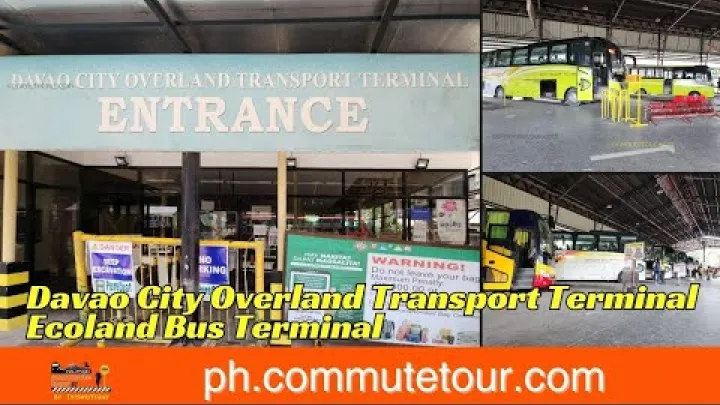
For most domestic and international travelers, Francisco Bangoy International Airport, commonly called Davao International Airport, is the practical air gateway for Mati. After landing in Davao City, the usual next step is to reach Davao Ecoland Bus Terminal or arrange a private transfer for the road journey to Mati.
Mati is reachable, but it is not usually a one-seat journey from major Philippine gateways. Direct scheduled air and sea access to Mati appears limited from available public route information, so the safer planning assumption is a connected journey: arrive in Davao City, transfer to intercity land transport, then complete the last local leg in Mati.
In simple terms, the bus is usually the best value, a private car is usually the most comfortable, and a van may be faster in some cases but less predictable. If your flight lands late in Davao, consider staying overnight in Davao City instead of forcing a night road trip.
Understanding Mati’s Transport Position
Mati sits on the eastern side of Mindanao in Davao Oriental. It is well known to visitors heading toward Dahican Beach, but its transport position is different from larger gateway cities such as Davao City, Cebu, or Manila.
Mati Is a Road-Based Destination for Most Visitors
For most travelers, Mati is a road-based destination. The common route is from Davao City through the Davao Region road network, often passing or connecting through areas such as Tagum City depending on the exact route and service. Travelers coming from northern Mindanao or eastern Mindanao may also use Tagum City as an interchange before continuing toward Mati.
A typical journey has three parts. First, you reach the region by air, ferry, or long-distance road travel. Second, you take an intercity bus, van, or private vehicle toward Mati City Bus Terminal or the city proper. Third, you use local transport to reach your accommodation, the city center, or a beach area such as Dahican Beach.
Travel time should be treated as an estimate, not a guarantee. Traffic leaving Davao City, roadworks, weather, waiting time at terminals, and holiday demand can all change the real journey time.
Why Mati Airport Is Usually Not the Main Arrival Option
Mati Airport exists as a local airport facility and is described as the only airport in Davao Oriental and a secondary airport in background references such as Wikipedia. However, travelers should not assume that an airport in a city means there are regular commercial passenger flights.
When planning a trip, search first for flights to Davao International Airport unless a current airline booking page clearly shows scheduled passenger service to Mati. Avoid building an itinerary around Mati Airport unless you have confirmed service directly through an airline, airport authority, or current local travel advisory.
Why the Port of Mati Is Not a Standard Passenger Ferry Gateway
The Port of Mati may appear on maps or in local references, but it should not be treated as a standard long-distance passenger ferry gateway unless a current operator or port notice confirms a usable service for your dates. Local maritime activity around Mati or Pujada Bay is not the same as a scheduled passenger ferry from Manila, Cebu, or another major city.
If you want to travel partly by sea, the more practical pattern is to arrive by ferry in Davao City and continue by land to Mati. Even then, ferry travel adds time and complexity, so it is better suited to slow travel itineraries than short vacations.
Getting from Davao City to Mati
The Davao City to Mati leg is the most important part of the route for many travelers. Your choice depends on budget, arrival time, luggage, comfort needs, and how much uncertainty you are willing to accept.
Bus from Davao Ecoland Bus Terminal to Mati
The bus is usually the most straightforward public transport option from Davao City to Mati. Davao Ecoland Bus Terminal is commonly used for intercity buses, and Bachelor Express is a frequently referenced operator on the Davao to Mati route. A published route listing from Pamasahe shows scheduled Davao City to Mati trips, but travelers should still confirm the current timetable at the terminal or with the operator before travel.
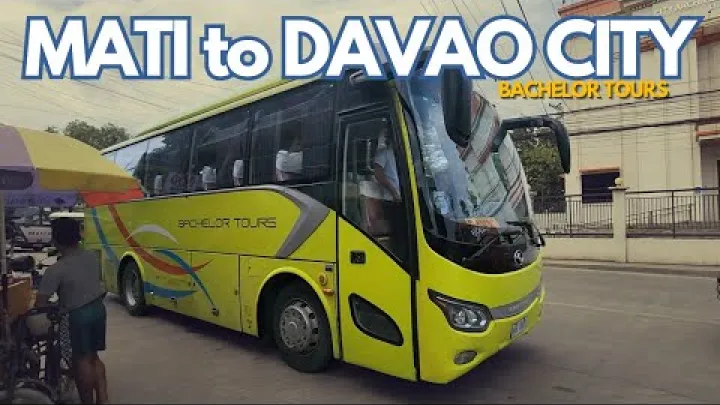
The journey is often described as taking around four hours, but this can vary. Early morning departures may be easier for onward planning, while late-day travel can be more affected by traffic, limited onward local transport, and fatigue after a flight.
A practical bus plan looks like this: arrive in Davao City, go to the correct terminal, find the Mati-bound bus, confirm that the bus goes to Mati City Bus Terminal or your intended stop, keep small cash for fares and food, and secure your luggage before boarding. If you are unsure, ask the conductor or terminal staff to confirm the destination before you pay or load your bags.
The bus is best for solo travelers, budget travelers, and people who want a more established public transport option. It is less ideal if you have very large luggage, surfboards, young children, or a flight arrival that leaves little time to reach the terminal comfortably.
Van from Davao City to Mati
Vans may be faster than buses in some cases because they can have fewer stops and may depart when full. However, they are often less spacious, may have tighter seating, and can be less predictable for travelers who need a clear schedule.
Van terminal locations, operators, and departure patterns can change. For that reason, avoid relying only on old travel blogs or informal comments. If you want to take a van, verify the current departure point after you arrive in Davao City, ask your accommodation, or check with local contacts close to your travel date.
Choose a van if you value speed and are comfortable with less space. Choose the bus if you prefer a more predictable intercity transport setting, more room for luggage, and a clearer terminal process.
Private Car or Taxi from Davao to Mati
A private car, hired van, or arranged transfer is the most flexible option from Davao City to Mati. It can be a good choice for groups, families, late arrivals, travelers carrying surfboards, or anyone who wants a direct pickup from Davao International Airport or a hotel.

Private transport costs more than a bus or public van, so agree on the fare and terms before departure. Confirm what is included, where the pickup will happen, whether tolls or parking are included if applicable, how many passengers and bags the vehicle can carry, and whether the driver is familiar with the route to Mati.
If you are self-driving, be realistic about road conditions, fatigue, and night driving. A daytime trip is easier for first-time visitors because signs, road curves, weather changes, and provincial traffic are simpler to manage in daylight.
Routes to Mati from Major Philippine Gateways
Travelers often search for routes from Manila, Cebu, Butuan, or other cities, but many of these routes still lead back to the same final pattern: reach Davao City or a Mindanao road interchange, then continue overland to Mati.
From Manila to Mati
The usual practical route from Manila to Mati is to fly from Manila to Davao City, then continue by land from Davao City to Mati. Route aggregators such as Rome2rio show the general pattern of using Davao as the air gateway before continuing toward Mati, although same-day details should always be checked with airlines and transport operators.
Bus and ferry combinations from Manila may exist as part of broader Philippine inter-island travel, but they are much slower and more complex than flying to Davao for most visitors. They may involve multiple transfers, long sea crossings, port processing, and significant buffer time.
Before booking your Manila to Davao flight, check the arrival time carefully. A morning or early afternoon arrival gives you more flexibility for the onward land trip. A late evening arrival may make an overnight stay in Davao City the safer and more comfortable choice.
From Cebu and the Visayas to Mati
From Cebu and many Visayas hubs, the simpler route is usually to fly to Davao City and continue overland to Mati. This keeps the journey easier to understand and reduces the number of transfers.
Ferries to Davao can suit travelers who have more time or who prefer sea travel. Ferry route listings for Davao City, such as those shown by Direct Ferries, can help with broad planning, but a ferry to Davao City is not a ferry directly to Mati. After arriving in Davao, you still need a road transfer to Mati.
If you use a ferry, allow extra time for check-in, port processing, weather-related delays, baggage handling, and the transfer from the Davao port area to the bus terminal or your private vehicle.
From Butuan, Tagum, and Northern Mindanao to Mati
Travelers coming from Butuan, Cagayan de Oro, Surigao, or other northern Mindanao points should expect a longer road-based journey. Tagum City is an important interchange for many regional routes and may be part of the transfer pattern toward Davao Oriental and Mati.
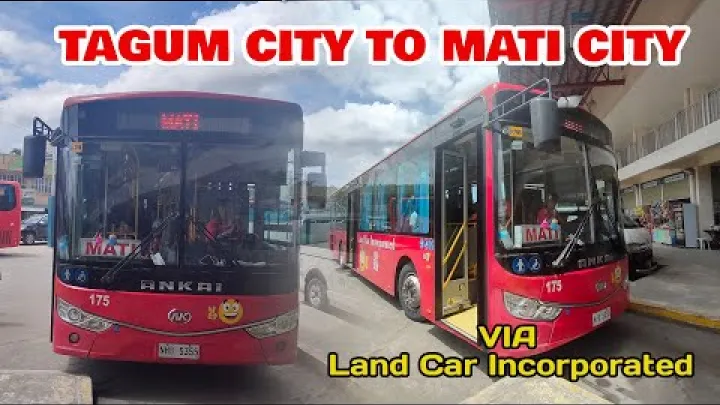
From Butuan to Mati, a common planning assumption is a transfer through Tagum or another regional road hub, depending on current bus routing. Do not plan tight same-day commitments in Mati after a long northern Mindanao trip, especially if you need to change buses.
If you are traveling from Cagayan de Oro or farther north, consider breaking the journey if needed. Long road days are possible, but they are more comfortable when you include meal stops, transfer time, and a backup plan in case a connection is missed.
Choosing the Best Transport Option
The best way to get to Mati depends less on one perfect route and more on your travel style. Compare the full chain, not only the main leg.
Fastest, Cheapest, and Most Comfortable Choices
For most visitors, the main decision is between a flight to Davao plus bus, a flight to Davao plus private car, a van from Davao, or a ferry to Davao plus land transport. The table below gives a practical comparison without assuming exact fares or fixed schedules.
| Option | Typical cost level | Booking difficulty | Best for |
|---|---|---|---|
| Fly to Davao plus bus to Mati | Low to medium | Moderate | Budget travelers and most first-time visitors |
| Fly to Davao plus private car | Higher | Easy if arranged early | Groups, families, late arrivals, large luggage |
| Van from Davao to Mati | Low to medium | Variable | Travelers who value speed over space |
| Ferry to Davao plus land transport | Variable | More complex | Slow travelers with flexible schedules |
| Regional road route via Tagum | Low to medium | Moderate | Travelers already in northern or eastern Mindanao |
If you want the lowest practical cost, use public transport and budget for every segment: airport or port transfer, intercity bus or van fare, meals, and the local ride in Mati. If you want the least stress, pre-arrange a private vehicle from Davao City or ask your accommodation in Mati for transfer guidance.
When to Avoid Tight Connections
Avoid scheduling fixed activities in Mati immediately after a long transport chain. Even if each segment looks simple on paper, delays can come from traffic in Davao City, waiting time at the terminal, road conditions, weather, or port processing if you arrive by ferry.
This is especially important during holidays, long weekends, school breaks, and periods of poor weather. If your flight lands late, an overnight stay in Davao City can be more comfortable than pushing onward when you are tired and public transport options are less clear.
Arriving in Mati and Reaching Your Final Stop
Reaching Mati City is not always the end of the journey. Many visitors still need a local transfer to a hotel, guesthouse, beach area, or meeting point.
Mati City Bus Terminal to the City Center
Many intercity passengers arrive at Mati City Bus Terminal before transferring to local transport. Tricycles and other local vehicles are commonly used for short last-mile trips in Philippine cities, but fares and availability should be confirmed locally.
Keep small cash, especially if you arrive outside normal banking hours. Before boarding a local ride, clearly state your destination, confirm the fare if the ride is not metered, and make sure the driver understands whether you are going to the city center, a specific hotel, or another local landmark.
Getting from Mati City to Dahican Beach
Dahican Beach is a common final destination for travelers going to Mati, but it usually requires a local transfer from the bus terminal or city center. Do not assume that your intercity bus will drop you directly at your beach accommodation.
Ask your accommodation about the best pickup point, estimated local travel time, and current fare range. If you have large bags, surfboards, or arrive after dark, arranging the last-mile transfer in advance can make the arrival much smoother.
Booking, Verification, and Travel Safety Tips
Transport information for provincial routes can change. The safest approach is to use online information for planning, then verify the final details close to your travel date.
How to Verify Current Schedules Before You Go
Check flight schedules through airline booking pages, bus details through operators or terminal counters, and ferry details through ferry operators or booking platforms. If you are staying at a hotel or guesthouse in Mati, ask them what route current guests are using from Davao City.
Online route aggregators and schedule pages are useful starting points, but they should not be treated as final proof of same-day operations. A route may exist in general while departure times, terminals, fares, or vehicle types change.
Before leaving Davao City, confirm the destination sign, the expected stop in Mati, and whether there are any known delays. If you are traveling on the last possible departure of the day, have a backup plan.
Common Transport Traps to Avoid
Common planning mistakes include relying on outdated fare information, assuming van terminals never change, accepting a local transfer without confirming the fare, and assuming Mati has direct scheduled flights or long-distance ferries.
In Davao City, use registered taxis, app-based rides where available, or transport recommended by your accommodation when moving between the airport, port, hotel, and bus terminal. For non-metered rides, agree on the fare before leaving. Keep enough cash for provincial transport because cards and online payments may not be accepted for every segment.
This is normal travel caution, not a reason to avoid the trip. Most problems can be reduced by confirming details, traveling in daylight when possible, and keeping your itinerary flexible.
Sample Route Plans for Different Travelers
Use these sample plans as starting points. Adjust them based on your arrival time, budget, luggage, and comfort level.
Best Route for First-Time Visitors
The best route for many first-time visitors is to fly into Davao City, transfer to Davao Ecoland Bus Terminal, and take a bus to Mati. If you prefer fewer moving parts, arrange a private vehicle from Davao International Airport or your Davao hotel.
This route minimizes uncertainty compared with multi-leg ferry routes or long regional bus chains. Try to arrive in Davao early enough to continue to Mati in daylight. If your flight arrives late or you feel tired, stay overnight in Davao City and continue the next morning.
Best Route for Budget Travelers
Budget travelers should usually plan around public transport. Fly or bus to Davao City, then use the bus to Mati. If you are already in Mindanao, check whether a route through Tagum City makes more sense than backtracking through Davao City.
Budget for the whole journey, not only the Davao to Mati fare. Include airport-to-terminal transport, food, water, the intercity fare, and the local ride from Mati City Bus Terminal to your accommodation. Buses are often easier to plan around than informal van arrangements, especially if you are new to the area.
Best Route for Groups and Travelers with Luggage
Groups, families, and travelers carrying surfboards or large bags may find a private car or van worth the cost. The headline vehicle price may look high, but the cost per person can be more reasonable when shared.
Before booking, confirm the vehicle size, pickup point, total fare, payment method, luggage space, driver waiting time, and return arrangements. Do not choose a vehicle only by price; reliability, space, and clear communication matter on a multi-hour provincial trip.
Final Planning Tips for Getting to Mati
What to Confirm Before Departure
Before departure, confirm your Davao arrival time, current bus or van departure point, expected travel time, cash needs, local transfer to your accommodation, and any weather or road concerns that could affect the trip. If direct Mati transport information is uncertain, use Davao City as your planning base.
The main takeaway is simple: getting to Mati is manageable when you plan it as a connected chain rather than a single ride. Choose your gateway, verify the onward road leg, allow buffer time, and arrange the final local transfer before you arrive if your destination is outside the city center.
Frequently Asked Questions
Can you fly directly to Mati?
Do not assume you can fly directly to Mati. Mati Airport exists, but travelers should check current airline booking pages because regular scheduled commercial flights may not be available. For most visitors, Davao International Airport is the practical air gateway.
What is the easiest way to get to Mati from Davao Airport?
The easiest public route is to travel from Davao Airport to the appropriate intercity bus terminal in Davao City, then take a Mati-bound bus. The easiest overall route is a pre-arranged private transfer from the airport to Mati, especially for groups or late arrivals.
How long does the Davao to Mati bus take?
The Davao to Mati bus is often planned as a multi-hour trip, commonly around four hours, but the real time depends on traffic, stops, weather, and road conditions. Confirm current schedules and allow extra time if you have onward plans.
Are there ferries directly to Mati?
Do not plan around a direct long-distance passenger ferry to Mati unless a current ferry operator or port notice confirms it. Travelers using sea travel usually arrive in Davao City first, then continue to Mati by road.
Is it better to take a bus, van, or private car to Mati?
The bus is usually best for budget and predictability, a van may be faster but less spacious, and a private car is best for comfort, groups, luggage, or late arrivals. Choose based on your arrival time, budget, and need for flexibility.
Select area
Create a post
Posting is free and no registration is required.