Pathein Travel Guide: Ayeyarwady Delta, Beaches and Tips

Pathein is a useful gateway to the Ayeyarwady Delta, a working river city, and the nearby beaches of Chaung Tha and Ngwe Saung. It offers a different experience from Myanmar’s major heritage destinations because daily life, river transport, handicrafts, and coastal travel are closely connected. This Pathein travel guide explains how the city fits into Southern Myanmar, how to plan routes from Yangon, where to base yourself, and what to expect from a short visit. Because travel conditions and local services can change, use the practical guidance below together with current official advice and direct confirmation from transport and accommodation providers.
Current Travel Conditions and a Go-or-No-Go Check
Before choosing attractions or booking a beach room, decide whether travel to Pathein and the surrounding townships is appropriate at the time of your trip. This decision should be based on current official guidance and locally confirmed access, not simply on whether a hotel, bus, or tourism listing appears online.
Check Current Official Advice Before Booking
Myanmar’s security, administrative, and transport conditions can change with limited notice. A travel listing may show that a route or property existed recently, but that does not mean that a leisure trip is currently advisable or that every township on the route can be reached. Begin with the live GOV.UK Myanmar travel advice page and read the sections relevant to Myanmar, Pathein, nearby townships, road travel, insurance, entry requirements, and legal differences.
Also consult the current advisory issued by your own government. Check whether your travel insurance remains valid for the proposed route and whether its conditions exclude areas covered by an official recommendation against travel. If official guidance advises against travel to Myanmar or a relevant area, treat that advice as the deciding factor. The presence of functioning businesses or previous visitor reports does not override it.
Use a Flexible, Locally Verified Itinerary
Pathein is often planned as part of a chain from Yangon to the city, then onward to the delta or the coast. That makes flexibility more important than a tightly timed schedule. Separate the basic go-or-no-go decision from ordinary itinerary choices, and avoid assuming that an attractive route will remain open for the whole booking period.
A simple pre-departure check should cover the following:
- Confirm that the townships, roads, and overnight stops on your proposed route are currently accessible.
- Confirm that the Yangon terminal, Pathein connections, and any coastal transport are operating.
- Ask your accommodation whether it is open, accepting new bookings, and able to receive you on the planned date.
- Keep a cancellation option, a fallback destination, or a postponement plan instead of making every booking non-refundable.
A short first plan is usually easier to change than a multi-stop journey with same-day transfers. If any essential part cannot be confirmed, remove it from the itinerary rather than building the rest of the trip around it.
How Pathein Fits into Southern Myanmar
Pathein is best understood as both a destination and a practical regional base. The city connects urban services and commerce with the waterways and communities of the Ayeyarwady Delta, while roads continue west toward the coastal beaches.
Understand Pathein’s Role in the Ayeyarwady Delta
Pathein is a substantial riverine city on the Pathein River, on the western side of the Ayeyarwady Delta. It functions as a regional centre for administration, trade, local services, transport, and supplies. For visitors, that means the city can be more useful than a simple overnight stop: it is a place to observe an active urban environment before continuing into river communities or toward the coast.
The name Pathein may refer to the city, Pathein District, or the wider area used in travel planning, so check the exact location when arranging transport. Central streets, the river, religious landmarks, markets, and transport areas form the most practical visitor geography. Beyond the built-up area, the landscape becomes increasingly shaped by waterways, villages, agriculture, and roads leading toward the Bay of Bengal coast.
Southern Myanmar is a broad travel concept rather than one uniform visitor region. Pathein is not a stop on the same route as Mawlamyine, Ye, or Dawei in the far south. It belongs to the Ayeyarwady and western coastal travel pattern, with Yangon as the most obvious starting point for many visitors.
Compare Pathein, Chaung Tha, and Ngwe Saung
The three bases serve different purposes. Pathein is the urban and logistical base, Chaung Tha is commonly associated with a livelier and more local beach atmosphere, and Ngwe Saung is generally presented as a more resort-oriented option with quieter sections and longer-stay accommodation. These are planning tendencies, not permanent guarantees about visitor numbers, cleanliness, service quality, or access.
| Base | Typical character | Useful for |
|---|---|---|
| Pathein | Working river city and cultural base | Landmarks, markets, crafts, supplies, onward transport |
| Chaung Tha | Active, local, and family-oriented beach setting | Short beach breaks and varied casual activities |
| Ngwe Saung | Longer beach stays and resort-style accommodation | Beach time, quieter sections, and coastal excursions |
Choose Pathein when you want the most practical access to city services and delta experiences. Choose Chaung Tha when activity and a mixed local accommodation scene matter more than a resort atmosphere. Choose Ngwe Saung when you prefer to stay on the coast for several nights and want a broader selection of resort-style properties. The beach comparison should come after the official travel and access check, not replace it.
Choose a Realistic Length of Stay
Pathein often works well as a short urban and transit stop, but the right length depends on whether you want only the city or also a confirmed river and craft experience. A one-night stay can cover arrival, a central walk, a landmark, market browsing, and a look at the Pathein River. It is useful when the city is a bridge between Yangon and the coast.
Allow two days if you want to slow down, visit several religious or urban sites, look for Pathein umbrellas, and arrange time near the river. Add more time only when a delta outing, workshop visit, or beach extension has been confirmed and the route can support it. A shorter city-focused itinerary is often more practical than adding uncertain connections simply to increase the number of places visited.
Getting to Pathein and Moving Around
Road travel is the principal documented connection for a Yangon–Pathein trip. Once in the city, local movement is relatively simple in central areas, while delta and beach travel requires more planning because transport may use different terminals, vehicles, crossings, and informal arrangements.
Reach Pathein from Yangon
Buses, private cars, and taxis are the main options to investigate for the Yangon–Pathein journey. The Dagon Ayar Highway Bus Station in Yangon is an important reference point in travel planning, but the actual departure terminal can change by operator or service. Use the BNF Express destination page as an operator starting point, not as proof of a current timetable or fare.

Before leaving Yangon, confirm the current departure terminal, bus name, departure time, fare, baggage rules, and expected arrival time directly with the operator. Ask whether the service is a direct bus or involves a change. A normal driving estimate is not the same as an actual bus journey: stops, traffic, checkpoints, road conditions, and loading time can all affect the arrival.
Private vehicles offer more control over stops and departure time, but the cost and road situation need to be assessed directly. Taxis may be practical for a group, although a long-distance fare should be agreed before departure. Keep the Pathein arrival flexible enough to accommodate a late bus rather than booking a tightly connected coastal transfer on the same day.
Continue to Chaung Tha or Ngwe Saung
The common route structure is to travel to Pathein first and then change to a local bus, pickup, shared vehicle, or private transfer toward the coast. The bus-station area near Shwemokhtaw Pagoda and Min Gyi Road can serve as a local reference point, but ask at your accommodation or the operator for the current departure place when you arrive.
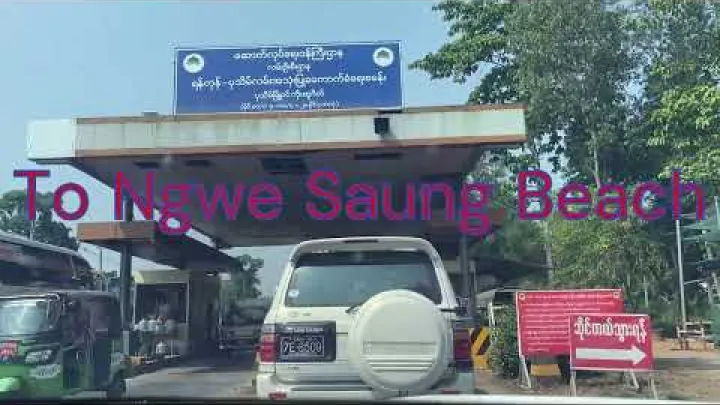
Available travel-guide material has quoted approximately 7,000–8,000 kyat and three to four hours for a Pathein–Chaung Tha bus journey. Treat those figures as indicative travel-history information rather than a current price or guaranteed duration; the Wikivoyage Chaung Tha guide itself should not replace direct operator confirmation.
Shared vehicles can cost less and may depart when full, but they offer less control over timing and luggage. A private vehicle can be easier for families or groups carrying beach equipment, while informal motorbike transfers may be useful for short local connections only when the driver, vehicle, luggage arrangement, and road conditions are acceptable. Do not choose a transport mode solely because an older fare or journey time looks attractive.
Move Around Pathein and Arrange Delta Transport
Walking can work well in central Pathein when your accommodation, markets, landmarks, and river access are close together. Local taxis or motorbike taxis may be available for longer urban trips, but arrangements can be informal and prices should be agreed before the ride. Ask your accommodation which pickup points are currently used instead of relying on a map pin or an old travel report.
![Preview image for the video "[EngSub] The 8-Hour Ferry to Mawtinzun | မော်တင်စွန်း သင်္ဘောလက်မှတ် ဝယ်ပုံနှင့် သင်္ဘောခရီးစဉ်".](/sites/default/files/styles/media_720x405/public/oembed_thumbnails/2026-08/-Dn0qshWGUcaV9JrVq4IfZA5S74MawTWtagNdMLuBdc.jpg.webp?itok=BsDNTHwv "Preview image for the video \"[EngSub] The 8-Hour Ferry to Mawtinzun | မော်တင်စွန်း သင်္ဘောလက်မှတ် ဝယ်ပုံနှင့် သင်္ဘောခရီးစဉ်\".")
Everyday river ferries and crossings are different from organized sightseeing boat trips. A local crossing may be part of ordinary travel to a nearby village area, while a private delta outing is arranged around a route, landing, and return time. Do not assume that a sightseeing boat has a published timetable, a standard departure point, or formal tourist infrastructure.
Before paying for a ferry or boat trip, ask the operator to confirm:
- the exact departure point, route, duration, and return arrangement;
- the condition of the boat and whether suitable life jackets are available;
- what happens if rain, wind, river conditions, or another disruption cancels the trip;
- the total price, payment method, passenger limit, and a working way to contact the operator.
Keep the return plan clear, especially if the boat leaves you at a village landing rather than returning to central Pathein. A local ferry is part of the transport system; a private excursion requires a more deliberate safety and communication check.
Where to Stay in and around Pathein
The best base depends on whether your priority is city access, delta planning, or uninterrupted beach time. Pathein provides the most flexible services, while the coastal bases reduce daily transfers but make the trip more dependent on current road access and local resort operations.
Base in Pathein for City and Delta Access
Pathein is the practical base for visitors who want markets, religious landmarks, Pathein umbrella shopping, river access, local food, and easier onward transport. Staying in the city also gives you time to reorganize after arriving from Yangon, replace supplies, confirm a boat arrangement, or decide whether a beach extension remains realistic.
Accommodation is a changing mix of city hotels and guesthouses rather than a fixed ranking of properties. When comparing rooms, focus on location and operating details: distance from the current transport area, access to central streets, proximity to food and basic services, reception hours, water and electricity arrangements, and whether the property can help arrange local transport. Confirm current opening status, facilities, room conditions, and booking terms directly.
Base at Chaung Tha or Ngwe Saung for Beach Time
Chaung Tha is commonly suited to travelers seeking a more active beach environment, casual local businesses, family-oriented activity, and a range from simple guesthouses to larger hotels. Ngwe Saung is more often chosen for a longer beach stay, a broad shoreline, quieter sections, and resort-style accommodation, including higher-end properties in available listings.
Choose the coast as your base when you want to spend most of the day at the beach rather than make repeated transfers from Pathein. Choose Chaung Tha for a shorter, more varied beach stop; choose Ngwe Saung when accommodation style and an extended coastal stay are more important. In either case, compare current beach access, operating services, road connections, and cancellation terms before moving away from the city.
Best Time to Visit Pathein
Seasonal planning affects comfort, road transfers, river outings, and beach activities, but favorable weather does not by itself make travel appropriate. Use the climate pattern as one part of the decision after checking current access and official advice.
Plan Around the Cool, Hot, and Wet Seasons
A broad planning framework places the generally cooler and drier period around November to February, hotter conditions around March to May, and the wetter monsoon period roughly from June to October. These boundaries are approximate rather than fixed annual rules. Heat and humidity can make city walking tiring, while monsoon rain may affect roads, river crossings, boat departures, and coastal conditions.
The cooler, drier months are usually the easiest for combining pagodas, markets, river walks, and beach transfers. The hotter months call for shorter walking periods, shade, drinking water, and an early or late activity schedule. During the wetter months, allow more time for road travel and expect outdoor plans to require changes. Hotel prices, demand, and service availability can also vary by season, but do not assume a predictable pattern without checking current local rates.
Match Weather to City, River, and Beach Activities
Use a same-day conditions check before each outdoor activity. Review the current forecast, then ask accommodation or transport staff about road conditions, river levels, rain, wind, and surf. This is especially important before a ferry crossing, delta boat trip, swimming session, or long transfer to Chaung Tha or Ngwe Saung.
On a comfortable day, put pagodas, markets, and longer walks into the cooler part of the day and keep flexible time near the river. On a wet or windy day, reverse the order, shorten outdoor stops, or remain in the city if the road or river plan is uncertain. Do not treat a beach as automatically suitable for swimming or boating; follow local operator instructions and beach conditions at the time.
Things to Do in Pathein
Pathein’s attractions are best approached as a compact city experience rather than a long list of isolated sights. Craft, religion, river life, markets, food, and ordinary leisure spaces together explain why the city is worth more than a rushed transfer stop.
See Pathein Umbrella Craft
The Pathein umbrella is the city’s best-known handicraft identity. It is valued as a practical object as well as a decorative product, and its colors and designs make it an easy way to connect a short city visit with local making traditions. The production involves multiple stages and careful handwork, but avoid relying on a single exact step count unless it has been confirmed by a current maker or cultural source.
Look for umbrellas in markets, craft shops, or local stalls, and ask whether a maker is willing to explain the process. A public workshop visit is not guaranteed, so do not arrive expecting a formal factory tour. Purchase respectfully, ask before photographing people or work areas, and consider buying directly from a local maker when the price and product are clear. A post from Tourism in Myanmar also places traditional Pathein umbrellas within the wider cultural setting of regional pilgrimage and festival activity.
Visit Pagodas, the Cathedral, and Urban Landmarks
A flexible city cluster can include Shwemokhtaw Pagoda, Shwezigon Pagoda, St. Peter’s Cathedral, Royal Lake Amusement Park, and Ocean Super Center. The religious buildings show the city’s spiritual and architectural character, while the lake, shopping, and commercial spaces show Pathein as a working regional city rather than a resort enclave.

Consider choosing one or two religious sites, then adding a market or urban leisure stop instead of trying to visit every listed place. Opening hours, access, maintenance, and photography rules may change, so confirm details locally. At pagodas and other religious buildings, wear modest clothing, remove shoes where required, keep your voice low, and avoid interrupting worship. Apply the same care at St. Peter’s Cathedral and ask before photographing people, ceremonies, or private areas.
Cross the River and Experience Delta Life
A local river crossing can reveal how Pathein connects with nearby communities. Depending on the route and conditions, you may observe commuters, cargo, small boats, river traffic, village access, and the gradual change from the city to semi-rural surroundings. The value is in understanding an everyday transport system, not treating a village as a staged attraction.
A confirmed delta boat trip may follow river channels and include a village landing, pottery activity, agriculture, or views of riverine landscapes. These possibilities vary by route and operator. Ask before entering a home, workshop, farm, or religious space, and do not photograph people or children without permission. Avoid taking objects, walking through work areas, or turning a private village routine into a photo stop.
Explore Food, Markets, and Everyday Leisure
Pathein’s food experience is more useful to approach through markets and ordinary eateries than through a single claimed signature dish. Look for fresh produce, seafood, rice and noodle meals, snacks, and family-oriented restaurants. Markets can also be a practical place to see dried seafood and ingredients connected with the delta economy.
Restaurant names such as G7 Gym & Restaurant, City Diner Restaurant, Kha Kha Gyi, Royal Lake Restaurant, and Lonkan Rooftop Bar can be treated as leads, not endorsements. Menus, opening hours, prices, and operating status need local confirmation. Choose busy food outlets when possible, eat food that is thoroughly cooked, and use sealed or reliably treated drinking water if you are uncertain about the local supply.
Chaung Tha and Ngwe Saung Beach Extensions
The beaches are natural extensions of a Pathein itinerary, but they are not interchangeable. Both require a separate transfer from the city, and the right choice depends on atmosphere, accommodation, activities, and the amount of time you can give to the coast.
Chaung Tha: Lively Beach Activities and Budget Choices
Chaung Tha is commonly described as a more active, local, and family-oriented beach destination. A short visit may include beach walks, horse riding, bicycle or quad-bike hire, inflatable rides, and possible excursions toward nearby small islands. Activity availability, prices, beach conditions, and equipment standards can vary, so treat each as an option rather than a guaranteed service.
Accommodation may range from simple guesthouses to larger hotels. For a lower-cost beach stay, compare the room’s distance from the beach, current water and power arrangements, meal options, transport access, and cancellation terms. The trade-off is that a budget choice may come with a longer or less predictable transfer and fewer services if plans change. Chaung Tha works best when you can allow a buffer around the Pathein connection rather than trying to arrive just before a fixed activity.
Ngwe Saung: Longer Beach Stays and Coastal Excursions
Ngwe Saung is generally positioned as a longer beach and resort-style extension. Available listings describe a broad shoreline, quieter sections, and a larger presence of higher-end accommodation. Possible activities include beach walks, horse riding, motorbike or quad-bike exploration, island trips, and visits toward places such as Mya Waddy Pagoda or Lakechyi beach when access is confirmed.
Choose Ngwe Saung when you want to stay on the coast for several nights and spend less time changing bases. Compare the location of the property, beach access, food options, transport arrangements, and whether nearby excursions are actually operating. A polished resort setting does not remove the need to assess current regional access, services, and official guidance. Do not make fixed assumptions about cleanliness, prices, or resort operation from older listings.
Costs, Etiquette, and Practical Preparation
A useful Pathein budget separates confirmed costs from estimates. Transport, rooms, food, local rides, boat trips, and beach activities may all be quoted differently, especially when services are arranged in person.
Estimate Transport, Room, and Activity Costs
Organize the budget into these categories:
- transport from Yangon to Pathein;
- Pathein transport to Chaung Tha or Ngwe Saung;
- city or beach accommodation;
- meals, drinking water, and market purchases;
- local taxis, motorbike taxis, or short transfers;
- delta boat trips and river crossings;
- optional beach activities and excursions.
Do not build the entire trip around one old fare or room price. Currency changes, season, demand, road conditions, operator choice, and what is included can alter the total. When a provider gives a price, ask whether it includes luggage, fuel, meals, entrance fees, equipment, waiting time, or the return journey. Keep a contingency line for a private transfer, a cancellation, a route change, or an additional night in Pathein.
A low-cost plan usually relies on shared road transport, a simple guesthouse, local food, and free or low-cost city activities. A mid-range plan may use a private transfer for one leg and a more comfortable hotel. A higher-cost plan can include private vehicles, a confirmed boat trip, and a resort stay, but higher spending does not guarantee that a service will operate.
Prepare Payments, Communications, and Bookings
Before paying any provider, confirm the accepted payment method, the full total, the booking contact, cancellation terms, check-in conditions, and the transport arrangement. Ask for the property or operator’s name, address, departure point, and a working contact method. Do not assume that an online listing, card payment, mobile connection, internet service, or digital confirmation will work consistently in Pathein or at the beaches.
Save essential booking details offline, including addresses written in a form a local driver can use. Keep enough flexibility to change a booking when transport or access changes. For a boat, bus, or private transfer, retain the operator’s contact and the agreed price. For accommodation, ask what happens if you arrive late or if the road connection is delayed. These simple records reduce confusion when several local providers are involved.
Follow Religious and Community Etiquette
Pathein brings visitors into contact with pagodas, a cathedral, markets, workshops, village landings, and beach communities. Dress modestly at religious sites, remove footwear where requested, and keep shoulders and knees covered when local practice expects it. Ask before taking photographs, especially during worship, at a workshop, inside a home, or on a boat carrying local passengers.
Keep noise low, do not block a ceremony or work area, and avoid touching religious objects or craft materials without permission. At a delta village, let residents decide whether they want to talk or be photographed. Buying a Pathein umbrella or using a local service can support the community, but aggressive bargaining and treating residents as part of a display can undermine that benefit. Pay agreed prices fairly and respect instructions from boat, market, and religious-site staff.
Plan a Responsible Pathein Itinerary
The most reliable itinerary is geographically modest and leaves space for arrival delays, meals, rest, changing opening conditions, and local transport. Use the following plans as structures rather than fixed schedules.
A One-Day Pathein Plan
Start with a central landmark such as Shwemokhtaw Pagoda if current access allows, then walk or take a short local ride toward markets or shops where Pathein umbrellas may be available. After a meal, choose one additional religious or urban stop, such as Shwezigon Pagoda, St. Peter’s Cathedral, Royal Lake Amusement Park, or Ocean Super Center, depending on opening status and your interests.
Leave time later in the day for the Pathein River and the surrounding central streets. This sequence gives you a sense of the city without crossing the region or relying on several timed connections. It is better to remove a stop when transport is delayed than to turn the day into a rushed checklist. A full delta boat trip and a beach transfer should not be added to the same one-day city plan.
A Two- or Three-Day Delta and Beach Plan
For two days, spend the first period in Pathein on city landmarks, markets, craft browsing, and the river. Use the next period for either a confirmed delta experience or a coastal transfer, not both if the connection leaves no buffer. If the route and local conditions allow, a three-day plan can place Pathein first, a confirmed river or craft experience next, and Chaung Tha or Ngwe Saung afterward.
Use Pathein as the main base when the cultural purpose of the trip matters most or when coastal access is uncertain. Move to Chaung Tha for a shorter, more active beach extension, or to Ngwe Saung for a longer resort-style stay. If a boat operator or beach connection cannot be confirmed, keep the plan in Pathein and expand the city, market, craft, and river-focused day instead of forcing the uncertain activity.
Decide Whether to Go, Modify the Route, or Postpone
Proceed only when current official guidance, township access, transport operation, accommodation, insurance, and your own risk tolerance are acceptable. Modify the route when one specific beach, boat operator, road, or overnight stop cannot be confirmed but the remaining city-focused plan is workable. Remove that element rather than treating it as a guaranteed connection.
Postpone when official advice makes the journey unsuitable, when access information is contradictory, when essential transport cannot be confirmed, or when insurance does not cover the proposed trip. A final check should ask:
- Is current official advice acceptable for every part of the route?
- Are the Yangon departure, Pathein arrival, and onward connections confirmed?
- Are accommodation and payment conditions clear?
- Can the plan be shortened, rerouted, or cancelled without creating a serious problem?
Pathein’s umbrellas, river setting, city landmarks, and access to the western coast make it an appealing subject for a Myanmar travel guide. Those attractions matter only after the practical conditions are acceptable. Use current official advice and direct local confirmation as the final authority, and let the itinerary change when the situation requires it.
Select area
Create a post
Posting is free and no registration is required.