Pathein Getting There: Travel from Yangon and Beyond

Pathein getting there is mainly a road-travel question for most visitors. The most practical current plan is usually to reach Yangon first, then continue west by a confirmed express bus or a privately arranged car. Pathein Airport, rail development, and river travel may offer alternatives, but their availability is less dependable for a fixed itinerary. This guide compares the main routes, explains the Yangon terminal choice, and shows how to continue to Ngwesaung or the Pathein delta after arrival.
Start with the Most Reliable Current Plan
For a low-uncertainty trip, plan the journey in two stages: arrive in Myanmar through a gateway such as Yangon International Airport, then travel from Yangon to Pathein by confirmed road transport. Travelers already elsewhere in Myanmar can also build a route through Yangon or another locally confirmed connection, but Yangon is the clearest planning base in the available route information.
Why Yangon Is the Main Gateway to Pathein
Yangon is the main practical gateway because it combines Myanmar’s largest international air access point with established long-distance road connections. After landing at Yangon International Airport, known by the code RGN, most travelers will need to transfer to an intercity bus terminal or meet a private driver for the Pathein road journey.
Pathein also has an airport, Pathein Airport or BSX. However, the presence of an airport does not mean that it has a dependable scheduled passenger network. Do not build an itinerary around a direct flight to Pathein unless an airline or the airport confirms an active service for your travel date. A route page may remain online after a service has stopped, changed, or become irregular.
Yangon is not the only possible gateway. A traveler who is already in another Myanmar city may find a road or domestic connection that works better for that starting point. The useful distinction is between a route that is physically possible and a service that is operating, bookable, and suitable for the date of travel. For most international arrivals, Yangon followed by road transport remains the most practical current plan.
The Yangon–Pathein Road Corridor
Pathein lies west of Yangon in Ayeyarwady Region. The straight-line distance is about 152 kilometers, while the driving distance is approximately 195 kilometers. The longer road distance is the figure that matters for planning, and the route should be treated as a several-hour overland journey rather than a short city transfer.
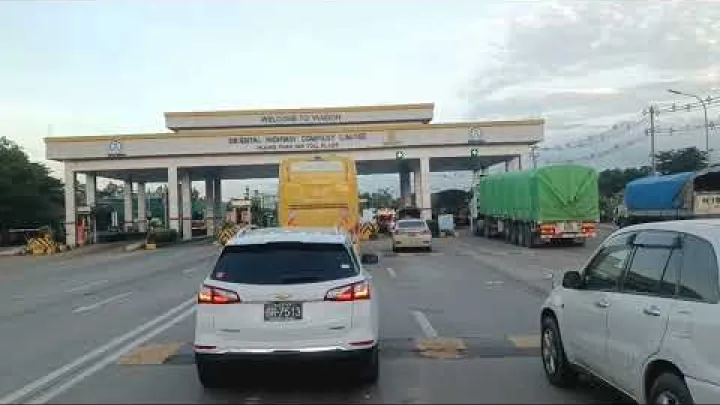
Bus journey descriptions commonly place the Yangon–Pathein trip at around four hours or longer. The actual duration depends on the operator’s stops, traffic leaving Yangon, road conditions, weather, loading time, and the exact arrival point in Pathein. A private car may offer a more direct trip, but it is not automatically faster if traffic or road delays affect the corridor.
For this reason, reserve at least a half day for the Yangon–Pathein travel segment. A bus that is scheduled to arrive after several hours may not be suitable for a flight, cruise, beach transfer, or other fixed appointment shortly afterward. Treat the nominal journey time as a planning guide, not as a guaranteed arrival time.
What to Confirm Before Choosing a Route
Current route information does not provide one complete official timetable for every Yangon–Pathein service. Confirm the details close to departure, especially if your wider itinerary depends on arriving on a particular day. A city-pair listing can show that Yangon and Pathein are connected without proving that a specific bus is running when you need it.
Use this checklist before paying for the journey:
- Travel date: Confirm that the service operates on your exact date, including weekends or public holidays.
- Operator: Record the company name and compare it with the name shown at the terminal or on the ticket.
- Departure terminal: Confirm whether the bus leaves from Aung Mingalar Highway Bus Station, Dagon Ayeyar Highway Bus Station, or another assigned point.
- Arrival point: Ask where the bus will stop in Pathein. The destination name alone may not identify the final drop-off point.
- Ticket availability: Check the seat, departure time, passenger name requirements, payment method, and ticket collection instructions.
- Onward connection: Allow time between Pathein arrival and any trip to Ngwesaung, the delta, or another city.
If the service cannot be confirmed, keep a fallback. Depending on your circumstances, that may be a different bus, a private vehicle, or an overnight stay in Yangon followed by travel the next day. A flexible backup is more useful than relying on an old timetable or an unconfirmed online result.
Travel by Express Bus from Yangon
The express bus is the mainstream practical choice for travelers who want regular road access and a lower expected cost than a private vehicle. It is less private and less flexible than a car, but it normally fits the way most visitors reach Pathein from Yangon. The important booking issue is not only finding the destination; it is matching the current departure, operator, and terminal.
Finding and Booking a Yangon–Pathein Bus
Online booking can be a useful first step. MM-Bus Ticket includes Pathein in its Myanmar express-bus search network, which helps travelers see whether a Yangon–Pathein city pair is listed. This supports route discovery, but a listing should not be treated as proof that every displayed departure is operating on the requested date.

A practical booking process is:
- Select Yangon as the departure city, Pathein as the destination, and the intended travel date.
- Compare the displayed departures and note the named operator, not only the booking website.
- Open the journey details and confirm the departure terminal, check-in time, arrival point, luggage rules, and passenger requirements.
- Check whether the platform is selling the ticket directly or acting as an agent for the operator.
- Ask whether you need to collect a paper ticket at a counter, show a booking code, or present an identity document.
- Save the confirmation offline and keep the operator’s contact details with your travel documents.
Exact fares, seat availability, departure times, and procedures for foreign passengers can change. Confirm those details close to the travel date. If the booking platform does not clearly state where to board or collect the ticket, contact the platform or the bus company before going to the terminal rather than guessing.
Reaching the Correct Yangon Highway Bus Terminal
Aung Mingalar Highway Bus Station and Dagon Ayeyar Highway Bus Station are important intercity transport anchors in Yangon. They are not interchangeable from a traveler’s point of view. The terminal for a Pathein bus depends on the selected operator, so do not assume that every Pathein service leaves from the same station.
When you book, treat the operator’s terminal assignment as part of the ticket. Save the station name in your phone and show the exact text to your driver or hotel. If the operator provides the terminal name in Burmese, keep that version as well. This is especially helpful when a taxi driver recognizes a station better from the local-language name than from an English transliteration.
A taxi is generally the simpler choice for passengers arriving at Yangon International Airport with luggage or traveling outside Yangon Bus Service operating hours. It costs more than using a local bus, but it reduces the number of transfers. Travelers coming from downtown may use Yangon Bus Service, or YBS, if a current route reaches a suitable highway-station area. A published Myanmore guide describes YBS service from about 5:00 a.m. to 9:00 p.m.; treat those hours and route details as a reference, because current operations and route numbers should be checked locally.
Allow extra time for Yangon traffic. The time needed to cross the city can be unpredictable, so a cheaper local connection is not useful if it causes a missed intercity departure. For an airport arrival, include time for immigration, baggage collection, finding transport, and reaching the correct highway station.
What the Bus Journey Is Like
The Yangon–Pathein bus ride is a several-hour road journey. The advertised or commonly reported duration may be around four hours, but stops, traffic, road work, weather, and boarding delays can extend it. If you have a fixed appointment after arrival, use a generous margin rather than planning around the shortest possible trip.

Comfort and services depend on the operator. Some buses may have air conditioning, while the temperature and condition of the vehicle can vary. Stops may be provided for food or rest, but their timing and duration are not uniform. Luggage may be placed in a separate compartment or handled at the station, so keep anything essential with you and make sure your larger bags are identifiable.
Carry water, essential medication, a phone charger or power bank, and a small amount of local cash. These are practical items for a route where services and stop arrangements may differ between operators. Avoid booking a flight, river departure, or beach vehicle immediately after the expected bus arrival. A bus is a good value route when you allow the journey to take the time it needs.
Compare Private, Air, Rail, and River Access
Road transport is the default, but the best option depends on your budget, group size, time, and tolerance for uncertain schedules. The comparison below is qualitative because current fares and service frequencies are not consistently established.
| Option | Best for | Main advantage | Main limitation |
|---|---|---|---|
| Express bus | Budget travelers | Established overland route | Fixed departure and less privacy |
| Private car or taxi | Groups, luggage, flexible plans | Door-to-door travel | Higher total cost and driver dependence |
| Air via BSX | Travelers with a directly confirmed flight | Potentially shorter time in the air | Scheduled service is uncertain |
| Rail | Travelers with a current local confirmation | Possible future or specialized alternative | No dependable through timetable established |
| River cruise or charter | Scenic, flexible itineraries | Experience of the delta and river | Slow, limited, and advance coordination required |
Private Car or Taxi for Door-to-Door Travel
A private car or intercity taxi is useful when you want a flexible departure, direct hotel-to-hotel travel, space for luggage, or a way to avoid changing between a Yangon airport or downtown location and a highway bus station. It can also suit a family or small group that values privacy and control over stops.
The trade-off is cost. A bus charges by passenger, while a private vehicle usually has one total quotation. To compare the options for a group, divide the complete car quotation by the number of passengers and compare that amount with the bus ticket plus the cost of reaching the bus terminal. Sharing a car may improve value for a larger group, but it does not automatically make the car cheaper.
Arrange the vehicle through a reputable hotel, travel company, or known local contact when possible. Before departure, obtain the driver’s identity and agree on a written total fare. The agreement should state whether fuel, tolls, planned stops, and waiting time are included. Also confirm the payment currency, pickup address, destination address, and what happens if the journey takes longer than expected.
A journey-planner estimate can help you understand distance and broad travel time, but it is not a live taxi quotation. The final price depends on the vehicle, the departure point, the date, the route, and the negotiation. Avoid choosing a driver only because of a low verbal price that does not define what is included.
Pathein Airport: Check BSX Before You Rely on Air Travel
Pathein Airport uses the code BSX. Its existence makes air access worth investigating, but it does not establish current scheduled passenger connectivity from Yangon or another gateway. The safest assumption for a Pathein itinerary is to fly into Yangon and continue overland unless an airline confirms a suitable BSX flight.
Secondary flight information should be read carefully. For example, the FlightsFrom page for Pathein–Sittwe records the last listed flight as scheduled for February 23, 2025 and describes the route as ending in March 2025. This is historical route evidence, not a current airline announcement. It shows why a route page should not be treated as proof that a service is available now.
Before buying an itinerary around BSX, contact the airline or airport and confirm that the flight is scheduled for your date. Ask for the flight number, operating days, booking channel, baggage allowance, and any changes to the arrival or departure arrangements. If there is no direct confirmation, do not use a flight aggregator page as the deciding evidence.
Aggregators can retain airport and route pages after an airline changes its network. They may also show historical routes, seasonal services, or data that is not synchronized with the operator. A confirmed flight could change the recommendation, but without that confirmation, Yangon followed by a road journey remains the more dependable plan.
Rail: A Developing Corridor, Not a Confirmed Shortcut
Rail is relevant to Pathein’s long-term transport picture, but it should not currently be treated as a simple alternative to the bus. References to Myanmar’s rail network associate a Pathein or Begayet–Einme–Nyaungdon–Yangon corridor with development and construction. The Rail transport in Myanmar overview provides background on this alignment, but it does not provide a reliable tourist timetable for a through Yangon–Pathein passenger service.
Infrastructure progress and bookable passenger service are different things. A line may be planned, under development, used for limited local operations, or described in historical material without offering a departure that a visitor can purchase. Do not estimate a rail fare, frequency, or journey time from the existence of a corridor.
Rail should enter your itinerary only when Myanmar Railways or a current staffed station source confirms all of the practical details. You would need a current passenger timetable, a ticketing channel, a confirmed departure station, and evidence that the train reaches the part of Pathein you need. Until those details are available, treat rail as a possible future or locally confirmed alternative rather than a mainstream route.
River Cruises: Scenic Access for Flexible Itineraries
The Pathein River and the wider Ayeyarwady Delta make water travel appealing for visitors who want scenery and a slower journey. In practice, a river trip to or through Pathein is better treated as a specialized cruise, charter, or organized itinerary than as a frequent public transport replacement for the Yangon–Pathein bus.
Some travel references associate river itineraries with Yangon, Pathein, Ngwesaung, and Pyay. That association does not prove that a particular operator is running the route now. A cruise may operate only on selected dates, require a minimum number of guests, or use a departure and arrival point that is different from the city location shown in promotional material.
Compare river travel with the bus on the factors that matter to your trip. It is usually slower and less flexible, may require earlier booking, and can involve cabin or meal arrangements. Its advantage is the experience rather than speed or a predictable low fare. Treat ordinary local boats and a multi-day cruise as separate products; a local boat excursion is not automatically an intercity ferry.
Before paying, confirm the departure jetty, total duration, cabin availability, meals, cancellation terms, and the exact place where you will arrive in Pathein. Also ask whether the boat is private or shared and how the operator handles changes to the planned departure. River travel works best when your itinerary has room for coordination and does not depend on a same-day connection.
Arrive in Pathein and Continue Beyond the City
Reaching Pathein is only one part of the journey for visitors heading to the beach or the delta. The most important local detail is often the exact arrival point, because intercity operators may not use one universally named terminal or one fixed drop-off location.
Reaching Pathein Center After the Intercity Arrival
Available route information does not establish one consistently named current intercity bus terminal or universal drop-off point in Pathein. Your ticket may identify a station, a company office, or another operator-designated stop. Ask the bus company for the exact arrival location before departure, especially if you have a hotel booking or a same-day onward transfer.
Send your accommodation name, address, and phone number to the driver or hotel in advance. If the hotel can provide a local-language address or arrange a pickup, keep that information available offline. This is more reliable than telling a driver only the general name of the city or assuming that the bus will stop in the city center.
A daytime arrival is easier when you need to orient yourself, collect luggage, or arrange a car for the next leg. An evening arrival can be more difficult if the drop-off point is outside the center or if your hotel does not know when to expect you. When the arrival location is unclear, arrange a trusted local pickup rather than leaving the final transfer to chance.
Do not rely on a fixed taxi rank or a universal transfer fare unless the bus company, hotel, or local transport provider has confirmed it. The final Pathein transfer depends on the actual stop and the location of your accommodation.
Continuing to Ngwesaung from Pathein
Pathein is a practical regional base for travelers continuing toward Ngwesaung. The clearly described onward option is road travel by taxi or private car. Public-service schedules, vehicle availability, and fares may need to be confirmed locally, so do not assume that a regular fixed beach transfer will be waiting when your bus arrives.
If the beach connection is time-sensitive, arrange the onward vehicle before leaving Yangon or soon after reaching Pathein. Give the driver the exact Ngwesaung accommodation or meeting point, and ask where the Pathein pickup will occur. For a traveler with a flexible schedule, staying in Pathein first may be simpler than forcing an uncertain connection after a long bus ride.
Plan the route as two separate journeys: Yangon to Pathein, then Pathein to Ngwesaung. The first leg may take several hours, and delays on it can affect the second. A private car for the onward leg offers more flexibility than waiting for an unconfirmed public service, but the extra cost should be compared with the value of a direct and coordinated transfer.
Using Pathein as a Base for Delta Waterways
The Pathein River and surrounding delta waterways are most useful for local excursions and regional exploration after you arrive. They should not be assumed to provide a regular intercity ferry that replaces the Yangon road journey. A road arrival followed by a local river experience is a more realistic way to combine the two types of travel.
For a boat outing, confirm the operator, route, departure time, return arrangements, and whether the trip is private or shared. Ask where the boat leaves, how long the excursion lasts, what is included, and what happens if the planned return is delayed. The exact route may depend on the boat and the local conditions, so a name such as Pathein River does not by itself define a bookable service.
Pathein can fit into a flexible itinerary that includes a road journey from Yangon, a delta excursion, and a later transfer to Ngwesaung. Keep the water activity separate from your essential transport plan. If returning to Pathein is important for a bus or beach vehicle, allow enough time for the boat trip and its return arrangements instead of scheduling connections tightly.
Booking, Safety, and Disruption Checks
Most travel problems on this route are easier to prevent when the ticket, terminal, baggage, and final transfer are treated as separate details. Use clear written information and keep the essential parts of the journey under your direct control.
Avoiding Ticket, Baggage, and Transfer Problems
Buy through a recognized booking platform, the named bus operator, or an official station counter. Be cautious about accepting unsolicited assistance from people who approach you before you have identified the correct counter or vehicle. This is a normal long-distance travel precaution, not a claim about a particular Pathein scam pattern.
Before boarding, match the ticket with the operator, departure time, terminal, seat, and destination. If the ticket displays a company office rather than a familiar terminal name, ask the operator where to check in. Keep a screenshot or printed copy of the confirmation in case mobile data is weak.
Keep your passport, cash, phone, medication, bank cards, and other valuables in your carry-on baggage. Do not place essential documents in a stored suitcase. Mark larger bags clearly and check that you receive them at the Pathein end of the journey.
For a taxi or private transfer, agree on the destination and total price before entering the vehicle. Make sure the driver understands the correct hotel, terminal, or beach location. If the fare includes waiting time, fuel, or tolls, keep that agreement in writing. A hotel or known local contact can help explain the destination when language makes the arrangement difficult.
Planning for Late Arrivals and Limited Local Services
Late arrival planning matters at both ends of the route. A published Yangon transport guide describes YBS service as operating into the evening, but its hours and routes should be treated as a reference that may change. If your international flight reaches Yangon late, a local bus may not be a practical way to reach the highway terminal, particularly after allowing time for immigration, baggage collection, and the road transfer across the city.
Compare the airport arrival time with the bus check-in time, not only with the scheduled departure. A bus that leaves soon after your flight lands may be impossible to reach if immigration or baggage takes longer than expected. For a late airport arrival, a taxi or prearranged transfer may be simpler. If the timing is too tight, staying overnight in Yangon can be safer for the itinerary than forcing a same-day connection.
An arrival in Pathein after dark can create a different problem. You may have luggage but no confirmed drop-off point, limited local transport, or a hotel that is not expecting you. Confirm the Pathein arrival location and prearrange a hotel transfer or another trusted pickup. When a missed bus or delayed road journey would disrupt the rest of your trip, include an overnight buffer rather than relying on the final service of the day.
Building a Buffer for Weather and Route Changes
There is no current official road-condition or weather advisory in the available route information that can establish a fixed travel time or a guaranteed seasonal pattern for the Yangon–Pathein corridor. Do not rely on a permanent claim that the route is always open, always fast, or subject to a fixed annual closure.
Before departure, ask the bus operator, hotel, or a trusted local contact about same-day road and weather conditions. The need is greatest when your Pathein arrival connects to a flight, cruise, or Ngwesaung vehicle. If that connection matters, leave a buffer long enough to accommodate slower road travel, a changed departure, or a temporary service interruption.
Keep the flexible option visible until the first leg is complete. That may mean choosing a later beach transfer, staying in Pathein, or allowing another night in Yangon. The goal is not to assume that disruption is routine; it is to avoid making a fixed connection depend on a journey whose conditions cannot be confirmed in advance.
Choose the Route That Fits Your Trip
There is no single best Pathein transport option for every traveler. Use the purpose of your trip to decide whether lower cost, direct access, flexibility, or a scenic experience matters most.
Best Plan for International Arrivals
For most international arrivals, use this sequence:
- Arrive at Yangon International Airport, RGN.
- Confirm the correct highway bus terminal and departure with the selected operator.
- Travel to Pathein by confirmed express bus or an arranged private car.
- Use the confirmed Pathein arrival point to meet your hotel or onward transfer.
If your flight arrives late, consider staying in Yangon instead of forcing a same-day terminal transfer. Mention BSX only after direct confirmation that an active scheduled passenger flight suits your date. If the bus is not confirmed or is missed, use the planned fallback rather than treating an old online listing as a live departure.
Best Plan for Budget Travelers
A confirmed express bus from Yangon is the primary budget-oriented choice. It normally avoids the higher total cost of a private car, while still providing a straightforward long-distance road connection. The exact ticket price and departure frequency should be checked for the travel date.
Yangon local buses may reduce the cost of reaching the highway terminal, but they add time and may be less convenient with luggage. A taxi to the terminal is simpler for travelers coming from the airport, traveling at night, or carrying several bags. Compare the terminal-transfer cost separately from the intercity ticket so that the total price is clear.
For international travelers, a confirmed departure and realistic time buffer are usually more valuable than a small saving from an unverified connection. Save the terminal information in English and Burmese if the operator provides both, and ask hotel staff or the official counter for help when station signs are difficult to read.
Best Plan for Scenic or Multi-Day Travel
A confirmed river cruise is worth considering when scenery and a slower itinerary matter more than speed or low cost. It can be combined with Pathein, Ngwesaung, delta exploration, or a wider Lower Myanmar trip. Treat it as a special itinerary that requires operator coordination, advance booking, and enough time for changes.
Rail should not be the central link until a current passenger service is independently confirmed with a timetable, ticketing channel, and staffed station or railway authority. Likewise, do not promote a named cruise plan to yourself until the operator confirms the departure date, route, and arrival point.
For a multi-modal trip, keep road transport as the backup. A flexible plan might use a confirmed Yangon–Pathein bus, a locally arranged delta excursion, and a prearranged car to Ngwesaung. The practical default remains Yangon to Pathein by confirmed road transport, with rail or river travel added only when the current service details are clear.
Conclusion: The Most Reliable Way to Reach Pathein
The most reliable way to reach Pathein is usually to arrive through Yangon and continue by a confirmed express bus. A private car is useful for groups, luggage, and flexible door-to-door travel. BSX flights, rail, and river trips may be possible in specific circumstances, but they should not anchor a fixed itinerary without direct current confirmation.
Confirm the operator, terminal, arrival point, and onward connection before paying. Allow a half day for the Yangon–Pathein road leg, arrange the final Pathein transfer when arriving late, and keep a fallback for Ngwesaung or delta plans. With those checks in place, Pathein can serve as a practical base for Ayeyarwady Region travel without depending on uncertain schedules.
Select area
Create a post
Posting is free and no registration is required.