Loikaw Travel Guide: Safety, Access and Trip Planning
![Preview image for the video "Myanmar Travel-Yangon[미얀마 여행-로이코]타웅크웨 사원/Taung Kwe Pagoda/Temple/Naung Yah Lake/Buddhism/Burma".](/sites/default/files/styles/media_720x405/public/oembed_thumbnails/2026-08/g3f4-hOqCw6fOF1daIPaJ9x14Y0bhSKv7pRPVPkofQ0.jpg.webp?itok=pk701l5g "Preview image for the video \"Myanmar Travel-Yangon[미얀마 여행-로이코]타웅크웨 사원/Taung Kwe Pagoda/Temple/Naung Yah Lake/Buddhism/Burma\".")
Loikaw is a small regional capital in Eastern Myanmar, known for its hilltop pagoda, lakes, cultural sites, and access to the landscapes of Kayah, also called Karenni, State. Its compact town center can make it appealing to travelers who prefer local context and slower exploration over a large monument circuit. However, conditions in Myanmar can change quickly, and current safety and access decisions must come before sightseeing or bookings. This Loikaw travel guide separates future planning ideas and older travel information from conditions that require direct confirmation.
Check Current Safety and Travel Conditions First
Loikaw should be treated as a conditional destination rather than an ordinary open city break. Read the current official information first, then assess whether transport, medical support, insurance, and local permissions make any future visit realistic.
Read Current Official Travel Advisories
The first question in any Loikaw travel guide is not what to see but whether travel should happen. As of 8 August 2026, the current U.S. Department of State advisory says not to travel to Burma for any reason because of armed conflict, unrest, arbitrary enforcement of local laws, poor health infrastructure, and landmines or unexploded ordnance. Read the full Burma Travel Advisory and the equivalent advice issued by your own government.
A destination overview cannot establish that Loikaw is safe, open, or reachable. A booking page, a recent-looking photograph, or a quiet town-center report is not evidence that roads beyond the city, checkpoints, communications, or rural attractions are operating normally. If your nationality’s official advisory recommends postponing travel to Myanmar or Kayah State, postpone the trip rather than treating this article as encouragement to go now.
This guide is therefore most useful for future planning, academic background, or comparing destinations. It does not replace official advice, local direction, or a professional assessment of personal risk. Avoid making non-refundable arrangements until the wider travel situation and the specific Loikaw route are acceptable.
Treat Older Travel Information as Conditional
Much of the practical information associated with Loikaw comes from the period before the current crisis. Older pages may describe flights, buses, guesthouses, restaurants, boat connections, village visits, or prices that no longer exist in the same form. Treat those details as historical context, not as a current timetable or booking guarantee.
Three labels help keep planning realistic:
- Historical: reported before the current disruption and useful only for understanding how travel once worked.
- Current: directly confirmed for your dates by a functioning provider or reliable official source.
- Conditional: possible in principle but dependent on permission, operating services, road conditions, or local advice.
A simple decision sequence is more useful than collecting a long list of attractions:
- Read the latest advisory for Myanmar and Kayah State.
- Establish whether the exact route and transport service are operating.
- Confirm medical support, communication arrangements, and insurance coverage.
- Only then build a flexible itinerary and choose accommodation.
A quiet central street does not guarantee that the surrounding countryside is accessible. Keep that distinction in mind whenever an older guide describes Loikaw as easy to explore.
Understand Loikaw and Its Place in Eastern Myanmar
Loikaw makes more sense when viewed as a regional center rather than as a resort town. Its scale, geography, and relationship with nearby destinations shape the kind of trip it can support.
Loikaw’s Geography, Layout, and Urban Character
Loikaw is the regional capital of Kayah State, which is also widely known as Karenni State. It is commonly described as lying in the Karen Hills near the Pilu River. The city is not organized around sharply defined tourist districts. Instead, a visitor’s practical mental map is built from a few local anchors: Taung Kwe Pagoda, the main market, lakeside roads, Naung Yar Lake, and accommodation areas such as the Nyaung Ya Quarter.
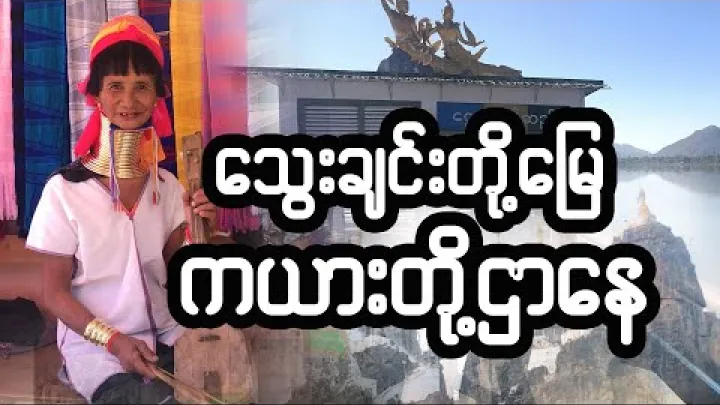
The central area is relatively compact in the context of a regional capital. That can make walking or cycling useful for short journeys between central sights, markets, and nearby services when conditions and local rules allow. Outlying caves, lakes, and villages are a different proposition. They may require a taxi, hired car, or locally arranged excursion, and the distance shown on a map does not reveal the quality of the road or the time required.
Use landmarks rather than assuming that a map’s informal neighborhood labels represent official visitor zones. This approach makes it easier to explain your destination to accommodation staff or drivers and avoids expecting the city to have the dense tourism infrastructure found in Yangon or around Inle Lake.
Compare Loikaw with Inle Lake and the Shan Plateau
Travelers often compare Loikaw with the better-known Eastern Myanmar stops around Inle Lake, Heho, Kalaw, and the Shan Plateau. The difference is mainly one of travel style and logistics. Inle Lake and the established Shan destinations have a wider range of hotels, tour services, transport connections, and familiar visitor routes. Loikaw is more centered on a small city, local cultural context, nearby water and cave sites, and rural landscapes.
That does not make Loikaw universally better or more authentic. It means that a traveler may spend more time arranging transport and adapting plans, while the reward is a slower experience shaped by a regional capital rather than a concentrated tourism circuit. Visitors who want scheduled excursions and many accommodation choices may find the Inle area easier. Those interested in understanding Kayah State through a small-city base may see Loikaw as a distinct addition when conditions permit.
Decide How Long to Stay
Older travel patterns commonly used two or three nights in Loikaw. Keep that duration as a future planning baseline, not as a current recommendation. Two nights can allow time for the central landmarks and one cultural or lakeside activity. Three nights provide more room for a confirmed excursion, a late transport arrival, or a change caused by regional connections.
A longer stay makes sense only when accommodation, local activities, and transport are genuinely available. Consider how much time you are willing to spend on a small-city visit compared with the transfer required from Inle Lake or Yangon. Build a buffer rather than assuming that a regional bus, flight, road journey, or boat connection will follow an old schedule.
Choose the Best Time to Visit
Seasonal conditions matter because several Loikaw activities involve outdoor viewpoints, lakes, caves, rural roads, or uneven paths. Weather can improve or reduce the experience, but it does not determine whether travel is permitted or safe.
Plan Around Weather and Road Conditions
Loikaw has the broad monsoon and drier-season contrast familiar across much of Myanmar. Wetter periods can bring rain, muddy or slower rural roads, reduced visibility, and more difficult access to lakes, caves, and village areas. Drier periods may make outdoor movement easier, but heat, dust, and changing local conditions still affect comfort and transport.
A precise best-month claim is less useful than a current local forecast and a road-condition update for the dates you are considering. Ask the accommodation provider or a currently operating local service whether a planned rural route is practical, not only whether the attraction appears on a map. Rain can affect a cave or lakeside outing even when the weather in the town center seems manageable.
Schedule outdoor activities with flexibility. Check the forecast shortly before a rural or cave excursion, allow time for delays, and be prepared to replace a distant trip with a central museum, market, or religious site. Favorable weather alone is not proof that an attraction has permission to open or that the route to it is suitable.
Plan How to Reach and Move Around Loikaw
Loikaw’s transport information needs careful separation between fixed geographic facts and changeable services. Air, road, and boat-linked journeys described in older material should be treated as options to investigate rather than routes that can be assumed.
Air Access and Loikaw Airport
Loikaw Airport is the local air gateway. The airport is identified as LIW, with ICAO code VYLK, and is located about 2 km northeast of Loikaw. These location details are more stable than an airline schedule; the reference page for Loikaw Airport should not be read as confirmation that flights are currently operating.
Air travel was historically the potentially fastest way to reach the city from a distant starting point. That does not mean that a flight is available on your dates. Airlines, routes, departure days, baggage rules, fares, and airport procedures can change or stop with little notice. Confirm the operating airline directly, obtain a current flight date, ask about baggage and cancellation rules, and arrange the transfer from the airport to your accommodation before relying on this option.
Overland and Regional Routes
Older travel accounts describe overland connections from Yangon and journeys from the Inle Lake or Heho area. Some routes involving Phae Khone and a combination of road and boat travel have also appeared in regional itineraries. These descriptions show how Loikaw was once connected to Eastern Myanmar, but they do not prove that the same buses, boats, roads, checkpoints, or fares are available today.
Route planning must be confirmed at the level of the complete journey. Check the exact road, current checkpoint situation, transport operation, fuel availability, and any boat connection with current official and reputable local sources immediately before departure. A route that exists on a map may be interrupted by a closed road, a permission requirement, a cancelled service, or a change in local conditions. Do not rely on an old travel time or a historical fare.
These long transfers also affect itinerary design. A journey from Yangon or the Inle area may consume much more time than the map distance suggests and may require an overnight stop or a substantial buffer. If the route cannot be confirmed from origin to destination, choose a different plan rather than trying to improvise at a checkpoint or transport terminal.
Getting Around the City and Nearby Sights
Walking can work for the compact central area, and cycling may be practical for some short urban journeys when locally permitted. Taxis or hired cars are more useful for attractions outside the center, especially when a visit involves several stops or equipment for a cave or lakeside outing. Availability should be treated as local and variable, not as a guaranteed app-based service.
Older reports also mention restrictions on tourist motorbike rental. Rules can be administrative as well as practical, so do not assume that a guesthouse can legally provide a motorbike or that an international driving document resolves the issue. Ask current accommodation staff or a reputable local operator what transport is allowed and available for visitors.
Before a hired journey begins, agree on the destination, waiting time, total duration, fuel arrangements, and fare. Written details or a message in a translation app can prevent misunderstandings. Accommodation staff may be able to identify a currently operating driver, but their recommendation is not a guarantee that every outlying road is suitable.
Choose Where to Stay in Loikaw
The best base depends less on a long list of neighborhoods than on whether you value quiet lakeside surroundings, central food and services, or help with transport. Loikaw’s lodging choices should be assessed for practical reliability as well as atmosphere.
Central and Lakeside Bases
A lakeside base in or around the Nyaung Ya Quarter can offer a quieter setting and easier access to lakeside roads. It may suit a traveler who wants a calm place to return to after exploring. The trade-off is that central food, markets, services, and early departures may require a local transfer rather than a short walk.
A base near Taung Kwe Pagoda and the main market is more convenient for first-time orientation. It can reduce the time needed to reach central food stalls, shops, and the city’s main landmark. It may feel more urban and less peaceful than a lakeside property, but convenience becomes valuable when transport schedules are uncertain.
Loikaw Lodge by the Lake is one researched example associated with the lakeside option. Treat it as a property to investigate rather than a current recommendation. Confirm whether it is open, accepting reservations, serving foreign guests, and operating its advertised facilities. The same checks apply to every hotel, motel, guesthouse, or boutique property.
Match Lodging to Practical Needs
Older descriptions suggest a range from simple motels and guesthouses to mid-range and boutique accommodation. Present availability may be narrower, and a booking platform may not show every operating property. Rather than ranking hotels without current evidence, match the property to the needs of your journey.
- Ask whether foreign guests are accepted and what identification or registration is required.
- Confirm water supply, electricity arrangements, air conditioning or fans, and the expected response to outages.
- Check internet and mobile connectivity if you need work, study, or reliable communication.
- Read cancellation and payment terms carefully, especially when transport may change.
- Ask whether the property can arrange a driver or explain current local transport options.
Loikaw does not offer the large, sharply differentiated district choices found in Yangon. A central or lakeside base is usually a practical decision about convenience and atmosphere, not a choice between entirely different city identities. Ask for the exact location and realistic transfer time before booking an excursion or early departure.
Build a Low-Impact Loikaw Sightseeing Plan
Loikaw’s attractions work best in a town-first plan. Begin with places that help you understand the city, then add an outlying activity only when the route, site, and community arrangements are clear.
Taung Kwe Pagoda
Taung Kwe Pagoda is Loikaw’s signature urban landmark. The pagoda complex stands on a steep rocky outcrop and is associated with broad views across the low-lying town and surrounding countryside. It is a place to see the city’s geography as well as an important religious site, so visitors should allow time for both the view and the setting.
Stairs are part of the approach, and older visitor reports mention an elevator. Treat the elevator’s operation, opening times, and access rules as changeable. Ask on arrival rather than assuming that the lift is available, and follow any instructions from temple staff.
Wear modest clothing, remove shoes where required, and avoid blocking paths or photographing people, ceremonies, or devotional activity without permission. Keep voices low and do not treat the pagoda only as a viewpoint. A short visit can be respectful when clothing, photography, and movement are adapted to an active religious environment.
Lakes, Caves, and Natural Attractions
Naung Yar Lake is an accessible in-town water stop and can fit naturally into a central orientation. Seven Stages Lake and Aung Tha Pyae Cave are wider-area possibilities identified in travel material about Kayah State. They should be considered separate options rather than a fixed sightseeing circuit.
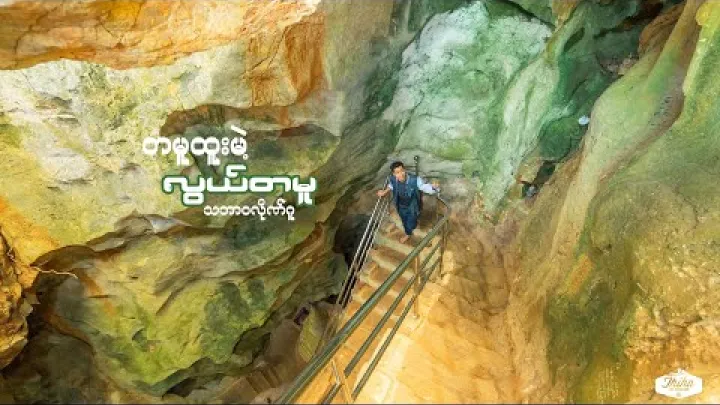
Whether these places can be combined depends on the current road, the time available, weather, site opening status, and any local permission. Do not plan around hard distances or promised journey times unless a current local source supports them. An outing that looks short on a map may take much longer because of road quality or waiting for transport.
Prepare for uneven paths and limited facilities. A cave or lake may also be sacred or locally meaningful, even if it is promoted online as an attraction. Dress appropriately, ask before entering restricted areas or taking photographs, and leave enough time to return without rushing. If the route or site status is unclear, choose a town-based activity instead of making an uncertain excursion the center of the day.
Kayah State Cultural Museum and Local Cultural Context
The Kayah State Cultural Museum offers a lower-intensity way to begin learning about local histories, clothing, and everyday life. It can provide useful context before a traveler considers a community visit, particularly when the visitor has limited knowledge of Kayah and Karenni communities.
A museum display is not a complete representation of every community or of contemporary local life. Avoid reducing people to costumes, objects, or a short list of ethnic labels. Treat the museum as an introduction and look for context in local voices, careful interpretation, and respectful conversations rather than assuming that one collection speaks for the whole state.
Opening hours, entry arrangements, and visitor access should be confirmed locally. Plan it as a flexible stop rather than a fixed appointment, and follow any photography or conduct rules displayed at the site.
Village Excursions and Responsible Cultural Visits
Before the current crisis, village excursions and visits described in tourism material as Kayan or Padaung-related experiences were marketed to travelers. These are historical examples, not guaranteed activities and not a reason to travel during conflict. Communities should never be presented as untouched attractions or as places where visitors are entitled to observe people in traditional dress.
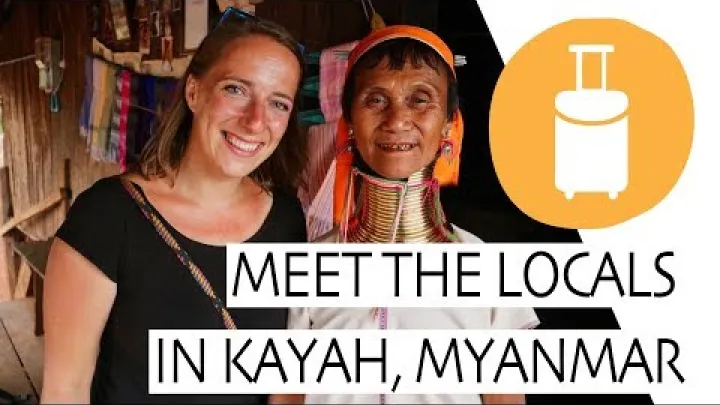
A responsible visit requires more than hiring a driver to a village. Ask who arranged the visit, whether the community actively welcomes visitors now, how consent was obtained, what photography rules apply, and how the community benefits financially. Do not make unannounced independent visits, photograph residents without permission, or pressure anyone to perform an identity for a tour.
Use a locally accountable operator that can demonstrate current permission, community consent, and a fair benefit arrangement before booking. The Kayah Manual for Tour Operators provides historical context about tourism services and activities, but it is not proof that a particular village route is operating or welcomed today. Be ready to omit the visit if the community does not actively invite it.
Eat, Budget, and Prepare for Basic Services
Everyday food and practical preparation are part of the Loikaw experience. Plan for local variation, limited information, and a need to separate broad Myanmar travel estimates from prices that have been confirmed in the city.
Local Food and Everyday Eating
Travel accounts describe Kayah State food through rice-based meals, fish, pork, vegetables, tea-shop dishes, and market food. These broad categories are more reliable for planning than a claim that one named dish represents the whole region. In Loikaw, availability may depend on the market, the season, the operating hours of a small restaurant, and current supply.
Tea shops and markets can be useful places to observe everyday eating, while simple restaurants may be easier for travelers who need more control over ingredients. Food should be approached with curiosity but without assuming that a menu is standardized or that an online recommendation is still open.
If you have allergies or dietary restrictions, prepare a short explanation in Burmese or use a translation tool with clear ingredient terms. Show the message before ordering and confirm whether shared cooking oil, fish sauce, meat stock, or other ingredients are used. Carry a suitable snack for long transfers or excursions because meal options outside the center may be limited.
Estimate Costs Without Relying on Old Prices
Loikaw-specific prices are difficult to treat as stable when inflation, currency changes, reduced supply, and property closures can affect every part of a trip. Separate the budget into lodging, food, local transport, entry fees or donations, and intercity travel. This makes it easier to remove one excursion or change a hotel without losing track of the total.
A nationwide Myanmar travel budget guide can provide broad budget and mid-range bands as provisional planning baselines. Do not convert those figures into promises about Loikaw. A simple guesthouse, local meals, and short central journeys belong to a different cost pattern from a private room, hired car, paid excursion, and long regional transfer. Older fares and booking-site rates should be marked as historical unless the provider confirms them for your dates.
Build a contingency amount into the plan for a cancelled connection, a required private transfer, a change of accommodation, or a longer stay. Before arriving, ask each provider which currency it accepts and whether payment is by cash, card, or another arrangement. Carry a reserve that is separate from your daily spending money, and do not assume that an online payment option will work locally.
Prepare for Water, Health, and Limited Services
Limited healthcare and emergency response are central planning constraints, not minor packing details. The official travel advisory identifies poor health infrastructure among the reasons for its warning. Do not assume that a familiar medication, specialist treatment, emergency transport, or rapid evacuation will be available in Loikaw or on a rural excursion.
Before making non-refundable bookings, confirm that travel insurance explicitly covers Myanmar and that emergency medical evacuation is included if you need it. Check exclusions related to travel against an official advisory, civil unrest, remote areas, or activities such as cave visits. Ask the insurer what assistance number works from Myanmar and what payment process applies during an emergency.
Carry essential prescription medicines in their original packaging, copies of prescriptions, and basic health information. Arrange dependable drinking water, and consider how you will manage water during a long road journey or rural visit. A power bank, an offline copy of important contacts, and more than one communication method can reduce problems when electricity or connectivity is inconsistent.
These measures do not replace advice from a doctor, insurer, or official authority. They are decision gates: if suitable medical and evacuation arrangements cannot be obtained, the trip should not proceed simply because accommodation or transport appears available.
Assemble a Conditional Eastern Myanmar Itinerary
A Loikaw itinerary should be modular. Start with the city and add regional connections only when each part can stand on its own if a road, flight, boat, or excursion changes.
Use a Two- or Three-Night Loikaw Base
For a future point when travel is permitted and services are operating, a two- or three-night town-first template is more resilient than a tightly timed schedule. Use the first period for orientation around the central market, lakeside roads, Naung Yar Lake, and the area near Taung Kwe Pagoda. Add the pagoda and the Kayah State Cultural Museum as central cultural stops, in an order that leaves room for opening-hour changes.
Use the remaining time for one confirmed nearby excursion, such as a lake or cave visit, only if the route and local arrangements are suitable. If you have two nights, keep the final period partly open for departure or a delayed arrival. With three nights, the extra night can serve as a buffer rather than an obligation to add another distant attraction.
This is a future planning scenario, not a recommendation to travel against current advisories. A town-first structure protects the trip from becoming dependent on one rural journey and gives more value to a short stay if an excursion has to be removed.
Connect Loikaw with Inle Lake and Other Eastern Myanmar Stops
Loikaw may complement Inle Lake, Heho, Kalaw, or Phae Khone for travelers who want a slower local focus after visiting a more established tourism hub. Inle Lake generally offers easier access to hotels, guides, boats, and organized activities. Loikaw offers a different regional-capital experience, but the connection may take more planning and may not be worth adding to a short trip.
Keep the route modular. Treat Inle Lake or another established hub as a separate base, then add Loikaw only when the flight, road, boat connection, and relevant permissions have been checked for the same travel window. Avoid building a chain of tightly timed connections across Eastern Myanmar.
If a connection is uncertain, shorten the itinerary or remove Loikaw rather than adding an unsafe detour. The best route is the one that remains workable when a service is delayed or cancelled, not the one that includes the greatest number of places on a map.
Conclusion: Decide Whether Loikaw Fits Your Plans
Loikaw can be a meaningful future destination for travelers interested in a compact regional capital, Taung Kwe Pagoda, local cultural context, lakes, caves, and the landscapes of Kayah State. It is less suitable for anyone who needs predictable transport, extensive medical services, or a highly developed tourism network.
Make the decision in order: current advisory, exact access, medical and evacuation preparation, then accommodation and itinerary. If those conditions are not satisfactory, postpone the trip. If they become acceptable in the future, use a flexible two- or three-night town-first plan, treat older information as conditional, and approach religious sites and community visits with care.
Select area
Create a post
Posting is free and no registration is required.