Sumbawa Besar Getting There: Flights, Ferries & Buses

Sumbawa Besar getting there is usually simpler when you choose the route that matches your starting point, budget, and tolerance for transfers. The fastest option is normally a domestic flight to Sultan Muhammad Kaharuddin III Airport, while the classic overland option uses the Lombok to Sumbawa ferry from Labuan Kayangan to Poto Tano. Travelers coming from Java, Bali, Lombok, Flores, Labuan Bajo, Bima, or Sape have different route choices and different levels of complexity. This guide compares flights, ferries, buses, road travel, and eastern Sumbawa routes so you can plan a realistic arrival without relying on outdated schedules.
Quick Answer and Route Comparison
For most visitors, the best way to get to Sumbawa Besar is to fly into Sultan Muhammad Kaharuddin III Airport (SWQ) after connecting through a larger Indonesian gateway such as Bali or Lombok. If you are already traveling overland through Lombok, the ferry from Labuan Kayangan to Poto Tano is the main public sea link to western Sumbawa, followed by road transport to Sumbawa Besar.
Best Route for Most Travelers
The fastest and simplest Sumbawa Besar getting there route is usually a domestic flight to SWQ. This avoids the long chain of taxis, buses, ferry waiting time, and road transfers that can make overland travel tiring. Sumbawa Besar is not an international gateway, so travelers arriving from outside Indonesia normally enter through Ngurah Rai International Airport (DPS) in Bali, Jakarta, Surabaya, or another major airport before taking a domestic connection.
The ferry-and-road route is still very useful. It is often chosen by budget travelers, people already in Lombok, and travelers carrying a motorbike or car. It also suits slow overland itineraries across Nusa Tenggara. Routes through Bima, Sape, or Flores are more specialized. They make sense if you are already moving west from Labuan Bajo or eastern Sumbawa, but they are not usually the easiest route for a first arrival from Bali or Java.
| Route type | Best for | Typical complexity | Main checks |
|---|---|---|---|
| Flight to SWQ | Short trips and simple arrivals | Low to moderate | Current flight days, connection time, baggage rules |
| Lombok ferry and road | Overland travelers and vehicles | Moderate | Ferry operation, onward transport from Poto Tano |
| Long-distance bus | Flexible budget travelers | High | Boarding point, included ferries, final stop |
| Flores, Sape, Bima route | East-to-west island trips | High | Ferry status, road transfers, overnight plans |
All times, fares, and schedules for regional Indonesian transport should be treated as date-sensitive. Do not build a tight itinerary around a single ferry, bus, or small-airport flight unless you have checked current information close to departure.
Choose by Starting Point
From Bali: Check direct or connecting domestic flights from Ngurah Rai International Airport (DPS) to Sumbawa Besar. If flights do not fit your dates, you can travel east through Lombok and continue by ferry and road, but this takes much longer.
From Lombok: You can check flights from Lombok International Airport (LOP) or travel by road to Labuan Kayangan ferry port, cross to Poto Tano ferry port, and continue by road to Sumbawa Besar. This is the main surface route between Lombok and Sumbawa.
From Java: The most practical route is usually to fly to Bali or Lombok, then connect onward. A bus-and-ferry chain from East Java is possible, but it is much slower and requires careful confirmation of stops and ferry inclusions. There is no train to Sumbawa Besar. Train travel from Java can only cover part of the journey before you switch to road and ferry transport.
From Flores or Labuan Bajo: The route normally involves the eastern sea corridor toward Sape, then road travel through Bima and onward across Sumbawa. This route can be rewarding for overland travelers, but it is transfer-heavy and not the simplest choice if you are starting in Bali or Lombok.
Getting to Sumbawa Besar by Air
Flying is the easiest option for travelers who want to reduce uncertainty. It is especially useful for short visits, work trips, family travel, or itineraries with a fixed hotel booking or onward boat connection.
Sultan Muhammad Kaharuddin III Airport
Sultan Muhammad Kaharuddin III Airport (SWQ) is the closest airport to Sumbawa Besar. It is a small domestic airport, not an international airport, so international visitors need to connect through another Indonesian airport first. The airport is much closer to the city than major regional gateways are to their urban centers, which makes the final arrival leg relatively short when taxis or hotel pickup are available.
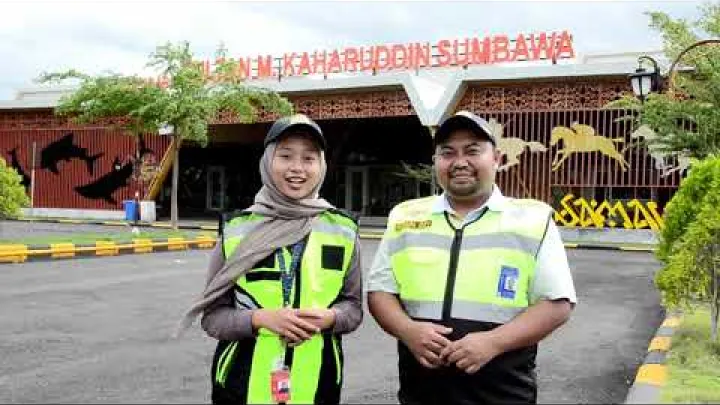
Because SWQ is a regional airport, it has fewer flight choices than Bali, Lombok, Jakarta, or Surabaya. Route data can also change by season and airline scheduling decisions. Flight route databases such as FlightsFrom list SWQ as a smaller airport with limited scheduled direct destinations, which is a useful reminder to check current availability before you book hotels, tours, or separate domestic connections.
When planning, search using both the airport code SWQ and the city name Sumbawa Besar. Some booking platforms may display Sumbawa, Sumbawa Besar, or the full airport name. Always confirm that the destination is Sultan Muhammad Kaharuddin III Airport, not Bima or another airport on the island.
Flights from Bali and Lombok
Available route data commonly shows scheduled direct links between Sumbawa Besar and Denpasar in Bali, as well as Lombok, with Wings Air appearing as the key operator in current public route listings. Bali is often the most familiar gateway for international visitors because Ngurah Rai International Airport (DPS) has many international and domestic connections. Lombok International Airport (LOP) is convenient if you are already in West Nusa Tenggara or combining Lombok and Sumbawa in one trip.
Flight time is short compared with overland travel, but frequency can be limited. Some search platforms may show other airline names as part of a multi-leg itinerary. This does not always mean those airlines operate a nonstop flight to SWQ. For current booking and airline-group route checks, travelers can review official airline channels such as Lion Air, especially because Wings Air is associated with the Lion Air Group.
If you are arriving internationally in Bali and connecting to Sumbawa Besar on the same day, leave generous time. You may need to clear immigration, collect luggage, pass customs, move to the domestic departure area, check in again, and handle any delay from your international flight. If the onward SWQ flight is not frequent, an overnight stay in Bali or Lombok can be safer than a tight same-day connection.
Connecting from Jakarta, Surabaya, or Overseas
Travelers from overseas usually enter Indonesia through a larger airport, then continue domestically. Bali is the easiest route to understand for many first-time visitors because it is a major international gateway and is geographically close to Sumbawa. Jakarta and Surabaya can also work, but the final route may still pass through Bali or Lombok depending on the flight schedule available on your travel dates.
A sensible planning sequence is: first choose your international arrival airport, then check whether a same-day domestic connection to SWQ is realistic, and finally decide whether you need an overnight buffer. This is more reliable than booking the cheapest international arrival first and only later discovering that the domestic connection is inconvenient or unavailable.
For short trips, flying usually saves enough time to justify the higher cost. For long trips, budget travel, or open-ended island travel, surface routes may be acceptable. The main trade-off is not only money. It is also fatigue, waiting time, uncertainty, and the risk of missed connections.
Getting There by Ferry and Road from Lombok
The Lombok-to-Sumbawa ferry route is the main overland link for travelers moving east from Lombok. It is practical, widely used, and suitable for passengers as well as vehicles, but it still requires planning because the ferry is only one part of the journey.
Labuan Kayangan to Poto Tano Ferry
The main ferry corridor from Lombok to Sumbawa runs between Labuan Kayangan ferry port on eastern Lombok and Poto Tano ferry port on western Sumbawa. This is the key crossing to know if you are traveling from Lombok to Sumbawa Besar without flying. Local ferry information sources describe the corridor as a frequent public ferry route for passengers and vehicles, and Discover Lombok Property provides local schedule guidance for the Kayangan to Poto Tano crossing.
The crossing itself is commonly described as taking around one to two hours, but the full travel time can be longer. You may wait for boarding, vehicle loading, ticketing, port queues, weather changes, or operational adjustments. This is why the ferry schedule should be treated as a planning guide rather than a guarantee.
Before you travel, confirm the current departure pattern, payment procedure, and port status. If official online information is not clear, ask your hotel, a local driver, or the port before you commit to a tight itinerary. Weather and loading conditions can affect Indonesian ferry routes, especially when you are connecting to onward transport the same day.
Poto Tano to Sumbawa Besar by Road
Arriving at Poto Tano does not mean you have arrived in Sumbawa Besar. Poto Tano is on western Sumbawa, and Sumbawa Besar is farther east by road. After the ferry, you need to find onward transport and confirm that the vehicle is going to Sumbawa Besar town or to a stop that is useful for your accommodation.

Private cars and pre-arranged drivers are usually the most direct and comfortable choices. They cost more, but they reduce uncertainty, especially if you have luggage or arrive late. Buses, minibuses, and shared vehicles can be cheaper, but departure times and exact drop-off points may be less predictable for visitors who do not speak Indonesian.
First-time visitors should try to travel this road section in daylight when practical. Daylight makes it easier to identify transport, negotiate calmly, and find your hotel after arrival. If you know you will arrive late, arrange a driver or ask your accommodation in Sumbawa Besar for advice before you leave Lombok.
Taking a Motorbike or Car Across the Ferry
Vehicle ferries make the Lombok-to-Sumbawa route practical for travelers touring by motorbike, private car, or hired vehicle. This can be a rewarding way to see Nusa Tenggara, but it is not the same as a short scooter ride in a tourist area. Distances are longer, roadside services can be more spread out, and road conditions may vary.
Before taking a vehicle across, confirm your ferry vehicle class, ticket process, and any payment requirements at the port. Vehicle category affects fares and boarding procedures. If you are using a rental motorbike or car, confirm that the rental agreement allows inter-island travel and that you understand the insurance conditions.
- Carry your driving license, rental papers, and vehicle documents.
- Check whether the port requires cash, electronic payment, or a specific card system.
- Fill fuel before long road sections, especially outside major towns.
- Plan to arrive before dark if you are unfamiliar with the route.
- Book accommodation in Sumbawa Besar or confirm a realistic arrival plan.
This option suits confident overland travelers. If you are not experienced with long-distance riding, mixed traffic, and rural roads, flying or using a driver is usually a safer and less stressful choice.
Getting There by Bus and Surface Travel from Java, Bali, or Lombok
Surface travel to Sumbawa Besar is possible from Java, Bali, and Lombok, but it requires more patience than flying. The journey can involve long bus rides, ferry crossings, terminal changes, and waiting time that is difficult to predict from a simple map.
Long-Distance Bus and Ferry Chains
Bus and ferry chains from Java or Bali to Sumbawa can work for flexible travelers. A typical surface journey may include road travel across Java or Bali, a ferry crossing to Lombok, road travel across Lombok, the ferry from Labuan Kayangan to Poto Tano, and another road section to Sumbawa Besar or another Sumbawa stop.
Booking platforms show that bus travel to Sumbawa is possible. For example, 12Go lists bus options between East Java and Sumbawa, which supports the existence of long-distance surface routes. However, exact departure cities, boarding points, operators, and destination stops can vary, so you should not assume there is one universal route that works every day.
Before paying for a long-distance bus, confirm the departure city, the exact boarding point, the final drop-off point, whether ferry crossings are included, luggage rules, and whether the bus goes to Sumbawa Besar town or only to another point on Sumbawa. If the booking platform does not make this clear, contact the operator or choose a more flexible itinerary.
Where Surface Travel Becomes Slow or Complex
Surface travel becomes slow when several uncertain parts are combined. A delayed ferry can cause a missed bus. A late bus can arrive after local transport has reduced for the evening. A vehicle may stop at an operator-specific point rather than a central tourist terminal. These issues are normal risks of multi-island travel, not reasons to avoid the route entirely.
Overland travel is easier if you have a flexible schedule, light luggage, basic Indonesian phrases, and no urgent same-day connection. It becomes less attractive if you are traveling with children, carrying heavy bags, arriving late at night, or working with a short vacation window.
Build buffer time before domestic flights, hotel check-ins, boat trips, or guided tours. If you need to be in Sumbawa Besar by a specific date, avoid planning the longest possible overland chain with no spare day. The cheapest route is not always the best value if it creates stress or causes you to lose paid accommodation or tour time.
Routes from Flores, Bima, and Eastern Sumbawa
Eastern routes are useful for travelers already crossing the Lesser Sunda islands from Flores toward Sumbawa. They are less useful for visitors whose trip begins in Bali or Lombok, because they usually add transfers rather than reduce them.
Via Labuan Bajo, Sape, and Bima
If you are coming from Flores or Labuan Bajo, the common regional logic is to approach Sumbawa through the eastern ferry corridor toward Sape, then continue by road through Bima and onward across Sumbawa toward Sumbawa Besar. This route connects well with a broader overland itinerary across eastern Indonesia, especially for backpackers and long-trip travelers.
The challenge is that each segment needs its own confirmation. You need to check the Flores-to-Sape ferry status, onward transport from Sape, road travel through Bima, and the longer journey across Sumbawa. Weather, port operations, and road connections can affect the total time.
This is best treated as an alternative regional route, not the default way to get to Sumbawa Besar. If your main goal is simply to arrive in Sumbawa Besar quickly, a flight through Bali or Lombok is usually easier to plan. If your goal is to travel slowly across the islands, the Labuan Bajo, Sape, and Bima route can make sense with flexible timing.
Using Bima Airport or Long-Distance Ferries
Bima can serve as an eastern Sumbawa entry point through Sultan Muhammad Salahuddin Airport (BMU) or through nearby sea connections, depending on your wider itinerary. This can be useful if you are already visiting Bima, Sape, eastern Sumbawa, or arriving from Flores. It is not the same as arriving directly in Sumbawa Besar.
From Bima, you still need a significant road journey across the island to reach Sumbawa Besar. That road leg should be planned as a real travel segment, not as a short airport transfer. Confirm transport availability, estimated travel time, rest stops, and whether the vehicle goes directly to your hotel or only to a terminal or main road.
Long-distance ferries in eastern Indonesia can be useful for adventurous travelers, but sailing days, ports, and journey times can change. Check current operator or port information shortly before departure. Unless the eastern route matches your existing travel direction, it is usually better treated as a backup or special-interest route rather than the simplest arrival plan.
Arriving in Sumbawa Besar
After the inter-island journey, the final arrival step is usually simpler. The most important task is to know where you will be dropped, how you will reach your accommodation, and what transport options are realistic at your arrival time.
From the Airport to the City Center
Because SWQ is close to Sumbawa Besar, the airport-to-city leg is usually much easier than the journey between islands. Travel information from Kupi describes the airport as close to the city center, which is useful context for arrival planning.
Taxis, local drivers, and hotel pickup are likely to be the most practical options for many visitors. Hotel pickup can cost more than bargaining for transport on arrival, but it reduces stress if you arrive late, carry luggage, or do not know local fare expectations.
Before arrival, ask your accommodation whether pickup is available or what a realistic fare should be. Avoid relying on exact fare estimates from old blogs, because prices can change with fuel costs, time of day, and local availability.
From Road Arrivals to Hotels
If you arrive by bus, minibus, private car, or ferry-road transfer, your final stop may not be a single obvious tourist terminal. Depending on the operator, you may be dropped at a bus office, terminal, market area, main road, or a point near but not exactly at Sumbawa Besar.
Confirm the final stop before boarding. Ask whether the vehicle goes into Sumbawa Besar town, passes nearby, or continues to another destination. This matters if your hotel is outside the central area or if you arrive after dark.
Save your hotel name, address, and phone number offline. A screenshot in Indonesian can help if you need to show the destination to a driver. Accommodation staff can also be a useful local contact if online maps, signage, or English-language transport information is limited.
Booking, Schedule Checks, and Practical Cautions
Transport to Sumbawa Besar is not difficult if you plan realistically, but it is sensitive to schedule changes. Small-airport flights, public ferries, long-distance buses, and local transfers can all change with demand, operations, and weather.
What to Verify Before You Travel
Before you leave, verify the parts of the journey that could affect your arrival day. For flights, check the current route, departure time, baggage allowance, and whether you are booking a nonstop flight or a connecting itinerary. For ferries, confirm the port, operating pattern, payment procedure, and whether conditions are affecting departures.
For buses and private transfers, confirm the pickup point, departure time, destination stop, luggage rules, and whether ferry tickets are included. If you are crossing from Lombok, check both the Labuan Kayangan to Poto Tano ferry and the road transport after Poto Tano.
- Confirm airport codes: DPS for Bali, LOP for Lombok, SWQ for Sumbawa Besar, and BMU for Bima.
- Check whether your flight to SWQ operates on your exact travel date.
- Ask whether ferry operations are normal on the day you travel.
- Confirm if your bus goes to Sumbawa Besar or only to another Sumbawa stop.
- Keep a buffer before important flights, tours, or hotel check-in deadlines.
Recent operator, airport, port, terminal, or local accommodation information is more useful than an old timetable. This is especially important if you are traveling during holidays, bad weather, or a period of changing airline schedules.
Money, Tickets, and Payment Preparation
Carry Indonesian rupiah in small denominations for local transfers, snacks, tips, and situations where cards are not accepted. Flights are usually easiest to book online. Buses, port transport, shared cars, and local taxis may require a mix of online booking, cash payment, and local negotiation.
Some ferry processes may involve electronic payment or card top-up systems, but procedures can differ by port and date. Check the current method before arriving at the port, especially if you are taking a vehicle. If you do not know the system, ask your driver, hotel, or port staff before you join a queue.
Treat fare estimates from aggregators, old travel blogs, or forum posts as planning guidance, not guaranteed prices. Transport costs can change because of fuel prices, route availability, vehicle type, late-night arrivals, holidays, and how much bargaining power you have at the arrival point.
Overcharging, Touts, and Late-Night Arrivals
Airports, ports, and bus stops can attract transport offers that feel expensive to visitors who do not know local prices. This does not mean every offer is dishonest, but it does mean you should confirm the price before departure and understand whether the price is per person or for the whole vehicle.
Hotel pickup or a pre-arranged driver can reduce stress after a late arrival. If you choose transport on arrival, avoid isolated negotiations late at night when possible, keep your accommodation contact details offline, and consider sharing a ride with other travelers if it is safe and appropriate.
Night road travel on unfamiliar routes should be approached cautiously, especially after a long ferry or bus journey. Fatigue affects decisions. If you are unsure about onward transport from Poto Tano, Bima, or a bus stop, it may be safer to plan an overnight stop or arrange a driver before arrival.
Frequently Asked Questions
What is the closest airport to Sumbawa Besar?
The closest airport is Sultan Muhammad Kaharuddin III Airport (SWQ). It is a domestic airport near Sumbawa Besar, so international travelers usually connect through Bali, Lombok, Jakarta, or another Indonesian gateway first.
Can you fly directly from Bali to Sumbawa Besar?
Direct Bali to Sumbawa Besar flights may appear in current route listings, commonly associated with Wings Air, but availability can change. Check your exact travel date on airline or reliable booking channels before planning a tight connection.
How do you get from Lombok to Sumbawa Besar by ferry?
Travel by road to Labuan Kayangan ferry port in Lombok, take the ferry to Poto Tano in western Sumbawa, then continue by road to Sumbawa Besar. Confirm ferry operations and onward transport before leaving Lombok.
Is there a train to Sumbawa Besar?
No. There is no train to Sumbawa Besar. If you use trains in Java, you still need to switch to road transport, ferries, and possibly domestic flights to reach Sumbawa Besar.
What is the best route to Sumbawa Besar from Flores or Labuan Bajo?
The regional overland route is usually via a ferry toward Sape, then road travel through Bima and across Sumbawa. It is useful for travelers already moving west from Flores, but it is slower and more transfer-heavy than flying through Bali or Lombok.
What should travelers verify before booking transport to Sumbawa Besar?
Verify flight days, airport codes, ferry status, bus boarding points, final drop-off locations, luggage rules, payment methods, and whether ferry tickets are included. Schedules and fares can change, so check close to your travel date.
Final Tips for Choosing Your Route
Your best route depends on how much time you have and where you are starting. Flying is usually the most efficient choice, while the Lombok ferry route is the main overland alternative.
Decision Rules for a Smooth Arrival
Choose flying if time, simplicity, and lower transfer risk matter most. This is the best default for short trips, first-time visitors, business travel, and anyone connecting from an international flight. Search for SWQ and allow enough time between international and domestic flights.
Choose the Lombok ferry-and-road route if you are already in Lombok, traveling with a vehicle, or building a slower multi-island itinerary. It can be economical and flexible, but you need to plan the road section from Poto Tano to Sumbawa Besar, not only the ferry crossing.
Choose routes through Bima, Sape, or Flores mainly when they match the direction of your existing eastern Indonesia trip. They can be useful for backpackers and overland travelers, but they require more schedule checks and more patience.
Whichever route you choose, build buffer time into your itinerary and verify current schedules shortly before travel. Sumbawa Besar is reachable by air, ferry, bus, and road, but the smoothest journey comes from matching the route to your starting point and avoiding tight connections in a region where transport can change quickly.
Select area
Create a post
Posting is free and no registration is required.