Ubud Getting There: Bali Airport, Ferry and Road Guide

This Ubud getting there guide explains the practical ways to reach Ubud, Bali, whether you arrive by international flight, domestic flight, fast boat, ferry, or road transfer from another part of the island. Ubud has no airport, rail station, or seaport, so every route ends with a road journey into Gianyar Regency. The best option depends on your arrival time, luggage, budget, group size, and tolerance for traffic or transfers. This guide compares private transfers, ride-hailing, taxis, tourist shuttles, buses, and port connections so you can plan a smoother arrival.
Quick Answer: The Best Ways to Get to Ubud
For most first-time visitors, the easiest way to get to Ubud is a pre-booked private car from Ngurah Rai International Airport, a port, or another Bali resort area. Ride-hailing cars can also work well where pickup is permitted, while shuttles and public transport are better for flexible budget travelers with light luggage.
Best Option by Traveler Type
If you are arriving after a long flight, traveling with family, carrying large bags, or staying at a villa outside central Ubud, a direct private transfer is usually the lowest-stress choice. The driver can meet you at an agreed point, help with luggage, and take you directly to your hotel, guesthouse, villa, or the closest accessible drop-off point.
App-based cars are often convenient when available, but they require a working phone, data connection, clear pickup point, and sometimes a short walk from terminals, ports, hotels, or busy tourist zones. Official airport taxis and local drivers can be practical if you confirm the full price and destination before entering the vehicle.
Solo budget travelers may consider tourist shuttles, shared vans, or mixed local transport. These options can cost less, but they may involve fixed schedules, limited luggage space, waiting time, and extra transfers in Denpasar, Batubulan, Terminal Ubung, Sanur, or another transport node. The cheapest route is not always the best value if it adds uncertainty after a flight or boat journey.
| Option | Best for | Main advantage | Main caution |
|---|---|---|---|
| Pre-booked private transfer | First-time visitors, families, late arrivals, luggage | Door-to-door and predictable | Confirm inclusions and meeting point |
| Ride-hailing car | Travelers with mobile data and flexible pickup | App pricing and tracking | Pickup rules and surge pricing can vary |
| Airport taxi or local driver | Travelers booking on arrival | Direct route without advance booking | Agree total fare before departure |
| Tourist shuttle or shared van | Solo budget travelers | Usually cheaper than private cars | Fixed pickup points and slower travel |
| Public or mixed transport | Very flexible travelers with light bags | Lowest potential cost | Routes, frequency, and transfers need checking |
Typical Travel Time and Cost Ranges
The journey from Bali Airport to Ubud is not far by distance, but it can feel long because much of the route uses ordinary roads through Denpasar, villages, commercial areas, and local junctions. In many normal conditions, airport-to-Ubud travel takes around 1.5 to 2.5 hours, but faster or slower trips are possible depending on traffic, weather, ceremonies, roadworks, and the exact location of your accommodation.
Private cars, ride-hailing cars, and airport taxis often overlap in price. As a broad planning range, many travelers should expect direct car transport from the airport to Ubud to cost several hundred thousand Indonesian rupiah, with higher prices possible for larger vehicles, late-night pickups, peak demand, distant villas, or bundled services. Shared shuttles and buses can be cheaper, but they may take longer and may not stop at your door.
Always confirm fares and schedules shortly before travel. Prices can change with fuel costs, season, demand, vehicle type, operator, hotel pickup rules, waiting time, and whether the service includes parking, tolls, or drop-off at a hard-to-reach address.
Understanding Ubud’s Location and Traffic
Ubud is inland, north of the airport and south-coast resort areas. Its location is central enough for sightseeing, but not directly connected to long-distance transport infrastructure.
Ubud’s Inland Position in Central Bali
Ubud sits in Gianyar Regency in central Bali. It is commonly reached from Ngurah Rai International Airport, from the south Bali resort areas, or from ports such as Sanur and Padang Bai. Unlike coastal resort towns, Ubud has no seaport, and unlike larger mainland cities, it has no rail station.
For orientation, central Ubud is often described around Ubud Palace, Jalan Raya Ubud, and the Monkey Forest area. These landmarks help drivers understand the center, but they are not universal drop-off points. Many accommodations are on smaller lanes, rice-field paths, village roads, or hillside access routes outside the central streets.
This geography affects your transport choice. A direct car is useful when you need to reach a specific guesthouse or villa, while a shuttle may only bring you to a central stop. If your accommodation is outside the core, ask for the most accurate map pin and the best vehicle access point before you travel.
Why the Last Kilometres Can Be Slow
The final part of the route into Ubud can be slower than expected. Roads around the town often pass through villages, markets, junctions, temples, schools, shops, and narrow central streets rather than fast highways. Even when traffic is moving, drivers may need to slow for scooters, pedestrians, parked vehicles, and local activity.
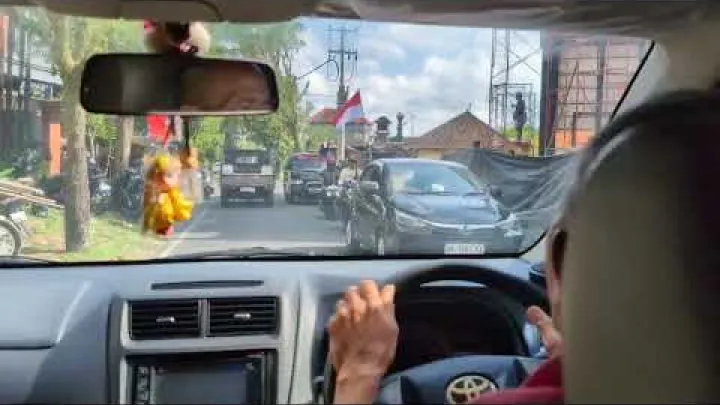
Congestion can be influenced by Denpasar traffic, school and work travel, tourist day-trip peaks, rain, local ceremonies, construction, and busy streets near the Monkey Forest area or Jalan Raya Ubud. The last few kilometres may take a surprising amount of time, especially if your accommodation is on a small lane where cars cannot turn easily.
Avoid tight same-day plans immediately after arrival. If you have a retreat check-in deadline, dinner booking, wellness appointment, or onward tour, leave a buffer. It is better to arrive early and relax than to plan an exact schedule around a traffic-sensitive transfer.
Getting to Bali First: Flights and Sea Gateways
Most Ubud-bound travelers first enter Bali by air, but visitors coming from nearby islands may arrive by boat. In both cases, the final stage to Ubud is by road.
Flying into Bali through Denpasar Airport
Ngurah Rai International Airport, commonly called Denpasar Airport and using the code DPS, is the main air gateway for travelers going to Ubud. The airport serves international and domestic flights, and many visitors connect through major hubs such as Jakarta, Singapore, Kuala Lumpur, or other regional cities.
When planning flights, separate the long-distance arrival into Bali from the airport-to-Ubud transfer. A flight may land on time, but immigration, baggage collection, currency exchange, SIM card setup, and meeting your driver can add time before you leave the airport area.
If your flight lands late at night or after a long international connection, it is usually worth arranging your Ubud transport before arrival. This reduces the need to compare offers while tired and helps your accommodation know when to expect you.
Reaching Bali by Ferry or Fast Boat
Travelers coming from nearby islands may arrive at Bali by ferry or fast boat rather than by plane. Common arrival areas relevant to Ubud include Sanur for boats from Nusa Penida and Nusa Lembongan, and Padang Bai for some Lombok and Gili Islands routes. Operators, routes, and schedules can change, so booking platforms such as Direct Ferries are best used as a starting point, not as a substitute for checking your exact operator before travel.
Boat travel does not take you directly to Ubud. After landing on Bali, you still need a road transfer by private driver, taxi, app-based car where available, shared van, or an onward transfer included with your boat ticket.
Before booking, check the current sailing time, sea conditions, luggage rules, port name, arrival point, and whether hotel pickup or drop-off is included. Also confirm whether Ubud is covered or whether the included transfer only serves beach areas or central drop-off points.
From Bali Airport to Ubud
Ngurah Rai International Airport is the most common starting point for a first trip to Ubud. The main choices are pre-booked private transfer, ride-hailing, airport taxi, or a slower public and shared transport combination.

Pre-Booked Private Transfers
A pre-booked private transfer is the easiest low-stress airport-to-Ubud option for many travelers. The usual process is simple: you provide your flight details, the driver tracks or waits for your arrival, you meet after leaving the arrivals area, and the car takes you directly to your accommodation or an agreed drop-off point.
This option is especially useful for late-night arrivals, families, groups, travelers with large luggage, and anyone unfamiliar with Bali transport. It is also helpful if your accommodation is in a village outside central Ubud or down a road that is difficult for a driver to find without advance instructions.
Book through your hotel, villa host, an established local operator, or a reputable travel platform. The Bali Airport Guide describes airport transport choices such as taxis, transfers, vans, and car services, which reflects the range of options travelers will see around DPS.
Before paying, confirm the passenger count, luggage space, total fare in Indonesian rupiah, meeting point, driver contact, waiting time, parking fees, and what happens if your flight is delayed. Save the driver’s name and phone number, and send your accommodation name, address, map pin, and local phone number if available.
Ride-Hailing from the Airport
Ride-hailing cars can be a practical way to travel from the airport to Ubud when pickup is permitted and cars are available. The benefit is that the app normally shows the estimated fare, route, driver details, vehicle plate, and in-app communication.
Set up your ride-hailing apps before landing if possible. Complete phone verification, add a payment method if you want cashless payment, and make sure your phone can use mobile data in Indonesia. Airport Wi-Fi may not always be enough when you need to communicate with a driver or walk to a pickup area.
Airport pickup points may be designated and may not be directly outside the terminal door. Follow in-app instructions, official signage, and local staff guidance. If you book through an app, avoid canceling the ride and switching to an off-app cash deal unless you are comfortable losing the app’s tracking, pricing, and dispute protection.
Airport Taxis and Local Drivers
Airport taxis and local drivers can provide direct transport to Ubud, but prices and processes may vary. This option can work well if you prefer arranging transport after arrival or if your phone is not ready for ride-hailing.
Use official counters or clearly agreed fixed fares where possible. Before entering the vehicle, confirm the total price, destination, currency, luggage charges, parking or toll fees if any, and payment method. If the fare is metered, confirm that the meter will be used. If the fare is fixed, confirm the full amount to your exact accommodation or drop-off point.
Be cautious with high-pressure offers, but keep the situation polite. Many drivers are legitimate and helpful. A simple script can avoid misunderstandings: “What is the full price in rupiah to this hotel in Ubud, including luggage and parking?” If the answer is unclear, choose another counter, app, or pre-booked option.
Public Bus and Mixed Public Transport Routes
Public or semi-public transport from the airport to Ubud is usually slower and more complex than a direct car. Depending on current routes, you may need to travel first toward Denpasar or a terminal area, then connect onward by bus, shuttle, taxi, or app-based car toward Ubud.
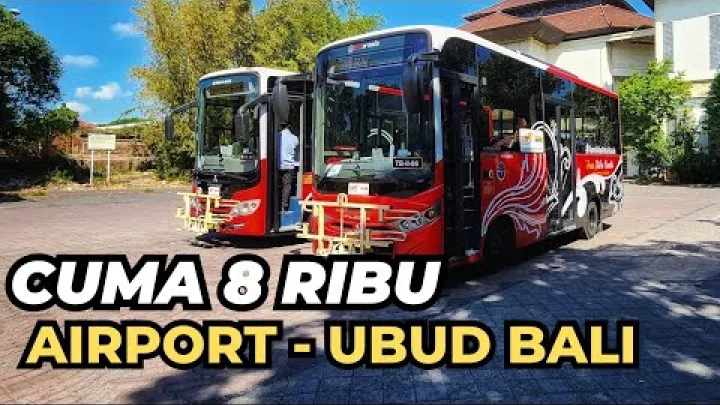
Names that may appear in route planning include Denpasar, Terminal Ubung, Batubulan, Sukawati, and local bus services such as Trans Metro Dewata. However, bus corridors, payment rules, and transfer points can change, and current official route information may be incomplete or hard to interpret for a new visitor.
Use this option only if you arrive during the day, carry light luggage, have time to check routes, and are comfortable changing plans. Do not rely on a direct airport-to-Ubud bus unless you have verified the current route and timetable shortly before travel through live transport apps, local operator updates, accommodation staff, or recent traveler information. Keep enough cash or payment options for a backup car if the route does not work as expected.
From Ports and Nearby Islands to Ubud
If you arrive in Bali by fast boat or ferry, your travel day has two separate parts: the sea crossing and the road transfer to Ubud. Plan both, especially when seas are rough, boats run late, or you are carrying luggage.
From Sanur after Nearby Island Crossings
Sanur is a common Bali arrival point for travelers coming from nearby islands such as Nusa Penida and Nusa Lembongan. After disembarking, the onward trip to Ubud is by road. You can arrange a private transfer, taxi, app-based car where pickup is available, or a bundled boat transfer if your operator offers one.

Sanur-to-Ubud can be shorter than airport-to-Ubud in some traffic conditions, but it is still traffic-dependent. You may need time for disembarkation, luggage collection, walking from the beach or port area, finding your driver, and leaving the busy Sanur area.
If you arrive late in the afternoon, travel with large bags, or are checking into a villa outside central Ubud, book onward transport in advance. Send your driver your boat operator, scheduled arrival time, and a message if the boat is delayed.
From Padang Bai after Lombok or the Gili Islands
Padang Bai is a common arrival area for some routes from Lombok and the Gili Islands. From there, Ubud is reached by road, and the drive is long enough to plan carefully after a boat journey.
Before booking your boat ticket, check whether it includes onward transfer to Ubud or only transport to Padang Bai. Some tickets may include shared hotel drop-off, while others may require you to arrange a separate driver at the port.
If your boat arrives late, a pre-booked driver can reduce stress compared with negotiating after disembarkation. Keep the driver updated if the boat is delayed, and confirm whether the agreed fare includes waiting time. If using a shared transfer, understand that the vehicle may stop at multiple hotels before reaching your accommodation.
When to Book Boat Tickets with Onward Transfer
Boat tickets with hotel pickup or drop-off can simplify multi-island itineraries. They are useful when you want one booking to cover the boat crossing and the road transfer, especially if you do not know the port area or are traveling with bags.
Check the included pickup area, exact drop-off point, vehicle type, shared or private status, waiting time, luggage limit, and whether Ubud is covered without surcharge. Ask for written confirmation that states the route and included services.
A bundled transfer is convenient, but it is not always the fastest. Shared vehicles may wait for other passengers or drop travelers at several hotels. Compare the total price and travel time with arranging a private driver separately, especially if your accommodation is outside central Ubud.
From Other Bali Areas to Ubud
Many visitors reach Ubud after spending time in Bali’s coastal resort areas. These transfers are usually simple to arrange, but traffic can make travel times longer than the map suggests.
From Kuta, Legian, and Seminyak
Kuta, Legian, and Seminyak are common starting points for a move to Ubud after a beach stay. Direct private cars, app-based cars, local taxis, and tourist shuttles may all be available depending on your exact pickup point and current local rules.
A private driver is practical if you have luggage, want hotel-to-hotel service, or plan to stop at places such as a market, temple, or rice terrace on the way. Agree the itinerary, waiting time, and final fare before departure. Do not assume that a day-trip sightseeing price and a simple relocation transfer price are the same.
These areas can have heavy local traffic, especially around busy shopping streets, beach access roads, and hotel zones. When feasible, an earlier departure may feel more comfortable than leaving during the busiest afternoon period. If you use an app, be prepared to meet at a pickup point that is easier for the driver to access.
From Canggu and the Southwestern Coast
Canggu-to-Ubud travel can be slow despite the moderate distance. Narrow roads, café traffic, beach traffic, scooters, construction, and sunset movement can all affect the journey. This route is a useful example of why Bali transfer times should be treated as estimates rather than promises.
Private drivers and app-based cars are the most practical options for many travelers. If you stay on a small lane, ask your accommodation where drivers usually pick up guests. Some areas may have local transport arrangements or pickup sensitivities, so you may need to walk a short distance to an accepted meeting point.
Avoid tight same-day plans if leaving during busy café, beach, or sunset periods. If you are moving accommodation, keep the day simple: check out, travel to Ubud, check in, and avoid scheduling an activity that requires exact arrival time.
From Nusa Dua, Jimbaran, and Uluwatu
Transfers from Nusa Dua, Jimbaran, and Uluwatu can take longer than many visitors expect because these areas are far south of Ubud. The route may pass through busy urban and resort areas before reaching the inland roads toward Gianyar Regency.
Private drivers, ride-hailing cars, hotel cars, and sightseeing transfers may all be possible. For a one-way relocation, compare the total fare, luggage space, pickup time, and whether the driver will take you directly to your Ubud accommodation. For a same-day Ubud excursion from the far south, start early and keep the itinerary realistic.
Uluwatu and Jimbaran traffic can be affected by beach movement, sunset visits, events, and narrow local roads. Avoid planning an Ubud check-in immediately after a sunset activity in the far south unless you are comfortable arriving late.
Public, Shared, and Sustainable Transport Options
Ubud is not the easiest place in Bali for public transport, but shared and lower-impact options can still be useful for certain travelers. The key is to confirm current routes and avoid assuming that a service runs from every resort area.
Tourist Shuttles and Shared Vans
Tourist shuttles and shared vans are a middle option between private cars and public buses. They may connect popular resort areas with central Ubud using fixed pickup points, scheduled departures, and shared vehicles.
The advantage is cost. A shuttle is often cheaper than a private car for one person. The trade-off is reduced flexibility: you may need to reach a pickup point, accept a central drop-off, travel at a fixed time, and share the journey with other passengers. Luggage rules may also be stricter than in a private vehicle.
General Ubud transport guidance from GetYourGuide notes that public transportation in Ubud is limited, while shuttles and private transfers are common practical options for longer distances.
Use shuttles when schedule matters less than price. Before booking, confirm pickup point, drop-off point, departure time, luggage allowance, cancellation policy, and whether the service is suitable for relocation with bags or mainly intended for day trips.
Modern Local Buses and Route Checking
Bali’s local bus networks, including services referred to as Trans Metro Dewata, may be useful for some journeys, but they are not usually the simplest way for international visitors to reach Ubud with luggage. They may be more practical from Denpasar or certain urban nodes than directly from the airport, port, or beach resort areas.
Because routes, payment systems, operating hours, and transfer points can change, avoid relying on old corridor numbers or step-by-step bus instructions without checking them close to your travel date. Route apps can help, but they may not always show service disruptions, local payment details, or the easiest final connection to your accommodation.
If you want to try local buses, plan a daytime trip, carry light luggage, and keep a backup option. Ask your accommodation whether a bus stop or shuttle point is realistic for your exact address, not just for central Ubud.
Electric Shuttle Pilots and Ubud Last-Mile Mobility
Ubud has been part of discussions and pilot programs aimed at improving mobility and reducing congestion. The Toyota Mobility Foundation and Bali Provincial Government have described sustainable mobility efforts for Ubud, including the SMART at Ubud program, as a trial initiative rather than a guaranteed permanent public service. The official announcement from Toyota Global Newsroom is useful for understanding the program’s purpose.
The practical point for travelers is that last-mile movement in Ubud remains a challenge. Even if your long-distance arrival is by private car, shuttle, or bus, the final streets near your accommodation may be narrow, busy, or unsuitable for larger vehicles.
Before relying on any electric shuttle, local app, hotel shuttle, or sustainable mobility service, verify whether it is active near your travel date and whether it serves your route. Treat these services as helpful when available, not as the foundation of your arrival plan.
Arrival Tips: Timing, Safety, and Avoiding Transport Problems
Most transport problems on the way to Ubud can be avoided with clear confirmation, realistic timing, and a backup plan. The goal is not to avoid local drivers, but to avoid misunderstandings about price, pickup point, and destination.
Late-Night Arrivals and Peak Traffic
Late-night arrivals can sometimes mean lighter road traffic, but they can also make transport availability more stressful if nothing is booked. If you land late, travel with children, or do not want to negotiate after a flight, arrange a transfer before arrival.
Daytime and afternoon transfers may take longer because of traffic, school runs, work movement, tourist day trips, ceremonies, or rain. Do not schedule an important dinner, class, retreat session, or tour immediately after you expect to arrive in Ubud.
For late arrivals, prepare a small checklist: driver contact, accommodation address, offline map, local currency or confirmed card payment, charged phone, power bank, and the accommodation’s phone number. If your guesthouse has limited reception hours, tell them your expected arrival time.
Ride-Hailing Restrictions and Pickup Points
Ride-hailing is common in Bali, but pickup rules may vary around airports, ports, hotels, beach clubs, and busy tourist zones. Restrictions are not always island-wide or permanent, so follow the current instructions in the app and the signs at your location.
You may need to walk a short distance to an accepted pickup area, especially around transport-sensitive zones. This can be inconvenient with luggage, rain, or children, so consider whether a pre-booked transfer is worth the extra cost.
Keep communication inside the app when possible. It helps preserve the agreed fare, location history, and driver details. If a pickup location is unclear, message the driver with a simple landmark and wait in a safe, well-lit place.
Taxi Touts, Fake Taxis, and Fare Negotiation
At airports, ports, and busy resort areas, you may be approached by drivers offering transport. Many are legitimate, but some situations can lead to unclear pricing or pressure to decide quickly.
Use official counters, reputable apps, hotel-arranged drivers, or clearly confirmed private transfers when possible. Warning signs include vague prices, claims that the app or meter cannot be used after you have already agreed to it, pressure to change vehicles, or requests to change the payment method without a clear reason.
If a ride is not metered or app-priced, agree the total fare before you start. Confirm the price in Indonesian rupiah, the exact destination, luggage, parking, waiting time, and whether the driver can reach the accommodation entrance. If you feel uncomfortable, politely decline and choose another option.
Accommodation Access and Narrow Lanes
Some Ubud hotels, villas, guesthouses, and retreats are located on narrow lanes, steep access roads, or rice-field paths where cars may not reach the front door. This is common enough that you should check access before you travel, especially if you have heavy luggage or arrive after dark.
Ask your accommodation for the best drop-off point, whether a car can reach the entrance, and whether staff can help carry bags. Drivers may know major landmarks such as Ubud Palace, the Monkey Forest area, or Jalan Raya Ubud better than a small villa name, so provide both the accommodation name and a nearby landmark when possible.
Save the full address, map pin, phone number, and check-in instructions offline. If the final approach requires walking, ask how far it is, whether the path is lit at night, and whether rain makes access difficult.
Final Route Recommendation
For the smoothest Ubud arrival, book a private transfer if you are arriving at Bali Airport, Sanur, Padang Bai, or a distant resort area with luggage. It is usually the best balance of safety, comfort, and predictability, especially for first-time visitors and late arrivals.
If you are traveling alone on a budget and arrive during the day, compare shuttles, shared vans, and carefully checked bus combinations. Use ride-hailing when pickup is clearly permitted and you have mobile data, but keep a backup plan if pickup rules or demand change.
Whatever route you choose, remember that Ubud’s inland location means the final kilometres can be slow. Confirm the fare, pickup point, luggage space, accommodation access, and driver contact before you travel. With realistic timing and clear arrangements, getting to Ubud can be simple and much less stressful.
Select area
Create a post
Posting is free and no registration is required.