Cao Bang Getting There: Bus, Van and Car Routes from Hanoi

Cao Bang getting there planning is mostly about choosing the right road connection from Hanoi or Noi Bai International Airport. This mountainous province in Northern Vietnam is rewarding to visit, but it is not as simple as landing at a local airport or taking a direct train. Most travelers first reach Hanoi, then continue to Cao Bang City by sleeper bus, limousine van, minibus, or private car. This guide explains the main routes, likely travel times, arrival points, booking checks, and common mistakes to avoid before you continue toward places such as Ban Gioc Waterfall and Trung Khanh.
Quick Answer: The Best Way to Get to Cao Bang
If you need the shortest practical answer, plan to travel by road. Hanoi is the most reliable gateway, while Noi Bai International Airport can work as a direct road gateway if your flight time matches a bus, van, or private transfer.
Best Route for Most Travelers
For most visitors, the best way to get to Cao Bang is to arrive in Hanoi, then take a long-distance bus, limousine van, or private car to Cao Bang City. This is the main transport corridor with the most visible booking options and the clearest departure points.
Many Hanoi to Cao Bang trips take around six to nine hours, but this should be treated as a planning range rather than a promise. Journey time can change because of departure location, route, road works, mountain weather, rest stops, and holiday traffic. Some airport-to-Cao Bang listings show longer ranges, so avoid building tight plans around the fastest possible time.
A good itinerary gives you a buffer after arrival. If you reach Hanoi on an international flight, consider whether you will be tired, whether immigration and baggage collection may take time, and whether the last useful departure to Cao Bang still fits your schedule. It is usually better to arrive in Cao Bang relaxed than to start a mountain road journey under pressure.
Transport Modes at a Glance
The practical transport modes to Cao Bang are long-distance sleeper buses, limousine vans or minibuses, and private cars or long-distance taxis. Buses are usually the cheapest and most widely used. Vans are often more convenient for travelers who prefer daytime travel, smaller vehicles, or central pick-up points. Private cars cost more but give the most control over timing, pick-up location, luggage, and rest stops.
Flights and trains should not be treated as practical direct options to Cao Bang unless a current official transport source confirms a new service. Flight search sites may show nearby or indirect possibilities, but this does not mean you can fly directly into Cao Bang City. Similarly, rail travel does not currently function as a simple Hanoi to Cao Bang train route for most travelers.
| Mode | Best for | Typical cost level | Main caution |
|---|---|---|---|
| Sleeper bus | Budget travelers and overnight travel | Low | Early morning arrival can be inconvenient |
| Limousine van or minibus | More comfort and daytime arrival | Medium | Pick-up and drop-off points vary |
| Private car or taxi | Families, groups, late arrivals, flexible plans | High | Total price and route must be confirmed clearly |
| Flight or train | Not a practical direct route for most travelers | Not applicable | Do not rely on generic booking pages without confirmation |
Main Gateways Before You Travel to Cao Bang
Because Cao Bang is in the northeast mountain region, your first major decision is where to start the long-distance road journey. Hanoi is the default gateway, Noi Bai International Airport is useful for some direct road departures, and other northern towns are possible only when you have flexibility.
Hanoi as the Primary Gateway
Hanoi is the main practical gateway for international and domestic travelers heading to Cao Bang. Travelers from central or southern Vietnam usually reach Hanoi first by flight, train, or long-distance bus, then change to a northeast-bound road service.

Common Hanoi departure arrangements include My Dinh Bus Station, operator offices, and tourist pick-up points in central districts. The exact boarding place matters. A ticket that says Hanoi does not always mean the same station, street, or office. Before you travel, confirm the operator name, street address, map pin, and whether the ticket includes hotel pick-up or requires you to reach a bus station yourself.
The road corridor usually leaves Hanoi and continues toward the northeast, often using faster lowland roads before entering more mountainous terrain. Some services may follow routes connected with the Bac Giang-Lang Son expressway and National Highway 4A, but the exact road can vary by operator, traffic, and conditions. Ask the operator if you need to know the route for motion sickness, rest stops, or connections.
Noi Bai International Airport as a Direct Gateway
Noi Bai International Airport can be a useful gateway if you want to avoid going into central Hanoi before continuing to Cao Bang. Online transport platforms list road options from Noi Bai Airport to Cao Bang, including buses, vans, and taxis, with the airport-to-province journey shown as a long road trip rather than a flight or train connection. For example, 12Go lists an approximate airport-to-Cao Bang road distance of about 309 kilometers and travel times that can fall in a broad seven to ten hour range depending on the service.
This option works best when your flight lands early enough and you have a confirmed same-day departure. Direct airport services may be less frequent than departures from Hanoi bus stations or city offices. Some services may also use an airport-area meeting point rather than a clear counter inside the terminal.
If your flight is delayed, immigration takes longer than expected, or the meeting point is confusing, you could miss the vehicle. Keep the operator phone number available, use mobile data if possible, and ask for the meeting point in clear written form before you arrive.
Other Northern Vietnam Starting Points
Travelers exploring Northern Vietnam often ask about reaching Cao Bang from Ha Giang, Ba Be National Park, Lang Son, or Bac Ha. These routes can make sense for flexible itineraries, motorbike trips, private tours, or regional loops, but they are less consistently documented than the Hanoi to Cao Bang corridor.
When starting outside Hanoi, do not assume that every town has a direct daily bus that can be booked easily online in English. Local buses, shared vans, or indirect connections may exist, but they can depend on the season, weekday, demand, and local station arrangements. Ask your accommodation, check the local bus station, and compare with at least one online booking source when possible.
If you have limited time, returning via Hanoi may still be simpler than trying to link several smaller towns by public transport. If you want to avoid backtracking, keep an extra day in your plan and avoid booking a non-refundable onward flight immediately after a mountain road journey.
Hanoi to Cao Bang by Bus, Van, or Private Car
The Hanoi to Cao Bang route is the core of most travel plans. It is also the route where travelers will see the widest range of vehicles, fares, pick-up points, and booking promises. Treat all schedules and prices as current snapshots, not permanent guarantees.
Sleeper Buses from Hanoi
Sleeper buses are the backbone of the Hanoi to Cao Bang route. They are popular because they keep costs low and can save a night of accommodation if you take an evening departure. A common pattern is to leave Hanoi in the evening and arrive in Cao Bang City very early the next morning.
Local route information from Ben Xe Cao Bang shows examples of Hanoi-Cao Bang services using My Dinh Bus Station routing, operator names, departure times, and fare snapshots such as sleeper bus services listed around 200,000 VND. These examples are useful for understanding the route, but you should check the current ticket price and departure time before travel because fares and schedules can change.
The main advantage of a sleeper bus is value. The main disadvantage is timing. If you arrive at dawn, your hotel room may not be ready, cafes may be closed, and you may be tired before starting a day trip. Contact your accommodation in Cao Bang City before departure and ask about luggage storage, early check-in, or a place to wait safely.
Choose your boarding point carefully. My Dinh Bus Station is a common long-distance bus hub in Hanoi, but some companies may use offices or pick-up points elsewhere. If your ticket includes a shuttle pick-up, ask whether it is included in the fare and how long before departure you must be ready.
Limousine Vans and Daytime Minibuses
In Vietnam, the word limousine often refers to a premium van, minibus, or upgraded coach rather than a luxury private car. These vehicles are often marketed as more comfortable than standard buses, with fewer seats and sometimes more convenient pick-up or drop-off arrangements.

For many international travelers, a daytime limousine van is easier than an overnight sleeper bus. You can see where you are going, arrive in Cao Bang before dark if the schedule runs well, and avoid the problem of reaching the city before hotel check-in. Vans can also be useful if you prefer a smaller vehicle or do not sleep well on buses.
The trade-off is that luggage space may be more limited, boarding locations can be less obvious, and the vehicle may make multiple pick-ups. Confirm whether your seat is on a van, minibus, or larger bus. Also confirm whether you will be dropped at Cao Bang Interprovincial Bus Station, an operator office, your hotel, or another city location.
Before departure, save screenshots of the booking, operator phone number, pick-up address, and Vietnamese destination name. This helps if your driver, hotel, or taxi needs to check the details.
Private Cars and Long-Distance Taxis
A private car or long-distance taxi is the most flexible way to travel from Hanoi or Noi Bai Airport to Cao Bang. It can make sense for families, small groups, travelers with heavy luggage, photographers carrying equipment, or people arriving too late for a convenient bus.
Private transport can offer hotel or airport pick-up and may allow you to choose rest stops. However, it is still subject to the same road distance, weather, traffic, and mountain conditions as other vehicles. Do not assume that a private car will always be much faster than a good bus or van.
Before agreeing to a private transfer, confirm the total price, vehicle size, luggage capacity, pick-up time, route, rest stops, and whether the driver is experienced with the Cao Bang road. Ask whether the price includes tolls, parking, waiting time, and night travel. If you book through accommodation or a local agency, ask for the vehicle details and driver contact before the travel day.
Simple Comparison for Choosing a Route
Choosing the best route depends on your arrival time, budget, comfort needs, and tolerance for uncertainty. The table below uses broad planning ranges because exact fares, vehicle types, and departure times change by operator and date.
| Option | Best for | Approximate time | Relative cost | Booking difficulty | Main drawback |
|---|---|---|---|---|---|
| Sleeper bus from Hanoi | Budget travelers and overnight trips | Often around 6-9 hours | Low | Medium | May arrive before normal check-in |
| Limousine van or minibus | Comfort and daytime arrival | Often around 6-9 hours | Medium | Medium | Pick-up points can vary |
| Direct airport road service | Travelers landing at Noi Bai Airport | Often a full-day road journey | Medium to high | Medium to high | Fewer services and airport meeting points |
| Private car | Groups, families, late arrivals | Similar road range, sometimes more flexible | High | Medium | Price details must be clear |
For the most reliable plan, check schedules close to departure and compare at least two booking channels. A lower fare is not helpful if the boarding address is unclear or the arrival point is far from where you need to be.
Noi Bai Airport to Cao Bang Without Going into Hanoi
Some travelers land at Noi Bai International Airport and want to continue directly to Cao Bang without entering Hanoi. This can save time, but it requires more careful planning than a standard Hanoi city departure.
Direct Airport Bus and Van Services
Direct airport-to-Cao Bang road services are useful when your flight lands early, you have a confirmed pick-up, and you do not want to spend time crossing Hanoi. Transport platforms such as 12Go-style booking sites may show buses, vans, and taxis from Noi Bai Airport to Cao Bang, but current availability should always be checked for your exact date.
The airport-to-Cao Bang road journey can take most of the day. Even if the listed journey time looks manageable, you need to include airport delays, baggage collection, walking time to the meeting point, and possible waiting time for other passengers.
Ask the operator for a precise meeting point. Some services may not wait at an obvious terminal desk. They may ask passengers to meet at a specific gate, parking area, nearby road, or airport-area stop. If you are arriving from outside Vietnam, make sure you can contact the operator after landing.
When an Overnight Stop in Hanoi Is Better
An overnight stop in Hanoi is often better after a late international arrival, a long-haul flight, or a connection with uncertain timing. It gives you access to more bus and van departures the next day and reduces the risk of missing the last same-day service.
Staying in Hanoi can also make boarding easier. You can choose a departure from My Dinh Bus Station, a known operator office, or a central pick-up point, depending on the ticket. You also have time to buy snacks, withdraw cash, organize a local SIM or eSIM, and confirm your Cao Bang accommodation.
Avoid planning major Cao Bang activities immediately after landing in Hanoi and traveling overnight. A long mountain road journey after a flight can be uncomfortable, and delays are always possible. Build your plan around arrival first, then sightseeing after rest.
Arriving in Cao Bang City
Cao Bang City is the practical staging point for most visitors. It is where long-distance road services usually connect with hotels, local taxis, tours, and onward transport toward Ban Gioc Waterfall or other parts of the province.
Cao Bang Interprovincial Bus Station
Cao Bang Interprovincial Bus Station is the main formal arrival hub for many long-distance services. Local station information from Ben Xe Cao Bang places the station near the end of Vo Nguyen Giap Street and describes it as serving interprovincial routes.
Not every operator will necessarily drop every passenger at the same place. Some vehicles may stop at a company office, a city pick-up point, or another agreed location. Check your ticket and ask the operator where you will arrive in Cao Bang City. If you are staying outside the city center, ask your accommodation whether they can help with the final transfer.
The bus station is the bridge between long-distance road travel and local movement. Once you arrive, you may need a taxi, prearranged hotel transfer, local bus, or motorbike rental depending on your plan.
Early Morning Arrivals and Getting to Accommodation
Many overnight buses may arrive before normal hotel check-in hours. This can be efficient, but it can also leave you waiting with luggage in the early morning. Contact your accommodation before travel and ask about reception hours, luggage storage, early check-in, or a paid half-day room.
If you arrive in the dark or at dawn, use a clear and calm approach to local transport. Prearranged pick-up, reputable taxis, or transport recommended by your accommodation can reduce confusion. If you use an informal motorbike taxi or a driver waiting near the station, agree on the price and destination before leaving.
Keep your hotel name, address, and phone number available in Vietnamese if possible. A screenshot works even if your mobile connection is weak.
Onward Context for Ban Gioc Waterfall
Many travelers go to Cao Bang because they want to visit Ban Gioc Waterfall near the border area around Trung Khanh. It is important to understand that Ban Gioc is an onward provincial journey after you reach Cao Bang City. It is not the same as the long-distance Hanoi to Cao Bang access route.
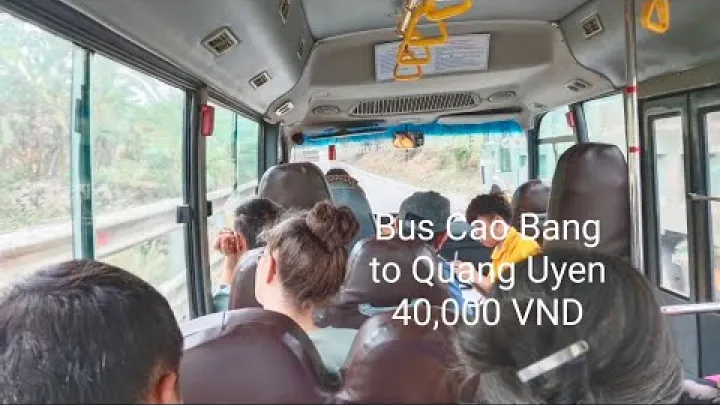
From Cao Bang City, travelers may use local buses, day tours, motorbikes, or private cars to reach Ban Gioc and nearby sights. Current local schedules can be incomplete online, so check after arrival or ask your accommodation before committing to a same-day plan.
Do not assume you can step off an overnight bus and immediately connect smoothly to Ban Gioc unless you have confirmed the timing. If Ban Gioc is your main reason for visiting, consider spending the first day recovering in Cao Bang City or arranging the onward trip in advance.
Getting to Cao Bang from Other Northern Vietnam Destinations
Northern Vietnam looks compact on a map, but mountain travel can be slow. Routes between provincial towns may be scenic and rewarding, yet they are not always easy to book online or predict precisely.
Ha Giang to Cao Bang
Ha Giang to Cao Bang is a common question for travelers planning a northern loop by motorbike, private car, or a mix of buses and tours. It can be a logical regional route, but it is less straightforward than Hanoi to Cao Bang.
Public buses or local transport may be available at certain times, but schedules can be harder to confirm in advance, especially in English. If you are in Ha Giang City, ask your accommodation, visit or contact local bus operators, and compare any available online listings. If you are traveling by motorbike, be realistic about mountain travel time and road conditions.
Map estimates can be optimistic in this region. Curves, passes, rain, fog, construction, and photo stops all add time. If you are linking Ha Giang and Cao Bang, avoid scheduling a tight same-day connection to Ban Gioc, Hanoi, or an onward flight.
Ba Be, Lang Son, Bac Ha, and Smaller Towns
Ba Be National Park, Lang Son, Bac Ha, and smaller northern towns can appear in regional road itineraries, but public transport connections are not always simple. Some routes may require a change of vehicle, a local bus station transfer, or a return toward a larger hub.
Lang Son can make sense in some northeast road plans, while Ba Be may be combined with Cao Bang in private or semi-private itineraries. Bac Ha is usually more indirect for Cao Bang access and may require careful routing through larger towns. These possibilities are useful for flexible travelers, not for people who need a guaranteed simple connection.
If you are avoiding Hanoi, keep at least one spare day in the itinerary. Ask local accommodation staff for current bus information, but still confirm the actual departure point and price yourself when possible. In smaller towns, a service that locals know well may not appear clearly on major English-language booking sites.
Booking, Reliability, and Common Travel Mistakes
The biggest problems on the Cao Bang route are usually not the road itself. They are unclear boarding points, old schedules, changing prices, and assumptions that all services operate the same way every day.
How to Book and Confirm Tickets
You can book Cao Bang transport through online platforms, operator offices, bus station counters, accommodation staff, local travel agencies, or phone confirmation where available. English-language platforms are convenient for comparing vehicles and paying by card, while local operators and station counters may have the most direct route knowledge.
Before paying, compare at least two sources for the same journey. Check the departure time, boarding point, vehicle type, arrival point, fare, luggage rules, and cancellation conditions. If one source says My Dinh Bus Station and another says a central hotel pick-up, ask the operator which one applies to your ticket.
A practical confirmation checklist includes the operator name, passenger name, travel date, departure time, boarding address, phone number, vehicle type, expected arrival point in Cao Bang, and any pick-up instructions. If the platform provides license plate or driver details, save them. Keep the information accessible offline.
Schedule Changes, Weather, and Road Delays
Schedules, fares, and vehicle types can change, especially during Vietnamese holidays, school breaks, bad weather, or periods of high demand. Mountain roads can also be affected by rain, fog, construction, traffic, and occasional delays.
Check current operator information shortly before departure and allow buffers for onward travel. This is especially important if you plan to continue to Ban Gioc Waterfall, return to Hanoi for a flight, or connect with another northern destination.
Official provincial sources such as Sovhtt can be useful for broader Cao Bang tourism and local notices, but they should not be treated as a live daily bus timetable. For actual departure times, confirm with the bus station, operator, or booking channel you will use.
Touts, Boarding Points, and Price Confusion
Bus stations and tourist areas can be confusing, especially when several companies use similar routes or when informal ticket sellers approach travelers. This does not mean you should be fearful, but it does mean you should be organized.
When possible, book through a reputable platform, a known operator office, your accommodation, or an official station counter. If someone redirects you to a different vehicle, confirm the operator name and destination before boarding. Do not hand over your ticket or luggage unless you are confident you are with the correct service.
The word Hanoi on a booking may mean My Dinh Bus Station, a specific bus company office, a hotel pick-up area, or another meeting point. Save the exact address, not just the city name. Keeping your ticket screenshot, operator phone number, and destination name in Vietnamese can prevent many small problems.
Frequently Asked Questions
Can you fly directly to Cao Bang?
Do not plan on a direct flight to Cao Bang for normal travel. Most visitors fly to Hanoi, land at Noi Bai International Airport, and continue to Cao Bang by road.
Is there a train from Hanoi to Cao Bang?
There is no practical direct Hanoi to Cao Bang train option for most travelers. The usual route is by bus, van, or private car from Hanoi or Noi Bai Airport.
How long does it take to get from Hanoi to Cao Bang?
Many road journeys take around six to nine hours, but the exact time depends on the vehicle, departure point, route, weather, traffic, and rest stops. Airport departures can take longer when waiting and meeting time are included.
Is it better to take a sleeper bus or a daytime van to Cao Bang?
Choose a sleeper bus if price is your priority and an early arrival is acceptable. Choose a daytime van or minibus if you prefer easier boarding, more comfort, and arriving before evening.
Can you go directly from Noi Bai Airport to Cao Bang?
Yes, direct road services from Noi Bai Airport to Cao Bang may be available, including buses, vans, and private cars. Check current availability, the exact meeting point, and whether your flight arrival leaves enough time.
Where do buses usually arrive in Cao Bang City?
Many long-distance services use Cao Bang Interprovincial Bus Station, but some operators may stop at offices or other city drop-off points. Always check the arrival point printed or confirmed on your ticket.
Conclusion: Build Buffers Into Your Cao Bang Transport Plan
Getting to Cao Bang is straightforward when you treat it as a road journey rather than a flight or train destination. For most travelers, Hanoi is the best gateway, with sleeper buses, limousine vans, and private cars forming the main options to Cao Bang City.
The safest planning habit is to confirm details close to departure. Check the exact boarding point, arrival point, vehicle type, fare, and operator contact, then build extra time for weather, road delays, and early morning arrivals. With realistic expectations and a small buffer, the journey to Cao Bang becomes a manageable first step toward one of Northern Vietnam's most memorable mountain regions.
Select area
Create a post
Posting is free and no registration is required.