Rach Gia Travel Guide: Ferries, Sights & Where to Stay

This Rach Gia travel guide is for travelers who want to understand the city before using it as a stop in the Mekong Delta or a gateway to Vietnam’s Gulf of Thailand islands. Rach Gia is not a resort town or a classic floating-market base. It is a working provincial coastal city with a harbor, local religious and cultural landmarks, everyday food streets, and important transport connections. This guide explains when to go, how to arrive, where to sleep, what to see, and how to build a realistic one- or two-night stay.
Rach Gia at a Glance
Rach Gia sits in southwest Vietnam, in Kiên Giang, on the Gulf of Thailand side of the Mekong Delta. It works best as a practical base with a local-city atmosphere: visitors can combine heritage stops and waterfront time with an onward journey to islands such as Phú Quốc, Nam Du, Hòn Sơn, or Hòn Tre.
Why Rach Gia Belongs on a Mekong Delta Itinerary
Rach Gia offers a different view of the Mekong Delta from the river-focused destinations that many first-time visitors know. It is a coastal provincial city where government, commerce, worship, transport, and daily life meet. The city can add variety to a longer route through southern Vietnam, especially for travelers moving between Ho Chi Minh City, the delta, and the islands offshore.
Choose Rach Gia if you value a straightforward transport hub, local cultural sites, and a less packaged urban experience. It is also suitable for travelers who prefer to spend a night on land before an island crossing rather than attempting a tightly timed connection. The city should not be treated as a replacement for classic river excursions or famous floating markets; those are better sought in other parts of the delta. Official tourism material describes Rach Gia as a political, economic, and cultural center of Kiên Giang with cultural and historical sites worth exploring, as noted by Vietnam Tourism.
Rach Gia as a Coastal Gateway
Three planning anchors shape most visits: Rach Gia Harbour, Rach Gia Airport, identified by the code VKG, and the road connection from Ho Chi Minh City and other southern destinations. For many travelers, the harbor is the reason to stop. A hotel night can turn an early ferry into a calm departure rather than a stressful same-day transfer.
A transit-focused visit may last only one night, with a meal, a short waterfront walk, and an early departure. A city-focused stay of two nights allows time for temples, the museum, parks, cafes, and ordinary streets. Choose Rach Gia as a base when the coastal gateway is central to your route. Consider Cần Thơ or another river-oriented base when floating markets and Mekong boat activity are the main purpose of your trip.
When to Visit Rach Gia
Rach Gia is warm and humid through the year. The most useful way to plan is not to look for a perfect month, but to balance heat, rainfall, outdoor comfort, and the importance of any ferry connection in your itinerary.
Dry and Rainy Season Trade-Offs
In broad southern Vietnam terms, the drier part of the year often brings more predictable conditions for walking, city sightseeing, and travel by road, while the wetter period can bring short or prolonged rain and more humid days. Heat can be intense even when rain is less frequent. Temple visits, museum time, cafes, and indoor meals remain possible in either pattern, but a waterfront walk or unplanned city wandering is more comfortable when you leave room for weather changes.
March to May can be a reasonable broad planning window for travelers who can tolerate high temperatures and want to arrange outdoor time early or late in the day. It is not a guaranteed best season for every traveler. Rain, wind, and local conditions vary, so check a current Rach Gia forecast close to departure rather than relying on a general seasonal description.
Planning Around Sea Conditions and Ferry Schedules
Weather matters more when Rach Gia is part of an island itinerary. A city-only stay can be adjusted around showers, but sea conditions can affect the comfort, timing, or operation of a ferry service. Do not build an international flight, a long bus trip, and an essential island boat into one narrow connection.
Check the local forecast and the ferry operator’s service status before finalizing an island connection. Confirm the departure terminal, check-in requirement, cancellation terms, and whether the sailing is operating, then leave a buffer day when the itinerary is weather-sensitive. This is particularly valuable for a trip to smaller islands, where alternatives may be limited.
How to Get to Rach Gia
Most international visitors reach Rach Gia overland from Ho Chi Minh City, through a domestic flight if one suits their dates, or after arriving by ferry from an island. The best option depends less on a single headline fare than on luggage, comfort, arrival time, and what you need to do next.
Traveling from Ho Chi Minh City by Bus or Road
Bus travel is usually the main practical overland option from Ho Chi Minh City. It is generally the lowest-cost choice and avoids the need to arrange a private driver. Route marketplaces may show fares beginning around US$12, but this is only an indicative example, not a fixed price; operators, vehicle types, holidays, pickup points, and availability can change. Current route listings are available through Bookaway.

A private car offers more control over departure time, rest stops, and hotel drop-off, making it useful for families, groups, or travelers with a late ferry plan. Minivans may sit between buses and private cars in price and flexibility, but their luggage allowance and pickup arrangements vary. Road conditions and traffic mean arrival estimates should be treated as estimates, not a promise.
| Option | Best for | Main advantage | Main trade-off |
|---|---|---|---|
| Bus | Budget travelers | Usually lower cost | Fixed pickup and schedule |
| Minivan | Smaller groups | Potentially flexible pickup | Space can be limited |
| Private car | Families or tight plans | Door-to-door control | Higher cost |
Before leaving Ho Chi Minh City, confirm the provider’s actual departure point, pickup instructions, luggage policy, and latest expected arrival time. If you plan to catch a ferry after arrival, an overnight stay is the safer design unless the complete connection has generous time built in.
Flying into Rach Gia Airport
Rach Gia Airport is a small airport serving the city, and it can be convenient when an available flight matches your route. It is not a reason to assume that there will be a suitable daily connection from every Vietnamese city or that a route will operate year-round. Direct-service listings can change with airline schedules and demand.
Check the airline or booking channel for the actual operating date, baggage rules, and arrival time before deciding that flying is better than the bus. A flight that lands late may still require a hotel night if the next stage is a morning ferry. You can use current route information for VKG as a starting point through FlightsFrom, then confirm the booking directly with the airline.
Ferries to Phú Quốc, Nam Du, Hòn Sơn, and Hòn Tre
Rach Gia Harbour is one of the main southwestern ports used for island travel. Routes from the Rach Gia area can connect travelers with Phú Quốc, Nam Du, Hòn Sơn, and Hòn Tre, although the available departure pattern differs by route and can change. A ferry booking page for Superdong services identifies Rach Gia and Hà Tiên as key ports for these island connections, including those destinations, through Baolau.

Plan the port journey as a separate stage, not as a simple extension of a bus or hotel booking. Know which terminal your operator uses, how far the hotel is from it, how early passengers should arrive, and whether the name on the ticket must match your travel document. Keep tickets, identification, booking messages, and luggage organized before reaching the terminal.
- Choose the island first, then check the complete outbound and return timetable.
- Confirm the terminal and check-in time for your specific operator.
- Review baggage limits, passenger-name requirements, and cancellation conditions.
- Allow enough time between a road arrival and boat departure.
- Do not assume a same-day island return is practical unless all current sailings support it.
Duration, fare, frequency, and even availability are variable details. They depend on the route, operator, season, weather, and operational decisions. Reconfirm the route, terminal, departure time, passenger details, and cancellation conditions directly with the operator shortly before departure.
Where to Stay in Rach Gia
Accommodation choice in Rach Gia is mainly a choice between ferry convenience and time in the city. Rather than searching for a particular formal district name, compare each property’s exact map location with the harbor, central sights, and your planned arrival or departure point.
Stay Near the Harbor for Early Departures
Harbor-adjacent lodging is the practical choice for an early island ferry. It reduces the chance that a long local transfer, morning traffic, or uncertainty about the terminal will complicate departure. This area also makes sense for late arrivals who want to eat, sleep, and leave without creating an extra sightseeing schedule.
The trade-off is that a harbor location may feel more functional than central. Check recent guest comments for room noise, reception coverage, air conditioning, and the accuracy of the listed location. Ask the property how it suggests reaching your specific ferry terminal if the map is unclear.
Stay in the Central Area for City Sightseeing
Central accommodation suits visitors who want to walk or take short rides to Nguyễn Trung Trực Temple, Tam Bao Pagoda, Phật Lớn Pagoda, Kiên Giang Museum, local cafes, and everyday streets. It is a better base when you have a relaxed transport schedule and want the city itself to be part of the trip.
A central stay does not mean the harbor is inaccessible, but it adds a transfer on ferry day. This is a reasonable trade-off for a two-night visit, especially when your departure is not very early. Confirm the estimated route to the terminal with the property rather than assuming all central listings are equally close.
Choosing a Base for a Transit Stop or Longer Stay
For a tight transit stop, stay near the harbor. For a longer city visit, stay centrally. Travelers with a late arrival and early ferry should normally favor function over sightseeing potential. Travelers with a full day in Rach Gia can use a central hotel and plan a harbor transfer when needed.
When comparing current listings, check the exact pin on a map, check-in and reception hours, air conditioning, recent reviews, cancellation terms, and whether staff can help arrange a taxi or other onward transfer. Room rates vary substantially by travel date, demand, room type, and booking platform, so compare the final price rather than relying on a general city-price estimate.
Best Things to Do in Rach Gia
Rach Gia rewards a slow, compact approach. Its highlights are best understood as parts of a real provincial city, not as a checklist of major national attractions. Give yourself time for a cultural stop, a waterfront pause, and an ordinary meal or coffee.
Explore Rach Gia Harbour and the Waterfront
Rach Gia Harbour is both an operational transport area and a useful introduction to the city’s coastal identity. A short visit can give you a sense of boat activity, local movement, and the scale of the island connections that shape many travelers’ plans. It is a worthwhile pause before or after a ferry, even if you are not staying long.
Set expectations correctly: this is an urban harbor experience, not a resort beach. Early morning and late afternoon can be more comfortable for walking in the heat. Remain in public or designated visitor areas, and do not enter working docks, restricted facilities, or unsecured waterfront edges for photographs.
Visit Nguyễn Trung Trực Temple and Local Pagodas
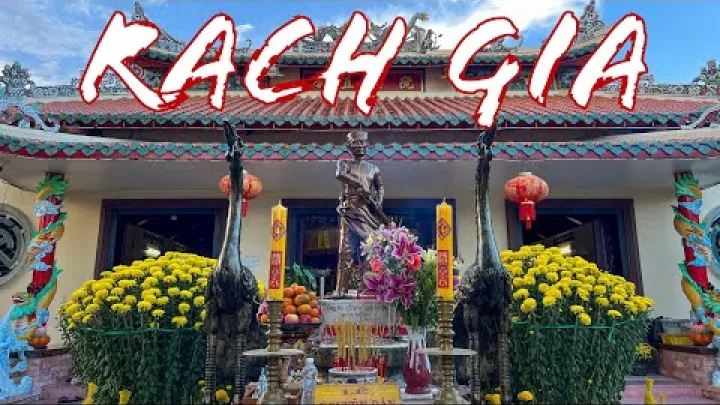
Nguyễn Trung Trực Temple is an important cultural stop where remembrance, local history, and active religious life meet. Pair it with Tam Bao Pagoda and Phật Lớn Pagoda for a compact route that shows another side of Rach Gia beyond its transport role. These are living places of worship, so the most rewarding visit is quiet and unhurried.

Wear modest clothing that covers shoulders and knees where appropriate, keep your voice low, and follow posted rules. Ask before photographing people, worshippers, or rituals. Opening arrangements, access, and special observances can differ by site, so do not assume a general schedule applies on the day you visit.
Learn at Kiên Giang Museum and Other Cultural Sites
Kiên Giang Museum can provide the historical context that a quick harbor walk cannot. It is a sensible first cultural stop for travelers who want to connect Rach Gia’s local sites with the wider province before visiting temples or exploring central streets. Combine it with nearby civic and heritage areas to create an easy half-day without rushed travel across the city.
Museum exhibits, admission arrangements, photography rules, and opening times can change. Check these details shortly before going, particularly if the museum is a key part of a short itinerary. Its value lies in helping visitors read the city as more than a place to wait for a boat.
Experience Parks, Cafes, and Everyday City Life
Công viên An Hòa Park, local cafes, casual food stops, and ordinary streets offer a lower-pressure way to experience Rach Gia between transport connections. This is a city where observing daily routines can be as useful as pursuing a dense list of sights. Sit for a coffee, choose a busy local meal spot, or take a gentle walk when conditions are comfortable.
Use cooler parts of the day for walking and keep your schedule adaptable if rain or heat becomes tiring. Avoid planning around unconfirmed market hours, named cafes, or nightlife claims. A simple neighborhood walk can be enough to make a transit stay feel like a genuine visit.
Getting Around and Managing Trip Costs
Rach Gia is manageable for independent travelers when they keep their itinerary geographically simple. The larger budget question is often not the city itself, but the transport chain around it: a bus or flight, local transfers, hotel nights, and island tickets can add up quickly.
Local Transport and Navigation
For short urban trips, use reputable local car or motorbike taxi options, arranged through a recognized app where available or through your accommodation. Walking can work for nearby central sights, but distance, heat, rain, and road conditions may make rides more practical. Save your hotel address, ferry-terminal details, and key place names offline in Vietnamese and English if possible.
Do not assume the harbor, airport, museum, temples, and every hotel are within easy walking distance of one another. Ask the driver to confirm the destination before departure, allow extra time for an unfamiliar pickup point, and keep small payment options available alongside a card or digital payment method.
Accommodation, Food, and Transport Budget Planning
Build your budget by category rather than by a single daily number. Allow for accommodation, meals, local rides, the long-distance journey to Rach Gia, and ferry tickets if you are continuing offshore. A short gateway stay may be modest in daily city spending, yet a multi-island trip can cost more once transfers, baggage, better boat seats, extra hotel nights, and schedule changes are included.
| Category | What changes the cost | Planning approach |
|---|---|---|
| Hotel | Date, room type, location | Compare harbor and central options |
| Meals | Venue and dining style | Keep a flexible daily allowance |
| City rides | Distance and time of day | Budget for several short transfers |
| Bus or flight | Operator, booking date, baggage | Check the final fare |
| Ferry | Route, sailing, baggage, season | Include return travel and buffers |
Live prices are volatile, so use current booking screens for decisions. Compare the whole journey rather than treating a low bus or ferry headline price as the total cost of reaching the island or returning to a major city.
Booking, Connectivity, and Practical Arrival Checks
Before arrival, save hotel confirmations, property addresses, transport tickets, and operator contact details offline. Confirm the accommodation location and check-in timing, the correct bus or ferry terminal, accepted payment methods, and the plan for reaching the hotel after arrival. These small checks are especially helpful when a booking platform shows an outdated pin or an operator changes a pickup arrangement.
For current local tourism information, the Kiên Giang Tourism and Trade, Investment Promotion Center is an official point of reference listed by Vietnam Tourism. Use official tourism channels and the actual transport operator for details that third-party booking pages may not update promptly.
Safety, Etiquette, and Common Planning Mistakes
Rach Gia is easiest to enjoy when travelers take ordinary road, water, heat, and cultural etiquette precautions. Keep decisions practical and consult current government travel advisories for major safety, health, or insurance decisions.
Road, Water, and Heat Awareness
Traffic requires attention even on short walks. Cross carefully, use reputable helmet-equipped transport if riding on a motorbike, and do not ride without a properly fitted helmet. Heat and humidity can cause fatigue quickly, so carry water, use shade and rest breaks, and avoid turning the hottest part of the day into a long walking route.
Near the waterfront, surfaces may be wet or uneven. Follow crew instructions while boarding and leaving ferries, keep valuables secure, and stay within designated passenger areas around boats, docks, and waterfront facilities. Do not use unsecured docks or restricted port areas as shortcuts or photo locations.
Temple Etiquette and Respectful Visits
At Nguyễn Trung Trực Temple and local pagodas, dress modestly, speak quietly, and allow worshippers space. Follow signs and staff directions, as access rules and photography practices can vary from one site to another. If you are unsure whether a photo is welcome, ask first or do not take it.
There is no need to perform rituals you do not understand. A respectful visit means observing carefully, avoiding disruption, and treating these places as active local spaces rather than only as photo stops.
Rach Gia Itineraries for One or Two Nights
The right Rach Gia itinerary depends on whether the city is your destination or a useful connection. Keep transport times conditional on your confirmed ticket, not on a generic schedule.
A One-Night Ferry-Gateway Itinerary
Arrive in Rach Gia, check into a hotel, and keep the first evening simple. If time and energy allow, visit the waterfront or have a relaxed local meal. Prepare tickets, identification, luggage, and payment for the next stage before sleeping. For an early sailing, choose harbor-side lodging and leave sightseeing for another trip.
If you arrive late, skip extra stops and prioritize rest and departure readiness. Travelers with a relaxed next-day schedule can stay centrally, fit in one temple or a short city walk, and then transfer to the harbor when needed.
A Two-Night City and Coastal Itinerary
On the first full day, create a compact cultural route: start with Kiên Giang Museum if it is open, then visit Nguyễn Trung Trực Temple and one or both pagodas. Break the day with a cafe or meal, and finish with the waterfront or a park visit when the temperature is more comfortable.
Use the second day according to your interest. Heritage-focused travelers can explore central streets at an unhurried pace. Travelers seeking local city life can spend time in cafes, parks, and food areas. Island-bound visitors can use the extra night as flexibility for a confirmed onward ferry rather than trying to force an unrealistic same-day ferry circuit.
When to Choose Rach Gia Instead of a Classic Mekong Base
Choose Rach Gia when Gulf of Thailand ferry access, a coastal provincial-city setting, and local cultural sites are the priorities. It is particularly useful on a route that includes Phú Quốc, Nam Du, Hòn Sơn, or Hòn Tre. Its harbor and road links make it a logical connection point rather than merely a place to pass through.
Choose a classic Mekong base such as Cần Thơ when your main goal is iconic floating markets, river excursions, and a more river-centered delta experience. In a longer Vietnam itinerary, the two approaches can complement each other: one highlights inland waterways, while the other opens a route toward the coast and islands.
The best Rach Gia trip is built around the experience and transport corridor you actually want. Stay near the harbor for a tight ferry plan, stay centrally for a fuller city visit, and leave enough flexibility for sea and transport conditions when an island connection matters.
Select area
Create a post
Posting is free and no registration is required.