Koronadal Getting There: Air, Bus, Ferry and Road Routes

Koronadal getting there is usually a two-step journey: first reach a nearby Mindanao gateway, then continue by road into South Cotabato. Koronadal does not have a confirmed commercial airport in the available transport information, so most visitors use General Santos International Airport or Francisco Bangoy International Airport in Davao. This guide compares the main routes by air, bus, ferry, and private vehicle, with practical notes on terminals, indicative travel times, and what to check before booking.
The simplest route for many travelers is to fly to General Santos City and continue to Koronadal by bus or car. Davao is a useful alternative when flight times, fares, or a wider Mindanao itinerary make it more convenient. Ferries and multi-day overland routes are possible for some travelers, but they require more planning and schedule flexibility.
Quick Route Planner for Koronadal
Use this section if you need a fast decision before booking. The best route depends on where you are coming from, your arrival time, your luggage, and whether you prefer the shortest road transfer or the widest choice of flights.
Best Overall Route: Fly to General Santos, Then Continue by Bus or Car
For most first-time visitors, the best overall route is to fly to General Santos International Airport, then continue north by bus, taxi, private car, or pre-arranged pickup. This route is usually the most practical because General Santos is the closest major air gateway supported by the available route information, and the onward land leg to Koronadal is relatively short.
Route-planning data from Rome2rio lists a Yellow Bus Line service from General Santos Airport to YBL Marbel Station at about 1 hour 30 minutes, with an indicative fare of about PHP 110. Treat this as a planning figure, not a guaranteed live timetable. Before traveling, confirm the current departure point, service hours, and whether the bus leaves directly from the airport or requires a short local transfer.
This route suits travelers arriving from Manila, budget travelers, people who want the fewest transfers, and visitors whose destination is in Koronadal or nearby parts of South Cotabato. If you arrive late at night or with heavy luggage, a private car or arranged pickup may be more comfortable, but it will normally cost more than the bus.
| Gateway | Onward leg | Indicative time | Best for |
|---|---|---|---|
| General Santos International Airport | Bus or car to Koronadal | About 1.5 hours by listed bus | Fastest simple route |
| Francisco Bangoy International Airport | Transfer to Ecoland, then bus | About 4.5 hours from Ecoland to Koronadal | More flexible flight choice |
| General Santos or Davao ferry ports | Land transfer to Koronadal | Varies by sailing and road leg | Slow travel or heavy baggage |
Best Alternative Route: Fly to Davao, Then Take the Ecoland Bus
Davao is the strongest alternative gateway for Koronadal. Travelers normally fly into Francisco Bangoy International Airport, transfer across Davao City to Davao City Ecoland Bus Terminal, and then take an intercity bus toward Koronadal. This adds a longer land journey than the General Santos route, but it can be worthwhile when Davao flights are cheaper, better timed, or easier to connect with from another Philippine city.
Available route-planning data lists the Davao City Ecoland Bus Terminal to Koronadal bus journey at about 4 hours 30 minutes. Fare ranges differ by source, so treat any quoted fare as indicative rather than fixed. Build in extra time for baggage collection, city traffic, buying a ticket, and waiting for the next bus.
Davao is especially useful if you are already visiting Davao City, if your international or domestic connection works better through Davao, or if you want to combine Koronadal with a broader Mindanao itinerary. For a simple direct trip to Koronadal, General Santos is usually easier.
When Ferries or Long-Distance Bus Routes Make Sense
Ferries and long-distance bus-and-ferry combinations can make sense for slow travel, flexible itineraries, large baggage, or travelers trying to avoid flying. They are not the fastest way to reach Koronadal. Ferries do not arrive in Koronadal itself, so you still need to continue by land from a Mindanao port such as General Santos City or Davao City.
Use ferry and multi-day overland routes only if you can tolerate schedule changes, missed connections, and possible overnight waits. Sailing schedules, weather conditions, vessel assignments, and port procedures can change. Confirm the route, sailing day, berth class, baggage rules, and arrival port before committing to a multi-leg plan.
Know the Main Gateways Before You Book
Koronadal is the regional center of South Cotabato and part of the wider Soccsksargen transport network. The main decision is not whether to fly directly to Koronadal, but which nearby gateway gives you the best balance of flight access, road time, price, and reliability.
General Santos International Airport
General Santos International Airport is the nearest major air gateway for most Koronadal-bound travelers. It is commonly the simplest airport choice because the onward road leg to Koronadal is shorter than from Davao, and route-planning data identifies a bus connection toward YBL Marbel Station.
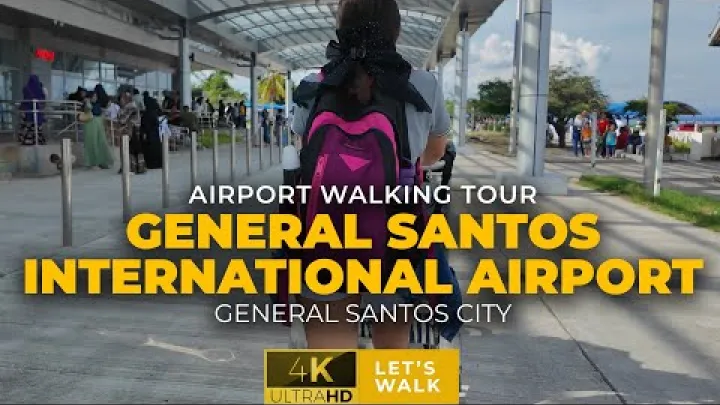
Flight schedule data from FlightsFrom shows scheduled domestic service from General Santos, with Manila listed as the dominant route in that database. Carriers and schedules can change, so check airline websites or booking platforms for current flight days, baggage rules, and arrival times. Booking sites may show airlines such as Cebu Pacific and Philippine Airlines on General Santos routes, but always confirm directly before relying on a connection.
Choose General Santos if your priority is reaching Koronadal with the least road travel. It is also a good option for travelers coming from Manila who can find a well-timed flight and want a straightforward bus or car transfer after arrival.
Francisco Bangoy International Airport in Davao
Francisco Bangoy International Airport in Davao is a larger regional gateway and a useful backup when flights to General Santos do not fit your schedule or budget. The trade-off is simple: Davao may offer better flight options for your itinerary, but it adds a longer land journey to Koronadal and a city transfer to the Ecoland bus terminal.
This route is most useful for travelers who plan to spend time in Davao City, travelers connecting from routes that do not align well with General Santos, or people who prefer to compare more flight choices before booking. If you choose Davao, avoid tight same-day plans after the bus ride, especially if you are arriving on a delayed flight or traveling during holidays.
General Santos and Davao Ferry Ports
General Santos City and Davao City can also function as ferry arrival points before the road leg to Koronadal. Ferry listing data from Direct Ferries identifies Davao City and General Santos City among Mindanao ferry ports, but ferry information should be treated as indicative until confirmed with the operator or booking channel.
Ferry travel is slower than flying and less suitable for tight schedules. It may be practical if you are already traveling by sea within the Philippines, carrying more baggage than is convenient on a flight, or building a slow travel itinerary across islands. Always confirm current sailings because routes, vessel frequency, and port procedures can change.
How to Get from General Santos to Koronadal
The General Santos to Koronadal corridor is the key land connection for many visitors. General Santos works as both an air gateway and a sea gateway, so this route is useful whether you arrive by plane, ferry, or another regional bus.
General Santos Airport to Koronadal by Bus
The airport-to-Koronadal bus is the best-value option when it is operating during your arrival window. Published route-planning information lists Yellow Bus Line between General Santos Airport and YBL Marbel Station, with an indicative journey time of about 1 hour 30 minutes and a fare around PHP 110.
Marbel is commonly associated with Koronadal, so you may see YBL Marbel Station used in route listings instead of a plain Koronadal label. Save both names before traveling. On the day of travel, confirm whether the bus boards at the airport, a nearby stop, or a company-specific point, and ask about the last departure if you arrive in the evening.
This option is best for solo travelers and budget travelers arriving during service hours. It may be less convenient if your flight lands late, if you have large luggage, or if you need to go directly to a hotel or office away from the terminal area.
General Santos City to Koronadal by Intercity Bus
If you are already in General Santos City, or if you arrive by ferry or another bus, you can usually continue to Koronadal by intercity bus. Third-party listings for Mindanao Star show frequent daytime departures on the Koronadal to General Santos corridor, including hourly-style listings across much of the day, but these should not be treated as official live timetables. Check current departures at the terminal or with the operator before you travel.
![Preview image for the video "[NON-AIRCONDITIONED BUS] Riding The Yellow Bus Line 2888 Bus | Koronadal - Gen. Santos".](/sites/default/files/styles/media_720x405/public/oembed_thumbnails/2026-06/RyKgLnYXYPrEeLyVaJXtBsE8c4BojTgWZ4Ap1sN8a-U.jpg.webp?itok=qe2aPpwT "Preview image for the video \"[NON-AIRCONDITIONED BUS] Riding The Yellow Bus Line 2888 Bus | Koronadal - Gen. Santos\".")
Mindanao Star Bus Transport and Yellow Bus Line are important names to know in this region. A listing on 12Go shows scheduled Koronadal to General Santos services for Mindanao Star, while Yellow Bus Line appears in regional route information and airport-to-Koronadal route planning. Depending on your exact route, departure points may include Bulaong Bus Terminal, YBL Marbel Station, or another company-specific terminal.
Before departure, confirm the terminal name, the route sign, the final destination, and whether the bus stops where you need to alight. This is especially important if you are connecting onward from Koronadal to another town in South Cotabato or Soccsksargen.
Taxi, Private Car, and Self-Drive Options
Taxis, private cars, and arranged pickups are more flexible than buses and can reduce waiting time. They are useful for late arrivals, families, groups, travelers with heavy luggage, or business travelers who need to go directly to a specific address. Route planners list the drive from General Santos Airport to Koronadal at roughly around an hour, although actual time depends on traffic, stops, weather, and road conditions.
Private transport usually costs more than the bus, so agree on the fare or use an official airport taxi or reputable booking channel before leaving. If a hotel, host, or workplace can arrange a pickup, confirm the vehicle details, meeting point, and price in advance.
Self-driving is possible for travelers comfortable with Philippine driving rules and local road conditions, but it is not the simplest option for most international visitors. If you drive, avoid tight arrival plans and consider daylight travel for your first trip on the route.
How to Get from Davao to Koronadal
The Davao route has two parts: transfer from the airport to Davao City Ecoland Bus Terminal, then take an intercity bus to Koronadal. It is a strong alternative gateway but requires more time and more steps than the General Santos route.
Davao Airport to Ecoland Bus Terminal
Koronadal-bound buses from Davao are associated with Davao City Ecoland Bus Terminal. If you fly into Francisco Bangoy International Airport, plan a separate transfer to Ecoland before boarding the intercity bus. Do not assume the airport and bus terminal are adjacent.
Allow buffer time for immigration or domestic arrival procedures if relevant, baggage collection, traffic across Davao City, ticket purchase, and waiting for the next departure. This buffer is especially important if you land in the late afternoon or evening, when a delay can push your road journey into the night.
Ecoland Bus Terminal to Koronadal
The Davao City Ecoland Bus Terminal to Koronadal route is the main land leg for travelers using Davao as their gateway. Route-planning data from Rome2rio lists Mindanao Star Bus Transport on the Koronadal to Davao City Ecoland Bus Terminal route, with an indicative journey time of about 4 hours 30 minutes and fares shown in the PHP 370 to PHP 550 range in one listing. Other nearby-airport route listings show higher indicative ranges, so use fare figures as planning estimates only.

Bus time can vary because of stops, road conditions, traffic, rest breaks, and terminal waiting. If you have an appointment in Koronadal, avoid scheduling it immediately after the expected arrival time. If you are continuing beyond Koronadal, plan extra time for the next transfer.
When Davao Is Better Than General Santos
Davao is better than General Santos when it fits the rest of your trip more naturally. Choose Davao if flight availability, fare, or timing is clearly better, or if you want to visit Davao City before continuing to South Cotabato. It can also be useful for travelers connecting from routes that do not have convenient General Santos flights.
Choose General Santos if speed and simplicity matter most. Choose Davao for itinerary flexibility. Neither option is always best; the right choice depends on the total travel time from your starting city to your final address in Koronadal.
Ferry and Long-Distance Overland Options
Ferry and long-distance overland travel can be part of a Koronadal itinerary, but these options need more preparation than flying. They are best for flexible travelers, not for people who need the fastest or most predictable route.
Manila to Mindanao by Ferry
Travel from Manila to Mindanao by ferry is possible through Mindanao ports such as General Santos or Davao, depending on the current ferry network and sailing schedules. This is much slower than flying and still requires a land transfer to Koronadal after arrival.
Before choosing a ferry, confirm the sailing day, departure port, arrival port, berth or cabin class, baggage rules, check-in time, and expected arrival time. Do not rely only on an old timetable or an aggregator listing for a multi-day route. Weather, vessel changes, and operational changes can affect sea travel.
Multi-Day Bus-and-Ferry Routes
Bus-and-ferry combinations from Metro Manila or other regions of the Philippines may be possible, but they are planning-intensive. These trips can involve several terminals, a sea crossing, long waiting periods, and more than one day of travel. In the available evidence, there is no simple verified direct bus route from Manila to Koronadal that should be presented as a default option.
If you choose a multi-day overland route, plan it as a chain of confirmed segments. Verify the first terminal, bus operator, ferry segment, arrival city in Mindanao, and onward bus or car route to Koronadal. Keep your accommodation plans flexible in case a delay forces an overnight stop.
What to Confirm Before Choosing a Slow Route
Before choosing a ferry or multi-leg overland route, confirm the live ferry schedule, bus terminal name, ticket office location, weather or sea-condition advisories, baggage allowance, arrival time, and onward transport from the arrival port. These details matter because a missed connection can create a long wait at a terminal or port.
Slow routes increase exposure to delays, fatigue, and schedule changes. Add buffer days if you must arrive in Koronadal for a fixed event, work appointment, school requirement, or family commitment.
Arriving in Koronadal: Terminals and Local Transport
Once you reach Koronadal, your next step is usually a short local transfer to a hotel, office, home, market, school, or another transport point. Terminal names can vary by route and operator, so save your intended arrival point before departure.
Koronadal City Integrated Transport Terminal and YBL Marbel Station
Koronadal City Integrated Transport Terminal is a useful local anchor for travelers. Mapcarta lists Koronadal City Integrated Transport Terminal as a bus station in Koronadal, South Cotabato, located on Jesse M. Robredo Avenue. Some route listings also use YBL Marbel Station, so do not assume every booking platform or operator will use the same terminal name.

Before you travel, save the terminal name, map location, and nearby landmark. Ask the driver or conductor whether the bus stops at your intended terminal or at another company-specific point. This is especially useful if someone is meeting you in Koronadal.
Jeepneys, Tricycles, and Local Transfers
After arriving in Koronadal, local transfers may involve jeepneys, tricycles, taxis, private pickups, or short hired rides, depending on your destination and time of day. Jeepneys and tricycles are common local transport modes in many Philippine cities, but route details and fares can vary locally.
Ask the terminal staff, hotel, host, or local contact which vehicle to take and what fare is reasonable before boarding. If you have luggage or arrive at night, a direct hired ride may be easier than trying to navigate a local route immediately after a long intercity trip.
Regional Bus Corridors Through South Cotabato
Koronadal is part of a wider Soccsksargen bus network linking General Santos, South Cotabato, Sultan Kudarat, Cotabato-area routes, and Davao-area routes. Bus travel is central to access in this part of Mindanao because the city is connected by regional road corridors rather than by its own commercial airport.
A regional route notice from the Philippine News Agency reported a Yellow Bus Line route serving multi-province travel in Soccsksargen, including connections involving General Santos and nearby areas. Use this as route-network context, not as a live timetable. Current departure times and terminals should still be confirmed close to travel.
Safety, Scams, and Reliability Checks
Transport in and around Koronadal is manageable when you plan with current information. The main risks for travelers are not complex: outdated schedules, unclear terminal names, late arrivals, and informal offers at transport hubs.
Use Current Operator and Terminal Information
Verify schedules and terminal assignments close to departure. Third-party route planners are useful for understanding the shape of a journey, but they may not reflect same-day changes, holidays, route suspensions, or terminal adjustments.
For flights, check the airline or booking platform. For ferries, check the operator or confirmed booking channel. For buses, check the terminal, operator counter, hotel staff, or a reliable local contact when available. This matters most for early-morning departures, late-night arrivals, holiday travel, and multi-leg journeys.
Avoid Touts and Unclear Fares
At airports, ports, and bus terminals, use official counters or clearly identified transport channels where possible. Confirm the fare before riding, especially for taxis, tricycles, private cars, or informal transfers. If a price is unclear, ask again before loading your bags.
These are general travel precautions, not a claim that Koronadal is unusually risky. Clear communication and official channels reduce misunderstandings and help you avoid paying more than expected.
Plan Around Arrival Time and Road Conditions
Avoid tight connections when arriving late or continuing to another destination after Koronadal. Add time for bus waiting, terminal transfers, traffic, rain, roadworks, rest stops, and meal breaks. A private vehicle can reduce waiting time, but it cannot remove all uncertainty from road travel.
If your trip involves a flight followed by a long bus ride, consider whether you will be comfortable arriving after dark. If not, stay overnight in the gateway city or choose an earlier flight.
Frequently Asked Questions
What is the nearest airport to Koronadal?
General Santos International Airport is the nearest major air gateway commonly used for Koronadal. From there, travelers continue by bus, taxi, private car, or arranged pickup.
Can you fly directly to Koronadal?
No direct commercial flight to Koronadal is confirmed in the available transport information. Most travelers fly to General Santos or Davao, then continue by road.
How do you get from General Santos Airport to Koronadal?
The usual budget option is a bus toward YBL Marbel Station, with route-planning data listing about 1 hour 30 minutes and an indicative fare around PHP 110. Confirm the current boarding point and departure times on the day of travel.
Is Davao a good gateway for Koronadal?
Yes, Davao is a good alternative when flights are cheaper, better timed, or part of a wider itinerary. It is less direct than General Santos because you need to transfer to Davao City Ecoland Bus Terminal and then take a longer bus ride.
Are ferries to Koronadal practical?
Ferries do not go to Koronadal itself. They can be practical for slow travel to a Mindanao port such as General Santos or Davao, but you still need a land transfer afterward and should confirm current sailings.
Which terminal should travelers check before departure?
Check the exact terminal named by your operator or booking platform. Important names include Davao City Ecoland Bus Terminal, Bulaong Bus Terminal, YBL Marbel Station, and Koronadal City Integrated Transport Terminal.
Final Route Recommendation
For most travelers, the best route to Koronadal is to fly to General Santos International Airport and continue by bus or car to Koronadal. This route usually offers the shortest and simplest land transfer, especially for visitors arriving from Manila or another Philippine city with a convenient General Santos flight.
Choose Davao if it gives you a better flight, a lower total fare, or a more useful itinerary. Choose ferry or multi-day overland travel only if you have enough time, flexibility, and patience for changing schedules. Whichever route you choose, confirm your current terminal, operator, fare, and arrival time before departure so your trip to Koronadal is as smooth as possible.
Select area
Create a post
Posting is free and no registration is required.